A bank application is an unlikely calling card for a technology community. It has no stage lights, no launch countdown and very little scope for applause. Yet a shared financing dossier is among the more revealing things La French Tech Aix-Marseille Région Sud has helped produce. Get several financial institutions to accept a common set of paperwork and a founder can spend less effort repackaging the same company for different desks.
That small administrative intervention explains the organization better than a wall of startup logos. Working through its Banques Innov group, the association brought financial players together to simplify how innovative businesses present themselves. La Tribune covered the initiative in March 2022. The idea remains prominent in the network’s offer: agree on the document, make the approach easier, let each institution make its own decision.
The distinction matters. A common application is useful precisely because it tackles something the network can change. It does not make a weak business creditworthy. It gives a founder a more orderly way to get to the conversation where that judgment happens. In an industry fond of promising transformation, tidier paperwork has an appealing honesty.
First, find the right desk
French Tech Aix-Marseille acts as an entry point into the local startup community. Its expertise lies in knowing which person, program or institution might help with the next problem. Founders and growing companies are the principal users; investors, established businesses and support organizations participate from the other side of the table. The relationship often begins with a question rather than a purchase.
French Tech Central makes this approach concrete. The local launch brought together access to 11 public services, including the employment service, URSSAF, Banque de France and the intellectual-property office INPI. Its announcement described a familiar problem: useful public services existed, but entrepreneurs had difficulty discovering the full range and finding their way through it.
The booking system was organized around needs drawn from questions startups were already asking. That is a design choice worth borrowing. A founder should be able to begin with a hiring or export problem without first learning the administrative structure of the French state. Individual appointments and collective workshops turn a directory into something a person can actually use.
The program’s published offer spans financing, recruitment, international trade, public procurement, taxation and research. For a young business, these subjects arrive together even when the institutions responsible for them do not. The association’s job is to arrange the introduction and make the available expertise easier to reach.
Shared paperwork ≠ shared approval.
The rooster came before this association
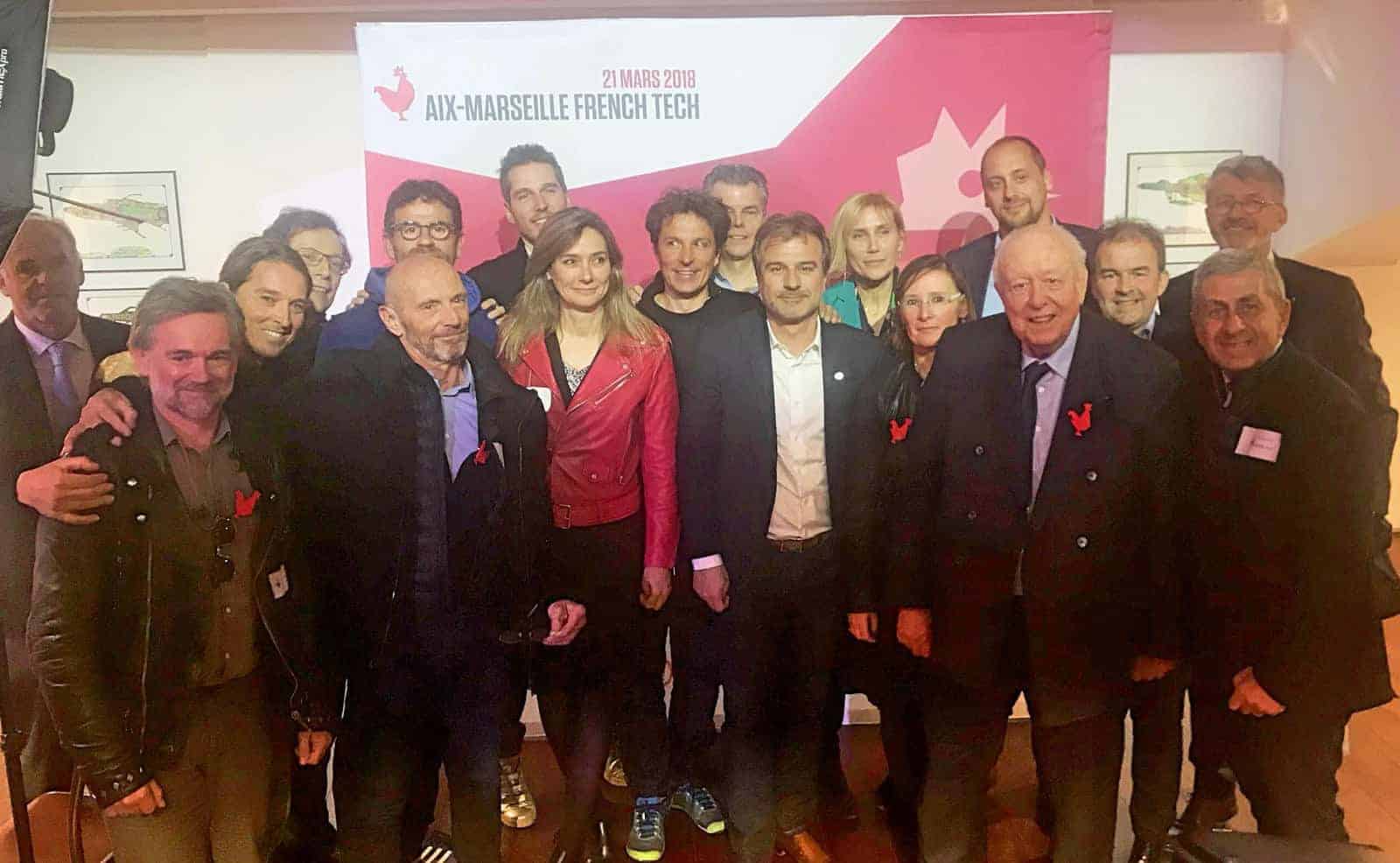
There are two dates in this story. The territory’s French Tech effort began in 2014; the current legal association was created in January 2018. Pascal Lorne, the entrepreneur behind Gojob, led the collective that took over the local operation that spring. Calling the whole enterprise a company founded by today’s leaders would flatten a much more interesting institutional history.
At the March 2018 launch, the collective wore red-rooster badges made with a 3D printer. The ambition was expansive: overseas connections, corporate customers and a stronger local investment community. Its language also contained a useful restraint. Bertrand Bigay described helping entrepreneurs “sans faire à la place de ceux qui font” - helping without doing the work in their place.
“sans faire à la place de ceux qui font.”
Bertrand Bigay, March 2018 launch, reported by Gomet’
The handover involved argument as well as enthusiasm. The former operator, Medinsoft, sought shared representation after losing the selection process to Lorne’s team. Contemporary reporting described competing views of the transition. For an organization whose job is to gather people, the question of who gets to speak for everyone was present from the beginning.
Free help, with a membership menu
The association’s basic services are free, according to its FAQ. Membership adds particular benefits, including posting job offers and preferential rates for events, exhibitions and partner services. This makes the opening conversation less of a sales funnel: a founder can seek orientation without assuming that every useful answer sits behind a subscription.
The published annual startup fees rise with employee count. A business with zero to nine employees pays €100; the next bands are €200 and €500. The largest listed category costs €1,000. Startups belonging to a partner support structure can qualify for free membership. Anyone already in an incubator has a good reason to check that relationship before paying.
*Label as published. Eligible startups in partner support structures can join free.
Behind those fees sits a mix of public support and private partnerships. A Métropole decision awarded €105,000 for 2025, equivalent to 17.10 percent of the association’s forecast budget excluding voluntary contributions. That implies a planned total of roughly €614,000. It is an operating-budget calculation, not a revenue figure or a venture valuation.
The distinction between the association’s resources and its members’ achievements deserves equal care. Money raised by a startup belongs to that startup’s financing story. An introduction may contribute to it, but putting both figures in the same promotional paragraph does not establish how much the network caused.
Six to eight startups, one visiting fund
Financing access also requires knowing who is interested in what. In a February 2026 interview, the leadership described a continuing shortage of early-stage investment. Nearly 70 percent of startups seeking capital wanted pre-seed or seed funding, they said. The demand was concentrated at a stage where the team considered existing territorial initiatives insufficient.
Its response included How I Met My VC, launched in 2025. The format brings a national fund to meet six to eight startups selected to fit its investment thesis. Five events in 2025 enabled nearly 40 companies to meet those funds, according to the interview. These are meetings, not an announced total of completed investments.
The practical lesson sits in the selection. A large audience can make an event feel successful while leaving most participants commercially irrelevant to one another. A smaller room, assembled around what an investor actually backs, has a clearer purpose. For founders, preparation should begin with fit: stage, sector, financing needs and the business evidence the conversation will require.
A network that knows its neighbors
The local market already contains incubators, accelerators, banks, investors and business networks. Marseille Innovation and P.Factory occupy parts of that landscape; Medinsoft has its own regional digital-business community. French Tech Aix-Marseille’s position depends on connecting across such organizations. Its membership arrangements explicitly recognize support structures and the startups they accompany.
That leaves founders with a useful way to choose. A company needing sustained incubation should examine the program and expertise of an incubator. A founder trying to identify the appropriate public official, financing contact or corporate introduction has a reason to approach French Tech. Those needs can coexist inside the same business, and participation in one organization need not exclude the others.
The network also distributes national French Tech programs locally. Tremplin addresses access for entrepreneurs underrepresented in the startup world. The local community’s job includes helping national opportunities reach people in its territory. Geographic knowledge matters here: a nationally available offer is more useful when somebody nearby can explain the route into it.
Seventy applications later, the team stayed inside
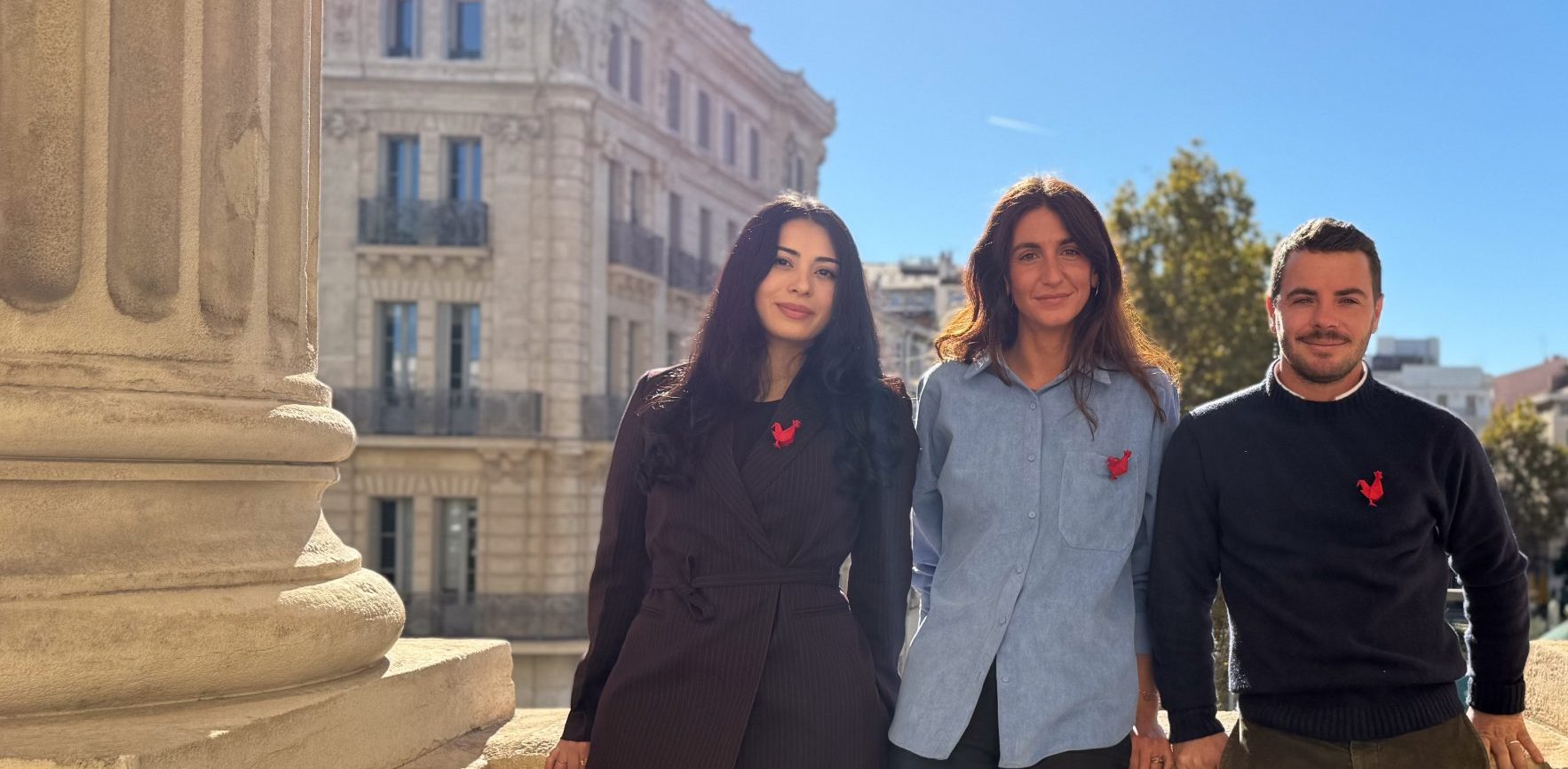
When director general Diane Renaud announced her departure, the association began recruiting. More than 70 external applications and one internal application followed. The eventual decision was a shared leadership arrangement built around three existing team members. The announcement presented continuity and complementary experience as the rationale.
From January 1, 2026, Jules Poret became executive director, Roxana Quintana partnerships director and Joséphine Boudy communication director. Responsibilities previously held by Renaud were divided among them, with Poret serving as the main external contact. Co-presidents Emilie Mercadal and Sébastien Demech, elected in March 2025, sit in a different part of the governance structure.
This is a specific change of organizational design, rather than evidence that the previous arrangement failed. The recruitment process gave the association a choice; it chose the experience already present in the team. Naming a principal contact alongside shared responsibility also addresses an obvious practical concern: a visitor still needs to know whom to call.
The next useful conversation
The public-facing calendar remains busy. Le Grand Bain is scheduled to return to Marseille’s Palais du Pharo on September 14, 2026, for its eighth edition, with inclusive and sustainable technology at the center of its agenda. Meanwhile, partnership announcements in 2026 have included executive-coaching firm VISCONTI Partners and secure-technology company SEALSQ.
Smaller conversations have a place beside the stage. French Tech Sans Filtre, introduced in 2024, addresses founder isolation through peer exchange and thematic mentoring. The format acknowledges that entrepreneurs need somewhere to discuss ordinary difficulties as well as somewhere to announce extraordinary ambitions. An association can make room for both.
The offer works best when the request is concrete. Bring a defined obstacle, enough context to identify the relevant person and a willingness to follow up. A network cannot supply missing customer demand or force an investor’s mandate to fit. It can shorten the search for somebody who understands the problem. In Aix-Marseille, that search may begin with an appointment, a peer discussion or a form that several banks have finally agreed to read.
Open the next door
Visit the website · Contact the team · News and articles · Le Grand Bain