Lindsey Cox had bought the house. She had taken the job in Chattanooga, started building a team and begun putting a new strategy to work at The Company Lab. Then the role she had imagined holding someday opened up in Nashville. Someday had arrived with exceptionally inconvenient timing.
The opportunity was to lead Launch Tennessee, the statewide startup organization where she had already spent six years. Taking it meant leaving work she cared about sooner than she wanted. She has described the decision as a tug between ambition and the wish to finish what she had started. She chose to return.
That move offers a useful way into her story. Cox’s career keeps changing its scale: a state office, a statewide network, a federal program, a city’s entrepreneur center, then the statewide network again. The recurring interest is how public institutions can make it easier for other people to build something. The founder gets the pitch deck. Someone still has to arrange the room.
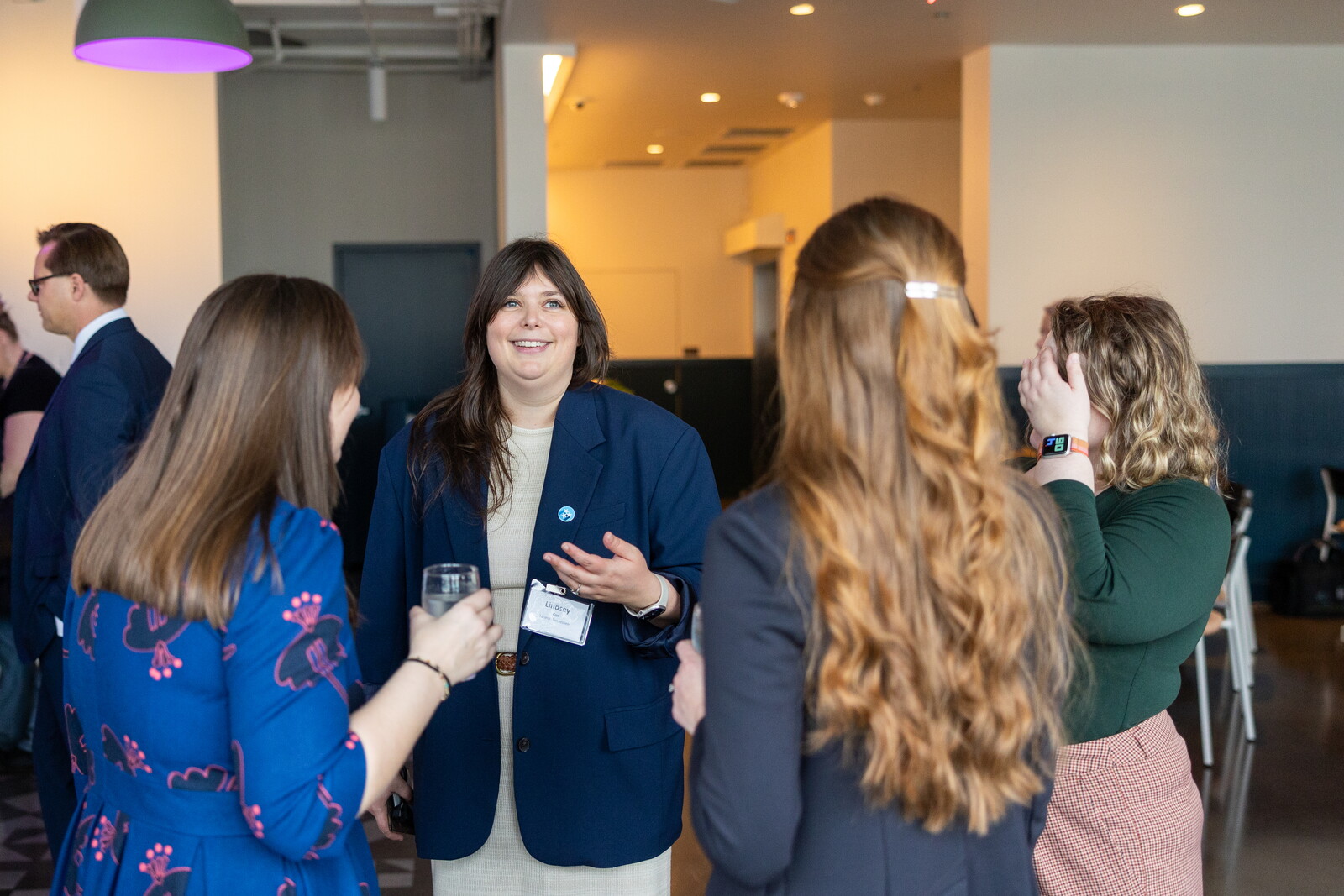
An accountant discovers what money can do
Cox’s route began at Tennessee Tech University in Cookeville, where she earned an accounting degree and, in 2010, an MBA. Her roots are in the Upper Cumberland. She identifies Livingston as her hometown, and has spoken about coming from a working-class background. An affordable education mattered to her.
One college experience gave her a wider frame of reference. Her team traveled to Washington, D.C., for a combined pitch and case-study competition and placed fourth among 40 schools. She remembers it as validation of the education she was getting. She also worked while studying, learning to manage competing obligations before they came with an executive title.
Her early professional work included bond finance in the Tennessee Comptroller’s Office and grant administration at the Legal Aid Society of Middle Tennessee. These were jobs close to the mechanics of public money: how it is organized, accounted for and put to use. In her telling, working with the comptroller’s boards helped her see the effect government could have on businesses and communities.
Charlie Brock hired her at LaunchTN in 2013. She entered through accounting, finance and compliance, working with regional accelerators on reporting and financial controls. Startup culture tends to reserve its glamour for the person holding the microphone. Cox came in through the part where somebody checks that the numbers add up. It turned out to be a useful entrance.
Learning the state, one connection at a time
Over her first six years at LaunchTN, Cox moved through innovation management, conference leadership, operations and government affairs. That combination gave her experience with both the public machinery behind entrepreneurship programs and the gatherings where founders and investors actually meet.
She helped reshape the 3686 Entrepreneurship Festival into a multi-day event for founders, investors and partners. She also established LaunchTN’s government relations team and oversaw the passage and administration of its Small Business Innovation Research matching program. A conference and a funding program can look like separate assignments. Both depend on getting people who have different priorities to agree on what happens next.
The regional network was central to that work. Its entrepreneur centers give founders a nearby place to begin, while LaunchTN connects resources across the state. The design recognizes a plain difficulty: a business can need expertise that its own community does not happen to contain. Sharing knowledge among centers gives that founder more people to ask.
The work is easy to describe with a map and harder to explain with a single success story. A useful introduction may happen well before a funding round, and a local adviser may be the reason a founder even knows which program to approach. Cox’s early responsibilities put her close to those less visible steps. They would later become part of the case for bringing her back.
“I like to joke that I was raised in the fire.”
Lindsey Cox
Washington, Chattanooga, and the unfinished job
In October 2019, Cox left Tennessee for the U.S. Economic Development Administration’s Office of Innovation and Entrepreneurship. She spent about 18 months in Washington, managing Build to Scale, a federal grant program supporting technology-based economic development. She was now looking at entrepreneur support beyond the borders of her home state.
She returned in April 2021 to become CEO of Chattanooga’s CO.LAB. There, the work became local and immediate: rebuild staffing, develop strategy and fundraising, refresh programs and reconnect the organization with its community. She oversaw the return of Startup Week Chattanooga. The federal program manager was now running an organization in the same regional network she had once supported.
The LaunchTN board selected her as its next CEO in March 2022, with an April start and a gradual transition while she continued leading CO.LAB. The overlap mattered. Accepting the new job did not instantly resolve her responsibilities to the old one. By the summer, she was moving into the statewide role full time.
There is a familiar career story in which each promotion appears inevitable once it has happened. Cox’s account contains more hesitation. She had committed to a city and a team, and the desired job arrived early. Her decision was consequential precisely because both options offered work she wanted to do. A good opportunity can still be a nuisance to the calendar.
- 2013LaunchTNStatewide support
- 2019WashingtonFederal grantmaking
- 2021CO.LABChattanooga leadership
- 2022LaunchTNReturn as CEO
A $70 million question about staying put
In June 2023, LaunchTN and the Tennessee Department of Economic and Community Development introduced InvestTN, a $70 million equity investment program for Tennessee startups and venture capital funds. It sits within Fund Tennessee, the state’s federally financed initiative under the State Small Business Credit Initiative.
Cox had hired Monique Villa as LaunchTN’s first chief investment officer in 2022, building the investment capability ahead of the fund’s debut. Today, that capital function is led by chief investment officer Eller Kelliher. The division of work is worth keeping in view: Cox leads the organization; a capital team handles investment strategy, diligence and deployment.
InvestTN’s original design split its allocation among regional seed investment, technology investment and investment in venture funds. Those are different ways of addressing capital access. A young company may need an initial check. A developing technology may need a larger round. Investing in funds also supports the investors who will choose and back companies themselves.
The $70 million describes the program’s size, rather than money already handed to founders. Cox’s argument for the effort is geographic as much as financial: entrepreneurs should have better access to capital and partners while building in Tennessee. A founder should be able to explain a product without first explaining why the company has to move.
Three routes
to capital access
Why a conference belongs in the business plan
Cox’s event work did not disappear when she became CEO. Tennessee House at South by Southwest took the state’s founders and partners to Austin, putting them in front of people who might not otherwise travel to meet them. Music, technology and business share a crowded calendar there. Cox saw a reason for Tennessee to have its own room.
The 2025 Tennessee House drew 3,922 attendees. Its approximately $400,000 cost combined about $150,000 from LaunchTN with money raised from partners. Those figures make the gathering something more concrete than a cheerful networking anecdote: it was a deliberate expenditure on introductions, with attendance that could be counted.
Attendance is only the beginning of the question, of course. What becomes of a meeting? Cox has described encounters with potential customers and investors as the reason to make the trip. A useful room puts a small company within reach of someone whose attention would otherwise be difficult to get. Hospitality has a business purpose, even when the furniture is comfortable.
Back home, 3686 provides another meeting place. LaunchTN’s fiscal 2023 report recorded more than 900 one-on-one meetings, compared with about 500 in 2022, and attendees from 33 states. The numbers concern meetings rather than promises of eventual success. Still, they show what Cox’s conference experience can build: more chances for a conversation to become a working relationship.
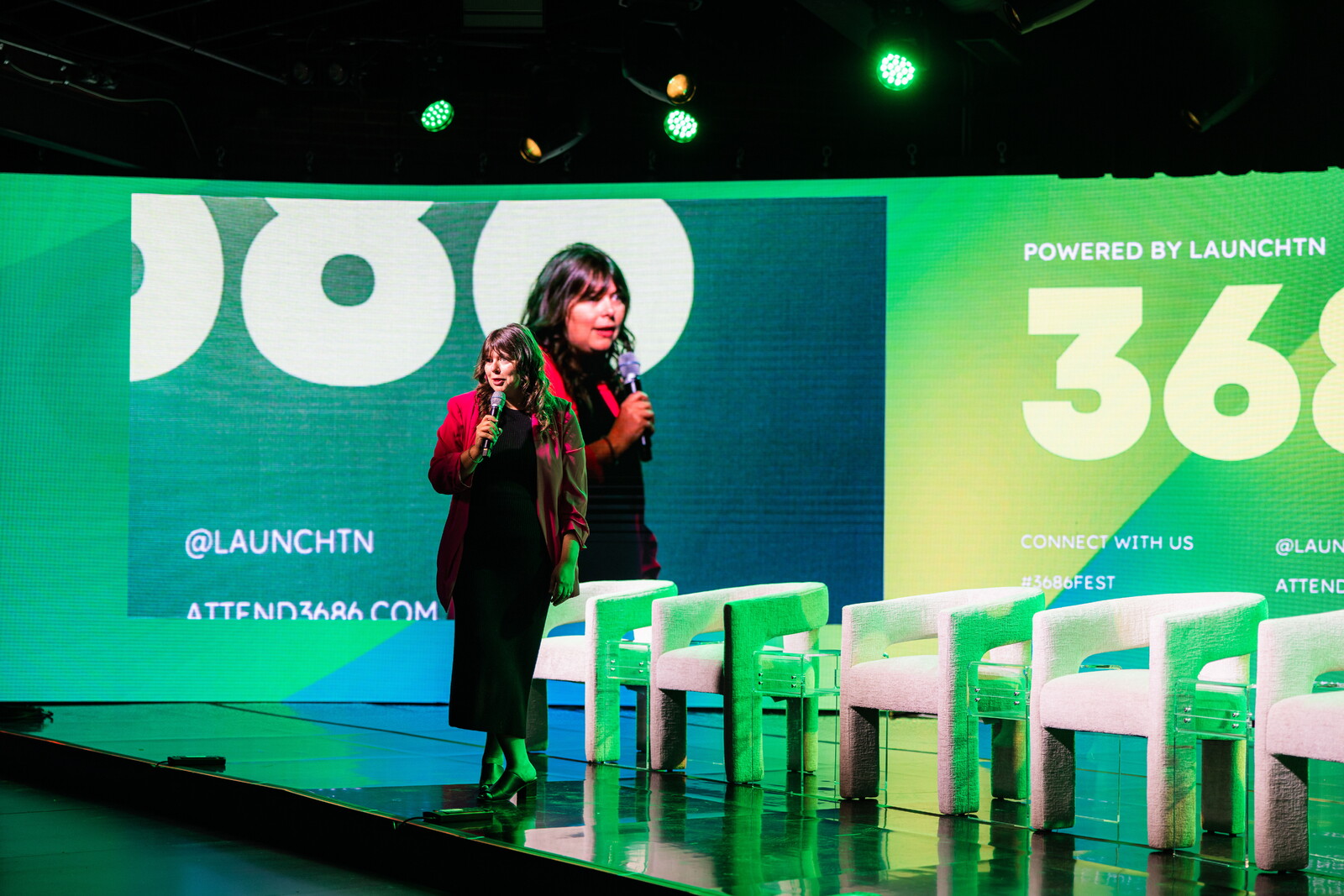
attendees through the doors
A gathering built around introductions.Getting the idea out of the laboratory
The other recurring question in Cox’s work concerns research. An idea developed at a university needs a path toward a usable product, a customer and, sometimes, a new company. LaunchTN’s Tennessee Technology Advancement Consortium provides shared technology-transfer and commercialization support for participating institutions.
Tennessee Tech is among those institutions. That gives Cox’s career an interesting return journey: the university where she learned accounting is now part of the research network her organization supports. The relationship is practical. Faculty and student innovators can draw on help with the process of moving research toward the market.
In August 2026, LaunchTN promoted Jennifer Skjellum to vice president of commercialization and director of the consortium. Cox framed the goal around getting ideas beyond the laboratory and into the economy. The appointment continued a pattern in her leadership: develop a program, then put people with relevant experience in charge of carrying it forward.
Connections, commercialization and capital are LaunchTN’s three stated pillars. Their relationship explains much of Cox’s job. Research support can help prepare an idea for investment. A regional center can introduce a founder to that support. An event can introduce the resulting company to a customer. The transitions between those steps deserve as much attention as the steps themselves.
Find people
and expertise.
Move research
toward the market.
Finance the
next stage.
The address on the application
Asked about the statewide network, Cox puts the founder’s needs ahead of the institution delivering the help. “Founders don’t care where support comes from. They just need it.” It is a blunt way to describe a collaborative system, and a useful test of whether that system works.
She has also laughed about the changing questions Tennessee founders bring her. “We used to dream about the problems we are having now.” Alongside the need for money come questions about lab space, manufacturing facilities and hiring. Growth produces its own paperwork, and its own demands on the people whose job is to help.
Cox lives in Nashville with her husband, Joe, their dog Banjo and three cats. She describes herself as driven, with an appetite for hard work and some levity along the way. Her career has room for both: fiscal reporting and festival production, investment programs and the patient maintenance of professional relationships.
The ambition running through it is to give more Tennessee entrepreneurs a workable route from an idea to a company. She has spent years learning what that route requires from different desks, in different cities. When she returned to LaunchTN, she brought those perspectives back to a network she had helped build. The next founder might start nearby, or several counties away. Cox’s work concerns what they can reach from there.