Before John Keisler could help a startup find its first investor, he had to learn his way around a classroom. His early work was teaching middle school literacy and civics in Newark, New Jersey, through Teach For America. The route from there to venture capital would pass through animal services, parks, police finance and the machinery of a California city. It is an unusual education for someone whose present business involves deciding how new businesses get their chance.
Today, Keisler is CEO and Managing Partner of Sunstone Management. The firm works with early-stage technology entrepreneurs and with the public institutions around them. His career gives that combination a particular texture. He has sat on the city side of a partnership, helped assemble an accelerator, then joined the private firm that was already part of the effort.
A classroom before a cap table
At St. Olaf College in Minnesota, Keisler studied philosophy and religion. After college came Newark, where literacy and civics were his subjects. His teaching placed him close to students whose difficulties extended beyond the school day. He subsequently turned toward city management to address the community challenges facing them.
That move carried him back to California, to work with the League of California Cities and to a Master of Public Administration at USC. The combination is telling: a teacher’s concern with a student’s prospects, followed by training in the institutions that influence those prospects. A classroom has a door. The problems arriving through it do not necessarily respect the boundary.
His early record also includes a 2001 Best Practices Award for a first-year teacher in Newark Public Schools. Between 2003 and 2005, he worked as a policy assistant for the League’s Orange County division. By 2005, he was joining Long Beach as a management assistant. The next lessons would come from the city itself.
The city as a working education
Keisler rotated through four departments when he arrived. Over the following decade, his responsibilities included Animal Care Services, business operations for Parks, Recreation and Marine, and the police department’s finances. These are jobs with budgets, staff, contracts and residents waiting for something to happen. The phrase “public service” acquires a fairly muscular meaning when somebody needs an answer today.
In 2015, he became Long Beach’s first Innovation Team director. A three-year, $3 million grant from Bloomberg Philanthropies supported the team. Its remit was to research, develop and implement ways to improve economic development and access to city services. The work began with investigation, rather than a finished solution looking for a convenient problem.
By September of that year, the team had met with 70 organizations and more than 500 people. Its proposed projects addressed the city’s economic development infrastructure and drew on cooperation among businesses, government and education. Keisler was learning what people needed by asking them, at considerable scale.
The following year, his team spent roughly 30 hours in Cambodia Town, identifying vacant properties, shadowing willing business owners and conducting interviews. It also worked with Code for America on a business portal, with components shaped by feedback from the people who would use them. The ambition was specific: make starting and growing a business easier to navigate. An entrepreneur should have enough puzzles inside the business without collecting another set at the permit counter.
Early research by Long Beach’s Innovation Team, before its economic development projects were set.
Three partners, one front door
He began serving as economic development director in 2017. Two years later, the partnership that would become the Long Beach Accelerator was taking shape. Keisler worked alongside Wade Martin, director of CSULB’s Institute for Innovation and Entrepreneurship, and Sunstone founding partner John Shen.
The arrangement joined resources that were useful in different ways. The university brought expertise and educational capacity. The city brought relationships with policymakers and local businesses. Sunstone offered office space at One World Trade Center and connections to investors. In 2019, its initial offer was 3,000 square feet.
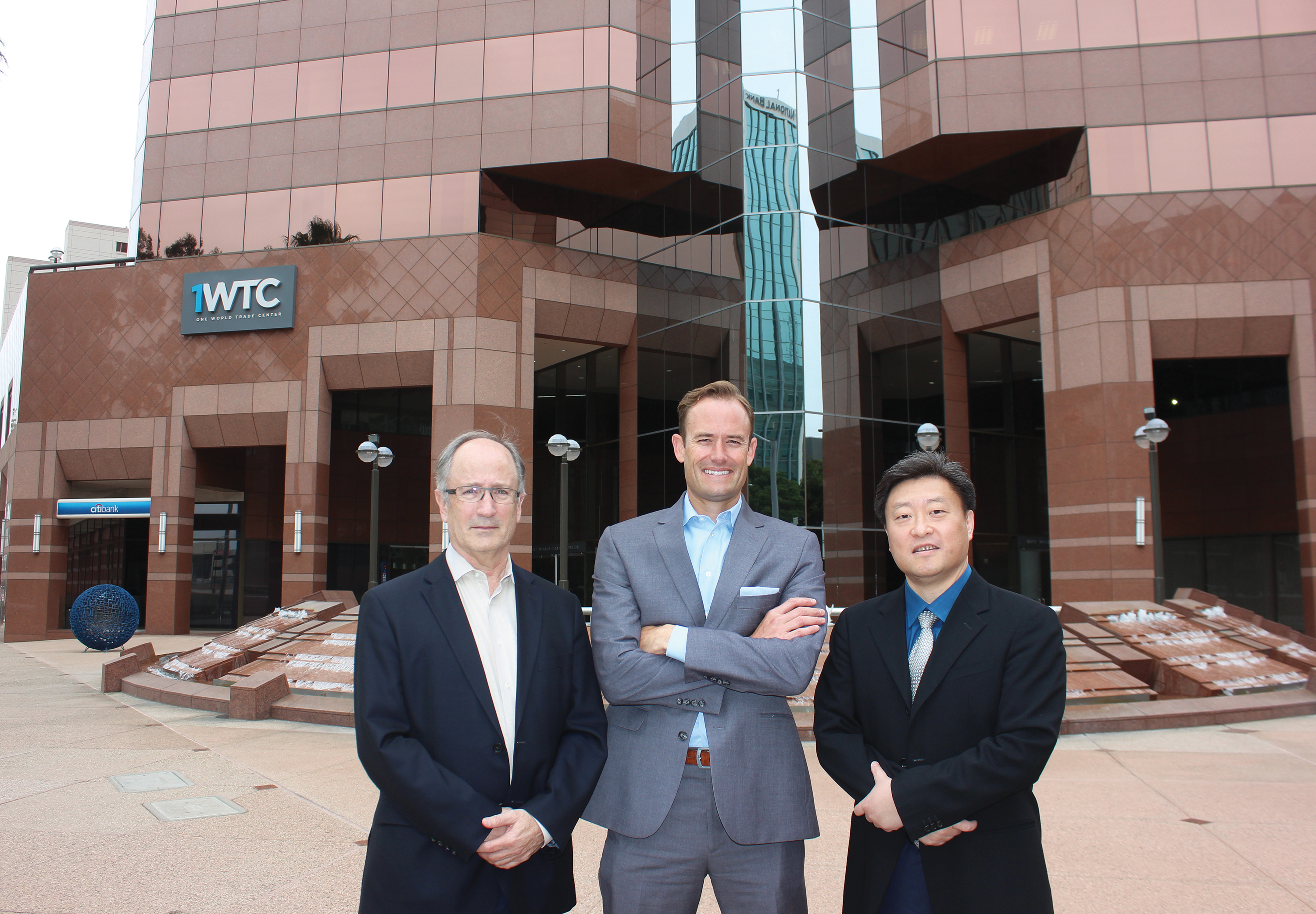
Keisler’s description of the gap was practical. Early-stage companies needed legal, financial and business preparation alongside different forms of capital. Merely finding a room would leave much of the job unfinished. As he put it, “The companies will come if there’s access to capital.”
Here was an economic development director treating a startup’s preparation as part of the city’s business. The partnership was already in motion years before he changed employers. That chronology helps explain why his eventual arrival at Sunstone looks like a continuation of work he knew.
Changing desks, keeping the question
Sunstone announced Keisler’s appointment as CEO on February 22, 2022. His final day with Long Beach was March 31. He was leaving a city government in which he had spent about seventeen years, with a longer record of public service behind him.
The city’s account of his departure listed a broad collection of departmental work: BizPort, BizCare Outreach, an Economic Insights Dashboard and economic inclusion initiatives, among other programs. It also identified the department as a founding participant in organizations including the Accelerator and Long Beach Economic Partnership. These were collective accomplishments, built within an organization he led.
His family’s connection to Long Beach reached further back. His grandparents bought their first home there in the 1940s and were able to send their first child to CSULB. Leaving City Hall did not mean leaving the place. “My wife Laura and I will remain active and engaged,” he said.
Later in 2022, the Sunstone Community Fund announced a $1 million commitment over five years for early-stage entrepreneurship and economic development. Established through a contribution from Shen, the donor-advised fund supported universities and nonprofits. Its grants and scholarships already exceeded $270,000 at the announcement. Those figures describe charitable support, with its own purpose alongside venture investment.
“Think of us as facilitators.”
John Keisler · The Sunstone Way, March 2023
When Keisler launched The Sunstone Way in March 2023, he emphasized connections: founders meeting experts, learning to find financing and getting help with business plans and marketing. He also wrote about opening doors to less traditional founders with ideas but limited access to expertise. The emphasis gave his new role a familiar subject. Access had followed him from schools into municipal government; now it was part of his explanation of private capital.
Baseball, fatherhood and the patient mentor
There is a less formal Keisler in his public writing. Sports provide recurring material. A Father’s Day post in June 2026 began with a golf dad joke, then moved to the sport that had occupied his household for years: baseball. Even a discussion of entrepreneurship can apparently require an extra pair of socks.
His son Ben, he wrote, was playing college baseball and thinking about a career in the game. Keisler’s father, also John, had been a pitcher at Long Beach State. He connected the generations through what older people teach younger ones, then extended the thought to mentors helping founders.
For him, prize money was only part of that help. Events and programs also gave young entrepreneurs places to meet potential mentors and investors. His earlier life in Long Beach included youth soccer coaching, civic boards and involvement in the Patrick Henry Foundation. Coaching and company building both involve people who are still learning. Neither becomes especially convincing when the instructor expects the first attempt to look like the final performance.
Back to campus, this time with a challenge
USC remains part of his professional orbit. The Sunstone Economic Development Challenge at USC Price began in 2023, organized by Sunstone Cities with support from the Community Fund. Graduate students work with municipal clients on economic development problems. It puts a public administration education to work against a real brief.
In May 2026, Keisler described six teams working with five cities and a county. San Bernardino’s team worked on the main corridor through Bloomington. Lake Elsinore’s proposal focused on revitalizing its commercial business community. Other teams represented Mission Viejo, Sutter Creek and West Covina. The projects bring local circumstances into the assignment.
There is a pleasing circularity to a former public administration student helping organize this exchange. The students get an institution to understand. Cities get attention directed at their problems. The competition provides a deadline and a reason to make a plan intelligible to other people. Those are useful disciplines even when nobody is waiting with an oversized check.
A room for the solo founder
In July 2026, Keisler described his participation in planning the Irvine Center of Innovation & Entrepreneurship. The effort included Sunstone Cities and city staff led by economic development director Karin Koch. He explicitly linked the suggestions to experience gained with the Long Beach Accelerator.
The planned center combined public, private and philanthropic partners. The Stella and John Foundation was its largest financial partner, with a $3.9 million contribution toward building and operating it. The Small Business Development Center would provide advice and education; American Lending Center would run a Capital Corner. Each participant had a distinct job.
The following month, Keisler considered what happens when AI lets a founder handle more tasks alone. His concern was the temptation to mistake capable tools for all the support a business needs. Mentors, candid customers and other founders still supply judgment born of experience. “AI can replace a function,” he wrote.
His interest in a physical place to meet those people makes sense alongside that concern. A person can automate more work and still need someone to ask a difficult question. In his account, the Irvine center was a place to walk into and find people. The room was part of the plan.
The invitation is still local
His recent writing continues to connect this approach with Long Beach. An October 2026 post discussed the Accelerator’s Tech Center at the former Acres of Books site, backed by a $1 million Small Business Administration grant, and the founder and investor gatherings around Long Beach Tech Week. The activity puts his long-running interest in access into a recognizable setting: people meeting, exchanging information and looking for the next useful connection.
Keisler’s career has changed its vocabulary several times. Literacy and civics became city management. City management became economic development. Economic development opened into venture capital. Across those changes, the work repeatedly returned to institutions that help someone move from an intention to an action.
There is an ordinary, demanding task inside that career: find out what people need, work out who can help, and get them into the same room. The former teacher has spent much of his working life arranging the next lesson.