The cheque goes to another investor. That is the first useful thing to understand about Jordan’s Innovative Startups and SMEs Fund, or ISSF. A founder looking for capital might expect to find a financier choosing companies across a desk. ISSF often works one level further up: choosing the funds that will choose the companies. Its assignment is to make Jordan a place more investors have a financial reason to visit.
The arrangement has a pleasingly practical logic. A regional venture manager brings judgment, contacts and the ability to finance another round. ISSF brings capital and a requirement that Jordanian businesses get a share of the attention. The country gains access to an investor’s wider resources without having to build every specialist investment team itself.
By September 2026, ISSF’s website reported $148 million in assets under management and 25 portfolio funds. Those figures describe a substantially broader operation than a single startup financier. Its public portfolio spans local investors and regional and international managers. The most revealing part of the story, however, is how the institution has adjusted the terms of that bargain.
A $98 million invitation
ISSF was established in 2017 and publicly launched in 2018. The original capitalization paired $50 million in World Bank financing with $48 million from the Central Bank of Jordan. The World Bank portion was a loan to Jordan. Calling the entire sum a startup funding round would miss both its origin and its purpose.
At the launch, general manager Muhab Murar described a market with only about five public and private investment funds supporting entrepreneurs. The ambition included encouraging new funds and paying for programs that could help businesses become investable. The financing shortage was therefore being addressed at two ends: the supply of investors and the preparation of entrepreneurs.
$50mWorld Bank financing
$48mCentral Bank of Jordan
Today, ISSF describes itself primarily as a fund of funds. Its investment thesis calls for commercial discipline, preservation of capital and additional private investment. The intended payoff includes export growth and jobs. It occupies an unusual position between national economic policy and venture finance: publicly backed money entrusted to a privately managed investment company.
That structure changes the meaning of “customer.” Fund managers are immediate investment counterparties. Startups are the ultimate financing beneficiaries. Entrepreneurs can also receive support through programs financed by ISSF and delivered by partners. There is no subscription tier or checkout button. This is an investment relationship, with selection, negotiated terms and an expectation that the underlying businesses can grow.
The specialist behind the cheque
The portfolio makes the operating model easier to see. In May 2024, ISSF raised its commitment to Propeller Ventures II from $3.5 million to $5 million. Propeller specializes in software as a service, enterprise software and cloud infrastructure. For a technical founder, that expertise can be more relevant than a general promise of entrepreneurship support.
Oasis500 offers a different route. In August 2024, ISSF increased its commitment to Oasis Ventures II from $3 million to $5 million. The manager focuses on early-stage Jordanian ICT businesses. The announcement framed the extra capital as a way to invest again in promising portfolio companies. Support after the first cheque is part of the proposition.
Other commitments broaden the menu: $2 million to VentureSouq Fund II in June 2024, with a fintech investment rationale, and $5 million to Global Ventures Fund III the following month. Global Ventures brings a Series A focus and experience across the Middle East and Africa. Different managers supply different judgments about when a company is ready.
In April 2025, ISSF added a $3 million commitment to Antler’s $60 million MENAP fund, which spans pre-seed through Series A. The partnership also described a dedicated program for Jordan. Antler’s emphasis on working with founders from the beginning extends the network toward businesses still assembling their first investable proposition.
For a founder, the practical move is to map the portfolio against the company’s stage and sector. A cloud infrastructure business and a payments startup need different conversations. ISSF’s network offers several possible entry points, each with its own selection process. The fund manager remains an investor to persuade.
Before the pitch, fix the plumbing
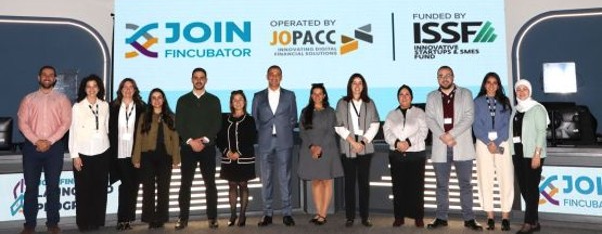
A business can need venture capital and still be unready to use it. ISSF’s work with the Jordan Payments and Clearing Company, JoPACC, gets unusually specific about that gap. Their JOIN FinTech Launchpad supported 13 startups with services including feasibility testing, IT infrastructure, cybersecurity, interface design, financial modeling and pitching.
The program culminated in a demo day and networking event announced in April 2025. Banks, venture funds, angel investors and other financial-sector participants attended. Scheduled founder meetings followed the pitches. The event put preparation and investor access in the same room; its service list shows how much work can sit behind a few polished minutes on stage.
There is a comparable effort in artificial intelligence. In September 2025, ISSF announced the graduation of the second and third cohorts of Orange Jordan’s AI incubator, co-funded by ISSF and co-designed by Princess Sumaya University for Technology. The partnership connects a telecom operator, a technology university and investment-oriented support.
Earlier work at Al Hussein Technical University illustrates both reach and attrition. A three-year CORE@HTU program nurtured 62 startups, of which 45 completed it, according to the May 2024 announcement. Six had received equity investment directly from ISSF or through its funds. Completion, investment and business success are different milestones; a useful support program should keep them separate.
The rule that asked for too much
The early machinery had friction. The World Bank’s completion assessment describes administrative complexity and implementation delays linked to layered governance and evolving responsibilities between ISSF and the Jordan Loan Guarantee Corporation. Decision-making roles were subsequently clarified and procedural layers removed.
A separate adjustment concerns local investment requirements. Second-phase planning explains that ISSF had often asked funds to invest two or three times its commitment in Jordanian companies. Higher requirements could discourage managers from participating. It makes the case for a one-times minimum instead.
The evidence is striking: by December 2024, $34.17 million deployed into funds corresponded to $91.93 million invested in qualifying Jordanian companies, roughly 2.7 times as much. That supported the argument that a lower contractual floor could still produce substantial investment. It is an observed relationship, not a promised financial return.
≈2.7× Investment deployment multiple, not investor profit.
The transferable lesson is to negotiate around investor behavior. A large obligation looks attractive on paper; it only helps if capable managers accept it and find businesses worth backing. The same planning favors most investment through funds, with a smaller co-investment allocation alongside portfolio managers.
The bill, and the scorecard
The $98 million starting figure is capital, rather than the bill for running the organization. The completion report’s component table records $2.83 million for project management, coordination and monitoring, and $2.29 million for deal-flow support at closing. Those are component figures within the report’s financing scope, not the institution’s lifetime overhead.
In May 2026, ISSF reported about $108.97 million in mobilized private capital and roughly 2,600 direct jobs for its first phase. It also reported $4.6 million invested in business development, startup support and related initiatives. Those services explain why the model involves more than allocating money among funds.
The completion assessment awarded the original project a “Highly Satisfactory” outcome rating. The later website snapshot reports more than 2,800 direct jobs in Jordan and 146 Jordanian portfolio companies. These snapshots have different scopes and timing; they should not be stitched into a tidy growth chart. Nor should jobs, assets and investment activity be mistaken for cash returned to investors.
A new route through Riyadh
The next phase is already placing commitments. In June 2026, ISSF announced $7 million for Endeavor Catalyst V, describing it as the first investment under Fund II. Endeavor’s global network gives the relationship an expansion rationale: connect Jordanian businesses to investors and support beyond their home market.
“Long-term commitment to markets where you have conviction matters more than timing market cycles.”
Allen Taylor, Endeavor Catalyst · June 2026
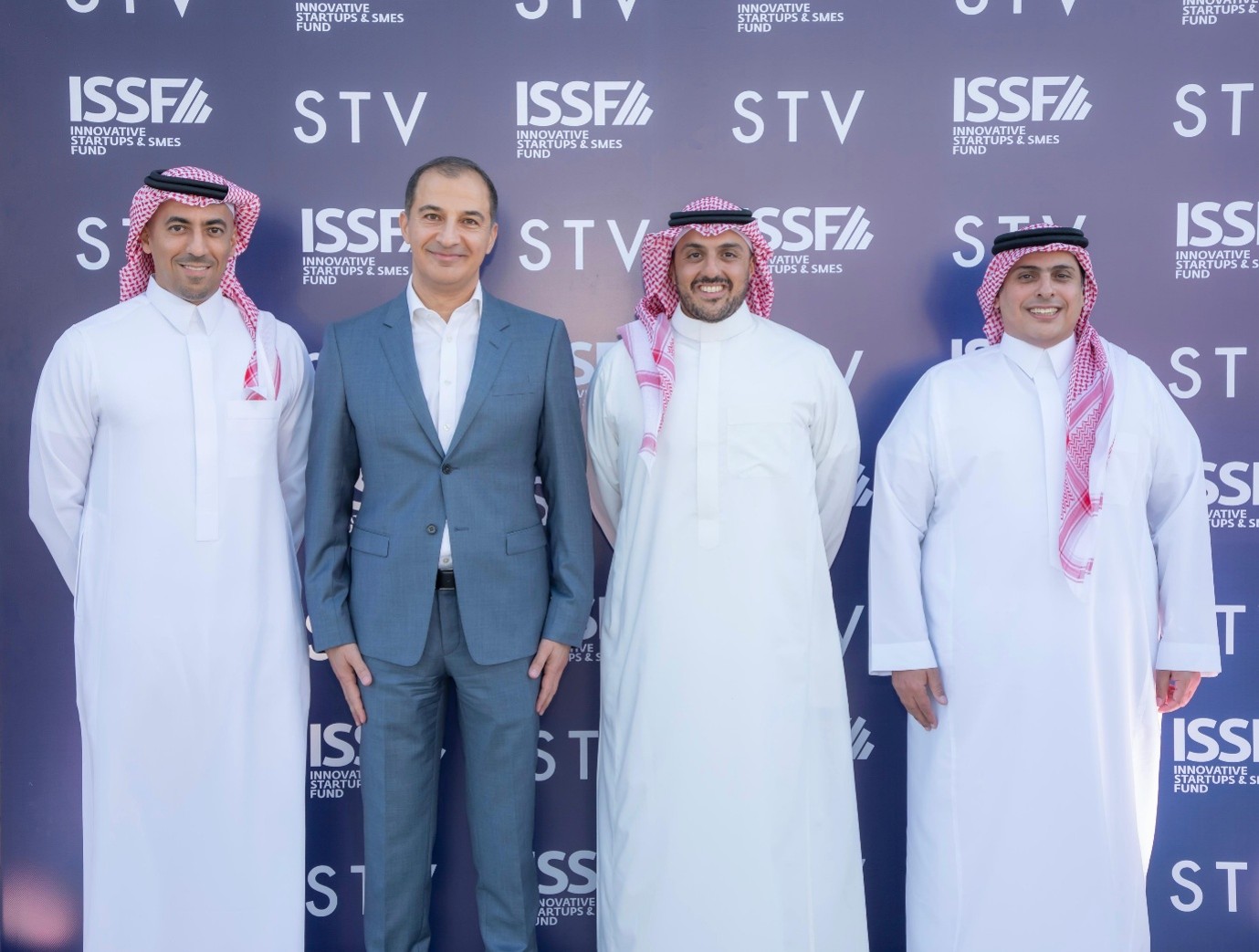
In July came a $5 million commitment to STV’s $100 million, Google-backed AI fund. Its focus is generative and applied AI. The announcement describes a strategy centered on applications using proprietary enterprise data to solve business problems. For Jordanian founders building such products, the attraction includes regional expertise and access to Saudi Arabia.
The World Bank approved $50 million for ISSF 2.0 in 2025. Its five-year ambitions include mobilizing $150 million in private capital, supporting 100 startups and creating 1,500 jobs. These are targets. A June 2025 memorandum with IFC adds cooperation on financing, capacity building and regulatory conditions to the next phase’s agenda.
For all its public purpose, this approach depends on businesses that suit equity investors: room to grow, a plausible route to larger markets and the prospect of eventual returns. A steady local business seeking ordinary working capital may fit another financing route better. A fund manager also needs freedom to decline weak investments. Without commercial selection, the logic that attracts private partners becomes harder to sustain.
The useful thing to copy is the sequence: recruit capable investors, give them a reason to engage locally, and prepare companies for their scrutiny. For founders, the first task is equally concrete. Find the relevant manager or program, understand its requirements, and arrive with a business that belongs in that conversation.
Follow the capital
Explore the ISSF website, fund portfolio and announcements.
LinkedIn · X · Instagram · Facebook
Watch: Jordan’s startup founders, in their own words · ISSF on YouTube