In a Michigan State University laboratory in 1965, bacteria refused to divide. Barnett Rosenberg and his colleagues had been investigating electricity’s effect on bacterial growth. The curious result pointed somewhere else: platinum compounds associated with the electrodes. Following that clue helped produce cisplatin, the cancer drug approved by the FDA in 1978. The experiment’s financial afterlife is still visible in East Lansing.
The MSU Research Foundation manages resources built from licensing income and investment returns, including the proceeds of cisplatin and carboplatin. It uses that pool to support university research, help form companies, invest in startups and operate places where those businesses can work. A discovery became a source of funding for discoveries nobody had yet imagined.
That history gives this nonprofit an unusual place in Michigan business. Its work stretches from a professor’s early research proposal to a young manufacturer’s unpaid customer order. It can help with the scientific beginning, the commercial middle and the very ordinary problem of finding somewhere to put the equipment.
Founded in 1973 by then-MSU president Clifton R. Wharton Jr., the foundation has provided more than $400 million to the university, according to its January 2026 reporting. Its financial foundation rewards patience. Scientific work can take years before anybody knows whether it belongs in a journal, a licensing agreement or a company.
A simplified view of the foundation’s model. Investment returns also support the funding pool.
02A fund with several jobs
The foundation’s business model starts with stewardship. It manages an endowment supported by decades of licensing revenues and investment returns, then directs resources into research and commercialization. Affiliated venture funds invest in companies. Its research parks supply offices, laboratories and other space. Public and regional partners support particular programs. These are different activities with different financial expectations.
In fiscal 2024-25, the foundation awarded $11.6 million in grants. It also designated $75 million for MSU’s Uncommon Will, Far Better World campaign. The campaign announcement described funding over eight years; treating that commitment as a single year’s expenditure would make the story considerably louder and less useful.
The beneficiaries extend beyond startup founders. Strategic Partnership Grants support interdisciplinary university research, with awards typically spanning two to three years and requiring a college or department match. The foundation funds the program; MSU’s Office of Research and Innovation administers it with the Council of Research Deans. The intention is to help projects develop enough substance to compete for larger external funding.
This is one reason “research foundation” deserves more attention than its rather institutional sound suggests. The organization connects money with several stages of work, each with its own needs. A professor seeking preliminary results and a founder seeking seed capital should enter through different doors.
Grants awarded in fiscal 2024-25
A year’s research support, distinct from the multi-year campaign commitment.
03Before the pitch comes the homework
For an inventor, the foundation’s startup services begin with questions that can puncture a promising presentation: Who needs the product? What will they pay? What intellectual property can be protected? What must be demonstrated before an investor or customer will take the idea seriously?
Its team helps assess markets and business models, plan intellectual-property strategy, pursue SBIR/STTR funding, form companies and prepare financial models. Entrepreneurs- and Mentors-in-Residence add operating experience. This sits alongside MSU’s technology-transfer work; university inventions still require the appropriate disclosure and licensing process. Support from the foundation should not be mistaken for automatic ownership of a university patent.
The Venture Fellows postdoc program addresses a particularly awkward handoff. A technology may need a researcher who can improve it while learning to build a business around it. The one-year program combines technical development with commercial preparation. Its application asks for a technology-readiness assessment, market opportunity, education plan and budget. Fellows can subsequently become eligible for sponsored Entrepreneur-in-Residence support for up to 18 months.
That is a useful idea to copy: assign a person to the transition. “Commercialization” becomes less mysterious when someone has explicit responsibility for testing the technology, investigating the market and learning what the next customer needs. The structure also makes weak assumptions easier to spot before the company has accumulated expensive commitments.
04Ten weeks, then the relationship continues
Conquer Accelerator provides another route. Launched in 2016 after planning began in 2015, it grew from a summer program for student entrepreneurs into geographically and sector-focused cohorts. Its early model paired a ten-week curriculum with a $20,000 investment from Red Cedar Ventures. That historical amount describes an investment, not a free cash prize or a universal current offer.
The program’s anniversary account reports more than 100 graduates. One was Jason Pearsall’s Golfler, later Club Caddie. His golf club’s move toward public play met resistance from members, producing a semi-private compromise. Software designed for either fully private or fully public courses did not fit. He built for that gap, joined the first Conquer cohort and sold the company in 2020.
That example supplies a grounded answer to what changed someone’s mind: customers pushed back, and the operating model changed. The lesson is to examine the compromise. A business that sits awkwardly between existing categories may reveal a software problem worth solving.
Today, Conquer includes FinTech, healthcare, EdTech and regional programs. Many cohorts prefer a minimum viable product or beta with early traction. Eligibility varies: the FinTech and EdTech offerings accept companies from across the United States, while other programs specify Michigan or a particular region. The program page is the right starting point for choosing a cohort.
05The customer said yes. The lender did not.
A sale can create a cash crisis. A manufacturer needs materials and supplier payments before the customer’s money arrives. Civilized Cycles, which makes electric cargo bikes, ran into this problem while bringing an unfamiliar product to market. Its vehicles lacked the established resale market and asset history that conventional lenders could use to assess collateral.
“Access to traditional debt financing was extremely difficult,” co-founder Marc Liu told the foundation in a March 2025 account. That was the first financing route to fail. Michigan Rise’s purchase-order program offered another route, linking working capital to actual customer orders. Grounded RVs and temperature-control company Promethient also described using the program to finance production.
The published terms are specific: loans can run up to 180 days, with a first note limited to $250,000 and up to $500,000 across multiple purchase orders, subject to underwriting. No personal guarantee is required. Money goes to the company at closing. This remains borrowing, with interest and repayment obligations, even though it avoids selling equity.
The fit is deliberately narrow. Applicants must be Michigan-based B2B or B2G technology companies, have most team members in the state, have been founded within ten years, be in good financial standing and have a recently executed purchase order. An idea without an order does not meet that test. The practical lesson is to match financing to the event that will repay it.
“Access to traditional debt financing was extremely difficult.”Marc Liu · Civilized Cycles · March 2025
06Some startups need a freezer
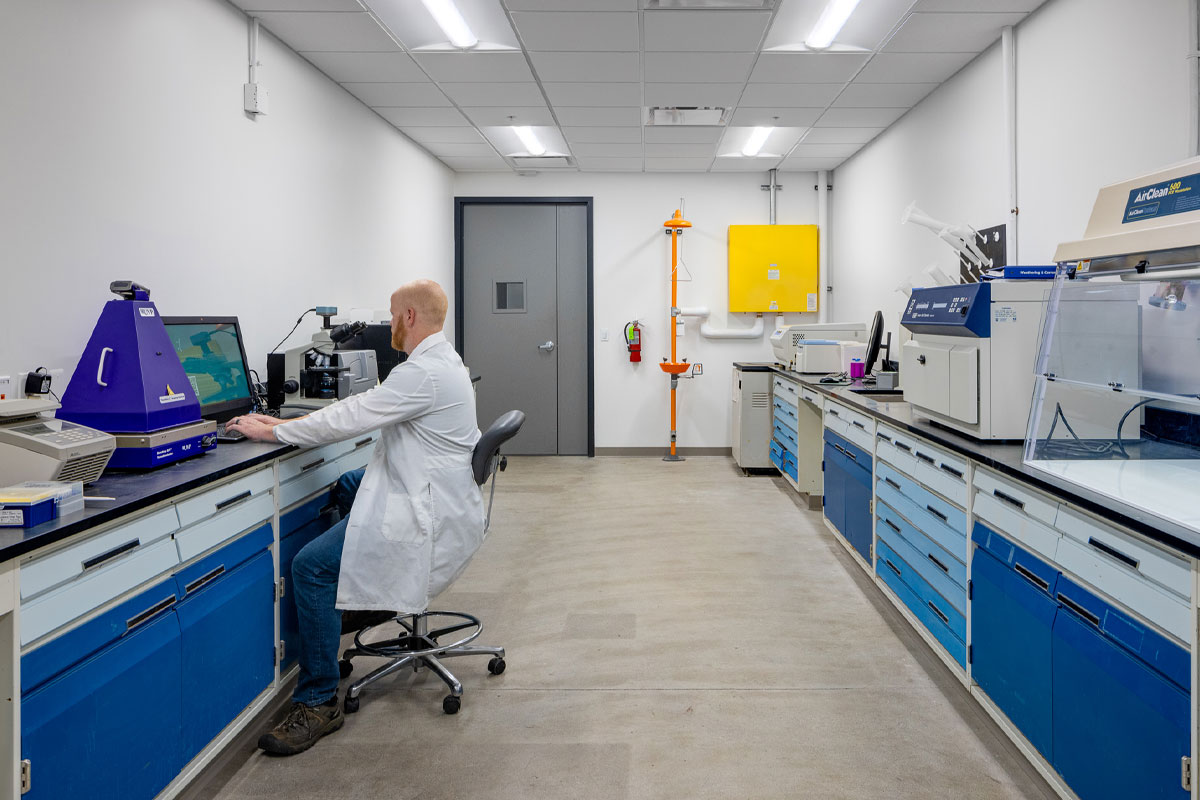
Walk through the VanCamp Incubator’s offering and the language gets satisfyingly physical: fume hoods, an autoclave, a tissue-culture room and a freezer that reaches minus 80 degrees Celsius. The 22,000-square-foot facility supports life-sciences, biotechnology and physical-sciences businesses near MSU. Companies can take private labs or smaller private spaces with access to shared facilities.
Those details explain a part of the foundation’s competitive position that a pitch competition cannot. Access to suitable research infrastructure changes what a small company can attempt. The foundation combines that space with startup services and connections to university and corporate partners, so a lease can sit alongside a much longer working relationship.
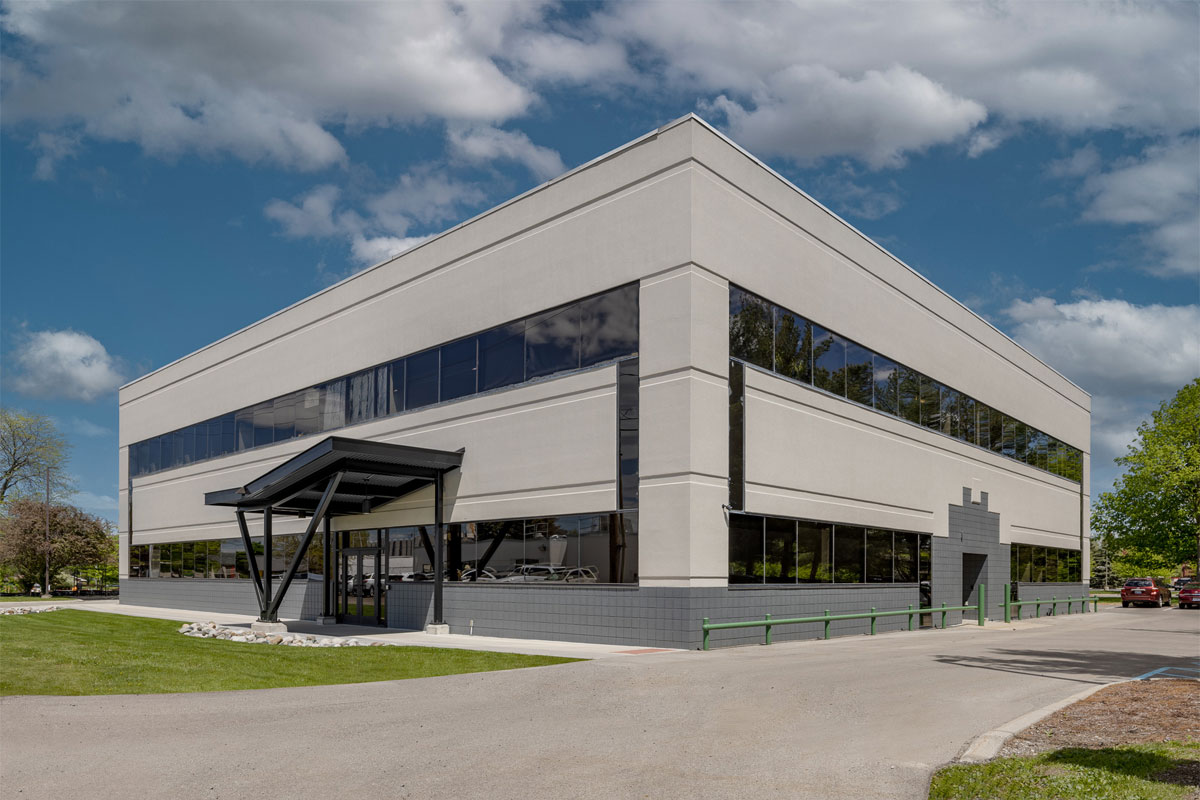
Its fiscal 2024-25 research-parks report counted six facilities, 190,000 square feet, 58 physical and virtual tenant companies, and 90 percent occupancy. Those are period-specific operating figures. Occupancy suggests demand for the space; it does not establish that every tenant has a viable business.
The next physical commitment is the Rosenberg Center. Announced in June 2026, the planned headquarters and multi-tenant hub carries an approximately $20 million investment from foundation resources. The project describes 68,000 square feet and an 8,000-square-foot mass-timber expansion, with a summer 2027 opening planned. Naming the building after Rosenberg makes the connection between old discovery and new infrastructure unusually literal.
07Michigan is part of the product
Red Cedar Ventures supplies early and follow-on capital, while Michigan Rise works with the Michigan Economic Development Corporation to back technology companies across the state. The foundation also lists a Henry Ford + MSU Innovation Fund. These funds sit beside, and often work with, other investors; founders still have to make a credible investment case.
The partner network gives the programs more definition. Henry Ford Health connects healthcare entrepreneurship with clinical expertise. Michigan Virtual supports the EdTech accelerator. MSU Federal Credit Union supports FinTech programming. A sector partner can help a founder ask better questions about a buyer’s workflow, approval process or operating constraints before the company commits to a product direction.
In market terms, the foundation overlaps with seed investors, university venture-development teams, commercial laboratory landlords and accelerators. Its distinctive proposition is the combination, anchored to MSU and Michigan. A founder seeking only office space may need a simpler provider. A business without a technology or growth focus may fit poorly with its venture programs. Access to research, coaching and capital still cannot manufacture customer demand.
The latest PitchMI cycle makes the statewide ambition tangible. On September 2, 2026, the foundation and MEDC announced 20 semifinalists for competitions in Grand Rapids, Kalamazoo, Marquette and Detroit. Four winners will each receive $250,000 and advance to a spring 2027 championship offering another $1 million. All 20 receive two weeks of development support and pitch coaching.
For a reader building a company, the useful starting point is the obstacle immediately ahead: technical validation, customer discovery, a lab, investment readiness or cash to fulfill an order. The foundation has built a different response for each. Its most transferable habit is that attention to the next specific problem. Even a financial legacy born in a laboratory has to earn its usefulness one practical decision at a time.
Follow the work
Explore the foundation’s website, Conquer programs and contact page. Follow its LinkedIn updates, news and stories, and video collection.
▶ Watch: Michigan Rise purchase-order financing ↗