Before Rami Katz helped finance technology companies, he financed a car. Nearly sixteen, he started tutoring, then turned the work into a business with about fifteen tutors. The proceeds bought his first set of wheels. It is a small episode, but a useful place to begin: a young person discovers that knowing something and organizing people who know something are different jobs. He finds an appetite for the second.
Years later, Katz expected a career as a law-firm partner. Instead, he arrived in Rochester in 2001 for an MBA, stayed, and eventually became chief executive of Excell Partners. A course of study became a much longer commitment to a place. The lawyer's imagined career had acquired a considerable detour.
His work now concerns another kind of first purchase: the capital that lets a young company begin. Excell invests in early-stage technology businesses in New York. Katz has spent years examining their plans, working with their management teams and helping assemble the relationships that make financing possible. Behind the job title lies a practical question. How does an idea acquire enough support to become somebody's livelihood?
A lawyer among the inventors
Katz earned a law degree at Tel Aviv University before coming to the University of Rochester. His earlier work included leading a practice in litigation, banking and corporate law in Israel. Debt restructuring was part of the assignment. That background places him on a particular side of the startup table: interested in invention, accustomed to obligations.
He also launched a legal and management consulting practice and became a founding member of a seed investment group. The group launched twelve technology startups, including ventures in advanced materials, internet technologies and consumer electronics. So his eventual investment career had an earlier rehearsal. He had already worked where a young business's financial arrangements and commercial prospects meet.
There is an instructive tension here. A new company asks people to believe in a future that has yet to arrive. Legal and financial work asks what, precisely, everybody has agreed to do. Put the two together and enthusiasm gets some useful company. Somebody must read the plan closely enough to distinguish an attractive possibility from an obligation that cannot be met.
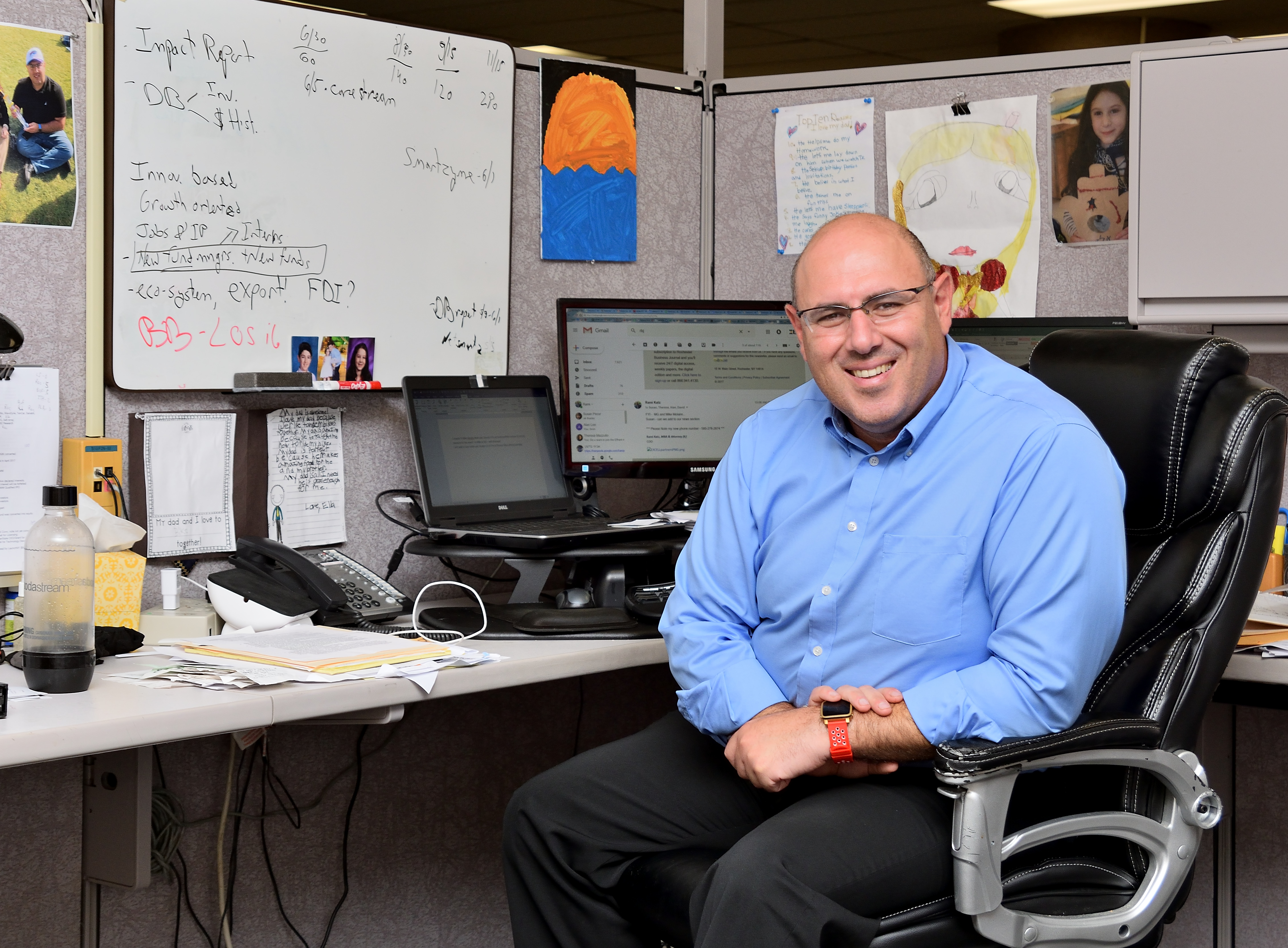
In Rochester, Katz became director of technology commercialization at High Tech Rochester, the organization now known as NextCorps. His job brought him alongside entrepreneurs and researchers assessing whether new technologies had commercial potential. He helped develop more than fifty investor-ready business plans associated with over $40 million in funding from venture investors, angels and grants.
The business plan is easy to dismiss as paperwork. In this setting, it is an attempt to make people with different expertise understand the same undertaking. A researcher, a prospective customer and an investor may admire the same technology for entirely different reasons. Commercialization requires a proposal they can each examine, question and, eventually, act on.
The students have to show their work
Katz's connection to Simon Business School continued after his own MBA. He teaches entrepreneurship and finance and has supervised graduate students working as venture analysts. This gives his career a pleasing circularity. He came to Rochester to learn about business; he stayed to help other people discover what their business education could withstand.
The analyst program puts students close to actual investment decisions. They begin by shadowing senior analysts examining companies that want financing. The educational benefit is obvious, though the setting offers fewer opportunities to hide behind a handsome slide. Findings have to survive questions from people whose decisions carry consequences.
“They must be able to validate their findings.”
Rami Katz, on training venture analysts, 2015
That sentence captures a demanding version of mentorship. The mentor creates access to serious work, then expects the learner to take it seriously. Katz has described graduates moving into venture capital and private equity positions. His role also involves mentoring executives and serving on portfolio-company boards, extending the same educational connection beyond the student years.
The classroom has another extension: Israel. He has taught Simon students about entrepreneurship there and led MBA groups on visits. One independent-study program, led with entrepreneurship professor Dennis Kessler, involved students advising the Israeli startup Lexifone on entering the American market before traveling to Israel. Learning about an entrepreneurial economy became an assignment with a company attached.
A trip can supply impressions. An assignment supplies questions. When students have already worked on a company's market entry, meetings abroad come with something to test. Katz's own movement between Israel and Rochester makes that educational arrangement particularly apt. The distance between the two places becomes part of the lesson.
An introduction can change the arithmetic
Excell's contribution to a company can begin with money and continue with introductions. An example from its portfolio is Owl Autonomous Imaging, a photonics company in Fairport. Excell introduced it to State Farm, which subsequently led a $15 million Series A round. The connection brought a regional technology business into conversation with a prospective investor whose interests matched its work.
That is a firm-level achievement, and it illustrates the environment in which Katz operates. The useful connection is specific. Two names in a contact list become more valuable when someone understands why those people should meet. A local investment organization can do considerable work before the larger check arrives.
Ten deals. Bars use $60 million as the comparison scale. Co-investment is capital from other investors, not a personal return.
The Finger Lakes Fund's 2021 figures give the idea scale: $5.6 million invested across ten deals, with more than $60 million in co-investment. Those are historical figures for the fund, rather than a scorecard for one individual. They show why an investor's work cannot always be measured by the size of its own check.
Katz has also offered free monthly office hours at NextCorps for founders to practice pitches and receive feedback. It is an unceremonious form of assistance: bring the presentation, try explaining the business, discover which parts need work. For a founder accustomed to discussing a technology with other specialists, that rehearsal can expose the distance between understanding the invention and explaining the investment.
Rochester, with a connection back to Israel
The network around Katz extends into community life. He has served on the Jewish Federation's board and as director of education at IHSC Hebrew School. He co-founded Israelis Speak, bringing Israeli and Jewish community members together to discuss connections between Jews in the United States and Israel. He also co-founded ROC Against Antisemitism.
These activities give his Rochester story another dimension. Staying in an adopted city can mean finding a job there. It can also mean accepting responsibilities that have little to do with the job. Education, community discussion and exchange become ways of participating in the place, while retaining a relationship with the country from which he came.
His involvement in the Rochester-Modi'in partnership belongs to that same pattern. The professional and civic parts of his biography both feature people meeting across geography. Their purposes differ, but each requires someone willing to organize the encounter and remain involved after the introduction.
This is a useful counterweight to a biography made entirely of investment figures. Money records one sort of commitment. Teaching and community work record others. Katz's career is easier to understand when those activities share the frame: an investor who also spends time arranging opportunities for students and neighbors to understand people beyond their immediate surroundings.
The next title, and the next generation
In December 2025, Theresa Mazzullo announced that she would hand Excell's chief executive role to Katz in January. She had led the firm's growth from a $2 million early-stage investor to an organization managing more than $80 million in assets. The succession followed more than a decade of their working together.
Katz inherited an organization with a record built by a team. Fifteen portfolio companies had achieved successful exits, with more than $12 million returned to limited partners, according to the figures reported at the transition. An exit is a result for the portfolio and its investors. It also marks the end of one chapter in the work of supporting a young company.
By February 2026, Katz was speaking as CEO about keeping Excell's own operations open to revision. He described a flat organization in which team members can propose changes and take responsibility for them. He was also weighing AI's productivity benefits against the difficulty of validating some of its outputs. The analyst's old obligation to substantiate a finding has acquired a new technological setting.
Asked what he wanted more time for, he named mentoring. Former students, employees and mentees had progressed, and watching their development was rewarding. He also saw learning flowing back toward the mentor, who has to keep up with a changing world. Then came another ambition, rather less likely to require an investment committee.
“In addition, I hope to play much more pickleball.”
Rami Katz, February 2026
It is a welcome detail. A career spent helping people prepare for demanding decisions still leaves room for wanting more time on a court. Katz's biography began with a teenager organizing tutors to buy a car. It now includes a CEO organizing capital, expertise and education around young companies. The scale has changed. The recurring pleasure seems to lie in helping people put what they know to work.