A small business can survive a workshop and still die waiting for an order. Leaders International works in that awkward space between learning how to run a company and finding someone willing to buy from it. In Jordan, its answer has included machinery, business advice and introductions to larger companies. In Tunisia, it has meant helping communities turn local knowledge into experiences visitors might pay for.
The Brussels-based nonprofit calls this economic development. The more useful description is business support with a destination: a supplier relationship, a paying client, a job. Across its programmes, training is one stop on a longer journey. That makes Leaders interesting in a field where attendance figures can too easily become the whole story.
Getting onto the purchasing list
Consider CERA, the Corporate Entrepreneurship Responsibility Alliance. Funded by the Netherlands’ embassy in Jordan, the programme encouraged larger businesses to work with local suppliers. Leaders combined equipment and technical assistance with help on financial models, marketing and access to markets. The ambition was to make smaller firms credible commercial partners.
At the project’s closing event, Leaders reported support for 90 businesses and an alliance of 30 large companies. Dutch ambassador Stella Kloth credited CERA with 600 new jobs and 125 partnerships. These are programme-reported results, rather than a measure of how many jobs would have existed without the intervention.
The closing expo brought about 200 participants together, with 40 small and medium-sized enterprises exhibiting. A memorandum with the Jordan Chamber of Industry sought to extend the relationships. There is a straightforward commercial idea underneath the development vocabulary: help a smaller supplier meet a larger buyer’s requirements, then put the two in the same room. An introduction works better when the product is ready.
The customer has two faces
Leaders dates its establishment to 2004 and describes its mission as expanding economic opportunity in developing economies. Its footprint includes offices in Belgium, Palestine, Jordan and Tunisia. The organisation deliberately combines nonprofit status with the working methods of a consultancy: research, programme design, implementation and measurement.
There are two audiences to satisfy. Governments, development agencies and other partners commission or finance interventions. Entrepreneurs, workers and smaller businesses receive support. A donor needs accountable delivery against an agreed objective; a founder needs assistance that makes a difference on Monday morning. Those needs overlap, but they are not identical.
This puts Leaders between development consulting, enterprise support and vocational training. Depending on the assignment, an alternative might be a local incubator, a specialist consultancy or an organisation running employment programmes. Leaders’ particular proposition is to connect those functions across a project. Its value depends on whether the combination solves a problem that a single training provider could not.
The range of services is practical. Researchers map markets and diagnose constraints. Advisers work on strategy. Trainers address technical and business skills. Firm-level assistance can extend to product development, quality certification and marketing. Monitoring teams track progress against agreed indicators. There is no single software subscription hiding underneath it all: the operating model is a portfolio of development grants and service contracts.
Who gets through the next round?
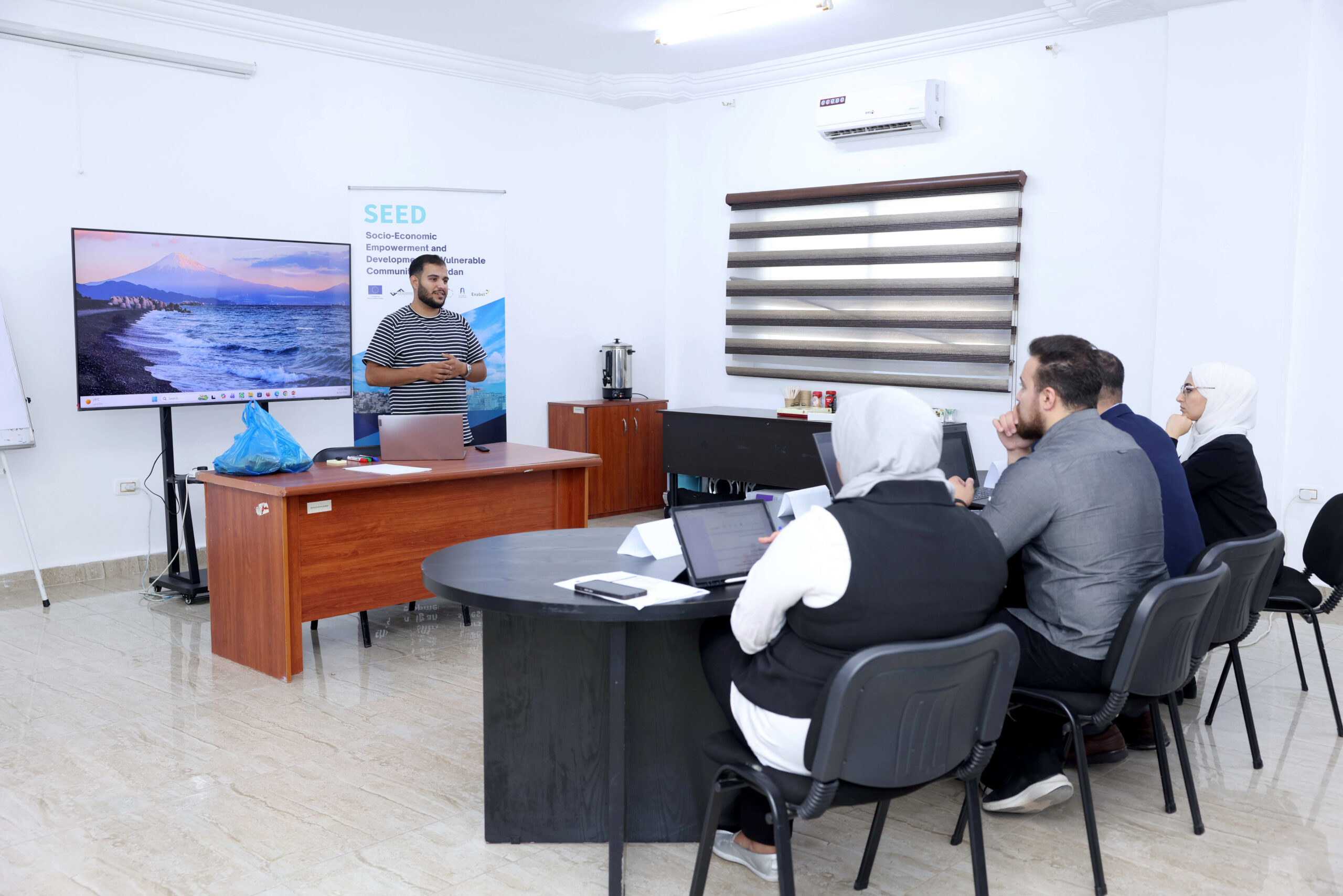
SEED I makes the selection process unusually visible. Part of an EU-funded programme delivered through Belgian development agency Enabel, it supports entrepreneurship among young people, women and Syrian refugees in Jordan. Leaders reports 493 participants across Amman, Mafraq, Irbid and Karak, working with eight community organisations.
After training and mentoring, 152 entrepreneurs presented to evaluation panels. One hundred advanced to further individual support. From that group, 50 businesses are intended to receive a combined package, including assistance in kind. The final package is planned for 35 existing registered businesses and 15 unregistered businesses.
Stages of one programme, not company-wide totals. The final stage is a target.
The panels considered market potential, feasibility, financial sustainability and prospects for growth and employment. Applicants can take a useful lesson from that list: explain who will pay, how delivery will work and what additional support changes. An attractive idea is the beginning of the application, not the whole argument.
A factory changed its mind
The employment work gets more personal. In a July 2026 account, Leaders described Salam Hazaymeh, a woman with hearing and speech impairments who wanted to work in sewing. Through Skills4Work II, she received vocational training and then workplace experience at a factory.
Management initially worried about communication and daily tasks. According to the organisation’s account, seeing her work changed those perceptions. Before her workplace training ended, she was offered a permanent position; she subsequently signed a contract as a sewing machine operator.
“I belong here. This is where I want to work.”
Salam Hazaymeh, quoted by Leaders International
The obstacle came before hiring: an employer’s uncertainty about whether the arrangement would work. Practical exposure gave both sides something more useful than a promise. This is a case for connecting training to workplaces early, while allowing employers to see people’s abilities. It also depends on a workplace willing to participate. A course cannot, by itself, supply that willingness.
Tunisia has more to sell than a room
Tourism gives the same market-access problem a different setting. Through TANIT, implemented with Museum Lab and EU support, Leaders worked with 32 civil society organisations across eight Tunisian governorates during 2024-2026. The emphasis was on experiences rooted in local heritage, landscapes, crafts and food.
As the project approached its conclusion, two August familiarisation trips brought media and content creators to communities in northern and southern Tunisia. The itinerary included places such as Zaghouan, Béja, Djerba and Tataouine. The purpose was to make the experiences visible beyond the people already producing them.
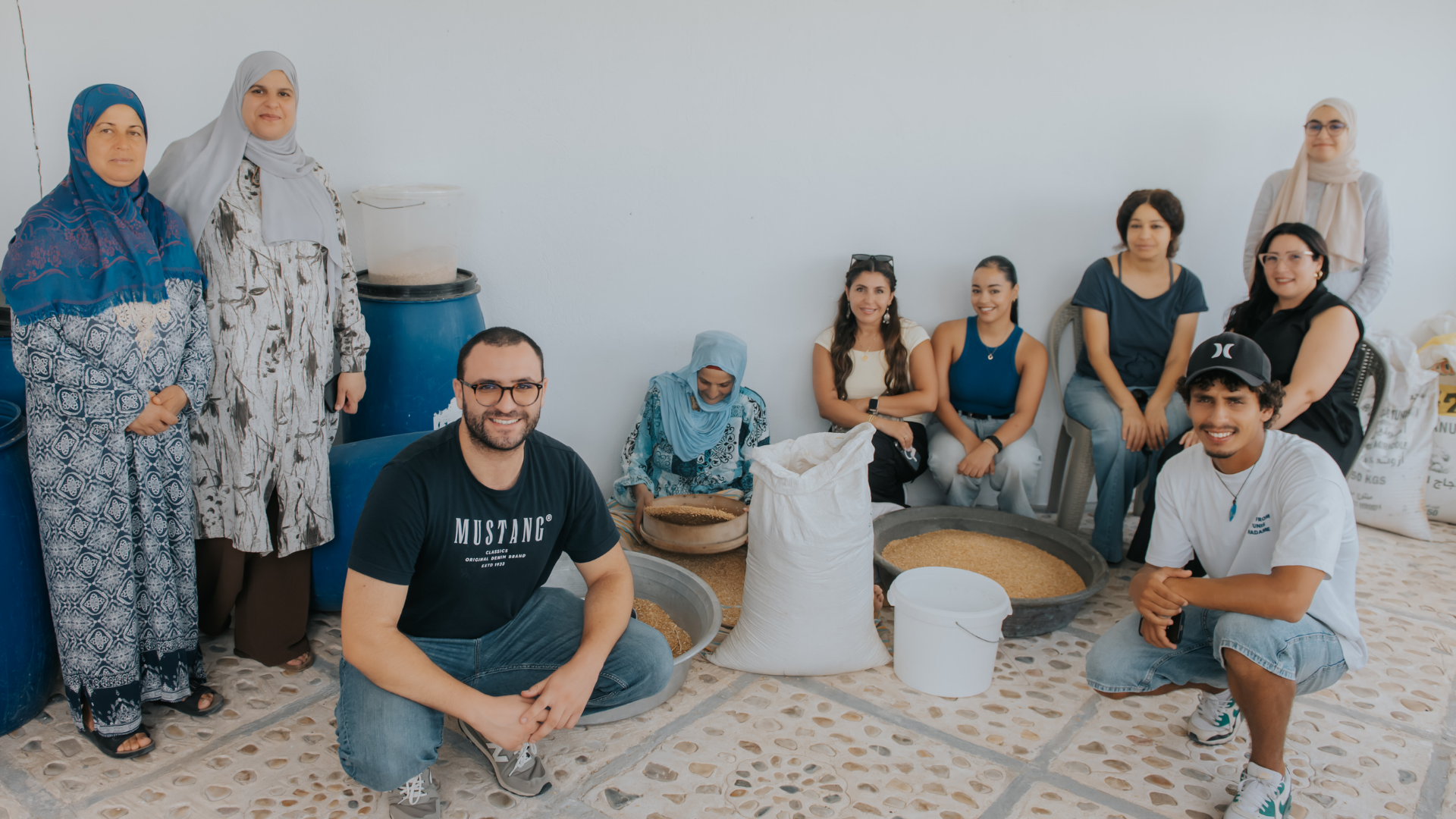
For a community organisation, this is a way to assemble an offer from skills and places it already knows. For tourism businesses, it expands the menu of activities they can connect to visitors. But visibility is only part of the transaction. The commercial test remains whether an experience can be booked, delivered consistently and sold at a price that rewards the people doing the work.
The arithmetic behind the ambition
Economic development costs money before it produces results, and Leaders’ accounts make that tension concrete. Its audited consolidated statements for 2024 report total revenues of €2,751,783 and total costs and expenses of €4,560,875. The recorded annual deficit was €1,809,092.
Project expenses accounted for €3,170,797. The balance sheet showed approximately €2.15 million in cash and bank balances and €1.95 million in net assets at year-end. These figures describe the consolidated group, covering associations in Belgium, Palestine and Jordan. They should not be read as the cost of CERA or any other single programme.
The deficit deserves attention alongside the success stories. It establishes that recognised income did not cover that year’s recorded expenditure. It does not establish why any particular project performed well or badly. For prospective partners, delivery results and the organisation’s financial capacity belong in the same conversation.
A separate example shows how project money works. MATRIX, a Mediterranean circular-textiles initiative, announced a total budget of €1.9 million, with 89 percent financed by the EU. That is the consortium’s budget, not a financing round for Leaders. Its planned work includes a circular fashion design toolbox, training and pilots with 90 smaller businesses. Water, energy, materials and digital methods are the practical subjects.
A business proposal is a technical skill, too
Leaders’ digital work deals with another purchasing desk: the client on a freelancing platform. Its May 2026 discussion of Palestinian freelancing research describes AI use in proposals, professional profiles, client communication and production work. Among reported use cases, roughly 28 percent concerned communication and proposals; about 35 percent concerned task execution.
Those percentages concern use cases among study participants, not the share of all Palestinian freelancers using AI. The distinction matters. What makes the research useful is its attention to the work around the work: explaining an offer in English, answering clients and presenting skills convincingly. Technical competence needs a route to the person buying it.
AI assistance can reduce some of that friction. It cannot guarantee connectivity, access to a platform or a steady stream of customers. The implication for skills programmes is to teach client acquisition alongside production skills, and to test whether learners can actually reach the markets they are being trained to serve.
Start with the order you want to win
Across these projects, the most transferable method is to identify the commercial destination first. A supplier needs a buyer’s specification. A trainee needs an employer with a suitable role. A tourism group needs visitors who can discover and purchase its experience. Working backwards makes the missing assistance easier to name.
Leaders’ stated approach to monitoring includes revisiting targets, identifying gaps and adjusting implementation. Its published values emphasise equal opportunity, accountability and ethical conduct. Those commitments give partners something concrete to ask about: how participants are selected, how support changes during delivery and what happens after the funded activity ends.
For an entrepreneur considering Leaders, the sensible starting point is a programme that fits the business’s location, stage and sector. For a prospective institutional partner, it is an assignment with a clear market problem and measurable outcomes. The useful question is specific: what would make this business ready for its next order?