In September 1939, eleven men and one woman met at El Fenix on Dallas’s McKinney Avenue to organize a Mexican business association. Their agenda included collective buying power. There is something wonderfully concrete about that beginning. Before the strategy decks and graduation photographs came a familiar business question: what could these owners accomplish together that they could not accomplish alone?
- GDHCC connects business education, advising, networking, and advocacy.
- Several programs charge participants no tuition because public and corporate partners fund them.
- Its practical specialty is preparing small firms for larger opportunities, including procurement.
Today, the Greater Dallas Hispanic Chamber of Commerce serves Hispanic-owned and other small businesses across North Texas. Its membership offer includes a directory, gatherings, committees, and opportunities to make connections. But the more interesting work happens before an introduction becomes useful. A potential customer can open a door. An owner still needs the financial records, operating capacity, and confidence to walk through it.
The trouble before the handshake
Consider the problems Dallas identified when it launched its accelerator initiative in 2023: weaknesses in back-office practices, financing and bonding, marketing, networking, estimating, project management, and growth practices. These are unglamorous subjects. They are also the subjects that determine whether a bigger order becomes a profitable job or an expensive lesson.
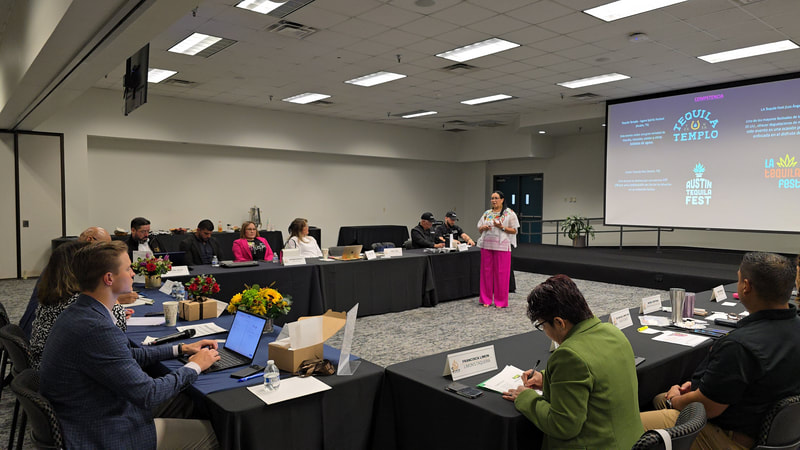
The chamber works at that intersection of preparation and access. Its Small Business Support Program offers a free initial 30-minute technical-assistance appointment, with help available in English and Spanish. Toyota and Texas Instruments sponsor the program. An owner can arrive with a question about starting up, certification, or capital, rather than first committing to a lengthy course.
That entry point matters. An entrepreneur with an unresolved permitting question needs a different kind of help from an established company trying to estimate the cost of expansion. Putting both in the same classroom might be convenient for the organizer. It would be less convenient for the businesses.
Five programs, several starting lines
The Empowered CEO Institute, launched in 2024 according to the chamber’s history, puts five programs under one roof. The useful organizing principle is business stage. Advising offers an entry point. The ESL Entrepreneurship Program covers starting a business in the United States, including permits, regulations, and fundamentals. Despite its name, the Institute describes the course as taught entirely in Spanish.
Dallas College collaborates on that program. Graduates receive a year of free chamber membership, extending the relationship beyond the last class. That is a small but telling design choice: learning how to run a company and finding a community in which to run it become connected activities.
- 01Get unstuckIndividual advising
- 02Start in SpanishESL Entrepreneurship
- 03Plan for growthScaleUp
- 04Prepare to competeDallas Accelerator
- 05Go deeperVenture Forward
Options matched to business needs; participation is subject to each program’s requirements.
For existing businesses, ScaleUp offers ten weeks of training built around Kauffman’s FastTrac Growth Venture curriculum. Participants attend four-hour weekly clinics, receive individual advice, and produce a business plan. The Dallas County-funded program advertises twenty seats per cohort. This is a commitment of working time, even when the tuition bill is zero.
The Dallas Accelerator Program takes an explicitly procurement-minded approach. Its published requirements include a registered Texas for-profit business, verified revenue, and location within its specified Dallas-Fort Worth market. Participants develop a strategic plan and present it to procurement experts, potential buyers, and industry leaders. The final audience gives the homework a useful edge.
Free has a funding line
On May 28, 2025, Dallas City Council authorized an eighteen-month, $603,683 service contract with GDHCC to administer the accelerator. It separately authorized $356,828 for the Dallas Fort Worth Minority Supplier Development Council. Those figures describe authorized public contracts, rather than investment rounds or checks to participating businesses.
The distinction explains the chamber’s business model. Membership and sponsorship sit alongside publicly funded program delivery; some specialist training carries a fee. Venture Forward, its advanced offering, currently lists $150 for members and $250 for nonmembers. Its tracks address subjects including artificial intelligence, construction, and access to capital. Free foundational support and paid advanced learning can coexist.
Read the results with the labels attached
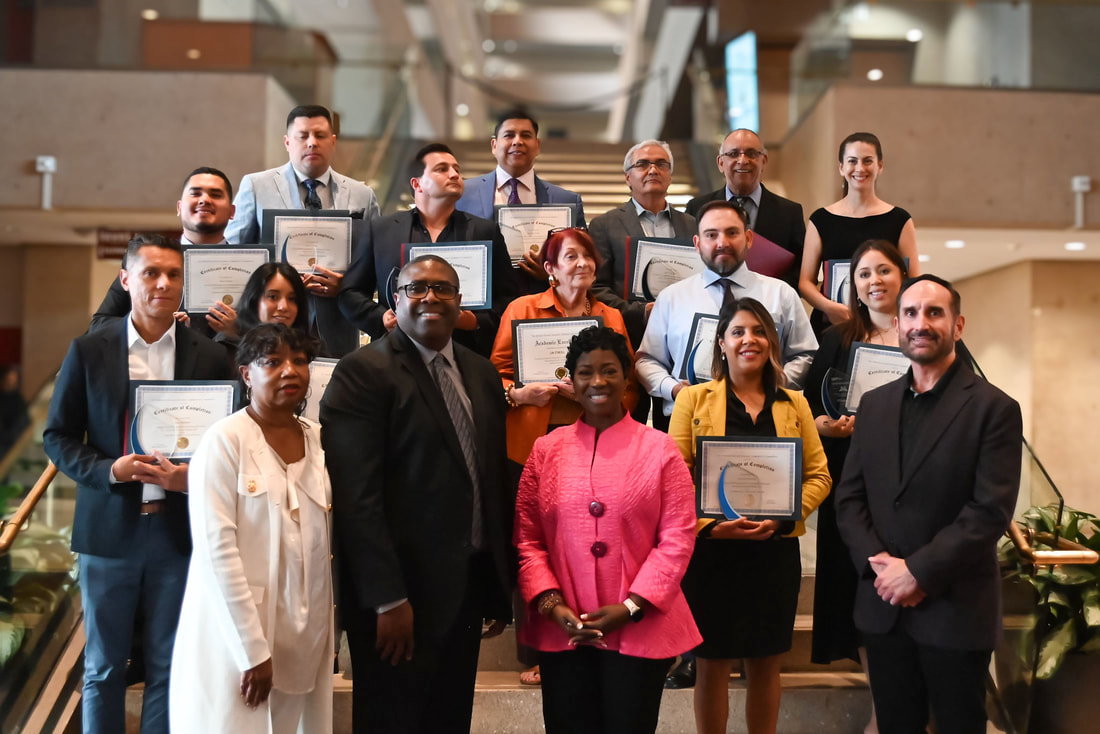
A May 2025 city memorandum reported sixty Dallas-based businesses completing DAP across its original operators, representing more than twenty industries. It said twenty-one percent of graduates reported at least a ten-percent increase in capacity. These are citywide program figures, covering multiple organizations. They do not measure GDHCC alone, and reported capacity growth does not establish what caused it.
Individual accounts offer a closer view. In a chamber-published ScaleUp testimonial, Raices Group owner Araceli Milan describes obtaining a first commercial contract after the program. Her experience illustrates the intended destination. It should be read as one participant’s account, rather than a forecast for the next applicant.
“After completing the program, my business secured its first commercial contract”
Araceli Milan · Raices Group, LLC
Excerpt from a GDHCC-published testimonial
A connection still needs a business behind it
GDHCC occupies a useful place among regional chambers, business advisers, and supplier-development organizations: Hispanic business advocacy combined with bilingual assistance and preparation for commercial opportunity. Its bid page points owners toward buyers including DFW Airport, DART, the City of Dallas, and Dallas College. Its policy work addresses another side of access: the rules under which businesses operate.
The approach has clear conditions. Advanced cohorts require an operating business, readiness, and time. DAP’s current listing specifies English and in-person participation. Membership benefits vary by level. And the chamber explicitly says buyers make their own purchasing decisions. An introduction cannot repair an unsuitable offer or guarantee an award.
For another business organization, the copyable idea is practical: match the help to the owner’s stage, fund the preparation, and connect learning to real customers. For a North Texas owner, the next move can be smaller: book an advising appointment or check the 2027 accelerator interest lists. Bring a specific business problem. The meeting will have somewhere to go.