At a ribbon cutting, the giant scissors are almost beside the point. Everybody knows the ribbon has been pre-cut, or at least weakened. The blades are theatrical. The useful bit is the semicircle around them: the banker beside the restaurateur, the school official beside the insurance agent, the new owner trying to memorize names before the photographs end. The Grand Prairie Chamber of Commerce has been arranging versions of this scene since 1945. Its enduring insight is that local commerce begins with a peculiar conversion - turning a stranger into someone you have seen before.
That conversion is the Chamber's actual business. Officially, it is a member-owned 501(c)(6) organization serving companies, nonprofits and professionals in Grand Prairie, the Texas city planted between Dallas and Fort Worth. It runs a directory, promotes members, watches legislation, convenes civic leaders and offers classes. But those are delivery mechanisms. The product underneath them is recognition.
A directory lists businesses. A chamber gives them reasons to keep bumping into one another.
The calendar is the product
Look at the public calendar and the theory becomes visible. A Business Exchange Breakfast is followed by a ribbon cutting. Then Business After Hours, an Ambassador Breakfast, a workshop and another ribbon cutting. The annual layer adds awards, a golf classic, a women’s leadership event, a holiday expo and a State of the District gathering with the school system. Each format gives a different sort of person an excuse to enter the loop.
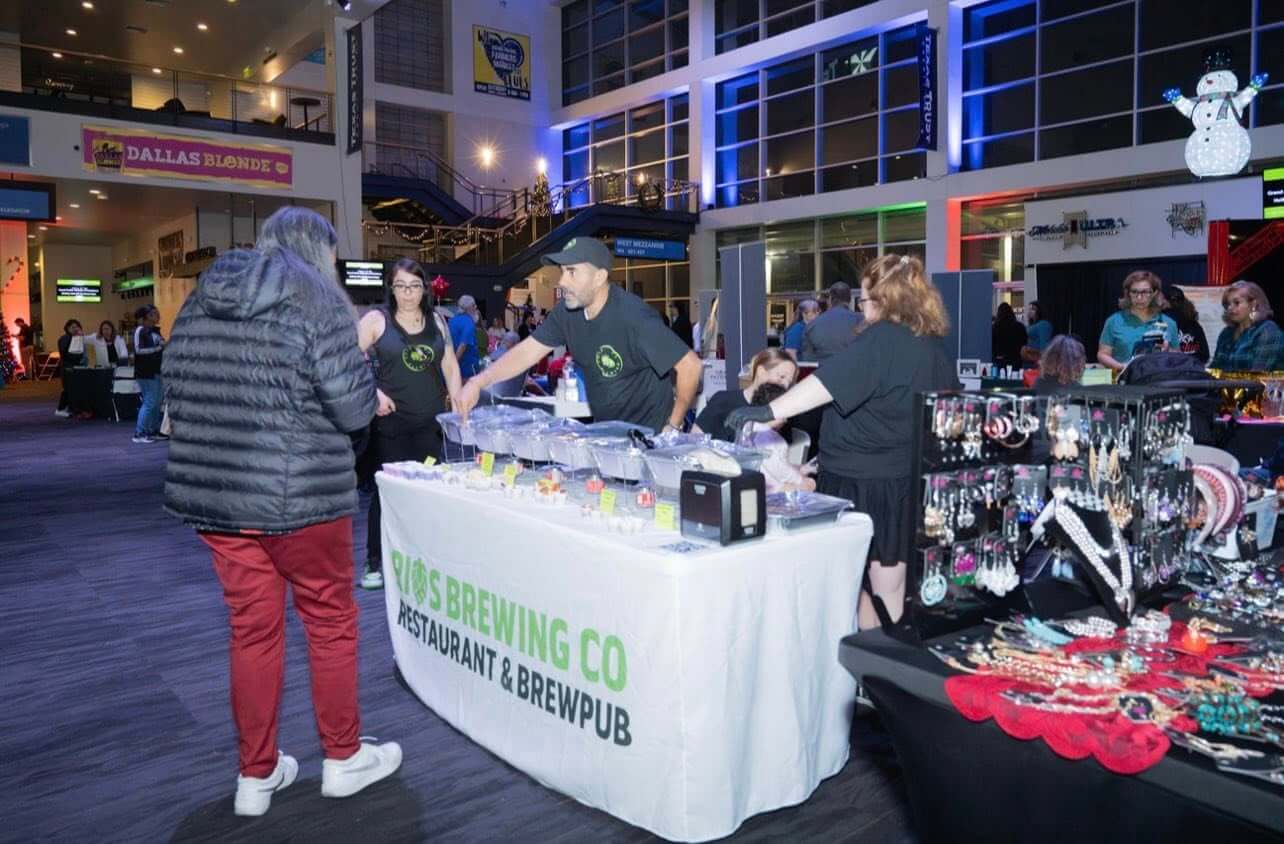
In February 2025, president and CEO Brian Bondy told the Grand Prairie City Council that the Chamber had 654 members. That number matters less as a scoreboard than as a pool of possible collisions. A plumber does not need to meet 653 people. She needs to meet the property manager with three buildings, the lender whose client needs a contractor, and the neighbor who will remember her company six months later. The Chamber increases the odds.
The price of being in the room
The entry price makes the model unusually legible. Current annual options begin at $150 for an individual who is not representing a business and $225 for a nonprofit. A Basic Business membership is $305. Above it sit $585, $875, $1,175 and $1,350 tiers. At $2,500, the Chairman’s Circle adds an ex-officio, non-voting board seat - proximity to governance without pretending that a check buys a vote.
An enhanced directory listing is another $50 a year. It can add richer descriptions, photos, video and an enhanced map pin.
This is not a venture-backed marketplace subsidizing introductions. The operational budget comes from member investment; sponsorships, events and visibility products add to the pot. Public filings for 2024 show $486,341 in revenue, almost all of it classified as program-service revenue. The members finance the machinery they use.
A city taught in 25-person classes
The most telling product is Leadership Grand Prairie. The nine-month course costs $900, caps enrollment at 25, and walks participants through municipal and state government, public safety, education, health care, tourism, business and economic development. In 2026 the program entered its 38th year with almost 700 alumni.
The class is education, but it is also structured proximity. Twenty-five people visit the same institutions, meet the same officials and acquire the same mental map of the city. Nine months later, each participant knows not only how Grand Prairie works but whom to call. That is difficult for an online course to reproduce. Information scales beautifully; shared experience does not.
This helps explain where the Chamber sits in the market. It competes with digital ads for attention, trade groups for expertise, networking clubs for referrals, local media for visibility and the city itself for civic information. Yet it combines pieces of all five. A search ad can find someone already shopping. A chamber can make a business the name that comes to mind before the search begins.
The first failure is silence
The Chamber publishes its own warning label: “The more you engage in events, the more you benefit from your membership.” It is both candid and commercially inconvenient. Pay the dues, ignore the calendar, leave the directory thin and decline introductions - and the first thing to fail is participation. The member has purchased access to a network without supplying the repeated contact that makes a network useful.
That dependence is the model’s limit. It works best where businesses share a real geography, owners can spare time to attend, and civic institutions are willing to collaborate. It works less well for a remote company with no local customer base, a founder seeking instant measurable leads, or anyone treating attendance as unpaid ceremony. A handshake has no click-through rate. Its return may arrive months later, wearing somebody else’s name tag.
The Chamber’s language has shifted with that reality. One piece of its site still uses the older mission to “promote, strengthen and expand” the business community. Its fuller current formulation is to “support, strengthen and empower” Grand Prairie businesses. Promotion is something an organization does to a member. Empowerment requires the member to do something back.
What another community can copy
- Build a rhythm, not a stunt. Recurring breakfasts and introductions create memory more reliably than one oversized gala.
- Give the network small jobs. Hosting, welcoming, teaching and sponsoring let members demonstrate usefulness in public.
- Connect media to meetings. A directory entry works harder when the person behind it has just appeared at an event.
- Teach the place itself. Leadership programs turn civic knowledge into durable relationships.
- Say the quiet condition aloud. The benefit rises with engagement; dues alone cannot manufacture trust.
The useful middle
Brian Bondy arrived in September 2024 after more than three decades around chambers in Texas and Missouri - first as a volunteer and board member, later from the other side of the desk. That biography suits the institution. A chamber president occupies the useful middle: between member and city, small shop and large employer, promotion and policy, the person with a question and the person who knows whom to call.
Grand Prairie’s Chamber is not unusual because it invented networking. It is interesting because it treats networking as civic infrastructure. The breakfast, the directory, the class and the giant scissors are not separate products. They are stations on the same route from unknown to known. Eight decades in, the machinery remains stubbornly human. That may be why it still works.