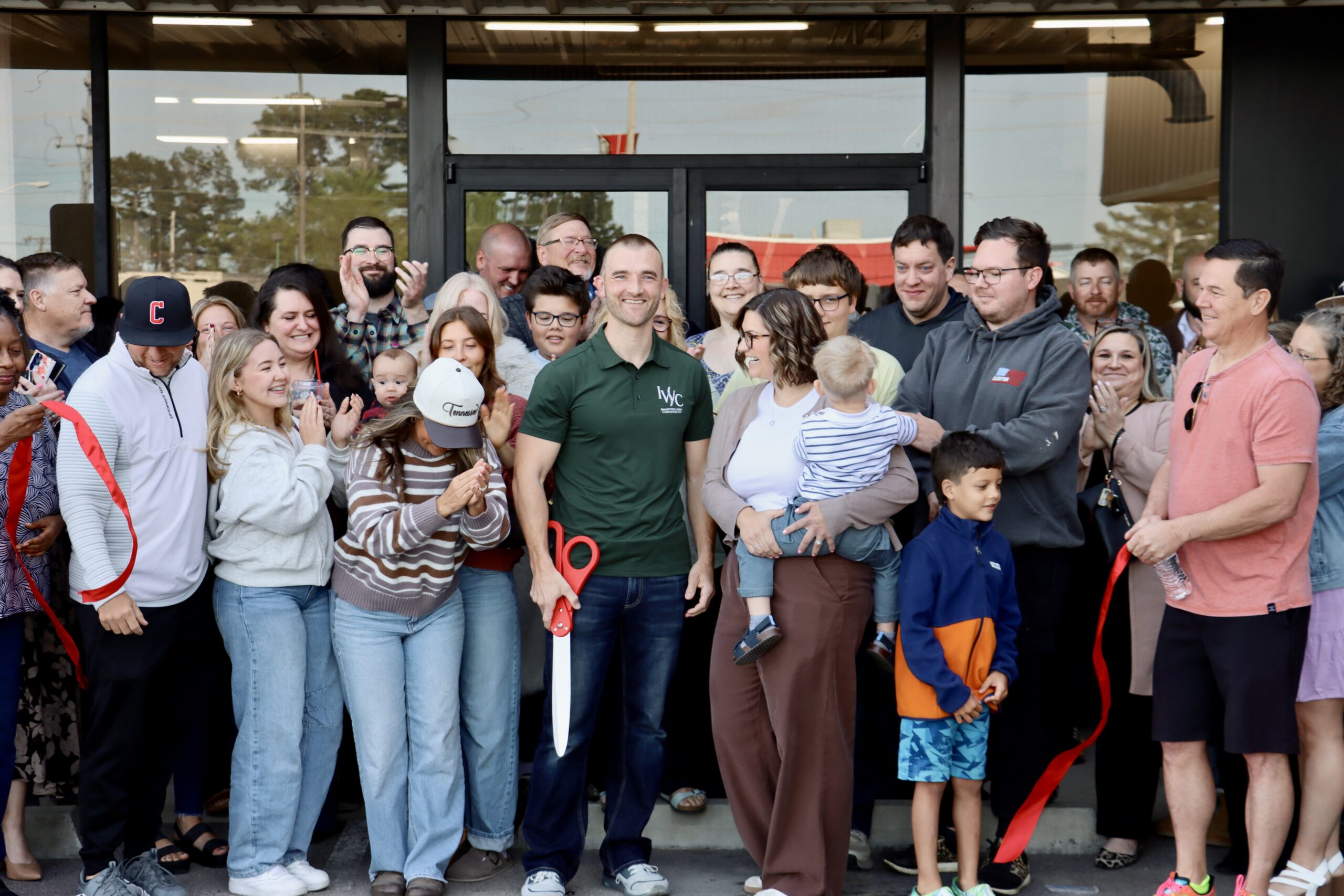
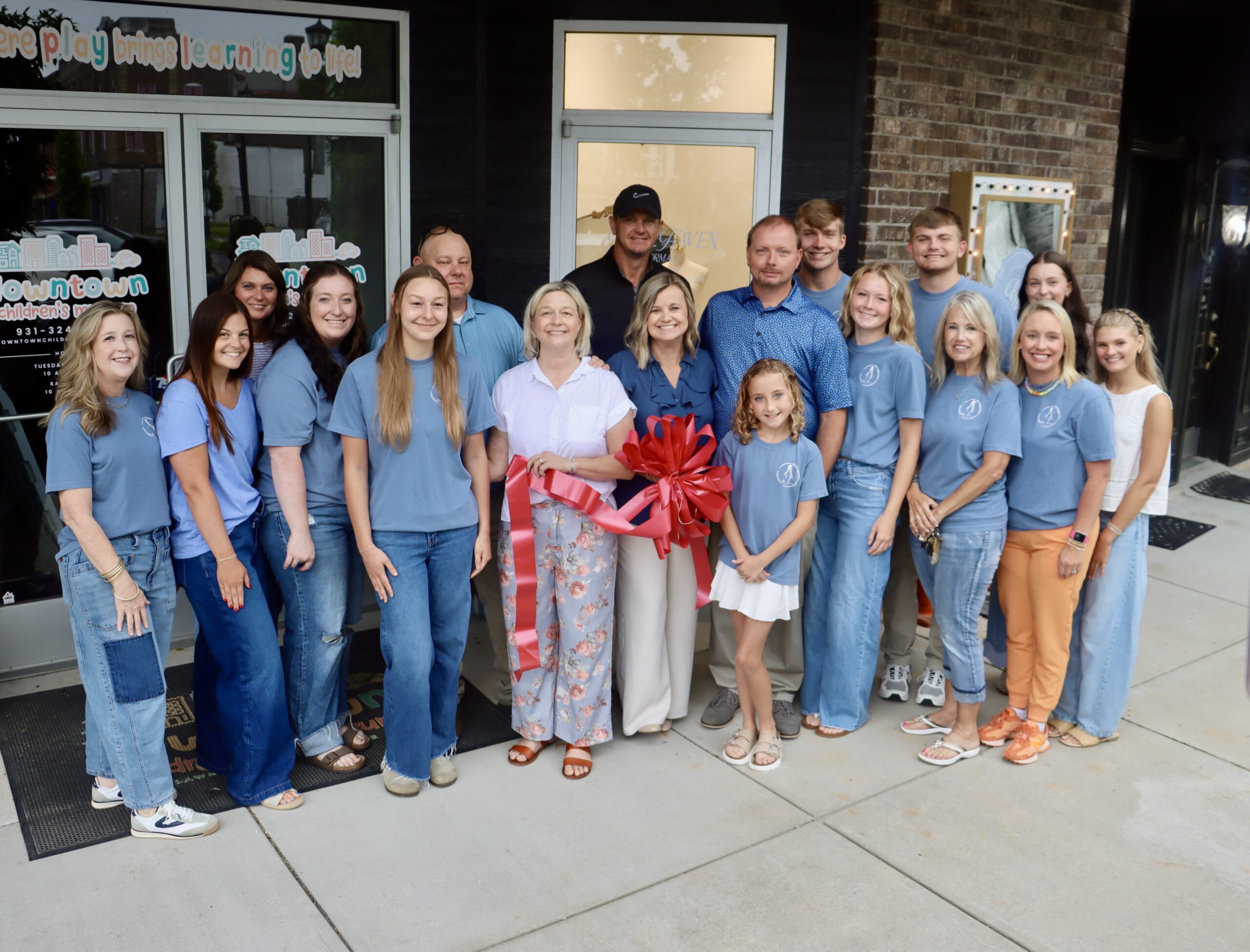
On a good day in Lawrence County, somebody is holding a pair of oversized scissors. A family has opened a clinic or a coffee shop, the red ribbon is taut, and a crowd has arranged itself into the familiar geometry of local optimism. The photograph looks ceremonial. Look closer. The crowd is the machinery.
A lender is beside a manufacturer. A city official is talking to a retailer. The person who knows about a training grant is three handshakes from the employer who needs welders. In a place of roughly county scale, those short distances matter. The Lawrence County Chamber of Commerce has spent decades turning them into a working method.
The Chamber, based on the public square in Lawrenceburg, is a 501(c)(6) business league with more than 450 members reported in 2024. Its customers include the usual chamber constituency - shops, manufacturers, nonprofits, utilities, governments and individual members - but also industrial prospects, working adults, students, tourists and residents. It sells memberships. What it really provides is organized proximity.
Those figures come from the professional biography of President and CEO Ryan Egly, who joined the Chamber as a project manager in 2015 and took the top job in 2019. They are not the Chamber's alone, and that is exactly the point. Economic development is a team sport in which everyone wants the trophy photo. The Chamber's expertise lies in assembling the team: local leadership, land, utilities, colleges, state programs and employers.
The product is a shorter distance between people
Consider what a relocating company actually needs. A glossy pitch is not enough. It needs to know which buildings are available, whether the road can carry trucks, how much power and water can be delivered, who approves what, where incentives fit, and whether workers can be trained. Lawrence County's Chamber presents itself as the conduit through that thicket. Its economic-development pages sit beside a sites-and-buildings inventory, a demographic dashboard, a job board and named staff contacts. The promise is not magic. It is fewer dead ends.
The membership side works the same way at smaller scale. Basic membership starts at $250, with published levels rising through $500, $1,000, $2,500 and $5,000 to a $10,000 Visionary tier. The menu includes directory visibility, referrals, communications, job posts, small-business counseling, advocacy, events, marketing and meeting space. This is a pooled-services model: a small firm buys into machinery it would be foolish to construct by itself.
The 2023 Form 990 makes the mechanism visible. The organization reported $781,074 in revenue. Contributions made up 63 percent, while program services supplied nearly 23 percent. This is neither a venture-backed company nor a government department. It is a member-supported civic utility with fee-generating programs, events, sponsorships and grants.
“Communities that win in today's economy do two things well: they grow their own talent, and they keep that talent learning.”
A county becomes the classroom
Leadership Lawrence is the cleanest expression of the Chamber's theory. The nine-month cohort does not teach leadership as a set of conference-room abstractions. It moves through social services, health, agriculture, tourism, infrastructure, economic development, government, public safety, education and workforce issues. Participants learn the county by meeting the people who run its systems. Tuition for the 2026-2027 adult program is $750 for Chamber members and $1,250 for non-members; youth tuition is $250.
The sequence matters. A future board member cannot solve a workforce shortage without understanding education. A manufacturer cannot discuss a site without understanding infrastructure. A civic leader cannot talk about tourism as decoration when visitor spending supports restaurants, lodging and retail. Leadership Lawrence turns these overlaps into a curriculum.
A newer partnership with the University of Tennessee Southern moves from curriculum to credentials. In early 2026, the Chamber convened university leaders and local manufacturers for industry tours and a stakeholder lunch. Employers can establish agreements through which workers receive a 25 percent tuition discount and a first class free. The Chamber's job is neither to teach the course nor run the factory. It makes sure the people designing one have walked through the other.
The county keeps score in public
Cheerleading is easy. A more revealing document is a September 2025 county committee report that records what went wrong. A modular-wall manufacturer chose Fayetteville because its site had better road access. A lettuce company and its 300 jobs went to Manchester because the available site was larger. These are not branding failures. They are physical constraints.
The same report captures a change of mind. Local leaders had been wary of data centers because of heavy electricity and water demands. Newer prospects arrived with lighter utility requirements and, according to the report, without requests for tax breaks. Four were then looking at Lawrence County. The important detail is not whether any one project lands. It is that the county updated its position when the operating facts changed.
That flexibility has limits. This model depends on trust among institutions, people willing to convene, credible public partners, useful sites and enough private participation to support the shared platform. It will not make an undersized parcel larger. It cannot substitute a networking breakfast for road capacity. In a fragmented region where business, government and education will not share information, the flywheel would stall.
Tourism is the other side of recruitment
In 2022 the Chamber launched Visit Lawrenceburg with Aha! Creative. The brand organizes the county around music, history, outdoor adventure, family experiences and Amish Country, then routes visitors toward dining, retail and lodging. State and regional partners extend the reach. A custom-itinerary tool turns promotion into a plan someone can actually use.
This may look far removed from industrial recruitment. It is not. A place competing for employers is also competing for workers, families and attention. Tourism gives the county a way to rehearse its answer to a basic question: why here? The same story can help fill a hotel tonight and make a prospective employee imagine staying for years.
The Chamber also runs the rituals that make the place legible to itself: Farm to Table, Women at Work, State of the County, a manufacturing breakfast, a golf tournament, Shop Local, an annual meeting and a Christmas parade now in its eighth decade. Through a U.S. Chamber Foundation partnership, it hosts a National Civics Bee. The 2024 local contest drew more than 150 student essays on problems such as voter turnout, litter, homelessness and teen vaping. Sixteen students reached the finals. The workforce pipeline, in this telling, starts with young people believing local problems are theirs to solve.
The Chamber's 2025 observance of its 75th anniversary points back to a mid-century founding.
Ryan Egly becomes president and CEO after four years in economic development work.
Tourism gains a dedicated brand, website and regional distribution network.
Lawrence County becomes one of five Tennessee communities piloting the National Civics Bee.
UT Southern leaders tour local employers as training and tuition partnerships take shape.
A practical trick worth stealing
Other communities can copy the architecture, even if they cannot copy the relationships. Put the directory, job board, property inventory and demographic data close together. Give employers one recognizable door to knock on. Build a leadership program around actual local systems. Treat tourism and talent attraction as related. Publish prices. Record losses honestly. Revisit assumptions when the facts change.
The Chamber's vision is only nine words: “A beautiful place to live. A beautiful place to do business.” The line works because the two sentences are allowed to depend on each other. A business climate without a civic life struggles to retain people. A civic life without viable employers struggles to finance itself. On Lawrenceburg's public square, the Chamber's broad portfolio resolves into one coherent job - keep shortening the distance between the people who can make both sentences true.