A leadership conference can put a woman behind a microphone. A plumbing qualification can put her on a building site. Timeless Women of Wonder Foundation has worked on both propositions, an unusual combination that says more about its ambitions than the sweeping language of empowerment ever could. Its subject is participation: who gets trained, who meets the decision-makers, and who can turn an introduction into an opportunity.
The Nairobi organization, usually shortened to TWOW, brings together women, young people, entrepreneurs and institutional leaders. Conferences provide the gathering place; mentorship, skills programs and business networks supply the follow-through. That makes it an interesting inhabitant of the space between professional education, social advocacy and enterprise development. The central question is refreshingly practical: what can someone do after joining that she could not do before?
Start with the building site
Unveiling Her Star gives that question a physical setting. TWOW’s account describes recruiting women in Kibra, Nairobi, for training in construction disciplines including masonry, painting, tiling, roofing and plumbing. It reports 320 graduates in 2015 and 500 in 2016, with theoretical and practical instruction and accreditation involving the National Construction Authority.
The partner list includes Savannah Cement, Dura Coat, Crown Paint, Rex Roofing and Christian Aid. Those names matter because the program needs people who understand materials, standards and the work itself. A credible route into construction requires more than a general invitation to become an entrepreneur.
A UN Women exhibitor catalogue also describes the initiative, reporting links between trainees and Kenya’s National Youth Service while setting out plans for other participants to connect with private-sector employers. The mechanism is the useful part: teach a marketable skill, establish that someone can perform it, then connect that person with an institution that can use it. Each step gives the preceding one a purpose.
Unveiling Her Star • Historical figures reported by TWOW
For anyone designing a similar initiative, the lesson is to start with the destination. A course becomes more convincing when a potential employer, accreditor or industry partner has a place in its design. The building site supplies a useful discipline: eventually, someone has to be able to do the job.
The founder’s first obstacle was belief
Founder Nyakan June, identified in earlier coverage as Nyakan Munyeki, described a difficult personal beginning in a 2020 interview. A life-threatening pregnancy experience changed her priorities. She left a well-paid career with an ambition to contribute to Africa’s development, before the execution plan was fully clear.
Her account is candid about the early friction: relatives and prospective partners struggled to understand the vision, and raising resources proved difficult. Existing professional connections did not automatically solve the problem. The sacrifice included income and time with family. She dated the idea to 2010 and the first conference to 2015.
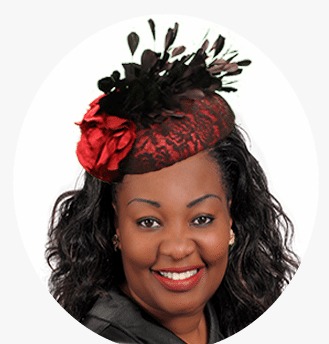
That history gives the foundation’s emphasis on relationships some texture. The founder had experienced the difference between possessing a professional network and persuading it to back an unfamiliar project. For readers, the transferable point is narrow but valuable: a compelling purpose still needs an explanation that a partner can act on.
A room with several kinds of power
The Timeless Women’s Conference creates a meeting place for people who often work in separate circles. Potentash’s account of the 2018 edition describes three days of discussion under the theme of Africa’s enterprise reformation. Investment, international expansion, business connections and women’s participation in enterprise featured in the conversations.
The format mixed invited speakers with active audience participation. That is a meaningful choice for a network whose participants include business owners and policymakers. One group may be trying to navigate an institution; another may be able to change how that institution works. Putting them in conversation creates the possibility of a useful exchange, though an introduction still leaves work to do.
The 2018 outcome report also records a closing gala with figures from politics, business and entertainment. Recognition has its own place in TWOW’s model. The framework gives celebration a named pillar, alongside leadership, enterprise, communities and media. There is room here for both a technical conversation and an evening that makes people feel seen.
“Inspired women for a prosperous Africa”
TWOW’s published vision
Another pillar is Timeless Bridges, explicitly involving men. That detail helps explain the breadth of the invitation. TWOW’s approach asks different participants to take responsibility for inclusion, including people already inside the institutions and industries women want to enter.
Mentorship with a calendar and a bill
Leadership development supplies a more sustained form of engagement. The 2021 Timeless Inspired Leadership and Enterprise program brief outlined an eight-month course for senior and executive leaders, including women and men. It combined training with mentorship and a personal plan for applying what participants learned.
The advertised full fee was $3,000 plus VAT, with a $2,000 plus VAT option for payment at registration. These are historical prices for that edition. They position the course as a substantial professional-development purchase. A prospective participant needs to weigh the commitment against a specific responsibility or goal, especially if attendance requires time away from work.
Advertised full-program fee, before payment discounts.
That creates different audiences within the same organization. An executive looking for experienced guidance, a business owner seeking contacts and a woman pursuing a trade qualification arrive with different needs. The useful question is which program serves the task in front of them. A broad mission can hold those activities together; participants still need a precise reason to enroll.
The unglamorous problem at checkout
One of the most revealing operational details lives in a software support forum. In November 2019, an account named TWOWAfrica asked Jotform about integrating PesaPal for an international conference planned in Rwanda. The request specifically concerned registrations that allowed mobile-money payments. Jotform’s response said the integration was unavailable and offered to submit a feature request.
It is a small exchange with a large implication for event design. An organizer can invite people across borders and still encounter a payment tool that does not accommodate the intended transaction. Here, the publicly documented obstacle was the connection between registration and payment.
The practical lesson is easy to copy: test the whole journey with the payment method participants will actually use. Completing a form and completing a purchase are separate achievements. A successful test needs both, plus a confirmation that reaches the person who paid. Operational details deserve a place on the agenda long before opening remarks.
Memberships, partners and the cost of access
TWOW’s membership offering extends the relationship beyond a single course or event. Its published terms describe annual membership and benefits that vary by membership type and country. The registration form includes options for women, youth, men and organizations. This is a network with several entry points.
Alongside membership payments, the wider operation advertises sponsorship opportunities. A Ford Foundation filing records a $6,000 grant in 2021 supporting attendance at the Timeless Women Leadership Program in East Africa. The business model therefore includes paid access and external support for particular activities. The distinction matters for understanding who pays and who participates.
Partners also contribute expertise and infrastructure. The Radical Leap Group says it designed an online platform in 2020 to connect international investors with African investment opportunities for TWOW. Close the Gap’s 2016 activity report records equipment support. These are concrete examples of organizations supplying capabilities that a convening network can put to use.
Build a relevant skill.
Meet someone who can use it.
Carry the work beyond the event.
From Nairobi’s network to Accra’s agenda
The regional structure is visible in TWOW’s country-representative directory, which lists representatives for East Africa, Ghana, South Africa, Zambia, Rwanda, Malawi and Botswana. A distributed network can make introductions more locally relevant. Its usefulness depends on what those contacts know and whom they can reach.
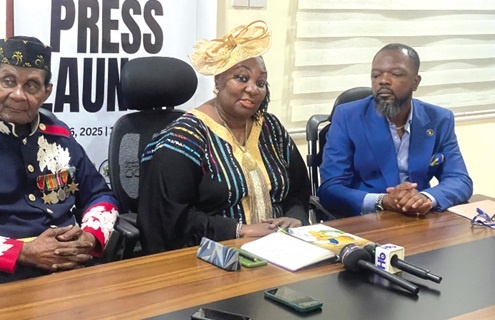
In April 2025, Ghana’s Graphic Online covered the announcement of a TWOW-organized Accelerate Africa’s Growth Conference in Accra. The agenda linked women, youth and small businesses with broader economic development. A photograph of June at the press launch captures the public-facing work of convening: the microphones, the briefing table and the people expected to carry the message outward.
By May 2026, News Ghana reported an Accelerate Africa’s Growth Connect gathering at the University of Ghana. Its coverage described an agenda spanning policy, workforce development, jobs and trade, with June calling for greater diaspora involvement. The organization’s conference work had carried its inclusion argument into a wider discussion about production and industrial development.
What to take home besides a badge
TWOW sits at the intersection of several markets: executive education, vocational preparation, professional networking and business-development events. A reader considering it should begin with the desired result. Leadership guidance calls for relevant mentors. Market access calls for useful counterparties. A new occupation calls for credible instruction and a route into employment.
Its 2020 impact report claimed more than 10,000 conference delegates, 200 women mentored and over 24,500 women trained in construction. Those are historical figures reported by the organization. They describe reach across different activities; attendance, training and earnings answer different questions.
The model makes most sense when participants have something specific to learn or offer and partners can help them apply it. It becomes less useful when the immediate need is outside a program’s scope, or when time, travel and fees make participation impractical. The part worth copying is the connection between skill, relationship and opportunity. That connection is where the invitation earns its keep.