In 2001, Aliya Willis became a credit underwriter intern at Bank of America. She was a college student; the bank was a possible future. INROADS had helped arrange the introduction. Twenty-five years later, the organization published her story: a finance degree, further study, professional licenses, and a banking career that had carried her into a senior vice president role. The interesting part begins before any of those credentials. Someone had made the first encounter possible.
- INROADS combines paid internships with preparation and ongoing coaching.
- Students gain employer access; companies meet candidates who have practiced for the opportunity.
- Its reach starts in high school and continues through an alumni network exceeding 40,000.
It is tempting to tell this as a story about spotting exceptional people. But that leaves out the machinery. Willis described interviewing with several Fortune 500 companies and choosing among offers. Choice was part of the achievement. The program had helped turn an unfamiliar professional world into a set of options she could evaluate.
01 / THE ORIGINAL INSIGHTTwenty-five students. Seventeen companies.
INROADS began in Chicago in 1970, founded by Frank C. Carr. Its first cohort comprised 25 students and 17 sponsoring companies. Historical accounts describe Carr hearing Martin Luther King Jr. at the 1963 March on Washington and connecting that experience with the absence of people of color from influential corporate positions. The response he eventually built was practical: connect young people with business experience and prepare them to lead.
There is a useful proportion in those starting numbers. Seventeen companies for 25 students suggests an undertaking built around employer relationships from the beginning. An internship program needs actual workplaces, actual managers, and actual assignments. A room full of motivated students cannot supply those things on its own.
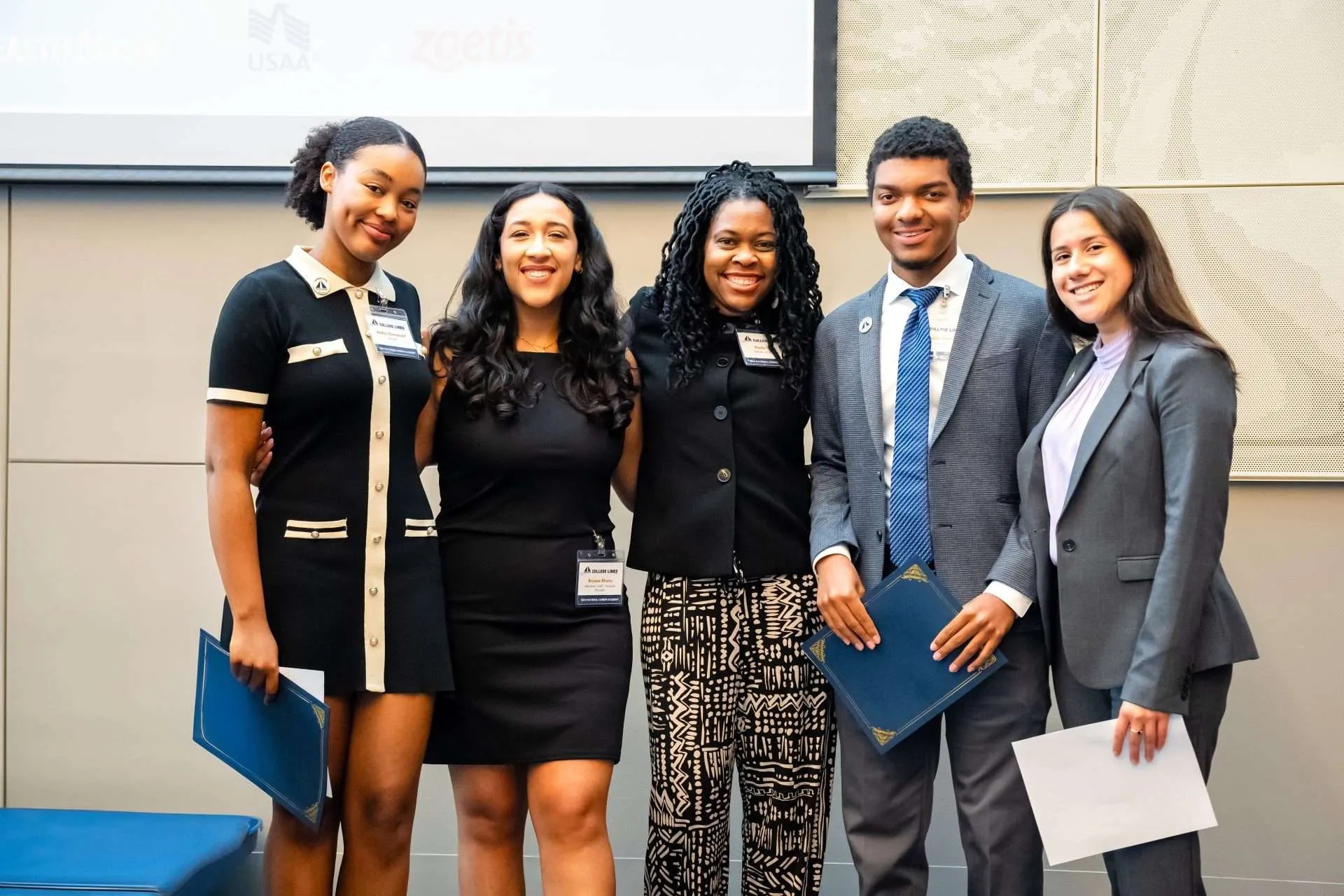
02 / BEFORE THE OFFERThe interview has a rehearsal
Today, the college internship program pairs career preparation with access to paid roles. Students submit academic records and a formatted resume, complete interview preparation, and progress toward employer interviews. The published process includes six weeks of cohort training. Coaching continues through the year; participation in a national conference adds another shared professional experience.
These details can sound fussy until you consider what they accomplish. A resume format makes a candidate’s experience easier to assess. Rehearsal gives an unfamiliar conversation a recognizable shape. An advisor provides somewhere to take a question that feels too small, or too embarrassing, to ask a prospective manager. Together, these interventions make professional expectations more explicit.
- 01Prepare
Resume + practice - 02Interview
Employer connection - 03Work
Paid experience
A student can use INROADS to explore a field, build workplace confidence, and pursue experience before graduation. Employers get an additional route to prepared early-career candidates. The organization says it works with more than 200 employer partners. Its proposition spans both sides of recruitment: helping students approach a workplace and helping workplaces meet students.
“INROADS gave me the structure and guidance I needed.”
Aliya Willis / alumni profile, April 2026
03 / STARTING EARLIERCollege Links starts before college
The college program is only part of the design. College Links introduces high school students to college planning and careers in STEAM and business. Its published schedule generally involves monthly Saturday sessions, October through May, lasting two to four hours. Students outside cities with in-person sessions can participate virtually.
That timing matters. Waiting until a student needs an internship leaves less room for exploration. Earlier exposure allows someone to discover an interest, ask basic questions, and meet peers with similar ambitions. College Links asks for a transcript and recommendation, and publishes a minimum GPA of 2.5. The commitment is sustained participation across a school year.
There are specialized routes, too. The HBCU Sustainable Communities Initiative connects scholarships, experiential learning, and internship opportunities in STEM and sustainability. A healthcare initiative involves Propel Center and the Black Directors Health Equity Agenda. Pronghorn’s partnership introduces eligible students to the spirits industry. Career access here reaches into specific industries with specific entry requirements.
04 / THE ECONOMICS OF ACCESSGood introductions need a budget
INROADS operates as a nonprofit, supported by contributions, grants, and program service revenue. Its return for the fiscal year ending August 2023 reported $11.08 million in total revenue against $13.33 million in expenses. That year produced a $2.26 million deficit. Those are historical figures, but they make the operating challenge concrete: staff time, training, and relationship maintenance require dependable money.
At its May 2025 gala, INROADS recognized a $1 million pledge from Thasunda Brown Duckett and her family. The event also marked a leadership transition: Ron Houston was announced as president and CEO following Forest T. Harper Jr. Alumni, philanthropy, and corporate relationships remain part of the infrastructure that sustains the work.
05 / THE USEFUL LESSONMake the rules easier to learn
INROADS belongs alongside career-access organizations such as Management Leadership for Tomorrow, whose Career Prep also combines coaching and employer connections. INROADS’s particular combination includes high school preparation, college internships, and an alumni community built across decades. A university career center or direct application is another route; the value here is the connected sequence of support.
The practical boundaries deserve attention. An application does not guarantee a placement. Employers make hiring decisions. INROADS does not pay relocation or transportation, and says most corporate partners offer no relocation assistance. A paid role far from affordable housing can still be difficult to accept. Preparation cannot manufacture an opening or erase a moving bill.
The lesson an employer, educator, or mentor can copy is concrete: explain expectations before assessment, let people practice, make introductions, and keep advising after the start date. Willis’s career is one person’s experience, rather than a promise to every applicant. It does show why the first opportunity deserves careful design. What begins as a summer assignment can give someone a professional world to grow into.