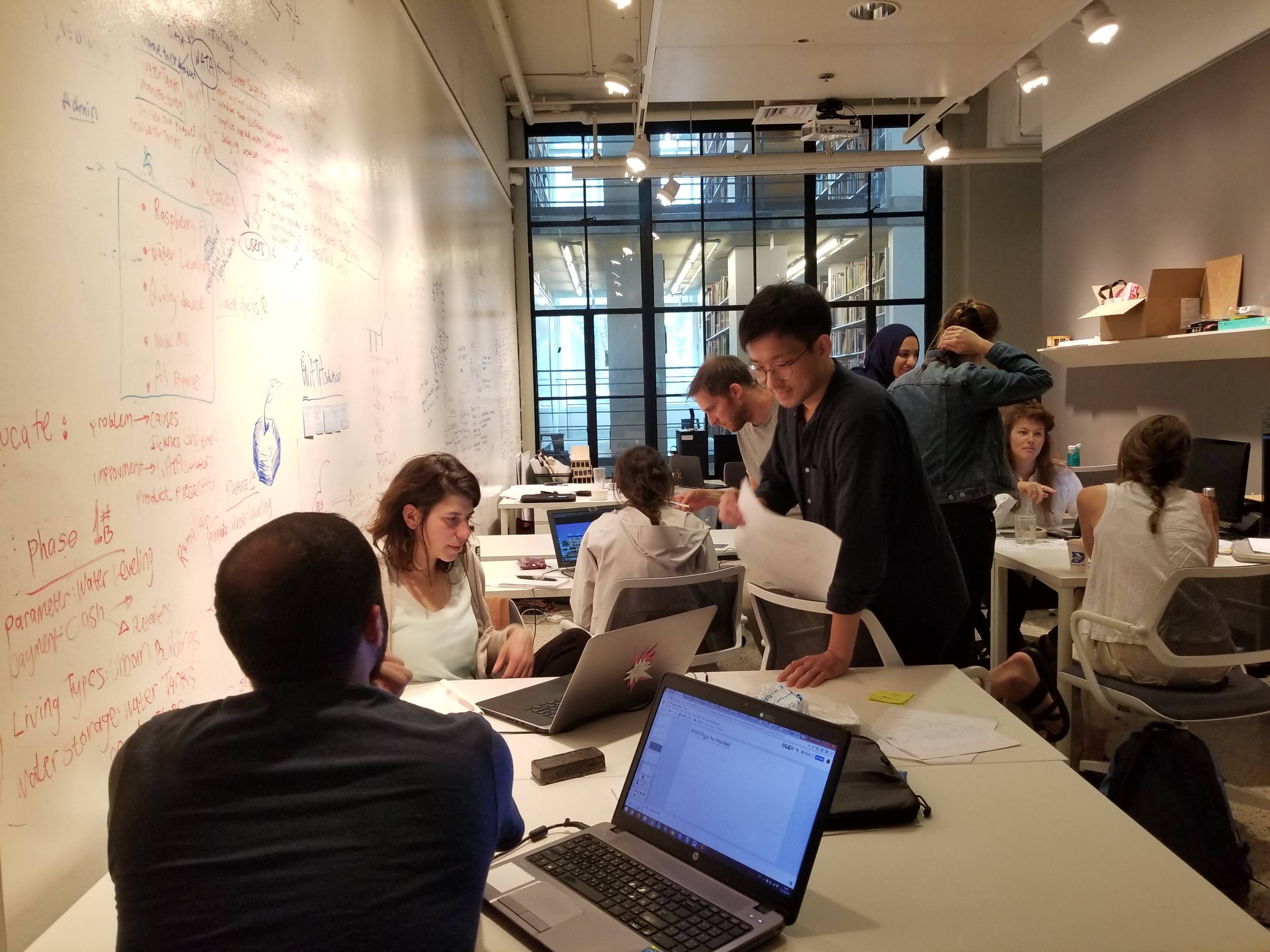
A household in the West Bank has a problem that cannot be solved by a stirring speech: how much water is left in the rooftop tank? In 2019, MIT described WATA, an OGS venture pairing an Israeli industrial designer with a Palestinian water engineer. Their proposed device would measure tank conditions and send information to a phone. Before either partner could sell a solution, they had to make one together.
- OGS brings Israeli and Palestinian leaders together through fellowship and venture development.
- Participants receive basic financial support; selected ventures can win awards.
- The longer project is a community that continues after the business pitch.
This is the interesting wager behind Our Generation Speaks. A shared problem gives two people a reason to exchange knowledge, revise an assumption, and depend on the other’s competence. Cooperation acquires a deadline. There is something almost impolite about bringing a business plan to a discussion of peace. It asks the hopeful person to do the arithmetic.
The rooftop test
OGS occupies an unusual intersection of peacebuilding, leadership education, and startup support. Its fellows develop ventures, but the organization now describes itself as a “people accelerator.” That choice of noun matters. A startup can close, change direction, or succeed without its original founders. The relationship between those founders may have a different life expectancy.
The portfolio is deliberately broad. OGS’s ventures page includes LoudnClear, a customer-engagement platform, and Yadaiha, an enterprise selling Palestinian embroidery to support women in Gaza. Commercial software and needlework are awkward neighbors in a conventional investment thesis. They fit more comfortably inside a program whose organizing interest is the person doing the building.
MIT DesignX reports that alumni ventures have raised over $75 million externally. That is evidence of venture fundraising, with all the ordinary unevenness that implies. It does not establish how much trust was created, still less how much peace. Money is easier to count than a friendship that survives an argument. The distinction should make a reader curious rather than credulous.
Boston, with a return ticket
Founder Ohad Elhelo developed the idea at Brandeis in 2014; the first fellowship cohort arrived in 2016. In a 2019 Boston Magazine interview, he recalled seeing the conflict from a distance after moving to Boston and wondering whether a small group of leaders could learn to trust one another. Distance had changed his vantage point. OGS made that distance part of its program.
Boston supplies a place to meet and an unusually dense collection of teachers, founders, and mentors. Brandeis hosts the residential experience. MassChallenge contributes venture expertise. MIT DesignX adds design methods and mentorship. This is a sensible division of labor: an organization trying to build relationships need not invent an entire business school along the way.
“The internship was the key.”Gilad Rosenzweig, MIT DesignX, quoted by MIT News in 2019
The MIT partnership illustrates what expert support can mean in practice. Student interns worked alongside founders and later continued work in the region. The benefit was continuity: someone who had already wrestled with an idea could help it through the next stage. A business card from an impressive visitor is considerably less useful than a colleague who remembers the spreadsheet.
OGS has neighbors in this field. Tech2Peace combines technology training and dialogue in shorter seminars. General accelerators offer venture support. OGS’s distinctive combination is the funded residential fellowship, regional follow-through, and continuing Israeli-Palestinian community. The fellowship is a temporary relocation with a local purpose: participants are expected to return to the region.
A summer paid for by someone else
For fellows, the participation fee is zero. OGS covers basic Boston expenses, including travel, housing, a modest stipend, and health insurance. Selected ventures can receive up to $50,000. Its current policy takes no equity. “Fully funded” still leaves personal extras, and the intensive program requires time that cannot also be sold to an employer.
OGS itself runs on philanthropy. Its 2024 tax return reports about $1.54 million in revenue and $2.06 million in expenses. These are organization-wide figures, not a price per fellow. A donor is paying for instruction, support, and the infrastructure that makes participation possible. Dividing the budget by a cohort would produce a tidy number with untidy meaning.
In 2022, USAID committed $4.5 million through MEPPA to the Next Generation Accelerator. The award was intended to expand leadership and entrepreneurship work. A grant commitment describes a funding arrangement, however; it should never be casually treated as cash already spent or as an investment round in a startup.
The summer that disappeared
The constraints became painfully concrete. OGS’s 2024 audit records that war caused the planned summer fellowship to be canceled. Alumni programming expanded instead. Then the USAID agreement was terminated in February 2025. OGS turned to private funding, continued on a smaller scale, and completed a fellowship that summer.
The sequence identifies what gave way: the ability to run a gathering, then a major funding arrangement. Calling either event a failure of trust would confuse the institution’s logistics with its purpose. But it also exposes the conditions the model needs. People must be able to travel and meet safely, and somebody must keep paying for the room.
OGS also expanded dedicated dialogue sessions in 2025. Its stated reason is practical: constructive conversations require tools and practice. Shared work cannot be assumed to settle political disagreement. Giving disagreement a place in the curriculum makes the model more demanding, and more plausible, than the cheerful suggestion that entrepreneurs can simply get along.
Keep the relationship after the pitch
Graduates enter OGS Next, which offers professional development, affinity groups, advice, and support for new initiatives. The alumni network gives the program somewhere to put its accumulated relationships. Without that, each summer would begin an expensive collection of introductions and then leave the maintenance to chance.
The principle others can borrow is modest enough to be useful: remove practical barriers, give people a task worth sharing, bring in expertise, and keep supporting the connection after the task ends. It requires willing participants and sustained resources. OGS’s wager is that a person who once helped you solve a difficult problem may remain someone you can call when the next one arrives.