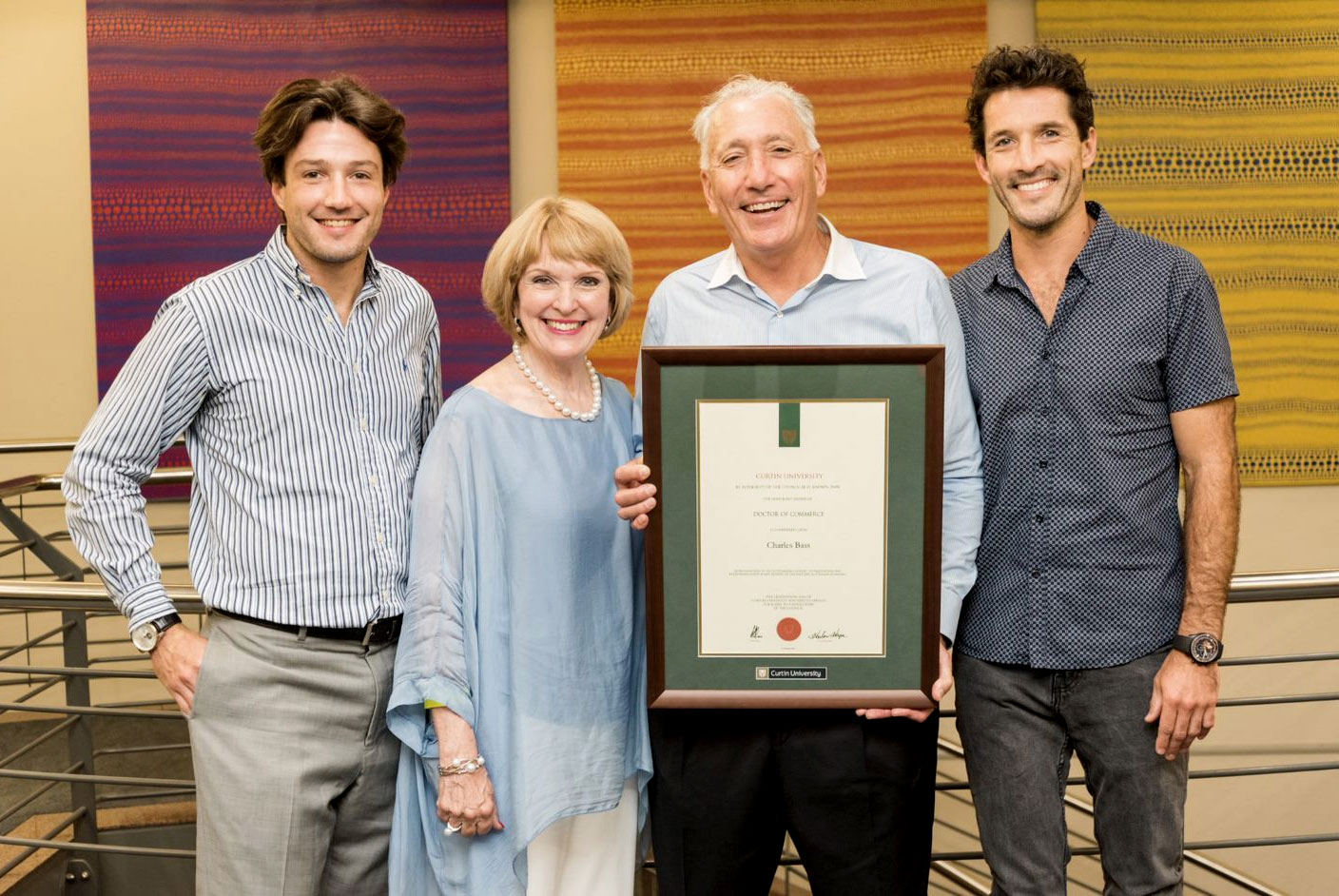
Charlie Bass made his fortune in resources, then put some of it into teaching people how to build businesses that did not depend on digging things up. His vehicle was CERI, the Centre for Entrepreneurial Research and Innovation. The address was in Nedlands, near the University of Western Australia. The ambition was considerably larger: give Western Australia more ways to earn its living.
That ambition has a pleasingly practical expression. A researcher arrives with an idea and encounters customer interviews, cash-flow models and the uncomfortable business of explaining why somebody should pay. CERI supplies classes, mentors, workspace and, for selected alumni, early funding. Its raw material is expertise. Its intended output is a company that can survive outside a laboratory.
A mining fortune changes the homework
Bass, an Aquila Resources co-founder, established CERI in 2015 after consulting academics, research institutions, governments and business leaders. Its premises opened in August 2016. His concern was the state’s dependence on finite natural resources, and his response was to support businesses built on knowledge that could reach customers elsewhere.
The financial commitment was substantial from the beginning. In October 2016, The West Australian estimated that Bass had already put about A$20 million into the project. That historical estimate describes backing for the centre, rather than a startup investment round. Today, CERI identifies the Bass Family Foundation as its primary funder.
“Entrepreneurialism is a long, long process.”
Charlie Bass, speaking in 2016
The line has aged well. CERI’s relationship with a founder can extend from an introductory course into years of residency. A business built around medical technology or an energy device has plenty to do after its first pitch night. For CERI, that continuing work has become part of the offering.
Two days to start. Eleven weeks to get specific.
CERI’s entry point is the Entrepreneurial Mindset Bootcamp, a two-day course built around doing: recognising problems, developing possible solutions and testing entrepreneurial thinking. Its audience includes aspiring founders, postgraduate students, researchers and professionals. Graduates join the alumni community and can use the Nedlands hub for business and team meetings.
Concept to Creation takes the discussion into company-building over 11 weekly evening sessions. Its syllabus includes idea validation, customers, negotiation, accounting, company formation and intellectual property. Subject experts lead the sessions. Participants sign non-disclosure deeds before the course, an operational detail that matters when a room contains commercially sensitive research.
Investment Readiness adds another 11-week option for founders approaching a raise, including research projects preparing to spin out. Participants work on customer evidence, product timelines, cash-flow models and capital strategy. One stated outcome is identifying the next 10 customers. Ten is a useful number: small enough to name names, large enough to expose a vague market claim.
Find the problem
Bootcamp · 2 days
Build the business
Concept to Creation · 11 weeks
Prepare the raise
Investment Readiness · 11 weeks
The seat is subsidised. The work is yours.
For eligible students or founders, CERI lists a bootcamp price of A$110 after scholarship. Its professional price is A$330. Concept to Creation and Investment Readiness each list A$330 and A$550 scholarship price points, depending on eligibility. These are Australian-dollar course prices, rather than an estimate of what it costs to launch a company.
Taking all three at the lower advertised rates would total A$770, assuming eligibility for each. At the professional rates, the arithmetic is A$1,430. Those totals buy structured learning; they do not include product development, salaries or residency. The two longer programs alone represent 55 scheduled classroom hours at two and a half hours per week.
CERI can offer these prices because fees are only one part of its business model. Donations, sponsorships and government program support supplement its foundation backing. Supporters can sponsor an individual, a startup team or a program. That arrangement lets philanthropic money pay for something less photogenic than a prototype: a founder learning how to manage cash.
After the class, a desk and some difficult questions
Residency is a separate, competitive program for eligible alumni with registered startups. It offers 12 months of office space for a monthly amenity fee. Extensions depend on company growth, collaboration and demand. Applicants must have completed Concept to Creation or Investment Readiness. Finishing a course establishes eligibility to apply; selection still follows.
The mentoring program brings industry experience into business decisions. Mentor teams work with founders on problems such as the core business model or a client negotiation, using MentorLoop to coordinate the relationship. CERI’s stated values include evidence, accountability and collaboration. The practical test of those values is whether a founder can bring an unresolved problem into the room and leave with useful work to do.
The directory shows why the advice needs range. Terra15 commercialises fibre-optic sensing; Lixa works on antibiofilm technology; Novolo turns coffee waste into functional ingredients. Gene S develops genetic testing for personalised medicine. WaveX develops wave-energy technology. These companies have different technical problems, but all need customers, teams and money.
When the startup grows out of the startup course
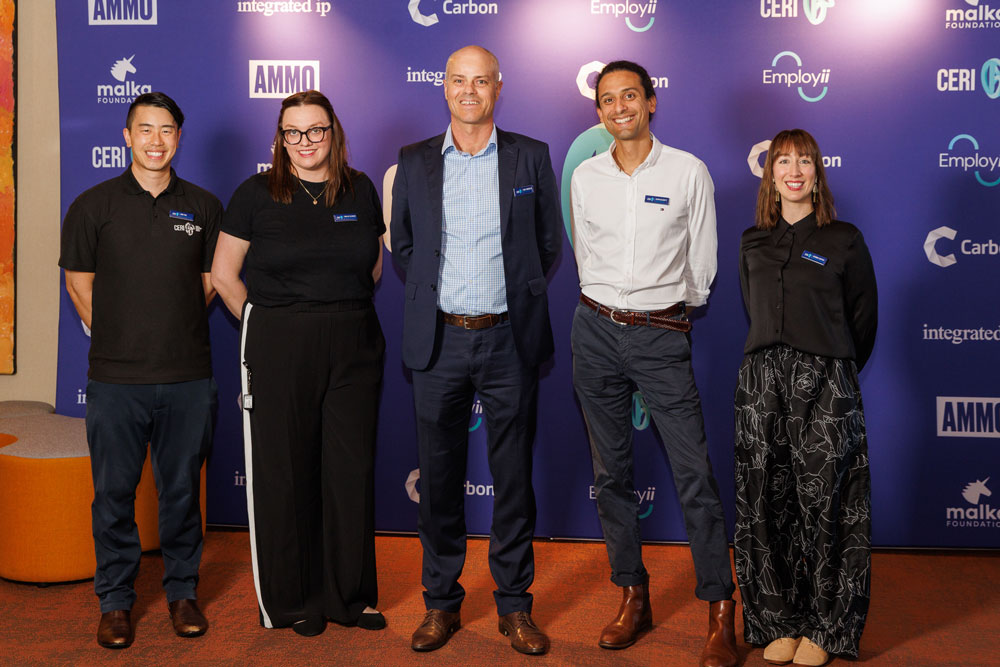
CERI made a concrete adjustment in August 2025 when it opened Launch@22 with Malka Foundation support. The scaleup incubator addresses a further set of demands: larger teams, product validation, regulatory pathways and international market entry. Gene S and WaveX, both already connected to CERI’s programs and residency, became its first two companies.
The change reflects a distinction every training provider faces. Teaching someone to establish a company is different from helping that company mature. Launch@22 extends CERI’s involvement at the point where the founder’s questions become more specific and the consequences more expensive. The centre has built another stage around those needs.
The time horizon is visible in Isopogen. Founder Dr Marian Sturm attended CERI’s inaugural bootcamp in 2016, became a resident in 2017 and completed Concept to Creation that year. NeuroScientific Biopharmaceuticals acquired Isopogen in June 2025. That is nearly nine years between the introductory classroom and the acquisition, a useful antidote to the idea that commercialisation fits neatly into one accelerator season.
A small fund with plans for a second life
CERI Start began in 2021 with donations from Anthony Torresan and Charlie Bass. It supplies eligible alumni with competitively awarded micro-seed funding for development, research and early commercialisation. Funding takes the form of a Simple Agreement for Future Equity, or SAFE. CERI says gains will return to the fund if a recipient later raises capital, the agreement converts into shares and gains are realised.
The proposed cycle links philanthropy to later company outcomes. Its sustainability depends on ventures progressing and investments producing gains; the mechanism alone cannot ensure that happens. For founders, it also means treating CERI Start as a financing decision with terms to understand. Alumni membership is the starting point for consideration, rather than a promise of a cheque.
Philanthropic donationsCompetitive micro-seed SAFEsFuture equity conversionRealised gains reinvested
Conversion and gains depend on future events. This diagram describes the mechanism, not a guaranteed return.Big numbers, with the labels attached
CERI’s published impact figures include more than 1,000 program graduates and an A$240 million combined startup valuation. Its 2025 alumni survey also reports 127 people employed and 18 patent families. Those are measures of the companies associated with CERI. The valuation is an alumni survey figure, not CERI’s own valuation or money sitting in its bank account.
Reported in CERI’s 2025 alumni survey. These figures describe respondents, not a controlled measure of the programs’ effect.
The distinction keeps the results useful. Graduation counts describe participation; jobs and patents describe activity beyond the classroom. None, alone, tells a prospective founder their probability of success. CERI’s case is easier to assess through specific services and the companies using them than through a single impressive total.
In 2026, another targeted offering arrived: CERI FIRST, for Female Innovators in Research, Science and Technology. CERI announced A$135,000 in support for the initiative in April. Government funding enables scholarships, female mentors, events and one residency placement for eligible participants. The program page lists second-cohort applications from September 1 to November 30, with participation tailored to each founder.
Bring a question worth testing
In Perth’s startup market, CERI sits alongside options such as Spacecubed’s Plus Eight. That accelerator advertises a six-month growth program, selective seed investment and international immersion. CERI’s emphasis is subsidised education connected to continuing alumni support. The choice depends on the founder’s stage, the support required and the time available to participate.
The most portable lesson is the sequence: identify a customer problem, test a business model, then work out what capital the next milestone needs. A reader can copy that order without renting a desk in Nedlands. It becomes less useful if the founder treats attendance as proof of demand, cannot commit time to testing, or needs specialist technical facilities beyond the centre’s offer.
CERI’s wager ultimately returns to the person at the desk. Western Australia has researchers who know how something works. The harder commercial question is who needs it enough to buy it. Helping a founder answer that question is modest daily work with a much larger economic ambition behind it.
Continue the conversation
Visit CERI ↗ Explore the programs ↗ CERI FIRST ↗ LinkedIn ↗ Instagram ↗ 2025 impact report ↗ Charlie Bass’s 2016 interview ↗ 2026 innovation funding news ↗