Imagine building something a government department could use. The software works. The problem is real. Then comes the purchasing process: documentation, approvals, the question of whether a young company is an acceptable risk. The product has reached the customer’s door. Getting through it is another undertaking entirely.
That gap is where StartupWA has chosen to work. The Perth-based nonprofit represents Western Australia’s startup sector, gathering people who ordinarily have different priorities: founders, investors, public servants, universities and established businesses. Its central argument is practical. If the state wants more scalable companies, it needs conditions in which those companies can actually do business.
- Free membership connects founders and supporters with events, working groups and sector updates.
- Roundtables turn shared obstacles into published policy recommendations.
- Its focus includes procurement, investment, visibility and founder wellbeing.
The room before the rulebook
StartupWA launched in September 2015, when the state’s emerging technology community gained a representative organisation. Justin Strharsky, an early director, described the purpose as giving governments an organisation they could speak to about startups. That sounds modest. Consider the alternative: a public agency trying to understand an industry through whichever founder happens to have its attention that week.
Collective representation gives scattered experiences somewhere to accumulate. StartupWA’s research stretches from ecosystem reports to discussions about mining technology, regional entrepreneurship and inclusive events. The output is usually less glamorous than a demo day: a report, a submission, a list of things an institution should change.
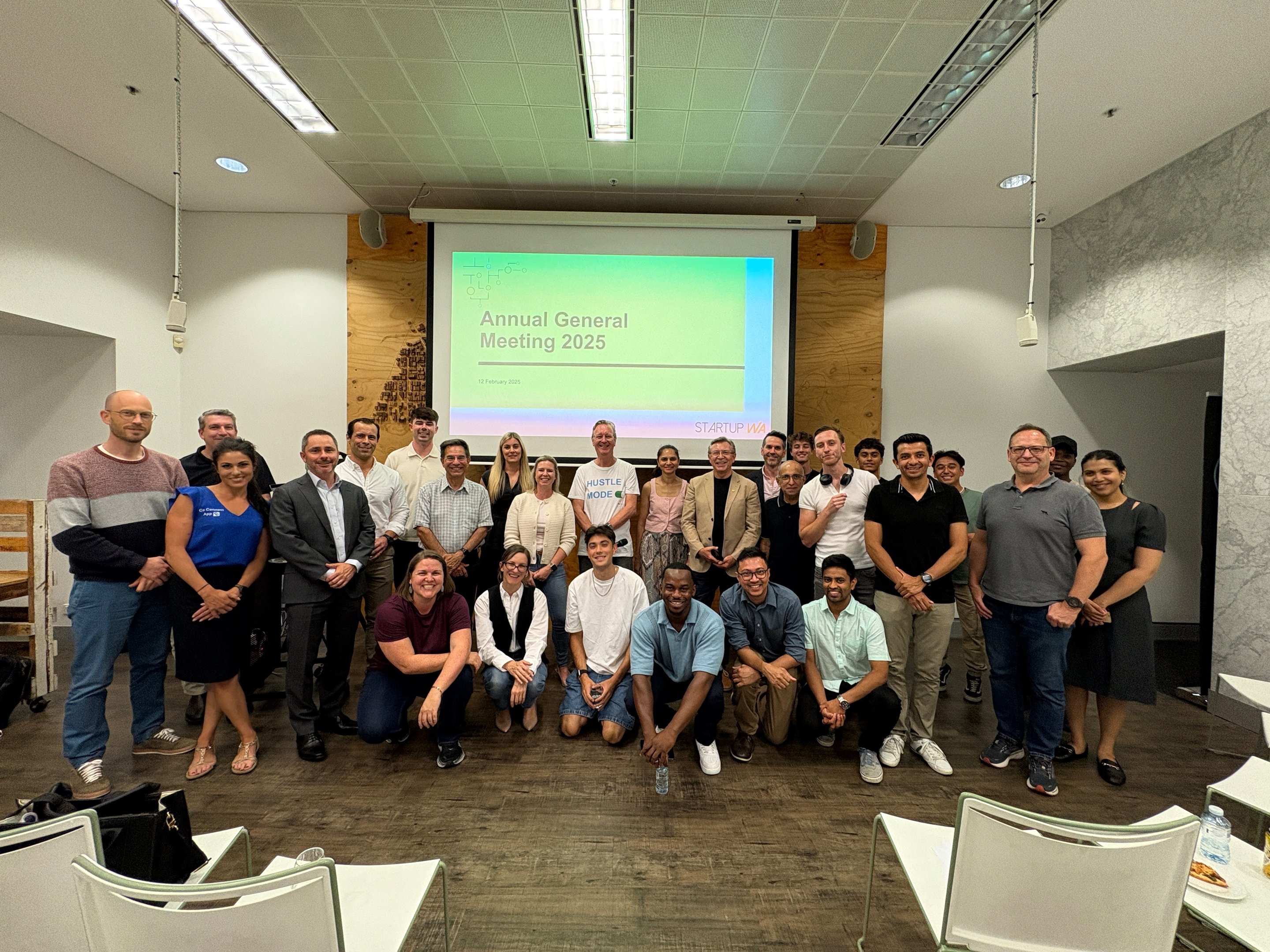
Procurement makes the method especially clear. On 23 July 2025, 57 participants gathered to examine the obstacles startups encounter when selling to government and large companies. Founders were joined by procurement specialists, officials, investors and others who could describe the same transaction from opposite sides of the desk.
A complaint, with an action plan
The resulting agenda went beyond asking buyers to be friendlier. StartupWA’s subsequent pre-budget submission proposed a procurement champion, accessible roadshows, simpler material and staged purchasing pathways. It recommended a direct-purchase tier below A$100,000, a middle tier up to A$1 million and fuller tender requirements above that.
Those were proposals, with an explicit qualification: WA agencies operate under different arrangements. The useful idea is proportionality. A small purchase should not necessarily demand the same machinery as a large one. For a founder, reducing that mismatch could make the difference between an opportunity worth pursuing and paperwork the company cannot afford.
The same sequence appeared in a different setting that November. Forty-two participants considered why WA startup success stories received too little recognition. Their recommendations included shared promotional assets, messages tailored to different audiences and investor education. By the following year, procurement and storytelling findings had both fed into StartupWA’s pre-budget recommendations.
There is a method here that another community can borrow: establish the problem before prescribing the campaign, bring in people who control different parts of it, and publish something specific enough to argue with. A meeting becomes useful when its ideas survive the meeting.
StartupWA also offers an affiliate route for organisations. Its published expectations ask affiliates to share updates, support the advocacy work and contribute at least one delegate each year to a policy or strategy discussion. The exchange is revealing: access to the network comes with a request to supply expertise. A university, coworking community or industry group can help explain a barrier that an individual founder sees only from one angle.
The money is in two different pots
Money introduces an easy misunderstanding. StartupWA argues for funding across the sector; that money is different from the funds supporting StartupWA itself. In late 2024, it called for A$100 million over four years for the New Industries Fund. In February 2025, WA Labor announced a A$40 million renewal commitment. Chair Charlie Gunningham welcomed the continuation while maintaining that more support was needed.
The full request had not been met. Welcoming the smaller commitment was a public response to partial progress, without withdrawing the larger argument. Nor does the sequence prove StartupWA caused the announcement. Advocacy operates among competing voices, budgets and political decisions.
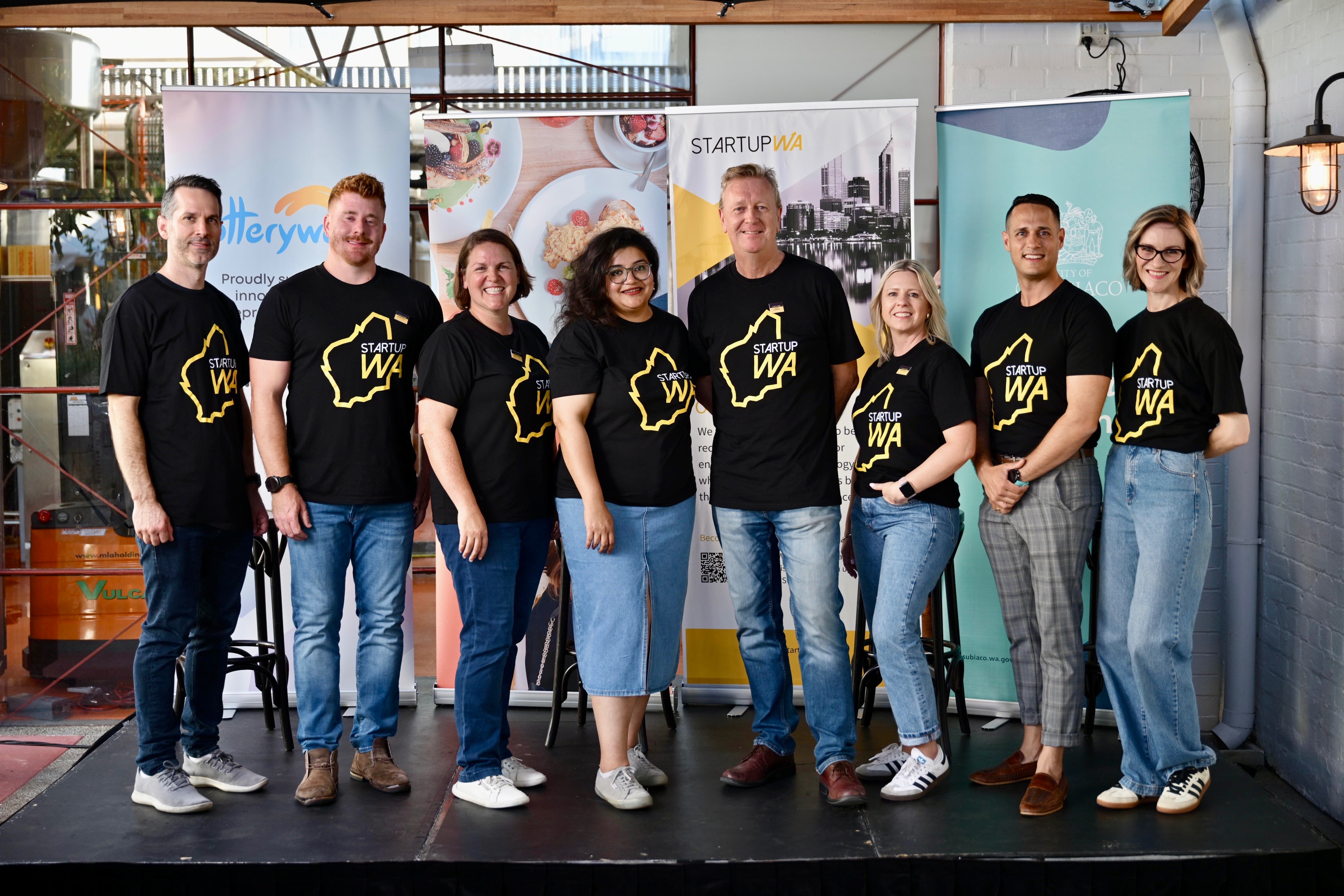
The organisation’s own economics are smaller and more concrete. Both membership categories are advertised as free. Its supporters include Curtin Commercialisation and Entrepreneurship, Kaizen West and scale.partners. Government recipient records also document A$40,000 in X-TEND administration support. A September 2026 director recruitment notice described a hands-on volunteer board with no CEO or staff. The people governing the organisation also do its work.
The founder is part of the infrastructure
That work has broadened beyond capital and contracts. StartupWA’s April 2026 wellbeing report drew on an anonymous survey of 129 WA founders and a 32-person roundtable. Among respondents, 77% reported financial stress and 70% burnout. These are findings from a voluntary sample, rather than a census of founders. They still challenge an account of startup development that counts companies while overlooking the people keeping them alive.
A first customer. A fairer rulebook. A founder able to keep going.Three practical stakes in the advocacy agenda
For someone building in WA, participation starts with choosing the right door. Ordinary membership covers founders, startup team members and investors; associate membership brings in the wider support community. Resource directories help people locate grants, investors and programs. StartupWA’s particular role is representation. An accelerator, specialist adviser or investor serves a different need.
Its broader priorities make that market position explicit. The organisation wants stronger research commercialisation, entrepreneurship in secondary education and more willingness among government agencies to buy from startups. These requests address the route from an idea to a viable company. Different organisations handle individual stages; StartupWA tries to get the institutions around them moving in a compatible direction.
The limits follow from that role. A submission cannot guarantee a contract. Free membership cannot guarantee funding. Volunteer capacity constrains delivery, and public proposals require other institutions to act. In October 2026, StartupWA appointed its first patrons, Amanda Healy and Michael Malone, adding experienced advocates to that effort. The test remains wonderfully concrete: does a young company with something useful to sell get a better chance to sell it?