A museum usually asks us to admire what survived. The Asan Nanum Foundation has made room for what did not work. Its 2026 Youth-Preneur “Failure Museum” catalogue collects 26 accounts from 29 students: ideas that resisted construction, projects that collided with data, questions that forced another attempt. There are recycled fishing nets, mobility problems, reusable containers. The interesting object is the unfinished thought. A teenager has tried something, discovered a difficulty, and left the evidence for the next person.
- Build shared infrastructure around people trying to solve problems.
- Connect students, founders, teachers, investors, and nonprofit leaders.
- Make experience useful twice: first to the person who earns it, then to someone else.
The museum of things that did not work
This is an unusually revealing exhibit for an organization associated with startup competitions and venture investment. A competition rewards the polished explanation. A museum of unsuccessful experiments preserves the awkward middle. Asan Nanum’s wager is that entrepreneurship can be learned there, while someone is still figuring out which question to ask.
Youth-Preneur began in 2016. By January 2025, the foundation reported reaching roughly 18,000 students across 800 schools. Students work in teams on problems rather than merely hearing about business. Teacher-Preneur trains educators, while the Asan Entrepreneurship Review supplies startup decision-making cases for university learning. The audience begins well before anybody needs an investor.
A memorial with working capital
The foundation was established in October 2011, ten years after the death of Hyundai founder Chung Ju-yung. His son Chung Mong-joon, family members, and Hyundai-related companies provided the founding contributions. Chung Ju-yung is the inspiration, rather than the man who established the institution. That distinction matters: this is a later generation deciding what to do with an industrial legacy.
The launch announcement put the contribution at KRW 500 billion. Chung Mong-joon supplied KRW 200 billion; Hyundai Heavy Industries Group companies supplied KRW 238 billion; other corporate and family contributors supplied the remainder. Those are philanthropic founding commitments, not a startup financing round or an annual operating budget. The foundation’s beneficiaries include people building businesses, but the foundation itself pursues a public-interest mission.
“A world where if you believe it, you can achieve it.”
The foundation’s stated vision
Its method combines education, startup support, social innovation, and ecosystem development. The Chung Ju-yung Angel Investment Fund backs venture funds and accelerators as catalytic capital. Alongside helping individual founders, the foundation works on the organizations that decide which founders receive support.
The useful distance between two desks
Then there is MARU. The name evokes the communal wooden floor of a traditional Korean home, a place for gathering. MARU180 opened in Seoul in 2014; MARU360 followed in 2021. An office becomes more useful when a person who understands your problem is nearby.
Three supports around the same founder.
The August 2026 announcement described about 30 resident startups and offered selected teams up to 18 months of workspace. Residents pay minimal facility-management costs. Shared amenities include meeting rooms, showers, and nap rooms. The offer recognizes that running a company involves bodies as well as spreadsheets.
Mentoring, investor matching, and partner services sit beside those facilities. The foundation advertises an annual benefits package worth approximately KRW 1.3 billion, involving partners including OpenAI, NVIDIA, and Anthropic. Treat that as a stated package value, with conditions, rather than cash deposited into each startup’s account.
A commercial coworking operator sells access to space. An accelerator may organize support around a particular cohort and investment strategy. Asan Nanum combines incubation with education and nonprofit development under a philanthropic mandate. Its particular expertise is arranging several kinds of access, then encouraging recipients to help one another through MARU’s pay-it-forward community.
The distinction is one of scope. D.CAMP also combines workspace, investment, mentoring, and networks; Seoul Startup Hub offers incubation and global expansion support. Founders have alternatives. MARU belongs in that support market, while Asan Nanum’s wider program connects it to school education and social-sector leadership. Its reach across those audiences is the more interesting comparison.
Sharing has scheduled occasions, too: workshops, town halls, gatherings, and clubs. The 2026 MARU offer describes a network of more than 500 founders, including alumni and participants in foundation programs. The useful question for an applicant is which people and programs fit the problem the team is trying to solve.
A front porch across the Pacific
In November 2025, the foundation officially opened MARU SF in San Mateo, California. It offers a short-stay residential and community base for Korean startups exploring the United States. Before the opening, a pilot beginning in May involved 53 membership startups. The foundation says their feedback informed adjustments to facilities and community programs.
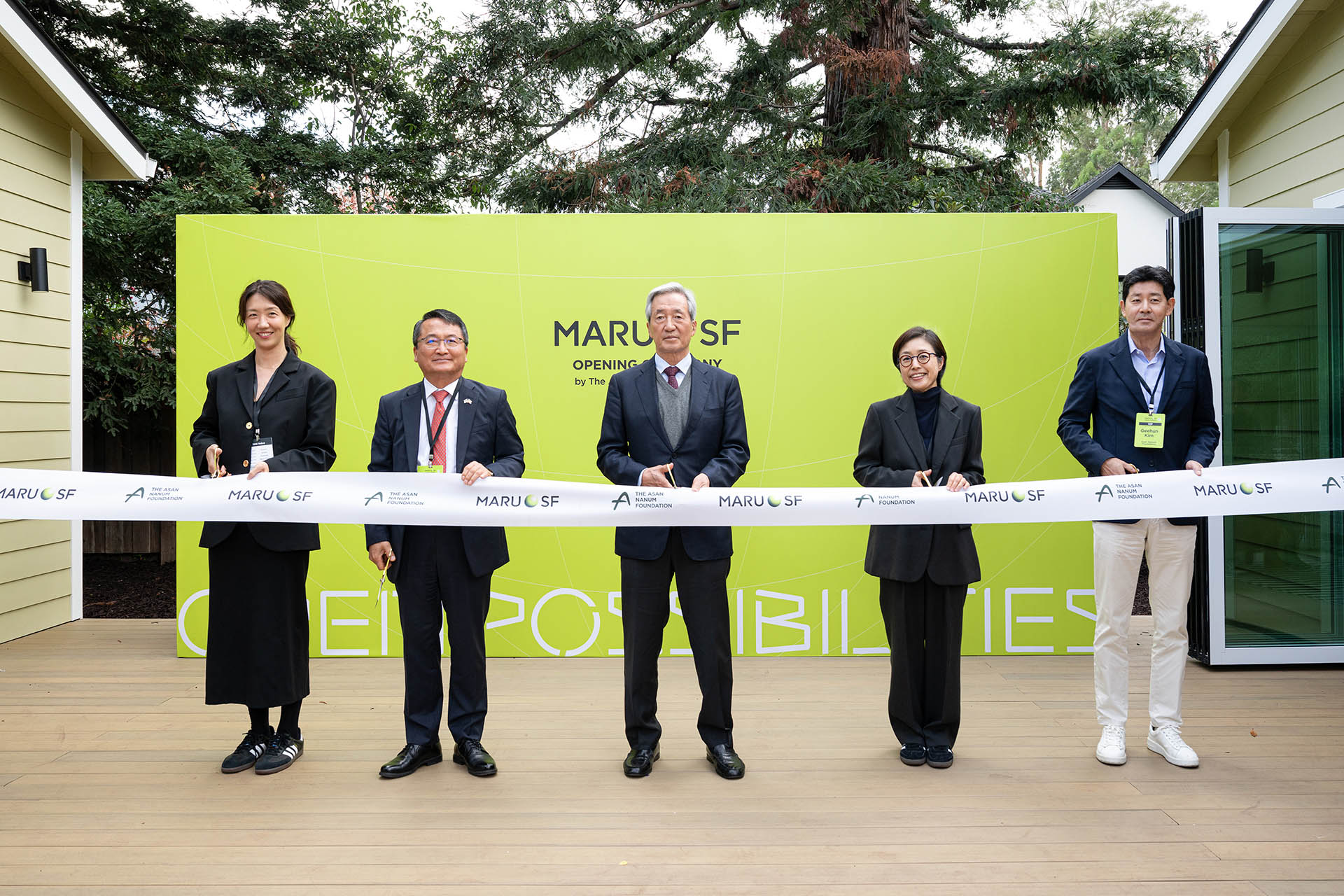
That is the documented revision here: test an operation with actual users, then change it. Asan Voyager adds market-entry coaching, networking, and support for stays. The logic is practical. A founder entering a new country needs somewhere to land and people to ask. Neither solves product demand, but both reduce the effort required to begin investigating it.
Who gets to try?
The circle extends beyond conventional technology founders. Asan Sanghoe supports entrepreneurs from diverse backgrounds, including North Korean defectors. Asan UniverCT works with universities on climate-tech entrepreneurship. Its 2025 partners included KAIST, Seoul National University, and Ewha Womans University.
Young nonprofits receive a version of the same practical attention. The 2026 Asan Nonprofit Startup growth track selected six organizations, offering each KRW 50 million in project support alongside advice, impact-measurement assistance, and short-term workspace. Their work includes mobility access, healthcare, disability independence, and resource circulation.
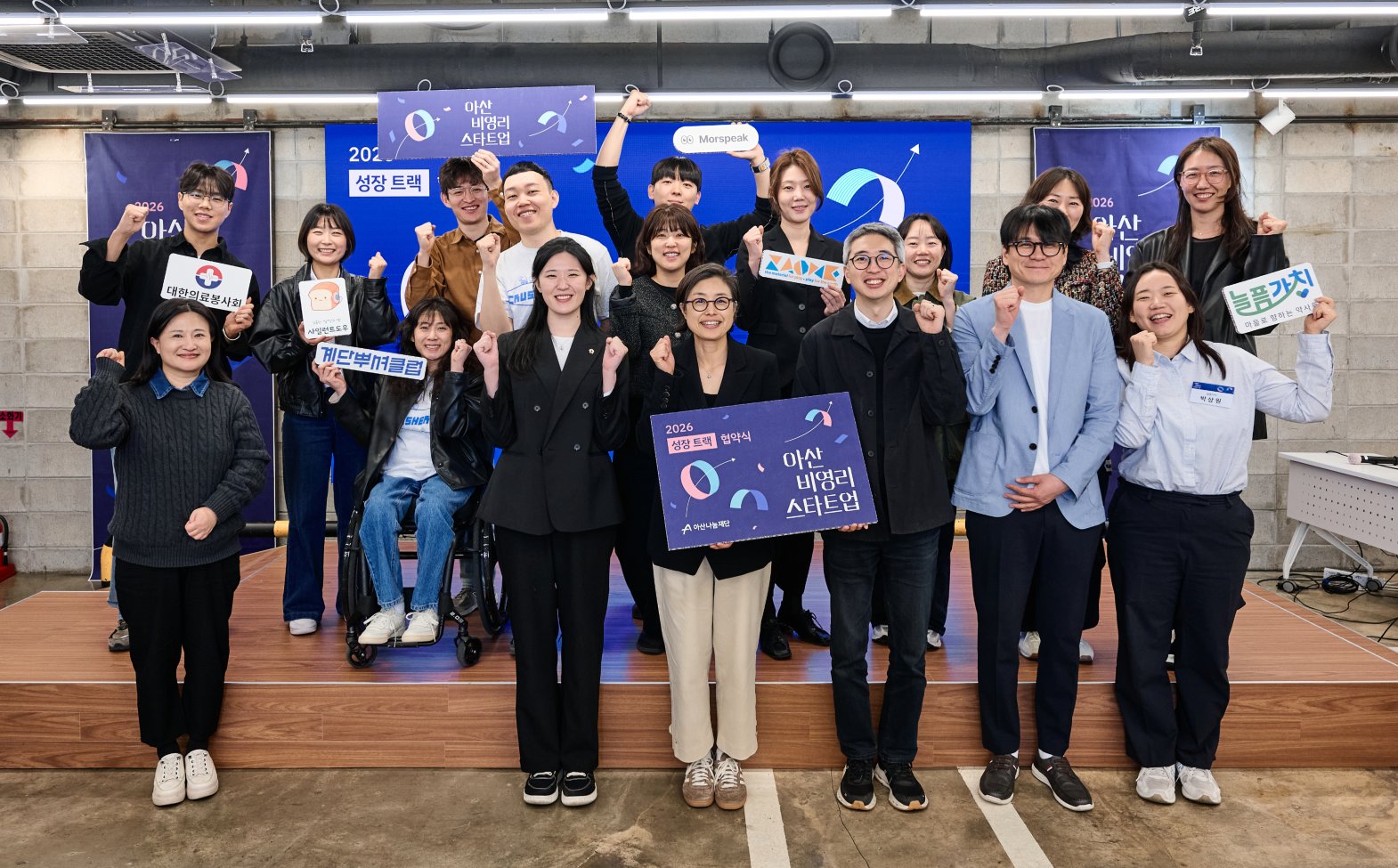
The next public stages are already scheduled: the October 28, 2026 startup competition has 15 teams and KRW 370 million in prizes; the November 17 nonprofit conference plans nine pitching teams and KRW 100 million. Both connect months of work to an audience.
What can another community copy? Put useful people within reach. Give experiments somewhere to happen. Ask participants to leave knowledge behind. The conditions matter: admission is selective, residency ends, and a community depends on people participating. For a founder who needs only cash, this bundle may miss the immediate problem. For someone who needs a place to test an idea and ask an embarrassing question, the village has a purpose.