A battery can work beautifully and still go nowhere. Its inventor has a prototype. A prospective investor wants independent results. The laboratory has the necessary equipment, but the inventor cannot afford the bill. Everyone is behaving reasonably. Nothing happens. This small stalemate is a useful place to begin understanding New Energy Nexus, a nonprofit whose work concerns the awkward transactions that must occur before clean energy becomes an ordinary business.
- It helps founders secure capital, test technology and find commercial partners.
- Support changes with the place: California laboratories, Uganda distributors, Australian battery startups.
- The useful lesson: fund the next obstacle a business must clear.
There is a temptation to describe the energy transition through inventions. Better batteries. More efficient buildings. A clever way to turn waste into fuel. New Energy Nexus occupies the less photogenic territory surrounding those inventions: the grant application, the test bench, the introduction to a customer. Its expertise is assembling those pieces into something a founder can actually use. A breakthrough with nowhere to go is a rather expensive ornament.
A battery is not a business
The organization’s California programs show the sequence. CalSEED, financed by the California Energy Commission, supports early concepts with non-dilutive grants and business assistance. Its current structure offers a $200,000 Concept Award and, for winners of its annual business-plan competition, a $500,000 Prototype Award. These are separate stages; the larger amount is not an automatic sequel. The founder must make progress and compete again.
CalTestBed addresses a different question: will someone outside the startup believe the technology’s performance? It connects clean energy entrepreneurs with third-party testing through a network of more than 70 facilities across University of California campuses and Lawrence Berkeley National Laboratory. Laboratory access becomes a resource a startup can obtain through a voucher rather than an asset it must build itself. That distinction matters when the business is young and the equipment is expensive.
The laboratory bill nobody wants
In March 2026, New Energy Nexus and EnergyLab announced an Australian version of that intervention. The AusTestBed pilot, backed by Boundless Earth, gives three battery and storage startups AU$50,000 each for independent testing. Powerblocks, Adoxima and Carbophite are the initial participants. The announcement specifies no matching private investment, no cost to the recipients and no claim on their intellectual property.
The disclosed voucher commitment is therefore AU$150,000. It is not a complete operating budget for the program. The design does, however, reveal a choice worth copying. Requiring founders to raise matching money before validating a prototype can reproduce the very obstacle a grant is supposed to remove. Here, public research infrastructure supplies the equipment and philanthropic support helps buy access. An accelerator need not own a laboratory to make one useful.
Testing remains a test. A voucher can produce disappointing results as readily as encouraging ones. Even encouraging results leave manufacturing, certification and customer economics to resolve. For founders, the value is a better-informed next decision. For funders, the attraction is supporting a specific technical milestone rather than paying for a vague promise to become investment-ready.
“Cash is kind.”Danny Kennedy / outgoing CEO, 2024
A different kind of energy entrepreneur
Now consider Uganda. The chapter works with community organizations, village savings and loan associations, and agricultural cooperatives to help distribute clean energy products. Business training, coaching and results-based finance sit alongside relationships with local organizations. Its ENVision platform helps businesses manage inventory, finances and loans. The challenge here is getting products through a functioning enterprise to households that can use them.
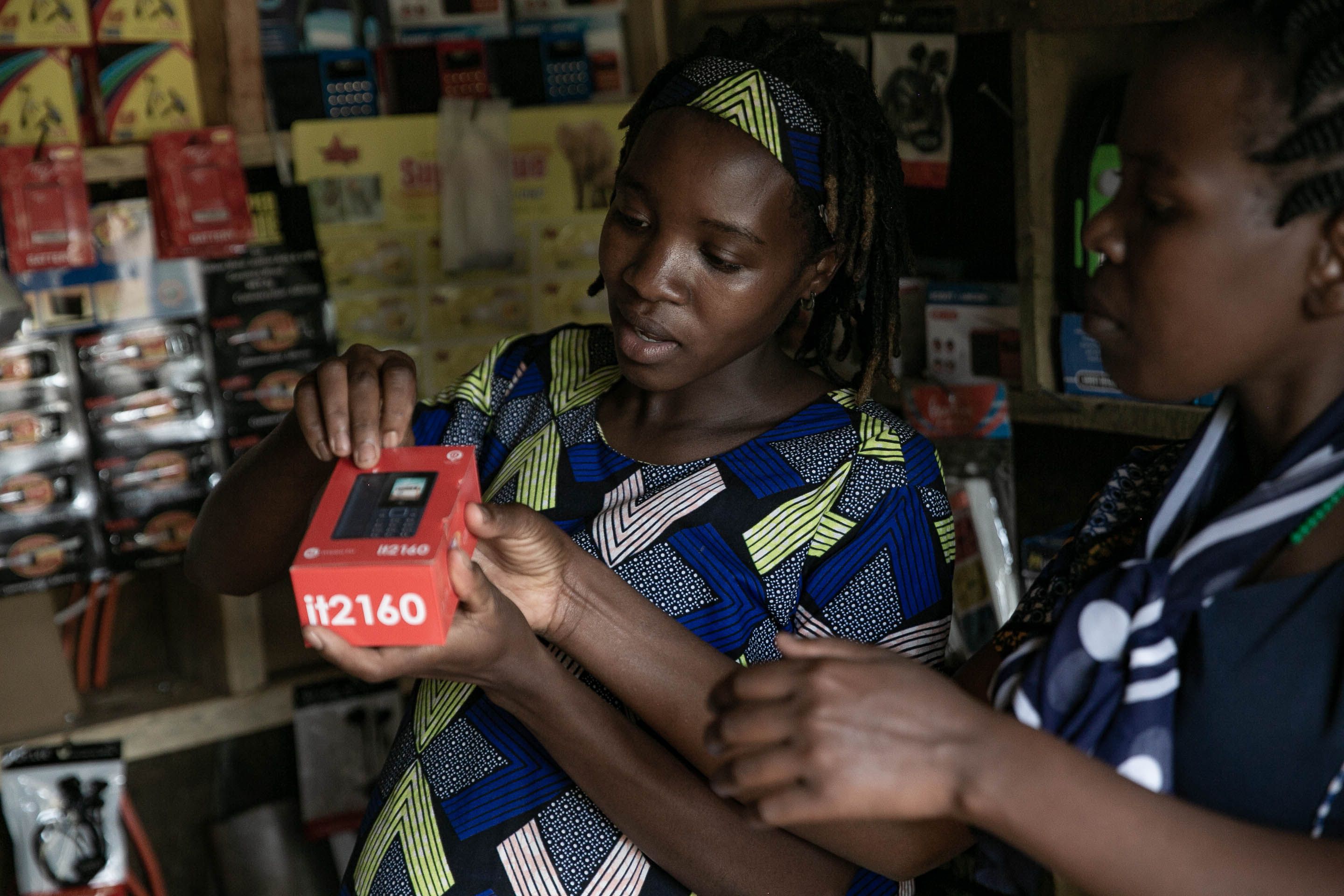
“NEX ENVenture gave us the financing and developed our capacity to grow and scale,” says Reverend Moses Atuhaire, executive director of Utopia, in a chapter testimonial. The combination is the point. Stock without bookkeeping can become a headache. Training without products leaves nothing to sell. The organization treats the distributor as an entrepreneur, alongside the engineer inventing a new battery material.
The original cheque had an expiry date
The institution began in California in 2004 as CalCEF, with $30 million arising from a PG&E bankruptcy settlement. Its later nonprofit and international development produced the New Energy Nexus network. The origin is pleasantly unlikely: a utility’s financial collapse helped capitalize clean energy innovation. But a settlement is a starting resource, not a renewable source of organizational income.
A 2025 California Public Utilities Commission report says the original settlement funds had been spent down by 2017 and that remaining investment returns were not expected to provide reliable future support. Today’s model brings together government program funding, foundations, donations and delivery partners. Its users are entrepreneurs; its financial backers often pay to create public benefits. Confusing those two audiences makes the business model harder to understand.
The same care applies to scale. The 2025 global impact report records 1,793 supported startups and businesses, 11,580 entrepreneurs and $5.44 billion in follow-on funding and revenue. That last number describes activity associated with supported businesses. It is neither the nonprofit’s turnover nor cash sitting in its accounts. Those distinctions are less exciting than a large number, but considerably more useful.
Network totals reported in the 2025 Global Impact Report.
Move the decisions closer to the problem
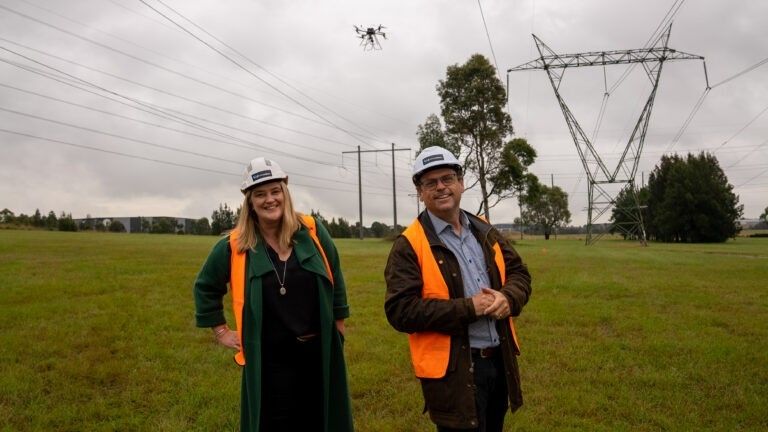
In September 2025, New Energy Nexus announced that Andrew Chang would become CEO as it continued moving decision-making and delivery power toward country chapters. That direction fits the work: a laboratory voucher and a rural distribution partnership require different knowledge. In May 2026, its Asan Nanum Foundation partnership added support for 15 South Korean climate startups, including mentorship and prototyping grants.
Copy the bottleneck, not the brochure
Other routes exist: Activate fellowships, university incubators, Cleantech Open, direct government grants and specialist investors. Some overlap with the network as collaborators. Founders should choose by geography, stage and the obstacle they face. A laboratory program cannot repair weak demand; a customer introduction cannot rescue unverified performance. Local distribution support needs workable supply chains and organizations people trust.
Former CEO Danny Kennedy’s published advice offers a neat corrective: “Cash is kind.” He describes watching businesses exhaust their runway and argues for a deliberate capital strategy. New Energy Nexus’s most portable idea follows from that experience. Identify what stops the next transaction. Find the institution that can remove it. Pay for that step. The energy transition becomes more tangible when somebody finally gets the test result, stocks the shelf or makes the sale.
Website · Find a program · News & stories · LinkedIn · X · Facebook · YouTube · Watch the Uganda program