Julian Bourgeois had a driveway, a basketball and a question: were all those hours of shooting making him better? His answer became Ball AI, an app that uses computer vision to track basketball training. Turning the question into a business required a different kind of measurement. Who would pay? Who would invest? And who would pick up the phone when the founder wanted to stop?
- Innovate Mississippi helps innovation startups prepare for investors.
- CoBuilders combines twelve weeks of development with a published $50,000 SAFE offer.
- Regional partners supply local connections; Seed Fund awards have separate conditions.
The founder who came back
Bourgeois first encountered CoBuilders through a regional pitch competition. He declined the accelerator that year. After another year of developing the product and competing elsewhere, Ball AI returned in 2025. In a July 2026 spotlight, he reported nearly $650,000 raised across dilutive and non-dilutive funding. He credited the program with helping build the investor network behind that effort.
Then came the less photogenic detail. During the accelerator, Bourgeois considered quitting. He singled out Innovate Mississippi staff and partners for pushing him forward. A network can look rather ceremonial on a diagram. Its value becomes easier to understand when someone inside it is having a miserable Tuesday.
“There was actually a time, back in maybe July or August, I wanted to quit”Julian Bourgeois / Ball AI founder
His experience is one founder’s account, not a survival rate. Still, it offers a useful entry into Innovate Mississippi: the organization works on the awkward interval between having an idea and having a business another person can assess.
The introductions have an address
The nonprofit’s official history begins in 1998 as Mississippi Technology, Inc. Its first board meeting followed in 1999. It launched an angel network in 2005, began administering a state-created Seed Fund after its formation in 2007, and adopted the Innovate Mississippi name in 2012. CoBuilders arrived in 2022. This is a long-running economic-development organization with an accelerator inside it.
Its distinguishing choice is geographic. Founders enter CoBuilders through regional partners rather than a single statewide doorway. The current partner network reaches Oxford, Starkville, Tupelo, Jackson, Vicksburg, Hattiesburg and the Gulf Coast. University entrepreneurship centers sit beside community-development organizations. Local knowledge gets a place at the table before the statewide pitch.
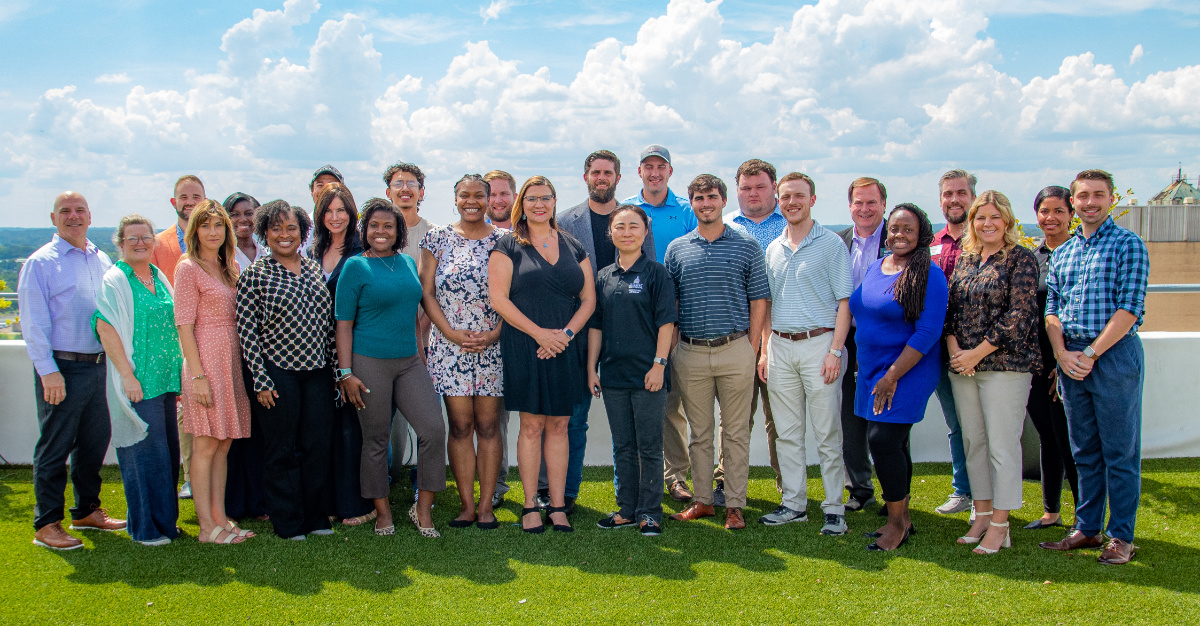
Consider two partners. Mississippi State’s E-Center works with student and resident entrepreneurs, including companies based on university technology. The Mississippi Polymer Institute brings an industrial and advanced-materials focus. An inventor seeking a prototype and a software founder seeking customers may share an accelerator, but they need different introductions.
What $50,000 asks in return
The current CoBuilders application page offers accepted companies $50,000 through a SAFE agreement, with a $1.5 million valuation cap. That cap belongs to the financing instrument; it is not a published valuation of Innovate Mississippi. Founders should read the agreement, because the capital comes with terms that matter to future ownership.
The regular curriculum is virtual, with in-person gatherings and a final Pitch Day. Companies must be headquartered in Mississippi and commit to completing the cohort. The ideal applicant has a minimum viable product ready for customer testing and can become investor-ready within twelve weeks. A preferred two-founder team is an ideal, not the same thing as a stated mandatory requirement.
Investor readiness is the actual assignment. Coaching examines product, market and financial risk. CoPath, the organization’s startup guide, turns meetings into next steps; introductions can include attorneys, accountants, software developers and prototyping firms. The 2025 kickoff described weekly meetings, assignments and testing. A persuasive presentation has to rest on something sturdier than persuasive slides.
Small checks, real constraints
The Mississippi Seed Fund offers a separate route. Its published proof-of-concept grant is $10,000 toward a $20,000 project; the example combines the award with $2,500 cash and $7,500 in-kind matching resources. A $25,000 proof-of-concept loan carries repayment terms. These awards reimburse eligible costs. They are not unrestricted cash handed over at the first meeting.
Timing matters. Reimbursement requests follow an agreement and a four-week waiting period. Earlier expenses and patent costs are excluded. The larger Growth and R&D funds are currently marked inactive because their funds have been expended. For a founder who cannot bridge expenses or assemble the match, the distinction between an award and available cash is painfully practical.
FoundersPlus works earlier in the journey. Supported by the W.K. Kellogg Foundation, it focuses on women and minority founders through entrepreneurial education, mentor access and development assistance. InvestMS addresses another stage, offering equity-investment opportunities to Mississippi startups and venture funds. Together, these programs provide several entry points rather than assuming every founder arrives ready to pitch.
There is a second customer here: the investor trying to find and evaluate a deal. The Mississippi Angel Investor Network offers access to startup opportunities and a forum for sharing due-diligence resources. Its published annual membership fee is $200. Members make investment decisions with their own capital; pooling money in an angel fund is a different arrangement. This distinction gives the organization a role on both sides of the introduction. Founders need help explaining the business, while investors need enough information to decide whether it suits them. A useful connection therefore requires more than exchanging business cards. Someone must prepare the opportunity, someone must examine it, and both parties must understand who is making the decision and bearing the risk.
A network earns its keep
The organization’s business model helps explain that breadth. Innovate Mississippi is a 501(c)(3), supported by public and private sponsors. Its FY2025 tax filing reports about $4.64 million in revenue, overwhelmingly from contributions. Microsoft has supported CoBuilders. Its three-cohort retrospective reported 35 participating companies and more than $1.22 million in total direct investments. Those investments are distinct from the nonprofit’s own operating revenue.
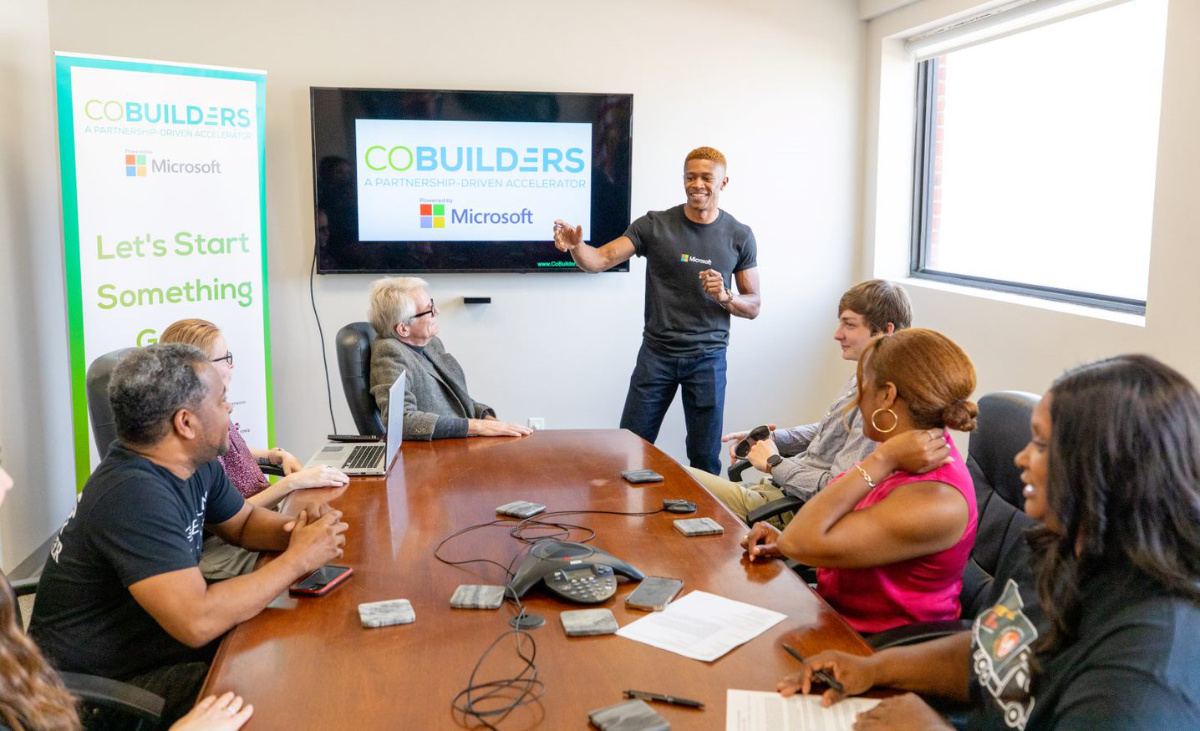
In August 2026, VTO Reading announced a nearly $500,000 seed round after participating in the fall 2025 accelerator. InvestMS and the Bulldog Angel Network anchored the round alongside other investors. September brought nine announced companies for the 2026 cohort, covering subjects from chemical testing to cricket. Pitch Day is scheduled for November 10.
Another region can copy the sequence: recruit through trusted local partners, test assumptions, set specific milestones, then make investor introductions. It needs committed mentors and money with usable terms. Founders can begin with Innovate Mississippi’s intake process; traditional businesses outside its innovation focus can look to SBDC resources. The useful promise is access to preparation and people. Customers still decide whether the business deserves to exist.
Open the next door
Explore Innovate Mississippi, CoBuilders terms, InvestMS and startup stories.
Follow LinkedIn, X, Instagram or Facebook. Watch the Ball AI founder interview.