A startup accelerator can charge founders nothing and still have an expensive problem. DivInc, the Austin nonprofit built to help overlooked entrepreneurs get a foothold in technology, knows the arithmetic. Its 2024 tax filing records $1.32 million in revenue against $1.83 million in expenses. The founders it serves can keep their equity. Someone still has to pay for the people doing the serving.
That tension makes DivInc more interesting than another collection of pitch workshops. It has spent a decade trying to turn business ownership into a route toward economic equity, particularly for women and entrepreneurs of color. The work involves introductions, coaching, industry connections and, in some cohorts, grants. The ambition is large. The machinery is surprisingly personal: a founder, an experienced operator and a conversation that would otherwise never happen.
Free for the founder. Funded by somebody.
DivInc is a 501(c)(3) nonprofit, operating between entrepreneurial education and the investment market. Founders use its services; foundations, corporate partners and individual donors help finance them. Calling all of those people “customers” would blur the arrangement. The entrepreneur needs a stronger business. The supporter is backing wider access to the opportunity to build one.
The financial squeeze is concrete. For the fiscal year from April 2024 through March 2025, DivInc reported $1,319,288 in total revenue and $1,832,674 in expenses, producing a $513,386 deficit. Contributions and grants supplied almost all revenue. The filing recorded no program-service revenue. It is an unusually clear view of what an equity-free offer requires behind the scenes.
The bill behind the mission
Reported totals, rounded in the bars. Deficit shown at filing precision.
In its 2023-2024 impact report, DivInc described a 38 percent decline in donations and program funding, including a 93 percent fall in corporate giving and the completion of multiyear federal grants. Individual support rose 79 percent, but could not close the gap. The organization said it streamlined operations and changed its fundraising approach, bringing in new foundation contributions.
The pressure appeared in the support system before the mission changed. These figures do not establish that the accelerator curriculum failed. They show how exposed a free service becomes when its sponsors retreat. The response was to seek a different mix of backing. In December 2025, DivInc announced more than $650,000 in grant funding secured in one year for its 2026 programming cycle. That announcement is evidence of renewed support, not proof that every financial difficulty disappeared.
Nine founders, and no application portal
DivInc began in 2016 at Galvanize Austin. Contemporary reporting named four founders: Preston James, Dan Austin, Dana Callender and Ashley Jennings. Its first pre-accelerator brought together nine people, five women and four men. Eight came from ethnic groups underrepresented among technology founders.
There was no formal application process for that first group. Advisors and mentors referred candidates. DivInc selected for commitment and coachability, looking for technology businesses with a validated concept and preferably an early product. Workshops covered legal issues, branding and building teams; lunches and dinners put participants beside people who had already lived through the startup process.
There is a useful lesson in that origin: an organization challenging exclusion used relationships to find people, then put those people inside a larger network. The trick was widening the circle. Its inaugural roster included the founders of Homads, Revealix and CodersLink. DivInc was helping build businesses, with distinct products and potential buyers, rather than assembling a single industry club.
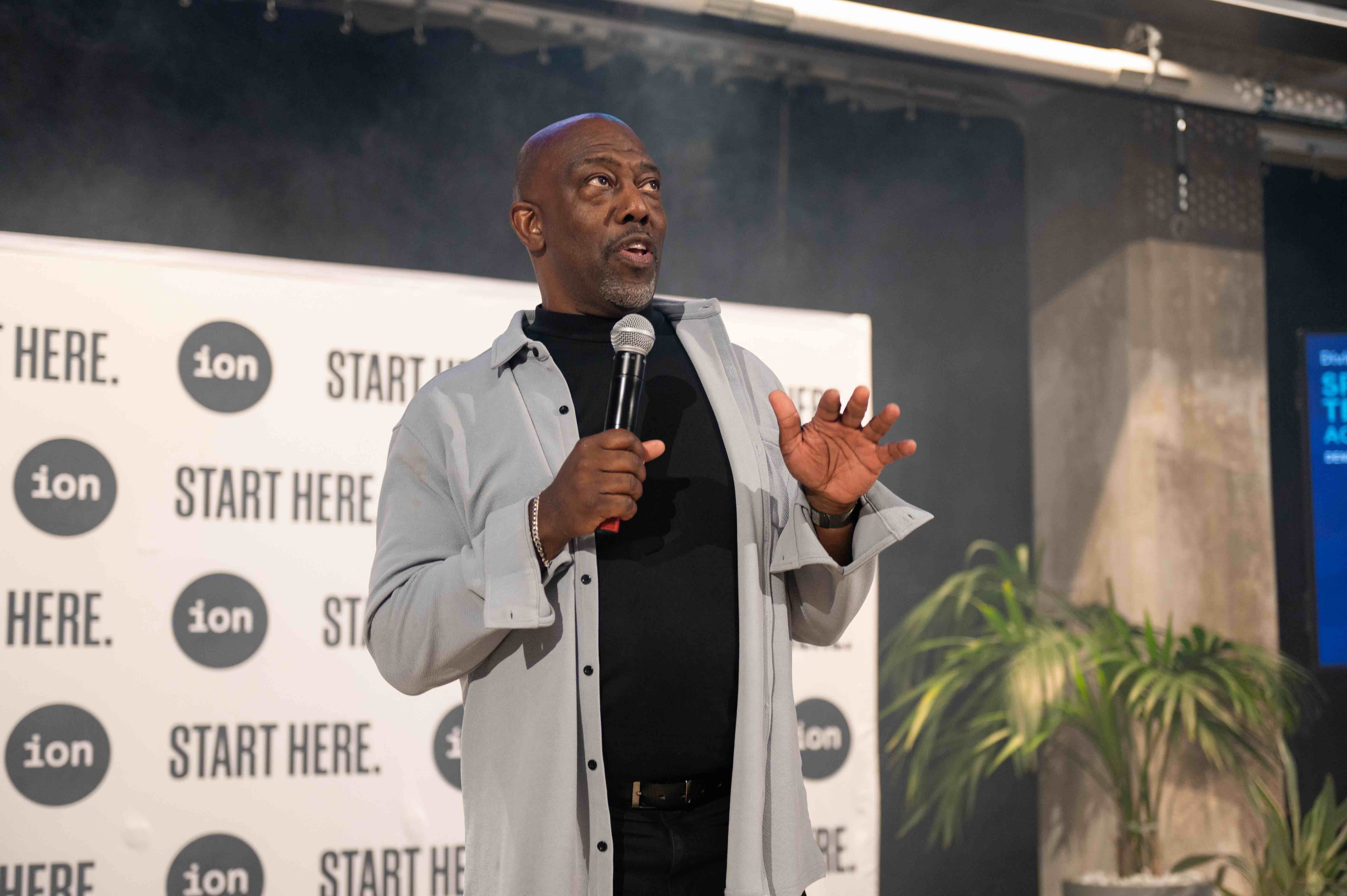
By March 2026, James said DivInc had supported the launch of more than 140 startups, with more than half still operating, and that founders had raised over $28 million in early-stage capital. Those are organization-reported figures, not a controlled study of accelerator effectiveness. They describe a substantial body of activity without telling us how those businesses would have performed on their own.
“We built access. Now we build ownership.”
Preston L. James II, March 2026
Houston supplied more than a second address
DivInc expanded to Houston in 2021 with a package of local support. JPMorgan Chase committed $250,000, Verizon supplied $175,000 for the first program and founder seed funding, and the Ion secured $605,000 over three years. The details matter: one partner helped make hiring possible, another supported programming and capital, and a third anchored the organization in a physical innovation district.
Houston also gave the accelerator subjects around which to organize expertise. DivInc’s 2022 5G Sports Tech cohort, backed by Verizon, included Brave Virtual Worlds, which worked on wearable motion capture, and TRAINR, a marketplace connecting athletes with trainers. Screen Skinz offered screen protectors with disappearing logos. An accelerator can be serious about economic opportunity and still have room for a phone accessory with a party trick.
The 2024 sports program added underdog venture team and HTX Sports Tech as partners. Rice University awarded an $800,000 grant over three years. Its sports management, medicine and analytics capabilities supplied a relevant institutional connection. For a young sports business, expertise in athlete performance or fan behavior can be more useful than another all-purpose lecture about disruption.
Other cohorts followed that sector-specific logic. The 2023 Clean Energy accelerator, supported by Chevron and Microsoft, covered areas including storage, efficiency and sustainable cities. Its announced completion grant was $10,000 per company. A separate DWeb for Social Impact program, supported by Filecoin Foundation for the Decentralized Web, explored decentralized technology and also advertised $10,000 in non-dilutive funding. These were particular programs with particular sponsors, not a standing promise that every DivInc founder receives a check.
The new CEO knows something about an audience
In March 2026, James announced his transition to founder and strategic advisor. DivInc named Tauri Laws-Phillips CEO later that month. The appointment brought together unusually compatible experience: marketing, consumer businesses, accelerator operations and the ability to stand in front of a room.
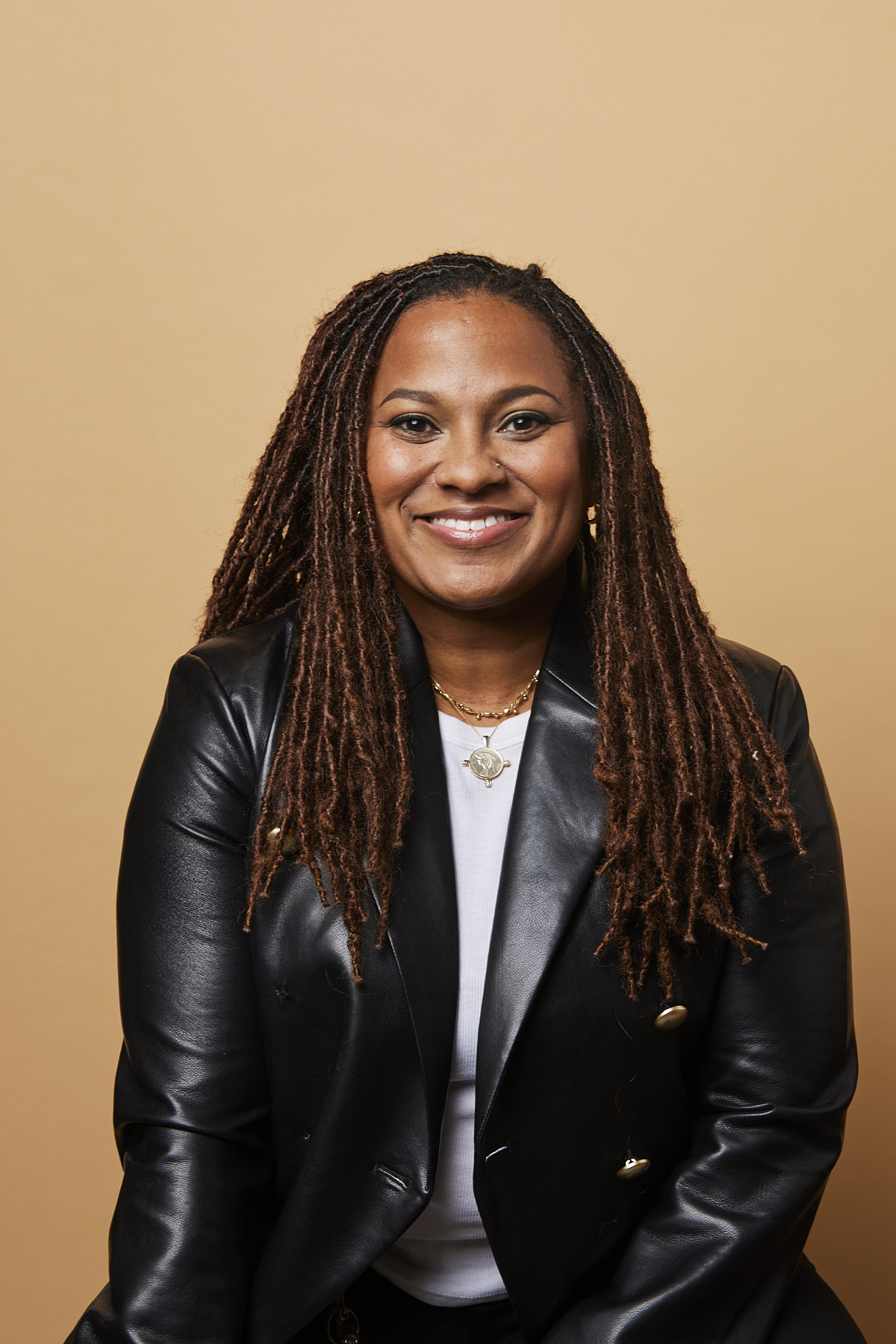
Laws-Phillips had worked with Andreessen Horowitz’s Talent x Opportunity initiative and SKU, where she served as program director and an equity mentor. DivInc credits her with supporting more than 200 founders across technology and consumer goods, alongside more than 15 years in marketing, including work at Unilever. She is also a former co-owner of Austin’s ColdTowne Theater and a comedy performer and writer.
The theater connection is an appealing detail, but her operational experience is the substantive one. Young companies need help explaining their product, identifying buyers and executing consistently. DivInc’s January 2026 agenda called for monthly educational workshops, community events in Austin and Houston, an industry-agnostic accelerator and a third year of internships. It described a shift toward sustainable growth and ongoing support. That is a broader calendar than one dramatic Demo Day.
No equity. A very real time commitment.
The next Women in Tech accelerator is scheduled to begin September 21, 2026. DivInc advertises a free, equity-free, 10-week hybrid program with two in-person weeks in Austin. It serves women-led, U.S.-based, for-profit technology businesses beyond pure ideation. Nonprofits and consulting firms are excluded. Founders should check the current program requirements for the precise leadership and product criteria.
*Company work and scheduled programming combined. Two in-person weeks in Austin are part of the advertised format.
The CEO must participate, committing 25 to 30 hours a week to company work and programming. Across ten weeks, that implies 250 to 300 hours, not all additional classroom time. Workshops, coaching, legal advice and warm introductions are the offer. Eighteen months of alumni support extend the relationship. For a founder already stretched between employment, caregiving and a startup, the calendar is a meaningful price.
DivInc occupies a recognizable place in a crowded market. MassChallenge also operates zero-equity programs, so leaving ownership untouched is not unique. Techstars offers an investment tied to equity and convertible instruments. DivInc’s distinction is the combination of its intended founder community, Texas relationships and sponsored access to expertise. The right comparison depends on whether a company most needs investment now, commercial contacts, a product test or sustained guidance.
Sometimes the missing ingredient is another pair of hands
DivInc’s internship work addresses a different bottleneck: founders can understand what needs doing and still lack enough people to do it. Its 2024 program, powered by Blackstone LaunchPad, placed 30 students in paid internships at 13 companies. Projects included web development, product development and marketing. Students gained experience inside early-stage businesses; founders gained help delivering actual work.
The NBA Foundation partnership announced in December 2024 aimed to add 25 paid opportunities for Black Houston youth aged 18 to 24 in 2025. DivInc paired placements with operational and team-development support for founders. That second element is easily overlooked. Giving a stretched entrepreneur an intern also creates a management job; the placement works better when somebody helps the founder learn to supervise.
By December 2025, DivInc reported that internship partners had helped it support more than 150 students and more than 30 early-stage startups. It planned 75-plus placements for 2026. The plan reflects a practical response to founder feedback about needing qualified talent. It also gives students an entry point into companies whose jobs may never reach a conventional graduate recruiting fair.
For anyone borrowing from DivInc, the useful unit is a specific obstacle paired with a specific person who can help remove it. Find the industry mentor. Arrange the buyer introduction. Give a student a defined project and a manager with time to guide it. This approach depends on engaged founders, capable partners and reliable funding. It cannot make an unwanted product desirable, or turn a workshop into guaranteed investment. Its value lies in making the next serious business decision less lonely and better informed.