The problem Almaz Negash noticed was almost embarrassingly simple. People were holding meetings about Africa. Africans were conspicuously scarce at the table. Negash, an Eritrean-born professional working in Silicon Valley, had spent years in international trade and social innovation. She understood what a room could accomplish. She also understood what it could quietly exclude.
- ADN connects African and diaspora founders with training, mentors, investors, and partners.
- Its programs serve enterprises in Africa and the United States, including nonprofit ventures.
- A newer philanthropic fund offers grants up to $25,000 through Myriad USA.
“Everybody was speaking about Africa but there were very few Africans at the table.”Almaz Negash / 2024 interview
The observation became African Diaspora Network, founded in 2010. Its proposition was that the people routinely discussed as beneficiaries could also be the people designing businesses, supplying expertise, and deciding where resources should go.
01 / A room with a follow-up plan
ADN’s signature gathering is the African Diaspora Investment Symposium, or ADIS. Entrepreneurs meet investors, foundation representatives, academics, government officials, and other founders. The conference covers investment and development opportunities, with participants interested in both commercial enterprises and social outcomes. Its audience includes friends of Africa as well as Africans and their descendants.
In 2016, ADN brought ADIS to Silicon Valley with $15,000 in seed support from the U.S. Department of State and 167 attendees. That is a refreshingly modest starting point for an organization concerned with capital. The money was seed support for the symposium, rather than a disclosed price tag for everything ADN would later become.
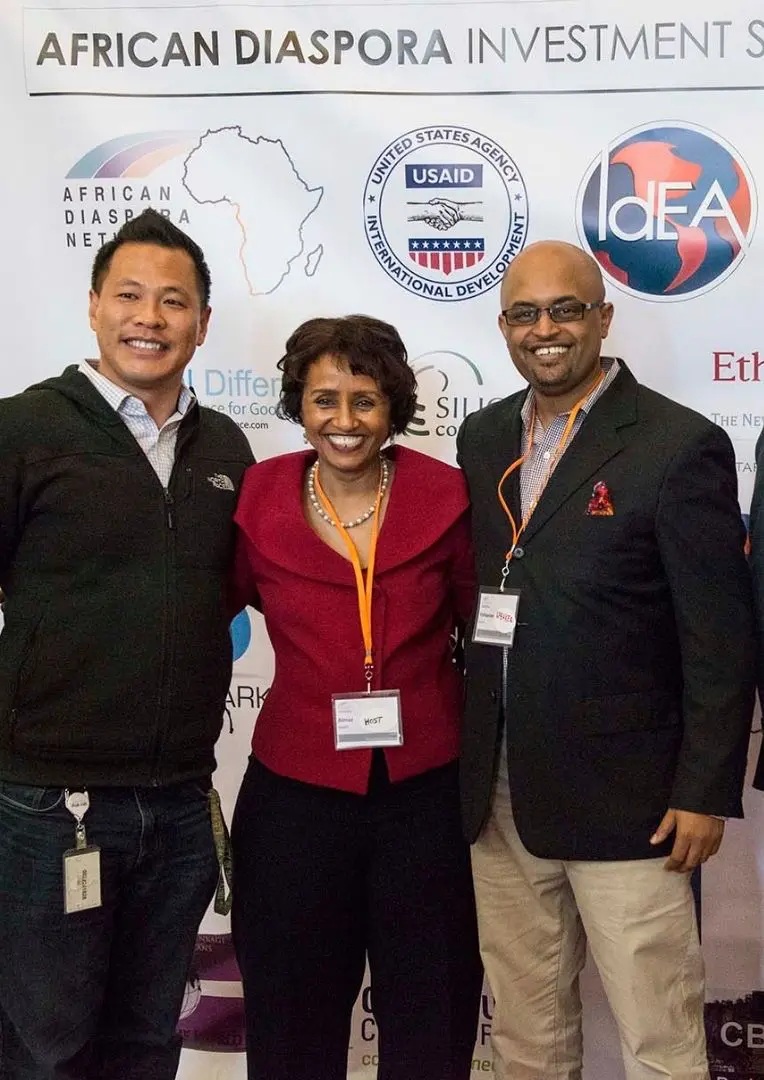
The interesting part is what ADN built around the gathering. Builders of Africa’s Future, launched in 2018, supports early-stage African businesses and nonprofits. Its program page reports 93 entrepreneurs trained and supported, working across healthcare, agriculture, education, renewable energy, and other sectors. The offer combines enterprise support with visibility and access to people a founder might otherwise struggle to reach.
02 / The question that crossed the Atlantic
At ADIS in January 2020, Silicon Valley Community Foundation expressed interest in an equivalent program for U.S.-based Black entrepreneurs. ADN’s Africa-focused accelerator offered a starting point. ABLE launched in 2021, extending the organization’s enterprise work to communities in the United States. A familiar problem had appeared on another side of the ocean: capable founders without sufficient access to support.
Today, ABLE means Accelerating Business Leadership and Entrepreneurship. Previously, “Black” occupied the second word. ADN explains that its rebranding reflects the variety of diaspora ventures it serves. After four cohorts with Santa Clara University’s Leavey Executive Center as academic partner, ADN brought delivery in-house and appointed an experienced lead facilitator. The organization was taking greater responsibility for the classroom as well as the guest list.
The current offer is concrete: a fully funded accelerator for early-stage, revenue-generating startups, leadership training, expert mentorship, investor connections, and an opportunity to pitch. Successful completion makes participants eligible for a financial award. These are useful services for founders preparing to raise money or enter new markets; participation itself does not promise an investment.
The 2026 cohort helps explain the breadth. SplitEV turns privately owned electric-vehicle chargers into bookable charging points. YOL Juice Market sells plant-based drinks and food. Both belong in the same founder-support program. ADN’s organizing principle is access and enterprise development, which gives it room to work beyond a single technology sector.
03 / The unexpected entrepreneurs
Then there are the Catholic Sisters. Through Start Your Social Enterprise, ADN supports women whose community work already reaches families facing poverty and limited opportunity. The initiative helps them develop entrepreneurial skills and move from charity-dependent operations toward sustainable enterprises. The African Management Institute leads virtual workshops, with support from the Conrad N. Hilton Foundation.
This is an instructive choice. Entrepreneurship programs often look for people who already describe themselves as entrepreneurs. ADN also works with people who have community knowledge and operating responsibilities, but need help building a business model. Expertise can arrive wearing something other than a startup hoodie.
04 / Giving gets an operating structure
ADN’s Beyond Remittances agenda asks diaspora communities to organize their expertise and money beyond family transfers. The African Diaspora Innovation Fund, launched in 2025 with Myriad USA, makes part of that idea tangible: philanthropic grants of up to $25,000 for African and African-descendant social entrepreneurs. Myriad USA administers the fund. This is charitable capital, rather than a retail investment promising shareholders a return.
ADN itself is a registered nonprofit, supported by donations, institutional funding, corporate sponsors, and partners. The distinction matters because several financial figures concern the ventures it supports. ADN reports that alumni collectively raised close to $20 million. That figure describes entrepreneur fundraising, not money earned by the organization.
of alumni directly attribute enterprise growth to ADN, according to the organization’s published account. A useful signal of perceived value, rather than proof of what would have happened without it.
Its 2024-2028 strategy identifies a practical weakness: the community lives across mailing lists and social platforms. ADN proposes a more useful year-round hub. The lesson readers can copy is specific: follow a convening with a place to keep working, named opportunities, and people responsible for making connections productive.
05 / The next introduction may be scientific
The same method is moving into health research. With the Gates Foundation, ADN is developing the Grand Challenges African Diaspora Engagement Accelerator. Its plans include a scientific hub and database, connections between continental and diaspora researchers, and case studies in vaccine research and drug discovery. These are proposed collaboration mechanisms, rather than completed medical breakthroughs.
In 2026, ADN also opened a Washington, D.C., office. September brought the announced board appointment of physician and health-equity leader Dr. Pierre R. Theodore. Its reach now spans entrepreneurship, philanthropy, science, and policy. Each adds another kind of specialist to the conversation.
For founders, the practical entry is an eligible program or a relevant convening. For experienced professionals, it may be mentoring, reviewing applications, or contributing a partnership. The model depends on fit, committed participants, and follow-through. An introduction cannot supply every missing resource. ADN’s useful wager is that organizing the right people makes the next step easier to take.