A good cake can earn compliments. A cake business has to earn its keep. Maneeka Brown arrived in SpringGR’s first cohort in 2014 with baking talent, a healthcare career and a master’s degree in business. She still wanted help with the mechanics of ownership. That distinction - between knowing your product and knowing how to run the enterprise around it - explains much of what this Grand Rapids organization does.
By January 2025, Brown was running Cakes by the Jar, continuing her healthcare work and helping other food entrepreneurs as a SpringGR facilitator. She had even returned for a refresher in 2021. In Rapid Growth’s account, she credited the program with helping her “fine-tune my business model.” Here was a graduate coming back with both questions and experience worth sharing.
SpringGR builds around that exchange. It teaches aspiring and established owners how to investigate a market, organize a business and make decisions with other entrepreneurs in the room. Its initial accelerators carry a $150 participant fee. The price gets attention; the work behind it deserves more.
The first assignment is the owner
SpringGR’s Idea Lab starts before a first sale. Its 14 weeks divide into four weeks focused on the individual and ten on business development. Fear, personal finances, mental health and the sacrifices of ownership share space with customer research and the business model canvas. Participants build a landing page and finish with a demonstration project.
There is a useful impatience in that design. A prospective owner can spend months polishing an idea while avoiding the awkward question of who will buy it. SpringGR puts the person and the proposition under examination. The canvas gives a concept a shape that other people can question; research supplies something firmer than enthusiasm.
The organization says it created Idea Lab after recognizing that many people arrived with a vision that still needed development. That observation led to a distinct starting point for people without sales. A beginner has different homework from an owner trying to make an existing operation pay.
Personal preparation → customer research, business models and practical work
The Small Business Accelerator serves owners who have already made at least $1,000 in business. Its later weeks add financial training and a pitch competition. Participants attend weekly, in person, and complete assignments. The distinction is concrete: an idea needs testing; a business with customers needs a stronger foundation.
That makes the low fee only one part of the commitment. SpringGR’s FAQ describes an opening phase that can also reveal when the program is a poor fit. Applications do not guarantee admission. Attendance matters, and the curriculum serves for-profit businesses. Someone seeking an occasional online answer should weigh those requirements before signing up.
The fee is small. The subsidy is substantial.
SpringGR began with two pilot programs in spring 2014. Early delivery took place through neighborhood organizations, including Restorers, The Other Way Ministries, Roosevelt Park Ministries and Streams of Hope. A 2016 account described DeVos family foundation funding and a deliberate effort to hold programs close to the people they served.
Its mission connects profitable businesses with community well-being. That helps explain a financial arrangement in which the entrepreneur’s tuition covers a fraction of the institution around the class. SpringGR is itself a nonprofit, although it trains people building for-profit enterprises.
The organization’s 2024 tax filing reports $1,119,588 in revenue and $1,178,426 in expenses. Contributions supplied $1,060,806, or 94.7 percent of revenue. The remaining $58,782 was recorded as other income. The year ended with expenses exceeding revenue by $58,838.
of organizational revenue came from contributions
For another community looking to copy the model, those figures matter as much as the syllabus. A $150 course depends on resources beyond the participant’s payment. Replication would require dependable backing as well as capable instructors. The published figures make the funding mechanism visible without turning a tuition price into a claim about what education actually costs.
Business Spanish, all the way through
Language is another part of access. SpringGR en Español offers Emprende and Avanza, each lasting 14 weeks. Emprende addresses people starting out with an idea or an early business. Avanza serves owners who have generated at least $1,000 in sales and want to strengthen their operations.
The programs are taught in Spanish, with Spanish-speaking facilitators and coaches. The distinction between the two tracks echoes the English-language offerings: personal preparation comes first, followed by practical work on the business. Existing sales change the starting point, but they do not eliminate the need to examine assumptions.
This is a specific design choice worth copying. Giving participants a familiar language for questions allows the class to spend its time on the commercial problem itself. The offering also treats Spanish-speaking entrepreneurs as people at different stages of ownership, each with a different set of decisions ahead.
Then somebody needs a kitchen
A food business makes the limits of classroom instruction tangible. After the lesson comes a batch to prepare. SpringGR’s Kitchen Accelerator Program addresses that combination through 14 weeks of instruction covering product development, finances, customer research and industry connections, with a food-business showcase among its activities.
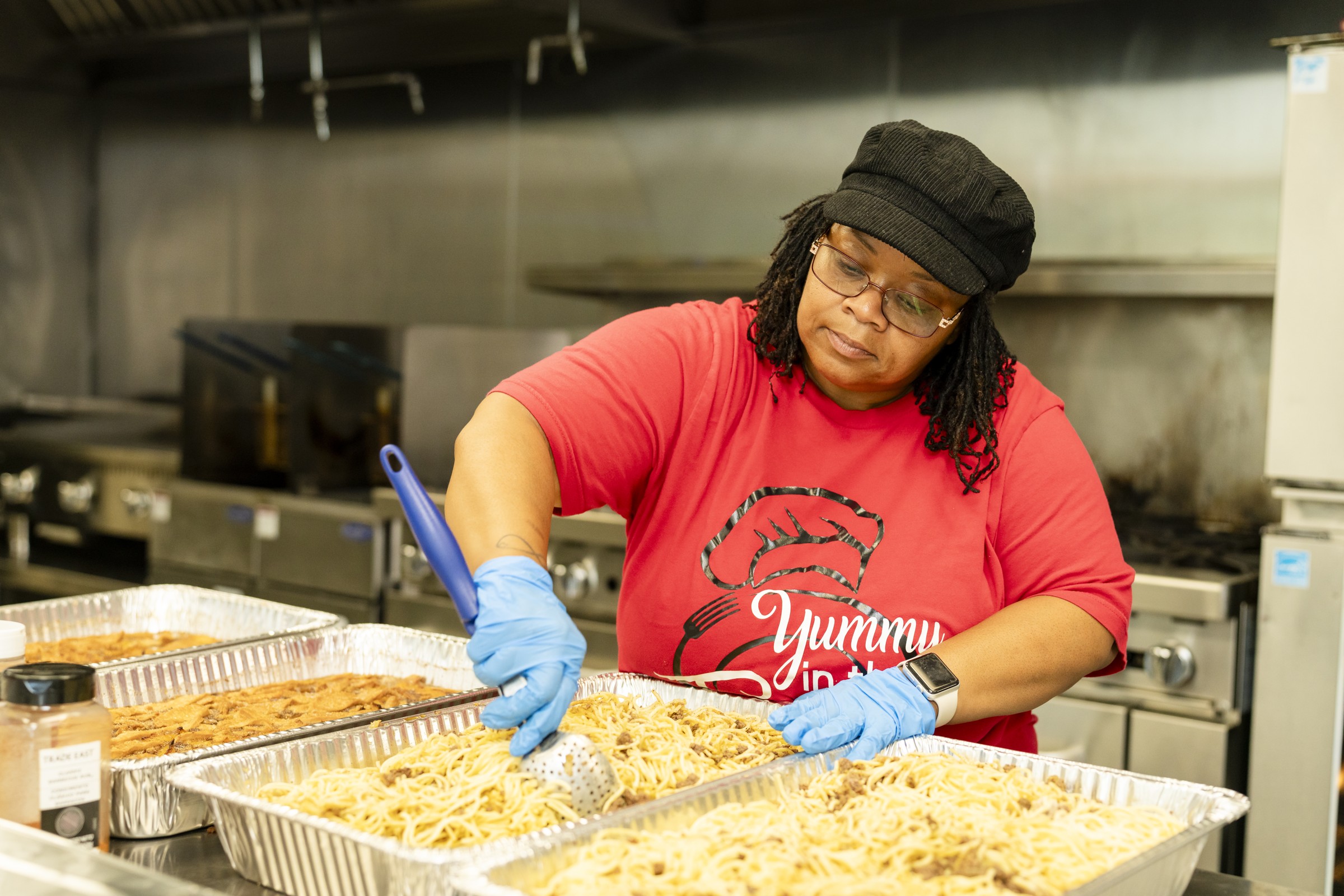
The related Kitchen Incubator at Kzoo Station supplies shared commercial facilities and continuing business support for eligible graduates. Its audience includes caterers, bakers, food-truck operators and product developers. The accelerator teaches business foundations; the incubator gives makers somewhere to keep putting them to work.
The address has its own conversion story. Amplify GR’s project announcement identified the building at 1445 Kalamazoo Avenue as the former Good Shepherd Auto, vacant for more than a decade. Neighbors had asked for more local food options and opportunities for Black, brown and women business owners. Construction began in October 2021.
SpringGR now names the incubator’s stages The Starter, The Simmer and The Sizzle. Behind the kitchen puns sit menus, money management, marketing, sales goals and eventually delegation. The progression makes a sober point: producing food consistently and running a growing company require different skills. Members also get opportunities to appear at markets, pop-ups and community events.
A graduation with somewhere to go afterward
The current team roster names Karla Velis-Brito as executive director and Arlene Campbell as director of programs and operations. Alongside operations staff sits a longer list of coaches and facilitators. Teaching, business growth and kitchen management appear as distinct responsibilities.
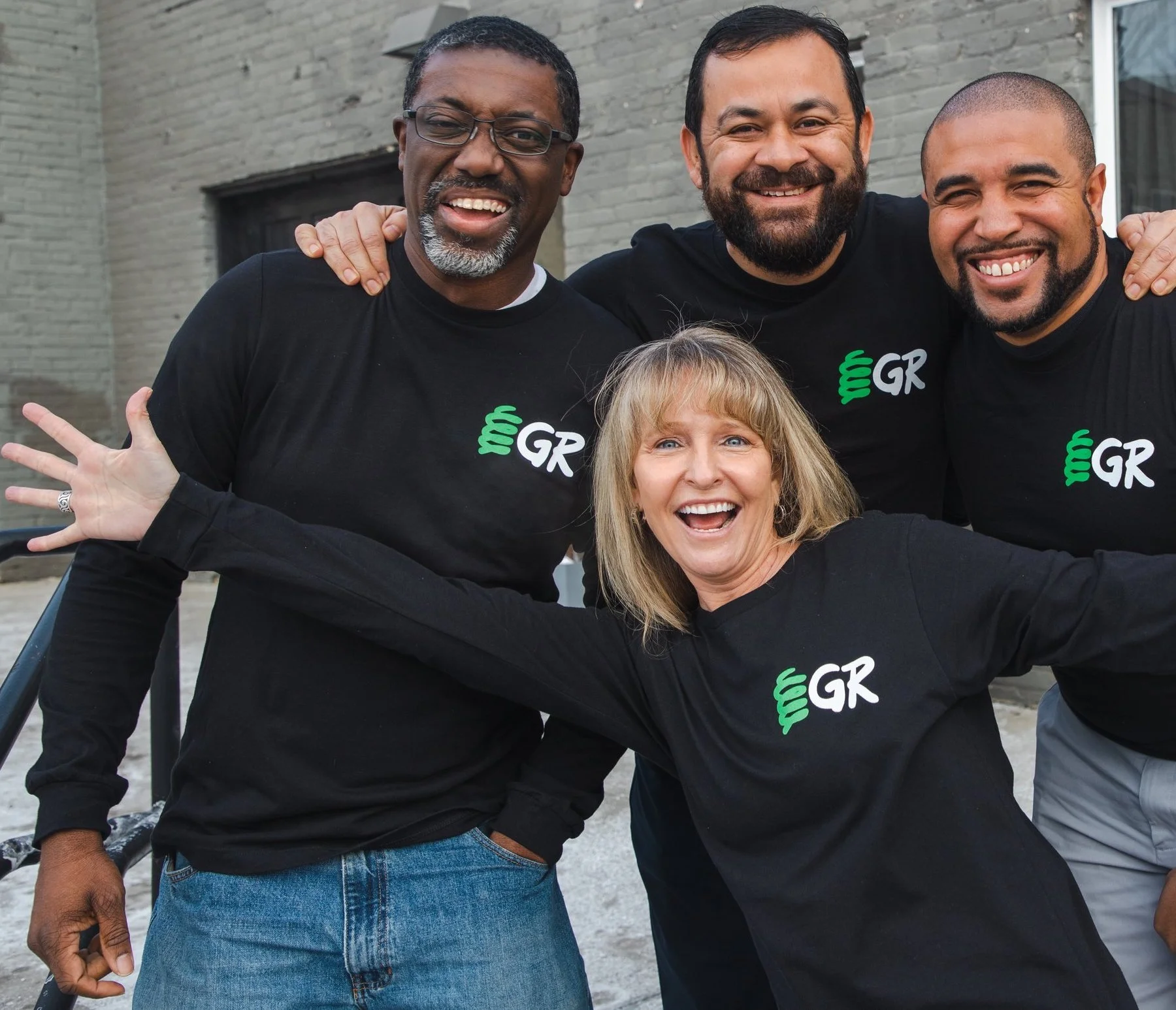
After classes, business support services include mentoring, regular roundtables and one-to-one Business Jumpstart coaching opportunities. Alumni can bring problems back into a room with people who understand their businesses. That continuity matters because a question about hiring or marketing may arrive well after the final presentation.
There is specialist help, too. SpringGR’s alumni offering includes legal support through Miller Johnson, subject to availability and terms. The law firm documented assistance for graduates in its 2018 diversity report, covering matters such as formation and contracts. This relationship gives the promise of continuing support a practical shape.
A free alumni coaching night listed for April 20, 2026 offered one-to-one conversations with professionals across insurance, sales, operations, finance and other business disciplines. A graduate could return with a particular question instead of enrolling in another full course.
Alumni accounts put detail behind the program descriptions. Raquel Lindsay, owner of Sparkle & Shine Cleaning Services, told WKTV that her early training addressed her ideal client, competitors and break-even point. Later, the 250 Project connected her with owners working on growth and a group that met regularly for accountability. Her 2023 account describes a move from learning basic business arithmetic to using it alongside other owners.
“There was a market for the products”Nancy Quero, Guelaguetza Designs, describing what she learned through SpringGR in WKTV’s 2019 reporting.
For Quero, the shift was recognizing that her products had a market worth pursuing. Both accounts give prospective participants something more useful than an abstract promise of confidence: specific questions to bring to a coach about buyers, costs and the next decision.
Customers change the curriculum
SpringGR has also pushed beyond getting started. The 250 Project began in 2022 with 13 owners in its first cohort, addressing the scarcity of minority-owned local businesses above $250,000 in annual revenue. Later reporting in 2023 described work on repeat customers, financial connections and a three-year growth path.
The current Next Level offering runs for 12 weeks and costs $500. Its published eligibility centers on roughly $75,000 in annual revenue, at least a year in business, another employee or contractor and majority ownership. Participants work on leadership, marketing, operations and finances, producing a customized growth map and action plan.
For an established owner, the practical lesson is to change the question as the business changes. Winning a first customer and directing a team deserve separate attention. A program organized by business stage can acknowledge that difference instead of asking every participant to begin again with the same introductory material.
There are alternatives. Michigan SBDC’s West Michigan region offers no-cost consulting, research and education; SCORE offers free mentoring. SpringGR’s case rests on the combination of a scheduled cohort, applied work, Spanish-language routes, food-business facilities and relationships that continue afterward. Those services can complement other local advice.
SpringGR reports more than 1,300 people through its programs and over $5.2 million in 2024 revenue at graduate-run businesses. The sales figure describes alumni enterprises; it does not measure how much revenue the training caused. The more immediate proposition is straightforward: test the idea, learn the numbers and keep people nearby who will ask useful questions. A cake may win the first compliment. There is more work before the next order pays.
Step into the room
Explore applications, alumni support and SpringGR’s website. Follow its community on LinkedIn, Instagram and Facebook, or watch its YouTube channel. Read the anniversary profile and Maneeka Brown’s story.