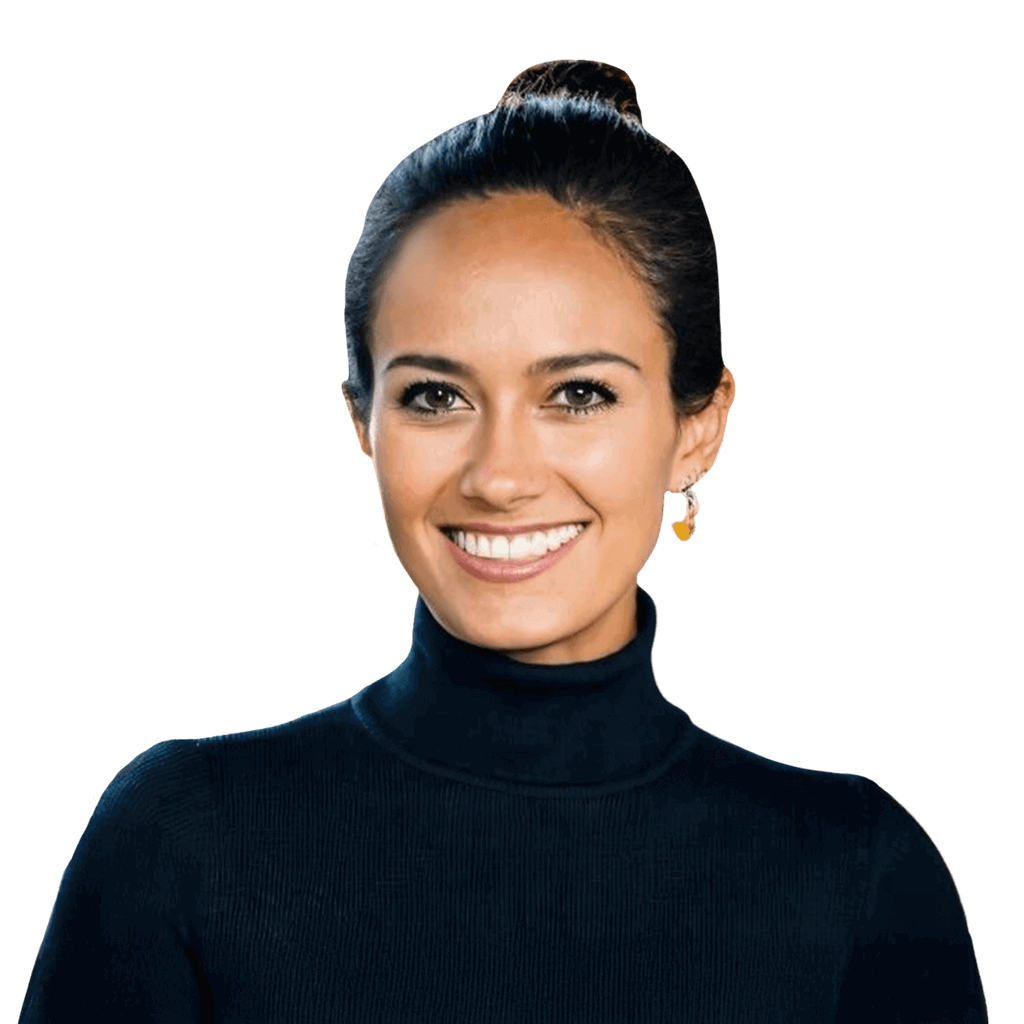
The Connector Who Designs the Room
Not everyone who matters in Silicon Valley writes checks. Some of them design the rooms where the checks get written. Katie Kirsch - Stanford-trained engineer, Harvard MBA, 4x founder, and now Partner at Andreessen Horowitz - has spent a decade figuring out that the most valuable thing you can build in tech isn't a product. It's the network that makes products possible.
At a16z, her title is Ecosystem Growth Partner, but the job description reads more like an architect's brief: design the connective tissue that holds one of the world's most influential venture firms together. Programs, products, spaces, systems - whatever it takes to bring the most ambitious founders, operators, and technologists into the same orbit.
She joined the firm in mid-2025 and within months had launched the inaugural a16z Growth Engineer Fellowship - an 8-week cohort for the engineers and operators reshaping how companies grow in an AI-native world. The application window opened. In days, 1,400 people applied from around the globe. Sixty-five were accepted, drawn from OpenAI, Replit, Notion, Coinbase, ElevenLabs, Perplexity, and Cursor. The speed of demand wasn't an accident. It was a signal about the trust Katie had already built.
In class, you study the protagonists. But when you become the protagonist of your own case, everything changes.- Katie Kirsch
A Builder Who Built Herself First
The path from Stanford's Product Design Engineering program (class of 2016) to a16z is not a straight line. It winds through IDEO's design labs in San Francisco, a classroom at Stanford's d.school and Harvard's Graduate School of Education, a nonprofit launch, a $750k pre-seed raise for a mentorship platform called Twenty, a pivot to a coaching startup called lume, and a Forbes 30 Under 30 list in 2024 - before landing in the partner seat at one of VC's most storied firms.
At IDEO, she led product and design work - learning the discipline of building for humans, not just for markets. That sensibility never left her. When she returned to Harvard Business School for her MBA (class of 2021), she brought it into the classroom as a teacher, running entrepreneurship programs at both HBS and Stanford's d.school where she taught students the thing business school rarely covers: how to actually build something from nothing, while managing the psychological weight of it.
After HBS, she moved to New York City and went all-in on Twenty - a global mentorship platform designed to help young adults navigate their twenties, personally and professionally. The community grew fast: 1,100+ members, 750+ coaching sessions, 550+ people in a Slack workspace with hundreds of jobs posted. The idea was right. The structure kept evolving.
The Pivot That Proved the Point
Founders pivot. What separates the ones who survive from the ones who don't is usually what happens in the 90 days after. When Katie pivoted from Twenty to co-found lume - an integrated professional and health coaching startup - she tripled ARR in under a year. That number isn't just a metric. It's a verdict on her ability to find product-market fit and execute without losing the thread.
What is lume?
lume is the first all-in-one membership blending professional and health coaching so founders and operators can pursue ambitious goals without sacrificing their wellbeing. Katie co-founded it with Ari Gootnick and tripled ARR within less than a year of launch.
lume was also personal. Katie had experienced the pressure first-hand - the particular strain of being a first-time startup CEO in a new city, with money raised, a team hired, and no manual for what to do when the ambiguity hit. "Working with a coach made me a calmer and more confident leader," she has said. "Finding the right coach feels like finding a superpower." lume was her attempt to give other founders that superpower before they needed to go looking for it.
Network as Infrastructure
In late 2024, Katie wrote a piece for a16z that cut through the noise about San Francisco's tech scene. Her argument: the social infrastructure of Silicon Valley had moved online. Proof of work now happens on X, not at conferences. Your "mutuals" - people you've met once in person but known intellectually for years through Twitter - are the primary currency of professional credibility.
"What they mean, mostly, is mutuals," she wrote, describing the new social graph. The piece wasn't tech commentary. It was a map of how the ecosystem she now manages actually functions. The pathway she described - X follows to private group chats to Partiful invites to in-person dinners to real relationships - is essentially the operating system behind every program she designs at a16z.
The Growth Engineer Fellowship is built on the same logic. It's not a conference or a summit. It's an 8-week cohort - tight, curated, with off-the-record dinners, live working sessions, and what Katie calls a "tiny talk" series where fellows demo their work and get sharp feedback. The output isn't keynotes. It's the relationships, the group chats, the trust built over a shared meal that no one outside the room hears about.
I create environments where the most ambitious startup founders, operators, and technologists can thrive.- Katie Kirsch, on joining a16z
Beyond the Resume Line
The version of Katie Kirsch that doesn't appear on the Forbes list: she volunteers in Uganda and India, working on women's health and education. She practices yoga and meditation. She plays mahjong - a game about pattern recognition, reading opponents, and playing the long game. She scuba dives. She writes on Substack. She teaches.
These aren't footnotes. They're the same instincts at work. Scuba diving requires you to stay calm in unfamiliar environments and trust your systems. Mahjong rewards pattern recognition and strategic patience. Teaching requires you to understand how people learn before you can change how they think. All of it feeds back into the kind of community architect she is - someone who thinks about systems, sequences, trust, and what it means to actually help someone get where they're going.
Katie Kirsch has a Stanford engineering degree and a Harvard MBA and a Forbes 30 Under 30 badge and a partnership at one of the most powerful firms in tech. She also coaches founders through the hardest moments of their professional lives, volunteers on two continents, and has spent ten years learning that the most valuable thing you can build is a room where the right people feel like they belong.
The tech ecosystem has plenty of people who build companies. It has very few who build the conditions for companies to be built. That's the rarer skill. That's Katie Kirsch's job now.