The interesting thing about HumanBulb’s clean-tech accelerator is what founders are asked to do before they build anything. In the first week, they choose a customer they can actually reach. Then they book interviews. By week three, the assignment is to decide whether to continue, narrow the problem, or change direction. An invention can wait. A conversation cannot.
- Paid internships connect Sacramento residents to clean-tech projects.
- Startup programs put customer discovery ahead of product development.
- Schools and community organizations can bring HumanBulb’s STEM sessions to their own sites.
That order explains much of this Sacramento nonprofit. HumanBulb works across youth education, workforce development, and entrepreneurship, with particular attention to women, LGBTQ+ people, immigrants and refugees, BIPOC communities, and people with low incomes. The recurring problem is access: to equipment, experience, useful contacts, and the confidence to enter a room where technology is being made.
01The homework comes before the invention
The SMUD Clean Tech AI Startup Accelerator, scheduled for June 15 through August 8, 2026, was advertised as free. Its subject was practical energy efficiency and electrification, especially in multifamily housing. Proposed applications included tenant engagement, retrofit decisions, EV charging, and tools that help households navigate incentives. These are stubborn operational problems, with customers to identify and workflows to understand.
Its curriculum makes the discipline visible. Interviews precede the market scan; the market scan precedes a tightly scoped minimum viable product. Building starts in week five. Feedback follows. The final showcase asks founders to arrive with a demonstration, evidence, and specific requests for pilots or partners. A charming slide deck has considerable competition.
“Customer evidence comes before building”
HumanBulb’s clean-tech accelerator principle
- 01-03ListenInterview customers.
Select the problem. - 04ScopeMap alternatives.
Choose a small MVP. - 05-06BuildMake a prototype.
Test and improve. - 07-08AskPackage the proof.
Seek pilots and partners.
The Roseville AI-Native Startup Accelerator applied a similar approach over 16 evening sessions, scheduled August 3 through September 24, 2026, at Roseville Venture Lab. It offered separate tracks for nontechnical founders and experienced builders. Coding experience was optional. Domain knowledge, customer discovery, and a willingness to make something were central. Its published application and interview counts were targets, rather than a victory lap.
02A paycheck is part of the curriculum
The other revealing number is 20. That is the weekly hours specified for Green Careers Launchpad, an eight-week paid internship for City of Sacramento residents ages 16 to 30. Interns support clean-tech companies and sustainability initiatives through research, digital content, project coordination, events, and outreach. The green economy, it turns out, also needs people who can write clearly and organize a meeting.
Training includes financial literacy, interview practice, professional communication, and emotional wellness. Interns meet practitioners and visit businesses. HumanBulb reports that all members of its 2025 cohort earned Google AI Essentials. That is a defined educational result; a permanent job is a separate achievement. The program also produced an intern-written green-technology resource covering agriculture, mobility, and the clean economy.
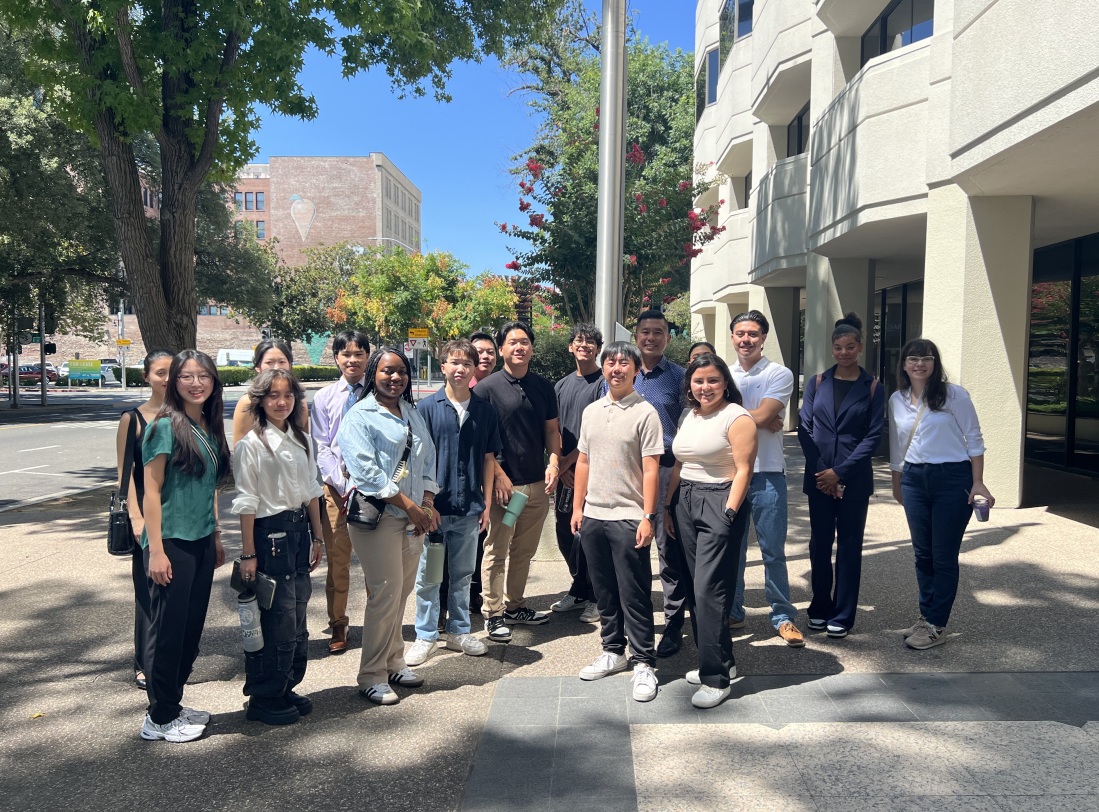
HumanBulb’s founders bring experience suited to this connecting work. Charlotte Danielsson is an attorney whose background includes startups, immigration, and leading the cross-border innovation organization Silicon Vikings. Henry Chang brings business-development experience across technology, telecommunications, and manufacturing, alongside nonprofit leadership. Their expertise includes the relationships and organizational work that sit around an invention.
03The classroom already exists
For younger participants, HumanBulb often takes the equipment to the audience. Its STEM Enrichment Partner Program supplies curriculum, materials, and facilitators; schools and community organizations supply students, space, and scheduling. The 2025-2026 series with Roberts Family Development Center included electrical circuits, wind turbines, solar-powered cars, and experiments using fruits and vegetables to power small devices.
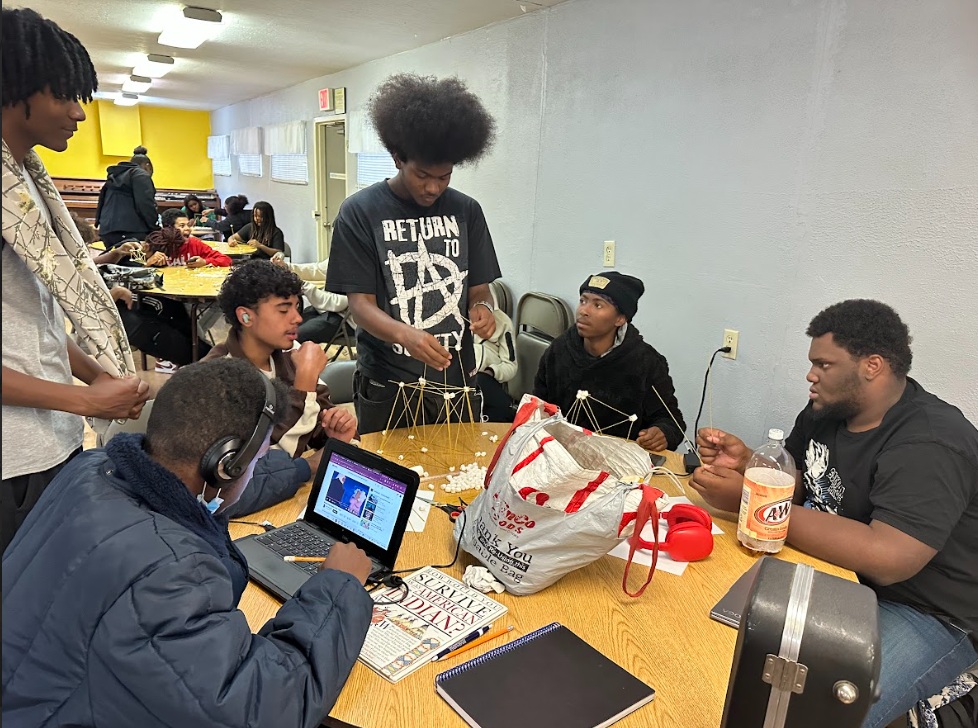
Then there is The Hidden Network, created with SacSewer. Participants simulated sewer blockages, built filtration models, and explored resource recovery. The three-session program was free and advertised a $50 stipend for attending every session. Wastewater is an unusually concrete way into environmental science: the system exists, the consequences matter, and somebody must understand how it works.
Adults have other entry points. Eligible learners can receive full Google Career Certificate scholarships with self-paced study and check-ins. An AWS PartyRock challenge has teams produce an AI application and supporting documentation in 90 minutes. TechConnect brings regional practitioners together. The Innovation Center advertises AI, prototyping, and XR labs. This is a collection of ways to get started, rather than one course everybody must take.
There is preparation for entrepreneurship, too. The Scalable Fundamentals series covers evaluating whether an idea can grow, AI-assisted marketing, defensible business models, early traction, and networking. One workshop specifically examines manual, personal approaches before scaling. Technology education here includes knowing when a human conversation remains the better tool.
04Free admission, real bills
The economics deserve their own paragraph. HumanBulb’s 2024 nonprofit filing reported $196,280 in revenue, entirely from contributions, against $197,505 in expenses. The difference was a $1,225 deficit. Year-end net assets were $4,408. Free participation shifts the bill toward donors, grants, and sponsors; it does not make the bill disappear.
That dependency is visible in FLEXPATH, its flexible virtual support for California climate and sustainability entrepreneurs. HumanBulb’s program page says it is paused because funding was cut as part of federal government cuts. That statement identifies a funding interruption, not a verdict on participant demand. Separately, its CalOSBA-funded consulting offer advertised availability only through September 2026, or until its allocated hours ran out.
05Borrow the sequence
HumanBulb fits between a classroom, a technical community, and an early-stage incubator. Its distinctive combination is paid experience, beginner access, partner delivery, and founder validation. The practical lesson to copy is the sequence: start with people you can reach, investigate their problem, make the smallest useful version, and ask for feedback before expanding it.
SMUD’s startup directory lists HumanBulb alongside resources such as StartupSac and UC Davis entrepreneurship programs. For a participant, the choice depends on the next task: finding a community, acquiring a credential, or validating a company. HumanBulb offers several of those starting points within one organization.
The conditions matter. These programs require time, attendance, and follow-through; certificate scholarships expect independent study. Local internships have residency and age criteria. A prototype still needs users, and an inclusive program still needs funding. HumanBulb makes the first steps more accessible. The next question belongs to the participant: who needs what you are learning to make?
Explore HumanBulb’s programs, find events and workshops, or follow its LinkedIn and Instagram. For the founders’ perspective, watch Charlotte Danielsson’s California Live interview.