ai-startups
(25)
Alchemist Accelerator teaches the art of getting paid.
Technical founders can build remarkable things and still struggle to sell them. Alchemist sells a six-month education in the people, budgets and buying decisions on the other side of the demo.
Good ideas deserve a test drive.
The Startup Ideas Podcast turns business brainstorming into something you can watch, question, and try. Greg Isenberg’s real subject is the distance between an interesting idea and a paying customer.

HumanBulb wants your first startup to begin with a question
In Sacramento, a nonprofit connects paid green-career internships, hands-on technology education, and AI startup programs. Its most useful lesson: interview the customer before falling in love with the invention.

ZhenFund: The first check buys time to change your mind
Before the business looks inevitable, somebody has to pay for the experiment. ZhenFund backs Chinese founders early, then gives them room to discover what they should actually build.
SparkLabs Group bets that talent travels better with an introduction
From Seoul to Riyadh, SparkLabs pairs startup capital with the people who can open the next door. Its most revealing investment might be a bottle of sesame oil.

Volta’s next big idea: build less
The Halifax startup hub once expanded to 60,000 square feet. Now it is betting on smaller teams, practical AI coaching and a question founders cannot dodge: who will pay?
BrahmVeda’s AI bet runs from horoscopes to hotel bookings
The Surat venture studio acquired VedVaani, then backed hotel technology startup Apycue. Its connecting idea: put software builders, business operators and capital around a specific customer problem.

You can leave Google. Xoogler keeps you connected.
What began with 40 people over drinks now connects tens of thousands of Google alumni. Inside the community turning a former employer into a source of new colleagues, companies and capital.
Campus Founders wants your startup to move in
In Heilbronn, Campus Founders bundles coaching, housing and access to capital around a simple bet: founders make more progress when they build together. Its free accelerator comes with a serious commitment - and financing worth reading closely.
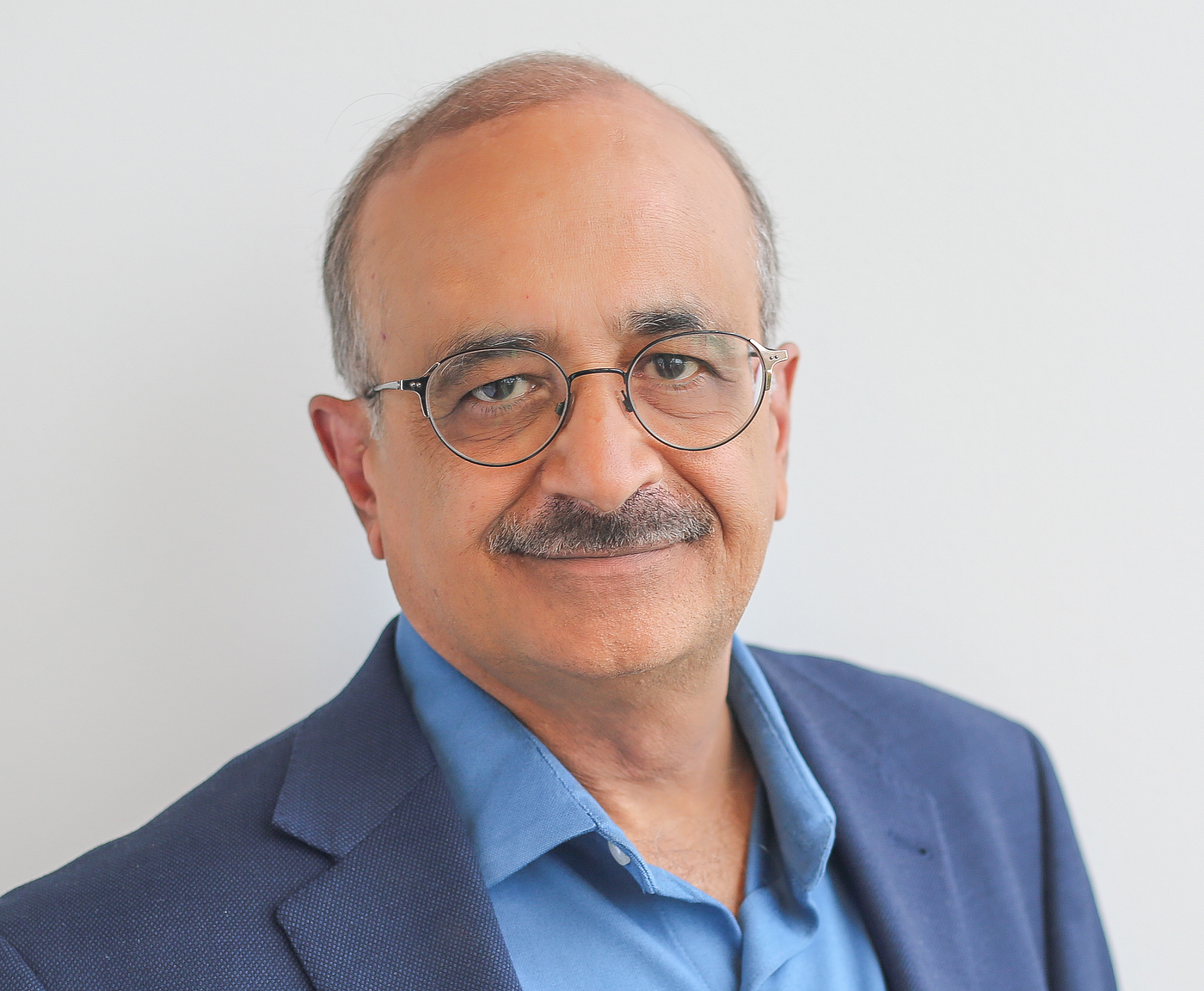
Nikhil Sinha's Long Game: Turning Distance Into Infrastructure
A communication scholar became a university builder, an online-learning executive and a startup ecosystem operator. Across each reinvention, Nikhil Sinha has kept working on the same stubborn problem: how to give ambitious people access to the networks that make ambition useful.

The 98 Is Betting the Venture Gap Is a Market Mispricing
Women-led startups still receive a sliver of venture funding. The 98 treats that gap not as a charity brief, but as an investable inefficiency - then brings an operator network to the cap table.

The Fund That Bet Its Whole Pitch on the People, Not the Money
Four operators who never quit their day jobs built a venture fund where the check is the smallest thing in the room. The real asset is a rolodex of 100+ people who have already done the job.

Footwork Built a $400 Million Venture Firm on Two People Saying Yes
Footwork pairs an investor's pattern recognition with an operator's scar tissue, then asks both partners to own every decision. Five years in, that compact design is becoming a case study in how a small venture firm can stay concentrated while its market changes underneath it.

Chapter One
Chapter One built its pitch around a useful provocation: venture capital should behave like a product, not a velvet rope. The former Tinder operators behind it are betting that product judgment can still create an edge when money itself has become abundant.

CapitalX
CapitalX is a San Francisco early-stage venture capital firm founded in 2020 by general partner Cindy Bi. It writes $100K-$500K seed checks into enterprise, SaaS, AI, fintech and developer-tools startups, with larger follow-on positions through SPVs, and runs an online-first, high-conviction model backed by an unusually operator-heavy base of limited partners. The firm points to a portfolio that includes Zapier, Rippling, Cruise, Turing, Flutterwave and Boom Supersonic, and a run of unicorn outcomes as its calling card.

Nixo
Nixo is an operations platform built for forward deployed engineers (FDEs) - the people who embed with customers to make software actually work in production. It pulls context from Slack, GitHub, Linear, and CRMs and reorganizes it around real FDE work, so teams can scope customer problems faster, reuse past code and fixes, and see workload across every account. Founded in 2025 by Stanford classmates Priya Khandelwal and Priti Rangnekar, Nixo went through Y Combinator's Summer 2025 batch.

Y Combinator
Y Combinator is a startup accelerator founded in 2005 that invests $500,000 in early-stage companies in exchange for equity, then runs them through an intensive three-month program in San Francisco capped by a Demo Day pitch to investors. It has funded more than 5,000 companies - including Airbnb, Stripe, Coinbase, DoorDash, Dropbox, Reddit, Instacart and Twitch - whose combined value tops $600 billion, making YC the most influential template for how modern software startups get built and funded.
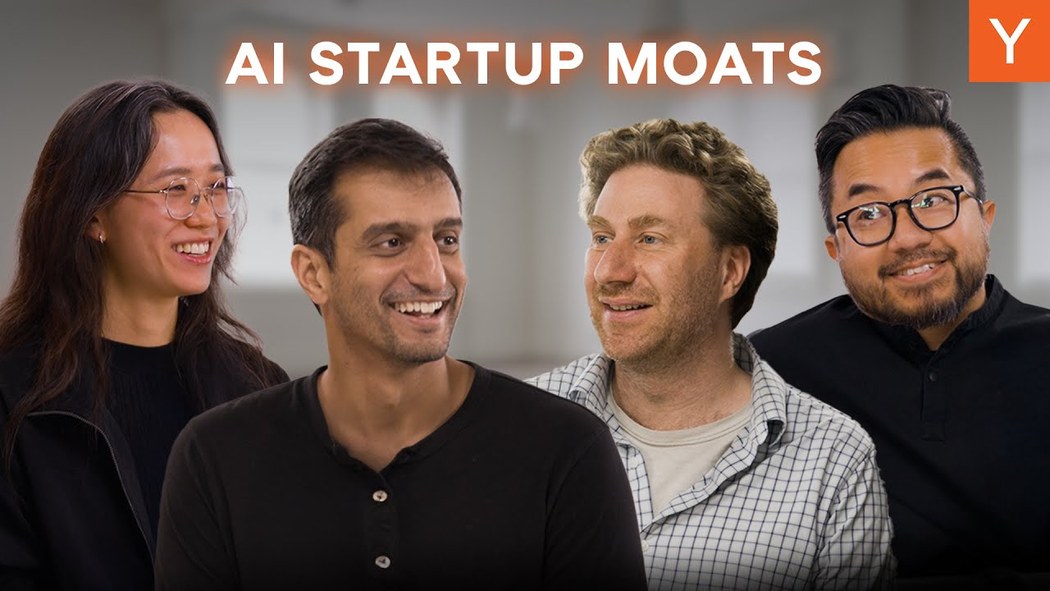
The Seven Powers: How AI Startups Build Moats
In this episode of Y Combinator's Lightcone podcast, hosts Garry Tan, Jared Friedman, Diana Hu and Harj Taggar revisit Hamilton Helmer's 'Seven Powers' framework and reboot it for the AI era. Prompted by anxious college founders who fear their AI-agent companies are just easily-cloned 'ChatGPT wrappers,' the group argues that durable moats absolutely exist in AI, they're just not obvious. They walk through process power, cornered resources, switching costs, counter positioning, branding, network economies and scale economies, adding an eighth power the book leaves out: speed. Along the way they use concrete, current examples like Cursor, Windsurf, Casca, Greenlight, Plaid, Happy Robot, Salient, Legora vs Harvey, Giga ML, Speak vs Duolingo, Avoca, Exa and OpenAI vs Google to show how founders should think about defensibility, and when.
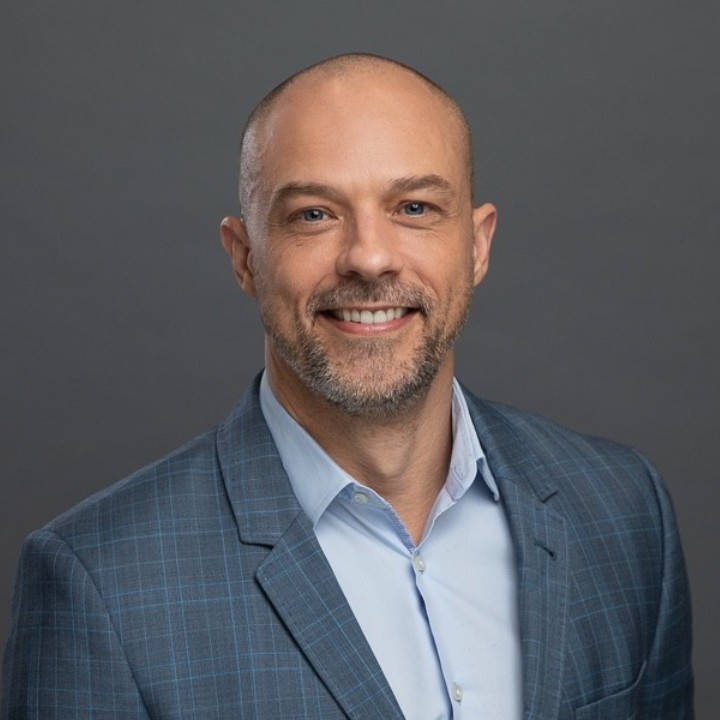
Ross Kennedy
Ross Kennedy is the Global Vice President of AI Startups & Emerging Growth at Microsoft, based in New York. With two decades of experience scaling technology organizations from startup to hyperscale, he leads Microsoft's efforts to help AI startups innovate, grow, and become market makers. Before Microsoft, he was a key force behind Google Cloud's expansion from $5.8B to over $30B in revenue, leading the global Strategic Deal Pursuit division for four years. Earlier, he scaled Liferay's international operations from 200 to 900 employees across 30+ countries. His guiding philosophy: culture beats strategy.

Reza Zadeh
Reza Zadeh is the founder and CEO of Matroid, a Palo Alto computer vision company that lets people build and deploy AI detectors without writing code. He is an adjunct professor at Stanford, a founding team member at Databricks, co-author of Apache Spark's machine learning library MLlib, and the person who built the algorithm behind Twitter's first machine-learning product, Who To Follow. Born during the Iran-Iraq war in Ahvaz, raised in London and Toronto, he turned a Stanford PhD on large-scale graphs into a company betting that one day every camera will understand what it sees.

Jai Glazer
Jai Glazer is a Harvard junior in Pforzheimer House concentrating in Social Studies who has stacked an unusually deep venture and go-to-market resume before finishing his degree. He is Vice President of Strategy at the Harvard Undergraduate Venture Capital Group, a scout at Afore VC, and has worked on go-to-market teams at Rho and at Sana, a Forbes AI 50 startup, plus a summer as an analyst at Alinea Ventures. He also writes opinion pieces for the Harvard Independent and practices Muay Thai.

Evan Stites-Clayton
Evan Stites-Clayton is a General Partner and CTO at HF0, a San Francisco-based residency and venture fund that backs repeat technical founders building AI-native startups. He previously co-founded Teespring with Walker Williams at Brown University in 2011, scaling it from a $3,000 weekend experiment to over $1 billion in cumulative sales and $65 million raised from Andreessen Horowitz and Khosla Ventures before going through Y Combinator's W13 batch. Named to Forbes 30 Under 30, he joined HF0 in 2022 to help the next generation of builders compress the gap between idea and scale.
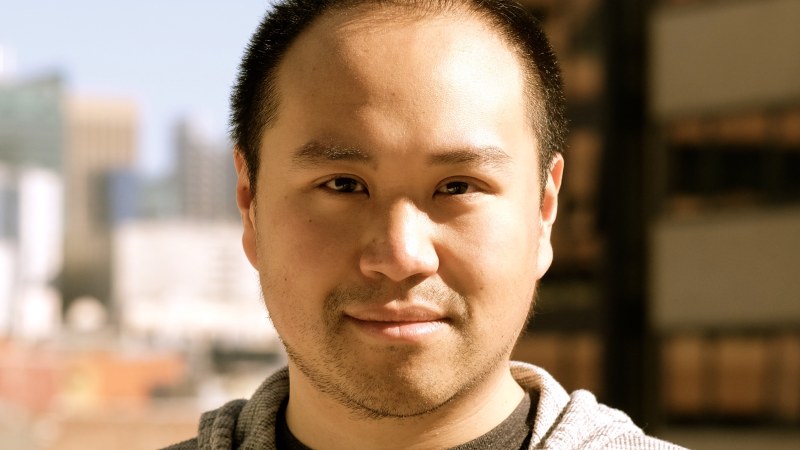
Brian Ma
Brian Ma is the founder and general partner of Iterative, a Singapore-based YC-style accelerator backing pre-seed and seed startups across Southeast Asia. A four-time founder before becoming a full-time investor, he co-founded Divvy Homes (a16z, GIC), Decide.com (acquired by eBay in 2013), and Weave (YC S14), and was one of the earliest product managers at Zillow.
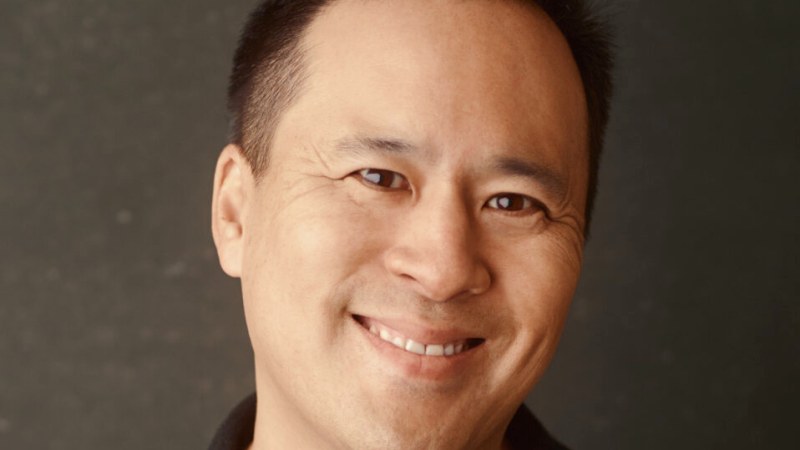
Jeremiah Owyang
Jeremiah Owyang is a General Partner at Blitzscaling Ventures, where he leads early-stage AI startup investments and co-manages the Blitzscaling AI Fund. A two-decade Silicon Valley veteran who has tracked five major technology waves from Web 2.0 to the current AI era, he is also the founder of Llama Lounge, the Bay Area's most prominent AI startup event series, which has hosted 24+ gatherings since April 2023 and turned away 900+ applicants at a single event. Previously co-founder of Altimeter Group and Kaleido Insights, Owyang combines rigorous tech analysis with hands-on community building, and is known for working from a 22-foot Airstream trailer parked 29 steps from his back door.
Yigit Ihlamur
Yigit Ihlamur is the co-founder and General Partner of Vela Partners, an AI-native quantitative venture capital firm based in the San Francisco Bay Area. A former Google Senior Program Manager and Oxford-trained AI researcher, he has pioneered the concept of 'Ventech' — using proprietary AI systems to evaluate and fund seed-stage AI founders at speed. Vela Partners issues $100K–$500K checks with commitments in 2–7 days, has backed 40+ AI startups, and earned a NeurIPS 2025 Best Poster award for its startup success forecasting research. Raised in Turkey by an entrepreneur father and mathematician mother, Yigit started coding at age four and competed as a top-10 national chess player before bringing that same obsessive discipline to venture capital.