Forty people having drinks is a manageable social occasion. Tens of thousands of former colleagues looking for jobs, cofounders and investors is an institution. Xoogler.co has spent more than a decade traveling between those two points, carrying a deceptively simple proposition: leaving Google need not mean losing the people who made working there useful.
The first gathering took place at Galvanize in San Francisco, on the eve of Google I/O in 2015. By his two-year retrospective, founder Christopher Fong was reporting more than 2,000 members. He also offered a refreshingly modest observation: a useful gathering could consist of just four Xooglers. The point was to help someone, with attendance serving as a means rather than the accomplishment.
Today, Xoogler combines professional networking, startup introductions, expert services and learning. Its June 2026 newsletter put membership above 36,000. The Google connection gives the network a recognizable center; the reasons people arrive are more varied. Some want to start a company. Some want to hire. Some simply want another conversation with someone who understands where they have been.
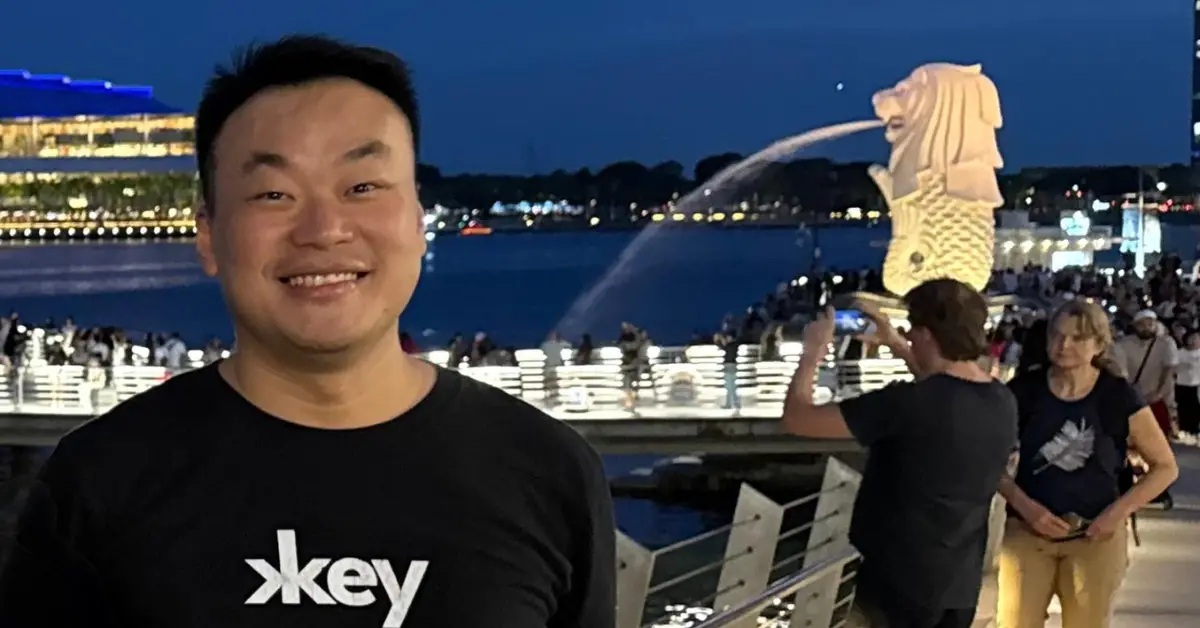
The old badge opens a new conversation
Fong brought experience in making introductions count. His Google work included Project Sand Hill, connecting startups and venture firms with the company’s products and teams. His professional biography places him at Google from 2006 to 2015, across sales, business development and partnerships. Helping someone navigate a large organization was already part of the job.
“I fell into it,” he told Singapore Global Network about starting Xoogler. An email list became a community, with meetups and demo days spreading across cities. His account identifies the pandemic and Google’s 2023 layoffs as moments when demand accelerated. After the layoffs, he said, membership doubled from 14,000 to 28,000 over two months.
That history puts a human purpose behind the business vocabulary. A person between roles needs somewhere to ask questions without delivering a polished success story first. A founder needs feedback before a fundraising announcement. A professional network earns its place in a working life when it can accommodate the unfinished parts.
First, the calendar got in the way
The surge exposed an ordinary problem: coordinating people. Fong’s anniversary newsletter describes him and Kushagra Shrivastava struggling to add 1,500 affected Googlers to a calendar invitation. They decided to build a platform. It is an unusually tangible origin for a networking product: too many people needed help for the existing arrangement to remain comfortable.
The proposed repair was practical. The 2025 community rollout brought member discovery, conversations, events and jobs under one login. A persistent knowledge base addressed discussions disappearing behind Slack’s 90-day history limit. The immediate prize was continuity: find a person, revisit a discussion, locate the next event.
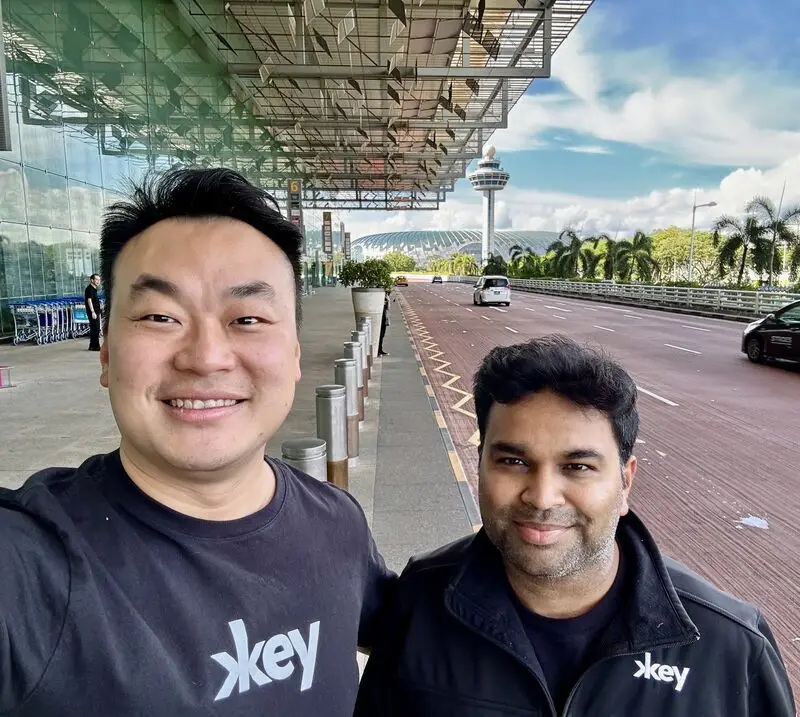
The distinction between the organizations matters. Xoogler’s privacy policy identifies The Network Institute as its manager. Key AI is the separate platform business Fong cofounded with Shrivastava. Xoogler provides a community with recurring needs; the software attempts to make responding to those needs less dependent on a well-connected organizer’s inbox.
This is a useful sequence for other community builders to study. Start with an exchange people already want to make. Watch where the work becomes repetitive or information gets lost. Then decide what software should do. A directory has a purpose when people are already asking for introductions; otherwise, it is another place to maintain a profile.
The customer may need a job, or a product expert
Xoogler serves several constituencies at once. Members look for colleagues and opportunities. Employers seek experienced hires. Founders seek collaborators and capital. The Expert Network, announced in August 2025, adds another route: businesses can look for alumni offering specialized knowledge. Experience becomes something a company can engage for a particular problem.
The public expert directory makes that proposition concrete. Its filters cover experience levels and skills including product discovery, design, go-to-market strategy and marketing. This is more useful than treating every Google alumnus as interchangeable. An organization trying to improve customer acquisition needs a different conversation from one working out product requirements or hiring its first leaders.
Professional education extends the service beyond introductions. One listed workshop, led by Grab product leader Anthony Isaakidis, focuses on moving into product management. His own move from sales gives that topic a specific practitioner’s perspective. The workshop promises hands-on work, which fits a network whose members may be changing disciplines as well as employers.
There is a place for smaller encounters, too. A mentoring event organized with Lorong AI and Singapore Global Network scheduled five-minute rotating conversations, followed by time for deeper discussion. That format gives newcomers a way to begin without having to command a room. A short first conversation can establish whether a longer one would help.
When the introduction includes an investor
The investment operation grew alongside the social one. Fong’s early retrospective dates the AngelList syndicate to November 2016. Its proposition was access to investors who might also know engineering, distribution, legal work or fundraising. Capital came with the possibility of a useful phone call after the money arrived.
The syndicate’s published investment thesis considers the team’s record, durable product differentiation and growing markets. Its AngelList portfolio includes Pointy, Kapwing, Workstream and FalconX. Those names describe investments, not a conventional customer roster. They show where the community’s investor activity has reached, without proving that alumni status alone makes a company worth backing.
Fong dates the first Xoogler Ventures fund to late 2020. In a 2023 post, he described Weekend Health, known for Sequence, as its first portfolio exit. He also said cofounders Rémi Cossart and Calvin Young met at a party he hosted. It is the sort of detail an alumni organizer would cherish: a social introduction later acquiring a business history.
A former employer can open the conversation. The company still has to earn the investment.
The investment distinction
The community’s own rules reinforce that point. Administrators acknowledge they cannot know every member’s integrity and encourage founders and investors to conduct their own checks. Familiar professional history can help people start talking. It cannot settle questions about a market, a founding relationship or the quality of a business.
An AI program with an equity price
In June 2026, Xoogler announced Key Studio, created with Google’s AI Futures Fund. The offer brought together early model access, mentoring, investor connections and potential financial support. Marissa Mayer was named as a mentor and participant. For alumni considering AI companies, it packaged several kinds of access into one program.
The published structure is a 12-week program operated by Blueprint X Labs Inc., doing business as Key AI. At least one founder must meet its Google or Alphabet alumni criteria. Solo founders can apply. The page currently marks applications closed, so the next step for an interested founder is checking future cohort availability.
Credits and cash do different jobs. Credits can reduce eligible infrastructure expenses; they do not pay a founder’s rent. Nor should a maximum award be treated as an automatic payment. The meaningful comparison is between what a particular team would use, what it would receive and the ownership it would give up.
Who pays for keeping people connected?
The broader community has more everyday support mechanisms. It solicits donations, welcomes hosts and food-and-drink sponsors, and has advertised paid job promotion. Its August 2025 newsletter said its nonprofit could accept startup equity donations. These arrangements sit alongside, rather than explain away, the separate economics of investment vehicles and venture programs.
Volunteer time is part of the operating model. The website describes more than 300 events a year, with local communities in places including London, Paris, Hong Kong and the Bay Area. A distributed network requires people willing to organize an evening and keep showing up. Software can circulate an invitation; someone still has to host.
Xoogler therefore occupies a particular corner of professional networking. Its focus is narrower than a general professional platform: a shared employer supplies context, while programs address hiring, learning and company formation. A recruiter, accelerator or angel syndicate might meet one of those needs. Xoogler’s appeal is that members can move between them as their circumstances change.
Bring a useful question
The most transferable part of the approach is specificity. Ask for feedback on a hiring plan, an introduction to someone with relevant experience, or a conversation about a market. Offer help in an area you know. These are manageable exchanges, and they give another member a reason to respond beyond a vague request to network.
That exchange needs boundaries. Xoogler’s guidelines prohibit unwanted selling, unauthorized data collection and misrepresentation of relationships. They ask members to respect confidential discussions. A community that welcomes professional opportunity still needs room where people are not treated as sales prospects. Otherwise, the people with useful experience have a reason to stop answering.
The model also depends on fit. A founder outside the relevant alumni criteria needs another route into a restricted program. A team seeking customers beyond the Google orbit must do that broader market work. And someone seeking a guaranteed job or investment will need more than membership. The network creates opportunities to ask; other people still choose their answers.
For those who fit, the practical starting points are already visible: the member platform, expert directory, event calendar and startup introductions. Xoogler’s original gathering was small enough for people to talk. Preserving that usefulness as the room gets larger is the job that continues.