Daniel Shapero had a perfectly respectable problem: he was getting very good at his job. He had helped build LinkedIn’s recruiting business, led a growing sales organization and acquired the sort of momentum that makes a career look inevitable in retrospect. Then a conversation with Jeff Weiner, LinkedIn’s chief executive at the time, made the trajectory look rather less obvious. Shapero wanted to lead a technology company someday. Was his current job teaching him everything he would need?
Weiner encouraged him to learn how products were built. Shapero eventually left sales leadership and became an individual contributor in LinkedIn’s product organization. There is a certain comedy in this: the executive at a company devoted to professional advancement deliberately chose a move that could look peculiar on a professional profile. The title became smaller. The education became larger.
In April 2026, Shapero became LinkedIn’s CEO. The appointment gives that earlier decision a satisfying ending, though it would be a mistake to treat the intervening years as a guaranteed route to the corner office. What makes the story useful is the uncertainty. He exchanged something he could already do for something he still needed to learn. Long before artificial intelligence made reinvention a compulsory business topic, he had made it a practical career decision.
Is the job you are good at teaching you what comes next?
A family business, before the network
Shapero grew up in Philadelphia with entrepreneurship close at hand. His maternal grandfather ran Fleet’s, a clothing store remembered for outfitting boys for their bar mitzvahs. Its advertising featured photographs of customers in their new suits. Family pride supplied a distribution system that a modern marketer would recognize immediately. A proud grandparent has never needed much instruction in sharing content.
That family history gave business a human scale: a store, a community, a reason for someone to come back. Years later, when he announced his appointment as CEO, Shapero returned to his grandparents’ businesses in Pennsylvania and Maine as examples of finding economic opportunity. The phrase belongs comfortably in a corporate mission statement. In his account, it also belongs around the family table.
His formal education took him through applied mathematics at Johns Hopkins and an MBA at Harvard Business School. There was room for sport too: his LinkedIn profile records playing fullback on the HBS rugby team and graduating with honors. The combination is pleasingly unglamorous. Some lessons arrive in a classroom; others arrive while somebody is trying to knock you over.
Three jobs, eighteen months
Before the MBA, there was an early success followed by an awkward run of reversals. While at university, Shapero co-founded Collegiate Recruiting Technologies, an internet business connecting high-school athletes with college coaches. The venture was sold around graduation. It was an early encounter with a problem that would remain familiar: capable people can miss opportunities because the right people never see them.
Then came the beginning of his Silicon Valley career. Over roughly eighteen months he went through three startups. Two closed; another laid him off. A sequence like that can look careless when reduced to dates on a résumé. Lived forward, it is a young person discovering that enthusiasm and employment security have separate calendars.
Business school offered a place to regroup. Consulting at Bain followed, from 2004 to 2008. In his later account of those years, Shapero described assessing businesses for private-equity investors, calling customers and learning about industries as varied as tires, laundry detergent and IT outsourcing. He also worked internationally, including time in Australia and India. The work demanded curiosity about businesses whose customers had little reason to be impressed by a consultant’s credentials.
There is a practical connection between that period and what followed. Calling a customer to understand whether a product deserves its business requires listening before concluding. A future sales executive was getting practice in the question underneath the pitch: why does anyone keep buying this?
- 2008Join LinkedIn
Build the sales business - 2014Start again in product
Learn how it gets built - 2021Become COO
Lead across functions - 2026Become CEO
Begin with listening
Employee number 300ish
Shapero joined LinkedIn in May 2008, describing himself years later as employee number “300ish.” Mike Gamson hired him. Shapero has repeatedly credited Gamson with taking a chance on someone without sales experience and showing him how to lead. The important part of the origin story is another person’s judgment. Someone saw a possible sales leader before the résumé made the case obvious.
The business grew rapidly. Looking back in a 2018 interview, Shapero described taking the sales and recruiting business from about $50 million in annual revenue to about $1 billion four years later. Those figures describe a business built by a team, during a period of expansion for the company. They also explain why leaving that work required more than a passing appetite for novelty.
His admiration for Gamson has centered on a combination of belief and standards: confidence in people alongside expectations about how they behave. Shapero’s version of leadership places character close to competence. It leaves little room for the familiar executive alibi that excellent results should excuse making everyone nearby miserable.
He has put the point plainly: “being a great leader was just being a better person.” It is an appealingly short sentence for a subject that can support entire airport bookshops. Its difficulty lies in the daily application. Being considerate when targets are easy is a modest test; sustaining it while a team is growing is a managerial job.
“The best salespeople are insatiably curious and great listeners.”
Daniel Shapero · on sales skills
Learning from the other side of the table
The move into product in 2014 changed what Shapero had to understand. Sales leaders hear what customers need and explain why a product matters. Product teams must decide what to build, what to postpone and how an idea will work for people using it. Proximity between the two functions can conceal how different their responsibilities are.
His product remit eventually included the job-seeking experience, recruiting products and learning products. The connection between them is easy to grasp. People need a way to find work, employers need a way to find people, and both sides need skills that remain useful. Running across those areas let him see LinkedIn from more than the customer meeting.
Later came broader commercial responsibilities as chief business officer, then the chief operating officer role in 2021. As COO he oversaw sales, support, operations and marketing. The career stayed within one company while moving through different kinds of work. Longevity and variety, so often presented as alternatives, occupied the same employment history.
There is a lesson here for employers as well as ambitious employees. A company that allows an established leader to become a learner can keep experience that might otherwise walk out the door. That takes patience on both sides. The employee must tolerate being less fluent; the organization must find room for someone whose value exceeds their immediate mastery of a new task.
The teacher in the sales meeting
Shapero has long been interested in teaching. At LinkedIn, that interest became literal through courses including How to Think Strategically and Communicating with Executives. In a 2023 message to LinkedIn Learning instructors, he described the pleasure of joining a community doing work he had dreamed of doing himself.
It also appears in his approach to hiring. He has described recruiting former teachers into sales, recognizing their ability to explain complicated ideas and communicate clearly. His team changed onboarding to teach the industry knowledge and sales skills the new hires needed. The adjustment matters. Finding potential creates an obligation to help it develop.
One interview question he favors is simple: “What are you most proud of?” The answer can reveal what someone values and how well they understand their own work. His advice also includes waiting until an interview ends before judging a candidate. Immediate rapport can flatter an interviewer while concealing how much they still need to learn.
Those preferences sit comfortably beside his description of effective sellers as curious listeners. His commercial advice asks for preparation and an informed point of view. Buyers can find product information themselves. A seller has to understand the customer’s business well enough to contribute something useful to the decision.
He has also spoken publicly about protecting mornings and evenings with his children. During a 2023 visit to Singapore, he endorsed continuing bedtime routines for as long as his children would allow. It is a warmer measure of executive ambition than another meeting squeezed into the calendar. Children, unlike quarterly forecasts, eventually acquire the power to dismiss you from the room.
The new job comes with homework
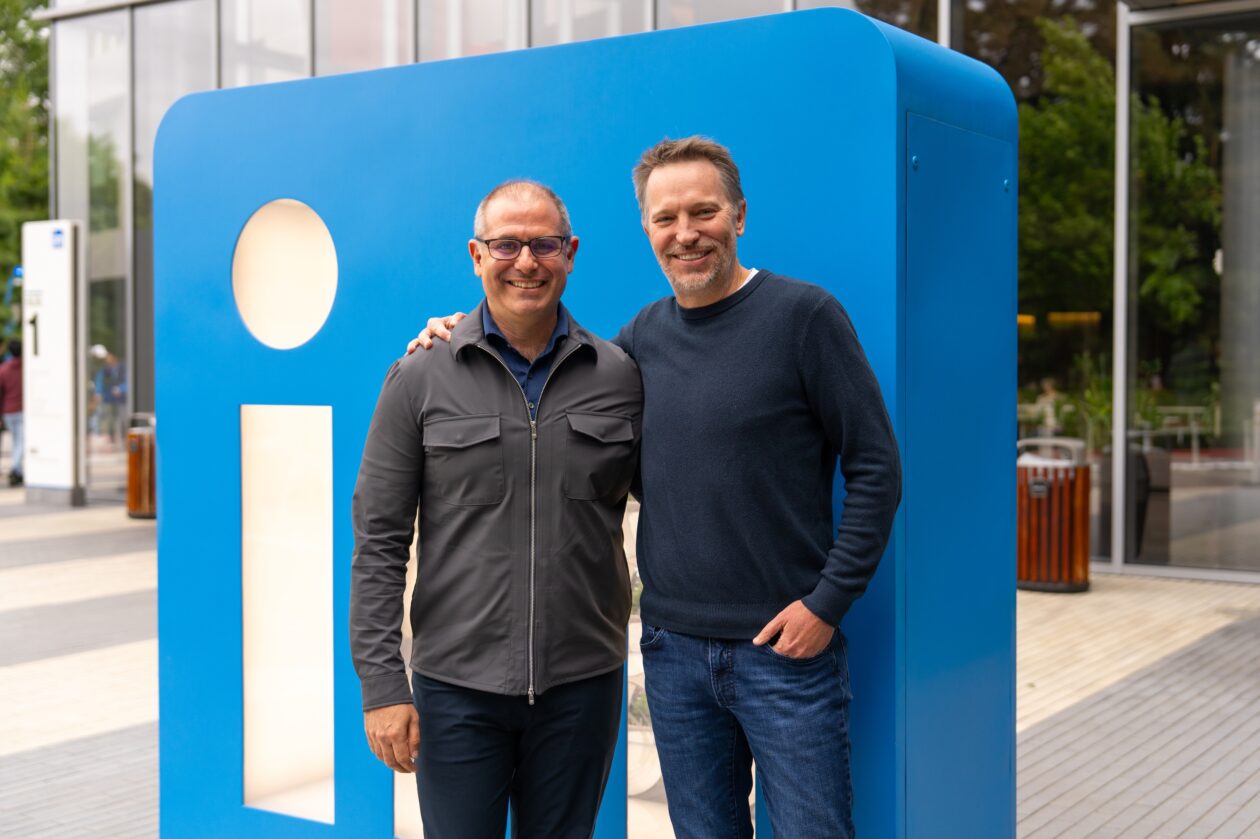
On April 22, 2026, LinkedIn announced Shapero’s elevation to CEO. He reports to Ryan Roslansky, whose responsibilities encompass LinkedIn and Microsoft Office. Mohak Shroff was appointed president of platforms and digital work, also reporting to Roslansky. The change placed an experienced internal operator at the head of the professional network while its parent company expanded the leadership around it.
Roslansky connected the appointments to AI’s effect on work and careers. For Shapero, the subject has an unusually personal echo. He is now running a platform used by professionals who face a version of the decision he once faced: whether the work they are doing today is preparing them for what they hope to do next.
He has argued that AI can make sellers more productive and create reasons for companies to invest further in them. That is his outlook, rather than a settled verdict on the future of employment. The distinction matters for someone leading a business whose members live with the consequences of changing hiring practices. A useful professional network must earn its place in those decisions.
His own announcement began with gratitude to Gamson, Roslansky and colleagues, then an intention to learn and listen to employees, members, creators and customers. For a new chief executive, listening is familiar opening language. In Shapero’s case, it comes attached to an earlier, consequential willingness to act on what he heard.
The title has finally caught up with the ambition he shared with Weiner years ago. The more interesting inheritance is the habit behind it: ask what the next job requires, then accept the inconvenience of learning it. Shapero once let a smaller title serve a larger purpose. Now he has a much larger title, and plenty left to learn.