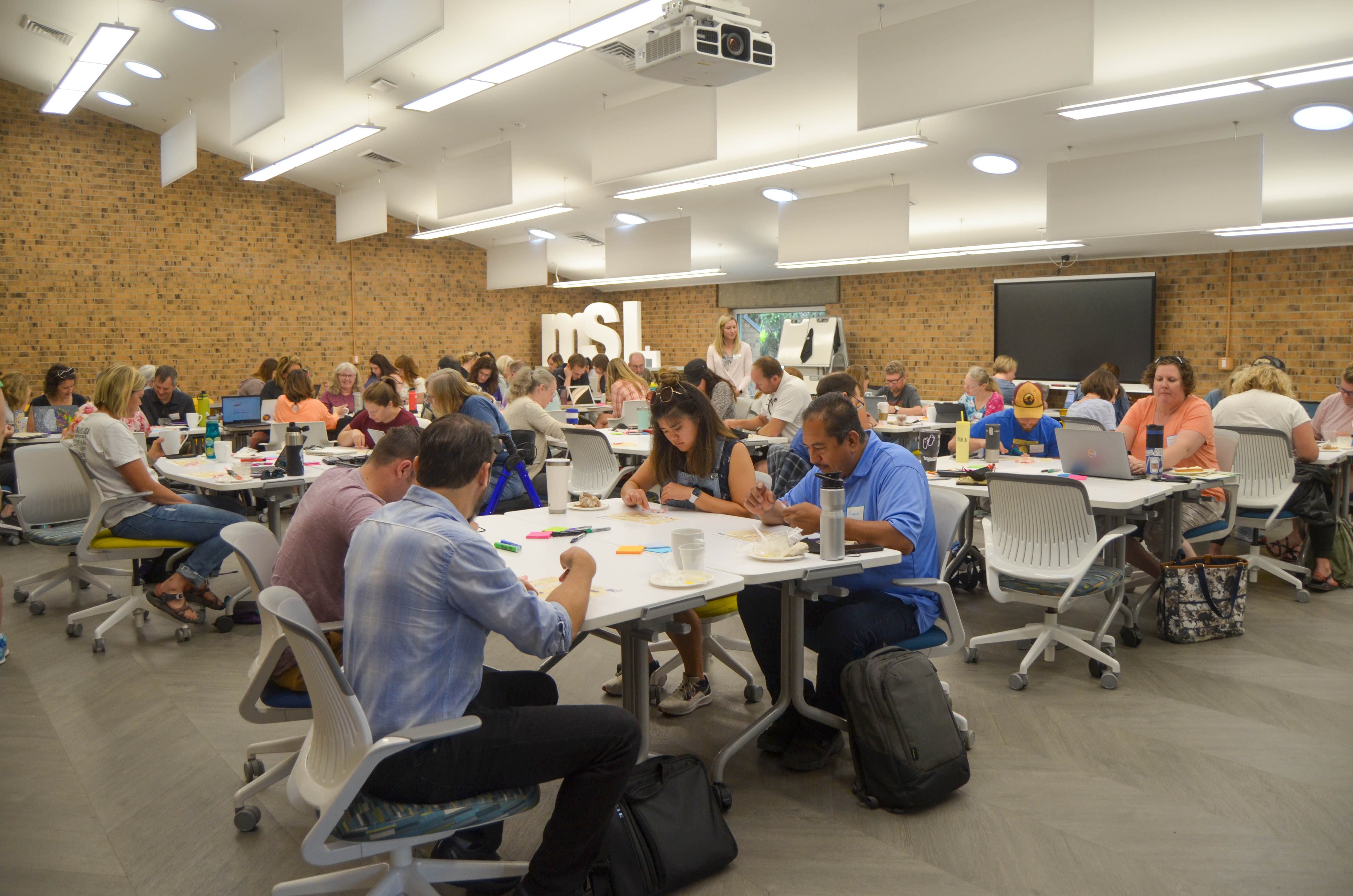
A zebra mussel is an unlikely guest at a teacher workshop. It has no opinion about curriculum, no slide deck and a talent for making itself expensive. In May 2026, MindSpark brought the problem of invasive mussels in Western Colorado waterways to 37 educators and administrators in Grand Junction. Before long, the room was considering ecology, agricultural water rights, city infrastructure and data science. A small creature had opened a very large syllabus.
- MindSpark trains educators and helps schools connect learning to local problems and careers.
- Its work ranges from $5.98 monthly online learning to sponsored, multi-month education accelerators.
- The transferable idea: ask who lives with a problem, then invite them into the lesson.
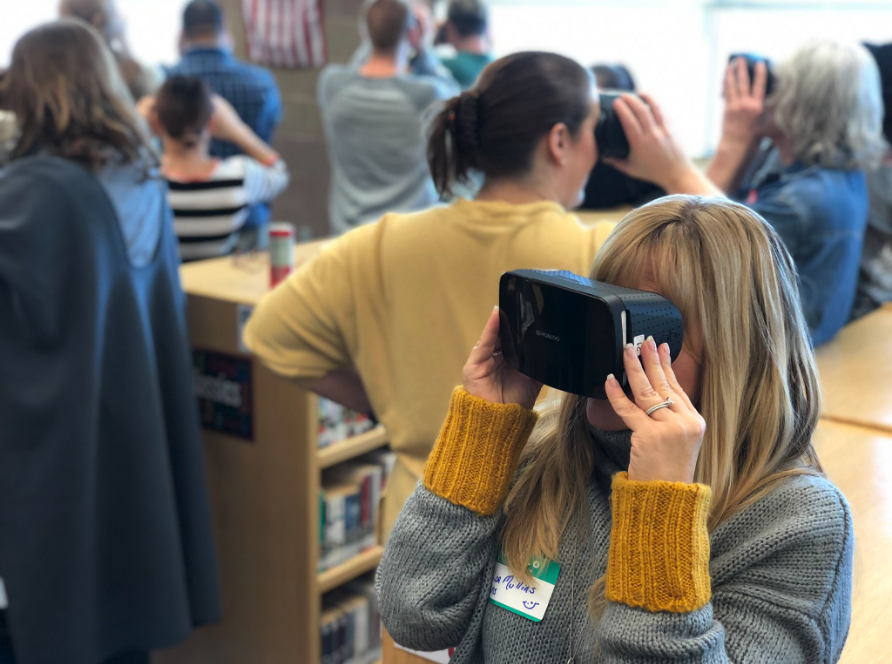
Teachers mapped more than a dozen career pathways connected to the challenge, according to MindSpark’s account. AI appeared as a planning tool inside the exercise. Participants also prototyped interactive learning experiences. The important sequence was problem, investigation, tool. It gave the technology something useful to do, and the educators a reason to care.
A mussel walks into a teacher workshop
MindSpark Learning, a Colorado nonprofit, sells and delivers professional learning while advising schools and districts. Its particular concern is the distance between education and employment: schools teach content, employers need people who can apply it, and teachers are expected to reconcile the two. MindSpark arranges introductions. Educators meet industry partners, explore authentic problems and build classroom experiences around them.
The idea predates the current excitement about AI. Share Fair Nation began offering educator learning experiences in 2007 and became MindSpark in 2017. Founders Carrie and John Morgridge supplied the philanthropic connection. CEO Kellie Lauth brought experience from Colorado’s Adams 12 STEM schools, where problem-based learning connected industry questions to student work.
“If we want to transform education, we must empower our educators first.”
Kellie Lauth · Samsung interview, 2020
That makes the teacher the point of multiplication. A new skill can travel through years of classes. MindSpark’s STEMpath, introduced in January 2019, joins graduate-level STEM and computer science coursework with industry externships and professional learning. The educator experiences work beyond school, then returns with a better answer to the student who asks when any of this will be useful.
The clubs that got cut
The more revealing test happened in Granby. East Grand Middle School entered a MindSpark Education Accelerator in 2021, after pandemic teaching had left staff feeling constrained. The first project established shared school values. When the school returned in 2023, the question grew sharper: did students actually experience those values?
Staff listened, tried clubs and adjusted. Graphic design, bike repair, martial arts and videography were among the offerings. Programs that were not connecting were cut; new ones followed student interests. There is the useful failure in this account: adults could propose something sensible and still discover that children did not want it. Student feedback changed the activity list.
MindSpark reports that every student participated in at least one club by the cohort’s end. A feedback and mentoring team became a standing structure. Student-connected enterprises included a bike shop, ski shop and t-shirt printing business. These details matter more than a handsome statement on a wall. They show where students were allowed to make decisions.
- 01DiscoverName the problem.
- 02DesignBring partners in.
- 03DoTest and revise.
- 04DynamizeMeasure and sustain.
The accelerator’s structure helps explain the difference from a stand-alone training day. Schools define a problem of practice, design with partners, experiment and plan how to sustain the work. MindSpark describes cohorts lasting six to nine months, followed by support. The school retains responsibility for the solution. A consultant can ask better questions; somebody local still has to run the bike shop.
A subscription, a sponsor, a patient donor
MindSpark has several doors into the same building. An individual can buy OnDemand access, currently advertised at $5.98 a month. Courses cover Responsible AI, Applied AI, classroom prompting and career-connected learning. Certifications can carry additional charges. General learners can take AI courses too. Schools can request bulk pricing.
A different route is Meet LEA, a free, 45-minute AI learning experience created with Google for educators, caregivers and community learning leaders. IBM-linked learning includes free AI webinars. MindSpark also serves as Code.org’s regional partner in Colorado and Utah, with scholarship opportunities for computer science professional learning.
For deeper organizational work, industry or community partners fund accelerator cohorts before schools apply. Philanthropy supplies another layer: the Morgridge Family Foundation announced a $10 million unrestricted gift in March 2022. This is a nonprofit operating model with paid services, subscriptions, sponsorship and charitable support. The monthly course price does not describe the cost of sustained district change.
Teaching the people who teach everyone else
MindSpark’s alternatives include district-run training, university certificates, online courses and education consultants. Its distinction is the combination: professional learning, employer relationships and local implementation. Buying Couragion in June 2021 added a career-literacy platform with diverse role models and virtual work-based experiences. The two organizations had already collaborated on STEMpath.
The relationships remain visible. Samsung’s 2025 Teacher Academy offered nearly 200 teachers virtual workshops in AI, entrepreneurship and design thinking; MindSpark led the AI work. In Todd County, its collaboration with Lakota community partners connects culturally relevant learning to agricultural technology and land stewardship. The local context supplies the curriculum’s reason for existing.
Organization-reported reach, rather than a measure of causal learning gains.
A school can copy the method without copying the entire program: choose a problem nearby, find people who understand it, let students help shape the response and revisit what fails to engage them. That is an editorial reading of these cases, rather than a guaranteed result. It requires staff time, willing partners and permission to revise. A course can introduce an idea; sustained practice has to make room for it.
MindSpark’s interesting wager is that educators already possess much of the capacity schools need. They need access to people, problems and tools that make the work worth attempting. A mussel, inconveniently, can provide all three.