In 2024, 105 companies knocked on Greenville County's door. Some wanted a factory. Some wanted a warehouse, an office, a laboratory or room to make an existing plant larger. Thirty-one percent came from outside the United States. Four out of five were new to the market. Each knock arrived carrying the same deceptively short question: Could our company work here?
The honest answer cannot fit on a billboard. It lives in acreage and amperage, highway turns and wage tables, fire codes and wastewater capacity. It depends on whether a building is really available, whether an employee can be trained, and whether a public incentive survives a public vote. The Greenville Area Development Corporation exists to assemble that answer before the caller loses patience and rings another city.
These are pipeline and portfolio measures, not a claim that every inquiry became a project or every promised job already exists.
The power is in the handoff
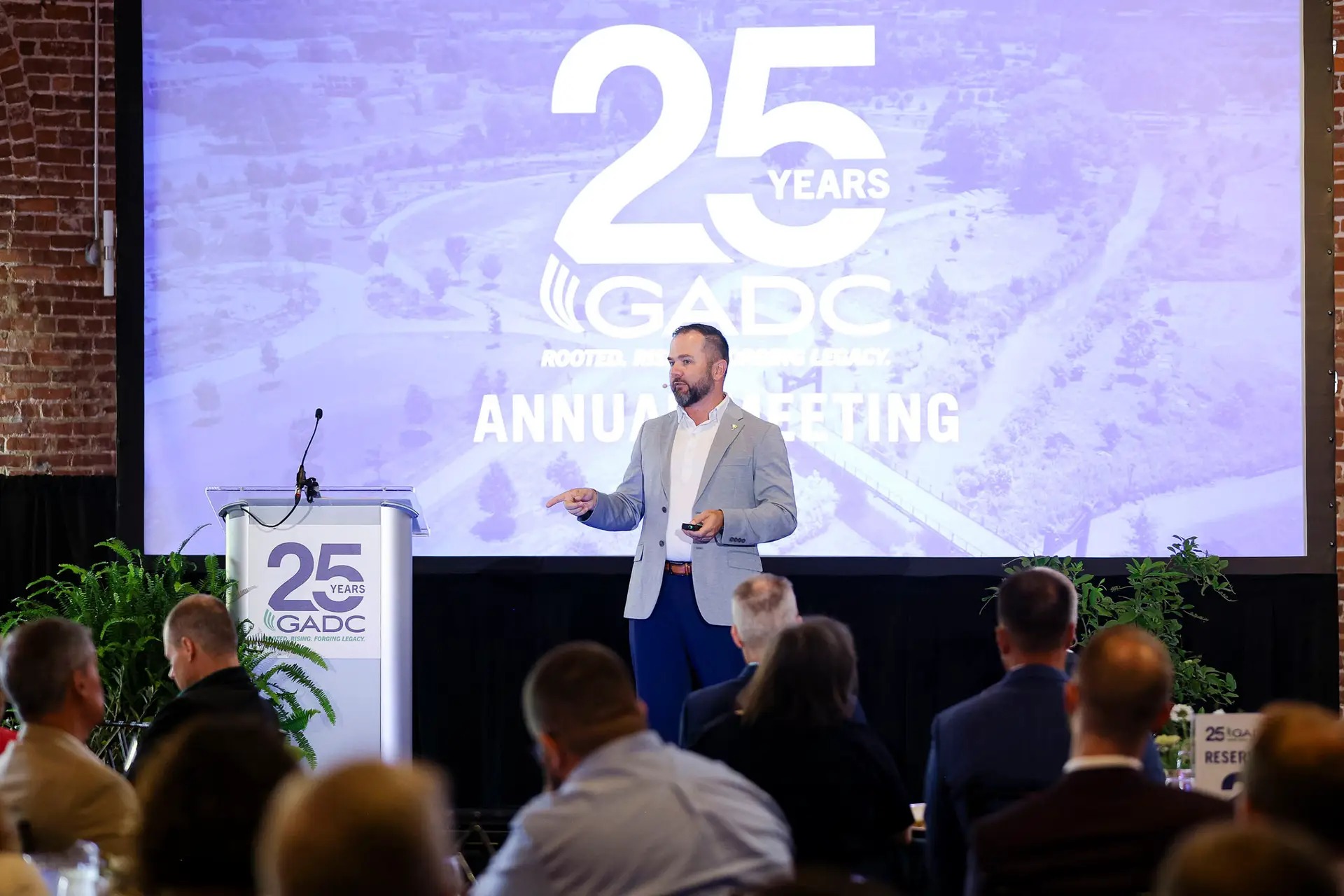
GADC is a 501(c)(3) created by Greenville County Council in 2001. It does not own the factories it recruits. It does not build the roads, award the state grants, teach the technical courses or cast the county votes. Its role is stranger and, in practice, more useful: it is the switchboard.
A project manager can search a live inventory of industrial buildings and raw sites, arrange a tour, make a confidential call to a landowner, pull workforce data, convene a utility, introduce a college and explain the incentive rules. GADC is also the only local organization empowered to negotiate qualifying property-tax incentives for a new or expanding company. County Council still decides. The distinction matters. GADC can get a complicated deal to the room where a public decision becomes possible; it cannot make the decision disappear.
“As a company is vetting the area, we are also vetting the company to make sure they are a community fit.”Max Stewart, CEO
That sentence contains the change in Greenville's posture. Recruitment used to sound like pursuit: the town runs, the company chooses. Stewart describes a two-sided inspection. When he arrived as CEO in July 2024, he inherited a county with strong demand and two awkward constraints - industrial vacancy near 5 percent and a workforce that local employers were already competing to hire. Scarcity gave Greenville permission to ask what each project would return.
Five percent changes the pitch
When empty industrial space is plentiful, an agency can sell square feet. At 5 percent vacancy, every acre becomes a choice. GADC's strategic answer has been to favor advanced manufacturing, materials, mobility, aerospace, life sciences, and professional and technical work - operations with higher skills, higher wages or more output from a smaller footprint. Automation, in this telling, is not simply a threat to employment. It is a way to keep production growing when both land and labor are tight.
The 2024 list shows the portfolio logic. EnerSys proposed a $500 million lithium-ion battery operation. Magna International announced $194 million for automotive expansion. PL Developments added pharmaceutical manufacturing; Samaritan Biologics brought medical products; Koops expanded automation; Swamp Rabbit Cafe & Grocery represented a much smaller local producer. The mix is the point. A county built on textiles learned what dependence on one industry costs.
Then came Isuzu. In February 2025, the truck maker selected a one-million-square-foot building on more than 200 acres for its new American production base. The company put the commitment at $280 million and more than 700 jobs. For GADC, it was a clean illustration of the service: match a major industrial user to a rare large property, connect state and local players, and keep the project moving until the code name can become a company name.
The bill has more than one column
Economic-development arithmetic often arrives in two incompatible dialects. The press release speaks in investment and jobs. The public ledger speaks in appropriations, foregone tax and grants. Put both on the same page and the deal becomes easier to discuss.
A fee-in-lieu agreement reduces the property-tax assessment a qualifying company would otherwise face; it is not a suitcase of county cash. State assistance can be cash-like - the Isuzu project received approval for a $7 million Closing Fund grant for site preparation and building construction. GADC says it models costs and benefits before recommending an incentive and reviews agreements with partners for compliance. The model is still a forecast. Its own impact analyses warn that assumptions may not materialize and actual results can vary.
That caveat is not fine print to be embarrassed by. It is the first useful rule of this business. Announced jobs are promises measured over years, not people sitting at desks on announcement day. Capital is committed, then spent. A community should celebrate the opening and keep the spreadsheet open afterward.
A headquarters hunt begins at home
In 2025, GADC changed the target without changing the map. Its new campaign looked first at companies already operating in Greenville but headquartered in another state or country. This is economic development as an upstairs move: persuade the factory's owner to bring finance, engineering, research or executive functions closer to the factory.
The logic is pleasantly unromantic. These are warm leads. The company already knows the roads, the workforce and the public officials. Headquarters jobs tend to deepen the local career ladder and give graduates a reason to stay. VisitGreenvilleSC, the city, the Chamber and other local development groups can sell quality of life, while GADC sells continuity. Greenville is no longer asking a stranger to move in. It is asking a tenant to put its name on the building.
Steal the switchboard, not the skyline
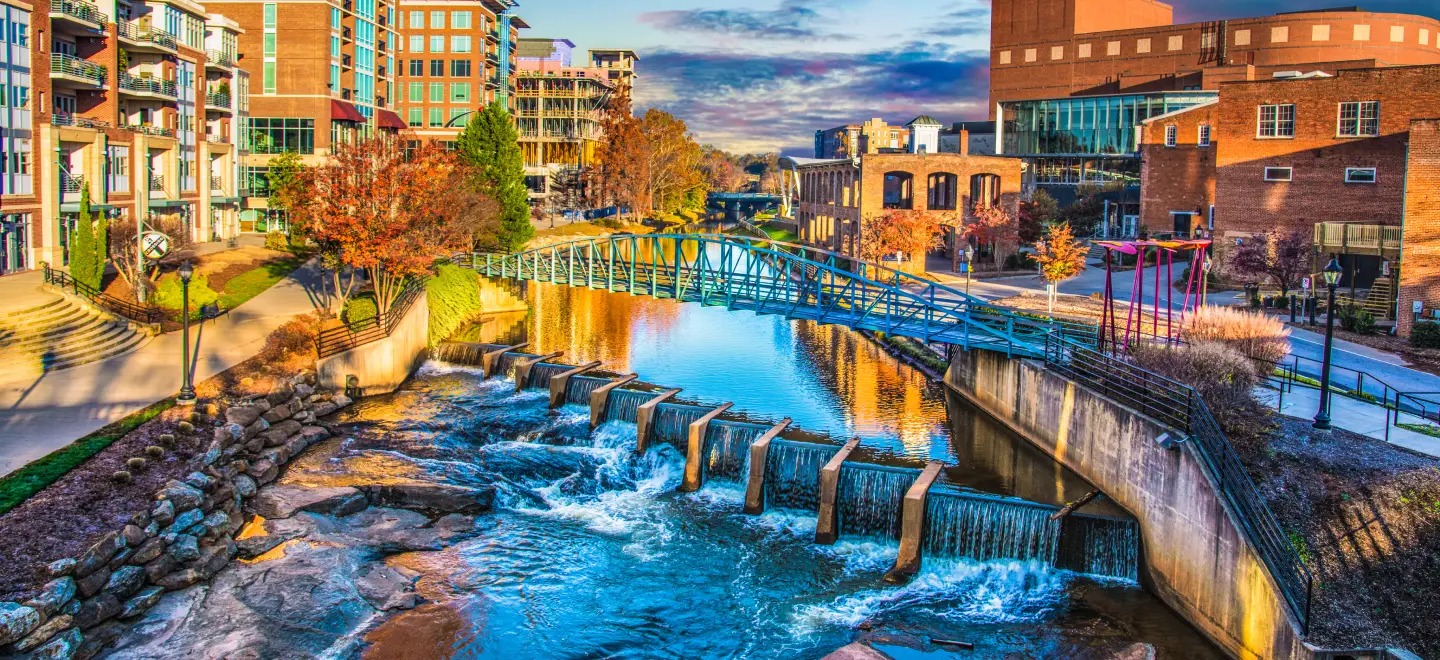
Another county cannot copy Greenville's interstate geometry, industrial history or downtown waterfall. It can copy the handoffs. The repeatable advantage is not a slogan and not the biggest possible subsidy. It is the removal of small, fatal delays.
The method depends on conditions GADC cannot manufacture. There must be credible sites, infrastructure with spare capacity, training partners able to react, elected officials willing to honor a process and enough trust to keep a confidential search confidential without making the final agreement invisible. Remove those, and the switchboard merely connects a caller to a collection of polite dead ends.
At its 25th anniversary in 2026, GADC attached a very large figure to its history: $94.2 billion in cumulative economic impact from affiliated business activity. Such numbers are built with multipliers and recurring effects, so they deserve more curiosity than applause. The smaller evidence may be more persuasive. A truck plant found a building. A battery company found a county. An old manufacturing region learned to recruit technical work without pretending it had infinite land.
The 105 knocks matter because most never become a ribbon. Economic development is the craft of knowing which door to open, what it costs to open it, and when to say that the room is already full.