There is a moment in every networking breakfast when the coffee has been poured, the name tags have started curling at the corners, and somebody asks the dangerous question: what happens after this? In Beavercreek, Ohio, the answer is becoming a building. The local Chamber of Commerce is taking the loose promises of business networking - introductions, advice, visibility, a useful room - and giving each of them an address.
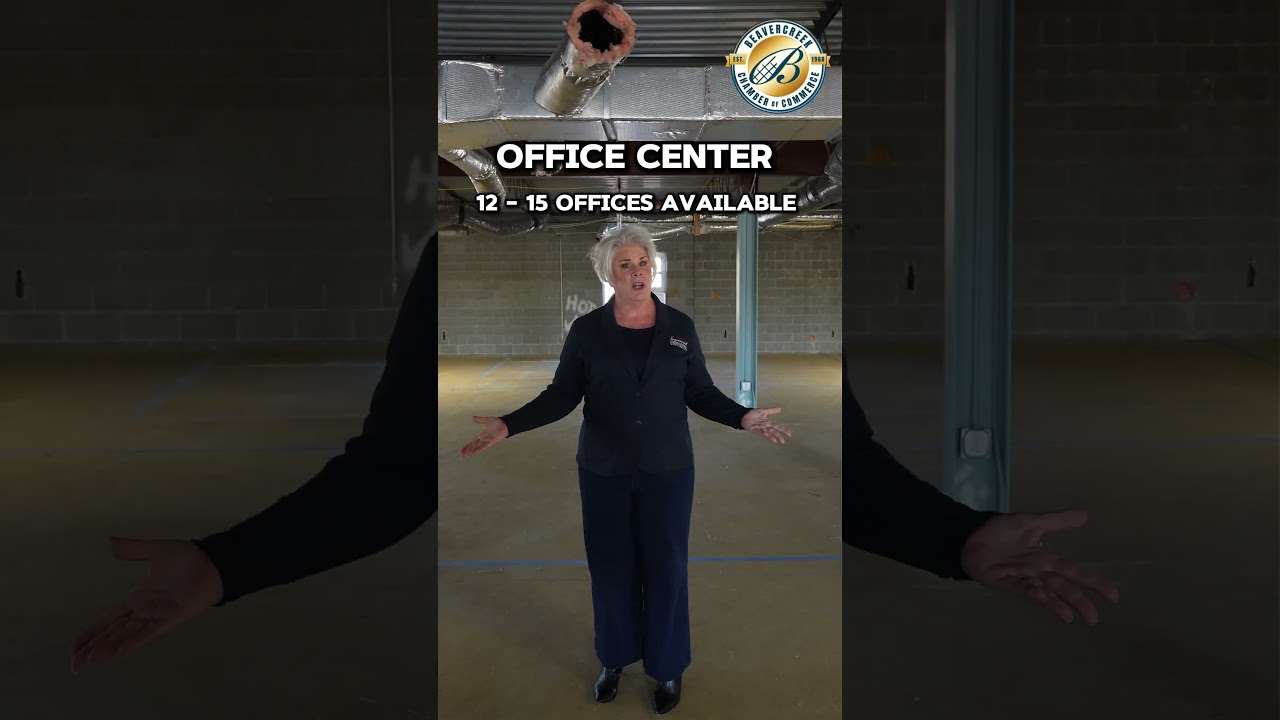
The address is 2680 Indian Ripple Road, where the Chamber's Business Success Center is being built out for a planned fall 2026 opening. The plans combine private offices, a boardroom, workforce support, workshops, modern audiovisual gear, and a roughly 6,000-square-foot event space with room for more than 200 people. Fifty5 Rivers Cold Brew is preparing a cafe inside. In the logic of local economic development, the coffee is not a perk. It is connective tissue.
The failure was a calendar
For decades, chambers have operated through a familiar rhythm: breakfasts, mixers, seminars, golf, galas, handshakes. Beavercreek still does all of those things. But the pandemic interrupted the rhythm and exposed its limitation. An event calendar can gather people. It cannot, by itself, tell a shop owner which resource to call on Tuesday afternoon, give a consultant an affordable studio on Wednesday, or put an entrepreneur next to a potential collaborator often enough for trust to form.
Wendy Rodgers, the Chamber's president and CEO, responded with a listening tour. In a 2025 interview with the Southern Ohio Chamber Alliance, the tour is described as the reset that shaped the Chamber's direction after the pandemic. That distinction matters. The idea did not begin with spare square footage and a search for tenants. It began with members describing friction.
“I bring the coffee and you bring the conversation because we are all better together!”Wendy Rodgers, President & CEO
The response came in layers. There was a multimedia studio with 4K cameras, audio equipment, and Mac editing tools. There was an annual Business Development Grant that can supply up to $8,000 for equipment, technology, permits, or expansion. There were leadership workshops, Lunch & Learns, Young Professionals events, restaurant meetups, job postings, member news, and the weekly The Link podcast. Now the physical center is designed to stack those layers together.
A chamber with a price list
The nicest thing about Beavercreek's offer is that much of it can be priced without interpretive dance. Annual dues are $275 for a company with up to three full-time employees, $385 for one with four to 50, and $550 above that. Nonprofits pay $137.50. Individuals pay $125, without a business listing. The studio costs members $35 an hour and nonmembers $50. The Chamber's existing conference room has published member and nonmember rates. Sponsorships range from $1,500 to $5,000, with add-ons for programs and podcast exposure.
This is not venture-backed abundance. The Chamber's 2024 federal filing reported $236,078 in revenue, with nearly seven dollars in every ten coming from contributions and a little more than one in four from program services. That modest base makes the new center more interesting. It is an attempt to diversify usefulness and income at the same time: offices can be leased, rooms can be rented, programs can run in-house, and a capital campaign can turn member enthusiasm into construction.
Even the campaign tiers are unusually legible: $500 is Spark, $1,000 is Flame, $5,000 is Blaze, and $10,000 is Inferno. Cute naming does not reveal the total project cost, but it does make participation easy to picture. The organization is asking its network to help finance the place where that network will operate.
The product is repeated proximity
A coworking operator can rent a desk. An event hall can rent a Saturday. A marketing agency can make a video, and a networking club can exchange referrals. Beavercreek's difference is not that any single service is rare. It is that the Chamber bundles them with civic relationships, local legitimacy, education, promotion, and a recurring cast of people.
The cafe makes the theory visible. Fifty5 Rivers is not simply installing a refreshment counter. It is opening its first dine-in hospitality concept, intended for both the public and the regional business community. A scheduled seminar might create one encounter. Coffee can create the unscheduled second and third. Those later meetings are where a familiar face becomes a call returned.
The same logic appears in the Chamber's ribbon cuttings. It tells hosts that attendance often ranges from five to 20 people. Refreshingly, it does not pretend the crowd is the whole result. The real value, it says, is the package of announcements, photographs, video, social posts, and local dignitaries. The ceremony is raw material for distribution. That is a sharper definition of promotion than simply filling a room.
This model works when the network is local enough to meet repeatedly, the programming solves specific operating problems, and the building stays busy. It is a poor fit for a scattered membership, a market already rich in inexpensive flexible space, or an organization that treats the property itself as the strategy.
What another town can borrow
The copyable part is not the square footage. A building is expensive and a cafe lease is not a personality. What can travel is the sequence: listen for repeated friction, build one small service that removes it, price that service clearly, and then arrange the services so each makes the others more useful.
This is also where the Business Development Grant earns its keep. It does not pay payroll, utilities, taxes, insurance, or legal fees. It is directed toward new capacity: a machine, a piece of technology, a permit, land or site work, an expansion. Recipients must remain members, participate, report progress, and show what happened. The money comes with a feedback loop.
Past winners range from a home inspector to a hotel, a dance center, a wetlands association, Pizza Dive, and Chicago Gyros and Dogs. The list is wonderfully untheoretical. Local economies are made of businesses that inspect houses, teach pirouettes, preserve marshes, and serve lunch. Beavercreek's approach works because it does not ask them to become one kind of company before they belong.
Sixty years, then wet paint
The Chamber began in 1966, when 65 businesses organized because they anticipated growth. Its 60th anniversary could have been treated as a retrospective, all plaques and sepia photographs. Instead, 2026 has featured hard hats. A summer preview of the unfinished center reportedly drew nearly 150 people. Construction on the cafe followed. The anniversary gala was set for November, along with the next grant announcement.
There is an appealing humility in an institution celebrating longevity by admitting that its container needed to change. Beavercreek has not abandoned breakfasts, business cards, golf, or ribbon scissors. It has simply noticed that connection becomes more valuable when people have something practical to do together. Record the interview. Attend the class. Apply for the grant. Rent the room. Meet again over coffee.
A chamber of commerce is easy to caricature because its product can sound weightless. Beavercreek's answer is concrete, drywall, cameras, tables, and a galley kitchen. The experiment will be judged less by the opening ceremony than by the ordinary Tuesday six months later - who is working there, what they learned, whom they met, and whether they came back. That is the right test. A network is not the number of names in a directory. It is the number of useful reasons those names have to collide.