In the autumn of 2026, nearly 40 representatives of Slovakia’s innovation community went to Boston and New York. SAPIE, the Slovak Alliance for Innovation Economy, organised the mission with Košice IT Valley, under SARIO’s auspices. The itinerary included MIT Sloan, Cornell Tech and the Cambridge Innovation Center. The revealing detail was how the doors opened: SAPIE says Slovaks living in America helped arrange almost every meeting.
That is a useful way to understand this organisation. A country can have researchers, founders and ambitious businesses, yet still struggle to connect them with the people who can help. SAPIE makes those introductions part of its job. Sometimes the next step is a conversation. On this trip, it was also a memorandum with Amazon Web Services.
- A nonprofit alliance connecting almost 200 companies and organisations.
- Practical help spans AI adoption, digital security, research commercialisation and policy.
- Membership buys access to a network; individual programmes have their own conditions.
Talent needs somewhere to go
SAPIE describes its establishment in 2014 with 11 members. Its chairman, Google Slovakia country manager Rasťo Kulich, co-founded the alliance with Anton Zajac and Ivan Štefunko. The founding question remains recognisable: how do you help innovative Slovak companies grow when the useful knowledge, capital and influence sit in different places?
The alliance’s answer combines education, public policy and connections between sectors. Its membership crosses software, gaming, marketing and cybersecurity. That breadth matters. A researcher seeking a commercial partner and a small business trying to understand AI may need very different expertise, but both can benefit from someone who knows whom to ask.
By 2020, SAPIE counted 109 members. Its current description puts membership at almost 200. The appeal is expressed neatly by Michal Rusko, chief business officer and partner at member company Touch4IT:
“Rooms and conversations we wouldn’t otherwise be part of.”Michal Rusko · Touch4IT
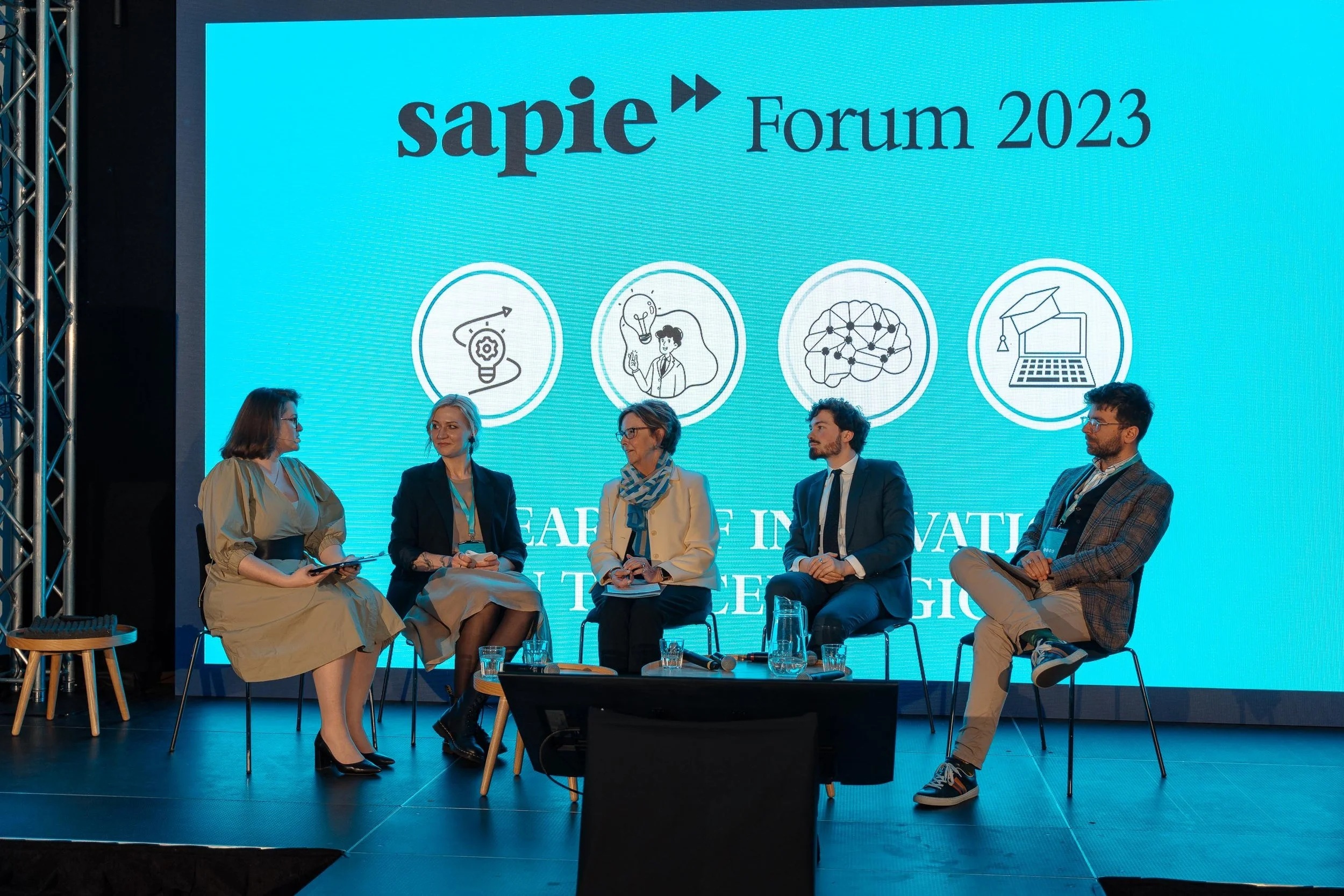
First, make the digital basics safe
One of SAPIE’s more instructive decisions came through the League for Digital Boost, its initiative supporting smaller businesses across Central and Eastern Europe. Digital transformation could mean skills, cloud computing, data or security. SAPIE says feedback from its community led it to prioritise cybersecurity in Slovakia. The people it wanted to help narrowed the brief.
In 2024, SAPIE and member companies produced a digital security guide for SMEs. The accompanying expert conversations covered passwords, multifactor authentication, risk analysis, monitoring and staff education. Before a business pursues another technology, it needs workable protection for the information it already holds. Here, listening produced a more specific offer than another general appeal to “go digital”.
A network with a price tag
SAPIE operates as a nonprofit membership association. Its 2026 membership schedule lists annual fees of €500 for individuals, NGOs and startups up to five years old; €1,000 for small companies and public institutions; €2,000 for medium companies; and €5,000 for large companies. The document also specifies company size criteria.
Regular membership provides access to activities and promotional opportunities. Members can participate in projects, meet peers, join foreign missions and contribute to legislative discussions. Project funding is another part of the picture: Slovakia’s public contracts register records a €20,000 financial-support agreement with the Economy Ministry’s foundation in March 2023. That amount describes one agreement, rather than the organisation’s total budget.
From an AI question to a real assignment
Consider Hopero, the European Digital Innovation Hub in which SAPIE participates. It offers AI readiness assessment, advice on data preparation, training and guidance on funding. Its stated business eligibility is fewer than 500 employees and annual turnover no higher than €100 million. Municipalities and public institutions are also among its audiences.
The Google collaboration takes a different route. A July 2026 announcement offered eligible organisations up to 500 free Google AI Professional course licences through Coursera. The course is in English and self-paced; licences are for noncommercial use and cannot be resold. The announcement’s first completion deadline was August 31, so readers should check the programme’s current intake.
For researchers, CapTTict addresses the journey from academia to market across nine countries. For women leading deep-tech startups, SAPIE participates in EPIC-X, whose programme advertised €60,000 grants for each of 20 selected startups. Those are programme grants to startups. In September 2026, 20 teams presented at its Vilnius Founder Showcase.
The programmes also reach industries where introductions alone are insufficient. In digital health, DIGIVITALITY addresses market-entry barriers through collaboration among startups, hospitals and innovation hubs. Its follow-on project, HealthBridge_CE, brings seven partners from six countries together. SAPIE says it will connect startups with health centres in Graz and oversee three cross-border pilots. The emphasis is on testing and assessment, because a promising application still needs evidence that healthcare organisations can use.
SAPIE Open Challenge makes the exchange especially concrete: an established company submits a real problem, and innovators work on it for one to two months. Its announced timetable puts team work in spring 2027 and presentations at SAPIE Forum 2027. The deadline for registration is November 30, 2026.
- 01Bring a company problem
- 02Match an innovation team
- 03Work for 1-2 months
- 04Present at Forum 2027
The introduction still needs a next step
The AWS memorandum, signed in New York on October 2, 2026, shows what SAPIE wants a connection to become. Planned activities include access to cloud learning platforms, expert consultations and up to five AWS Immersion Days and technical workshops. These are announced opportunities, with delivery still ahead.
Its position differs from a consultancy selling an implementation project or an accelerator serving one cohort. SAPIE keeps policy discussions, member relationships and specialist programmes under one roof. That makes it useful for businesses that need help finding a route before choosing a supplier.
The same concern appeared at R&D Club 4+ in 2026, which brought more than 60 managers and innovation leaders from almost 40 companies to Belá near Žilina. The discussion focused on systems for innovation: strategy, governance, leadership and culture. The practical question was how a company turns its supply of ideas into work that gets tested and managed.
The transferable lesson is modest: ask members to name a specific obstacle, find the people who understand it, and give the relationship a task. The limits follow the same logic. An introduction cannot replace an implementation team, programme eligibility or time to follow through. SAPIE’s value depends on what happens after people exchange names.
Take the next step
Explore SAPIE’s website, membership, events, news and the Open Challenge.