A 3D printer and a conference room solve different problems. Put them in the same building, add a classroom and a recording studio, and a more interesting question appears: how much of innovation depends on who happens to be nearby? In Larissa, Greece, JOIST has built a business around shortening those distances.
- JOIST combines workspace, practical technology, education and business support.
- Its customers range from small companies and creators to researchers and school groups.
- The model earns through services and space, with a franchise offer for other cities.
Opened in 2022 in a former industrial space of 1,800 square metres, the park makes an appealingly literal argument. Knowledge transfer needs somewhere to happen. A business owner can ask for help assessing digital readiness; a creator can book a studio; a learner can encounter technology through a workshop. The building supplies several doors into the same community.
01 / A factory for introductions
Founder and CEO Tasos Vasiliadis also founded the Institute of Entrepreneurship Development, which dates to 2005. JOIST carries that interest in entrepreneurship into physical infrastructure. Its website describes a connection between scientific research and the market. This is a particular problem for a regional business: the useful research may exist, but finding the right expert is a separate task.
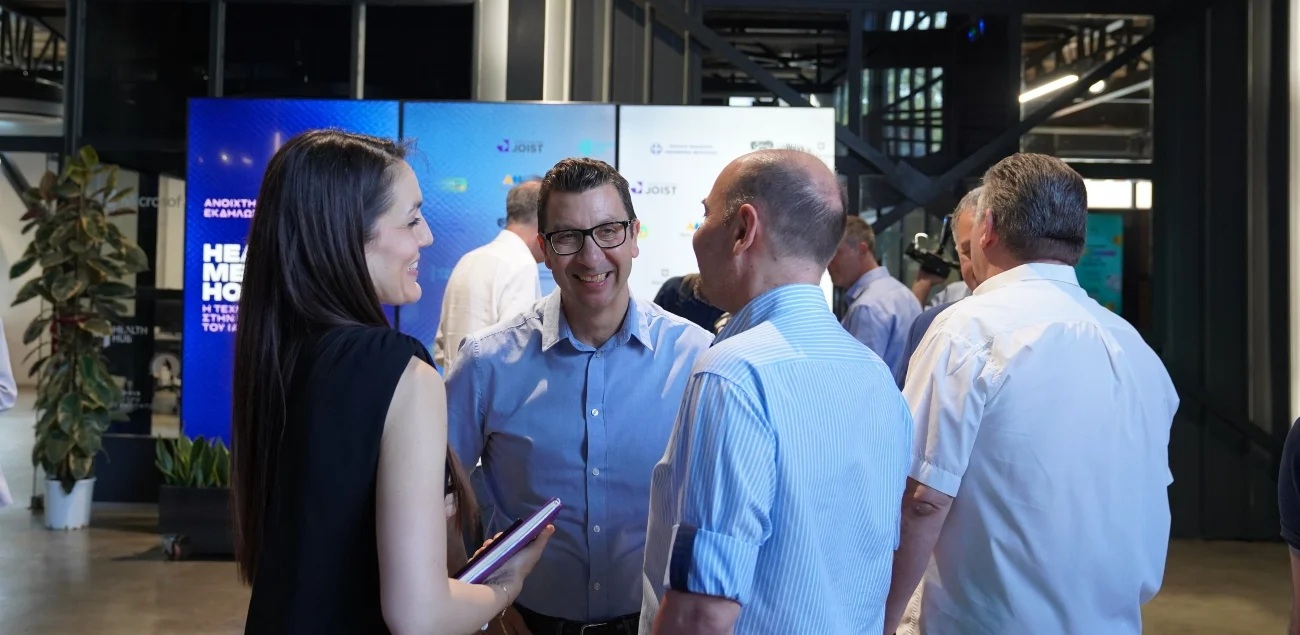
The park calls its approach “phygital,” combining physical and digital activity. The word is ungainly; the arrangement is easier to understand. Workspaces and events give people places to meet. An online marketplace helps businesses find innovation providers. Consulting helps translate a vague desire to modernise into something a company can actually commission.
That places JOIST between several familiar businesses. A coworking operator provides a desk. A consultancy diagnoses a problem. A university transfer office helps research find an application. JOIST combines parts of those roles. Its distinction lies in the breadth of the offer and the possibility of moving between services without starting every conversation from scratch.
02 / Diagnose before you buy
Consider the customer who knows the business is falling behind but cannot say which technology would help. JOIST’s innovation-management offer starts by identifying needs and challenges, then moves through strategy, solution selection and training. Project management and guidance on European funding appear as additional services. The sequence gives the customer a way to decide before committing.
The focused Digital Maturity Assessment is advertised at under €500, with a duration of less than one month. Its listed work includes benchmarking, a digital strategy and scenarios for adopting solutions. That price belongs to an assessment; readers should confirm the scope and the cost of any subsequent implementation. A report and a working system are different purchases.
- 01 Identify needs
- 02 Develop strategy
- 03 Select & train
- 04 ImplementOptional support
JOIST Marketplace addresses the next practical difficulty: choosing a provider. It connects businesses seeking solutions with companies offering them, including in health, energy and education. The marketplace and the advisers occupy adjacent positions in the buying journey. One helps articulate the requirement; the other makes potential suppliers easier to find.
03 / The workbench has neighbours
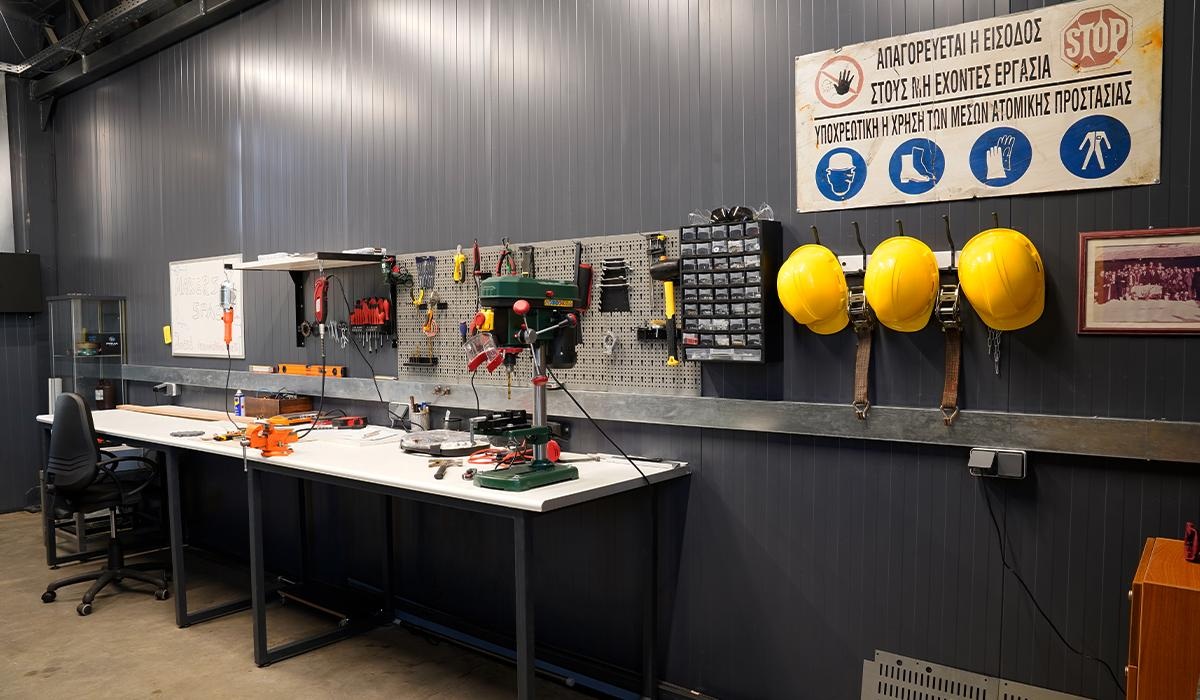
Elsewhere in the park, the work becomes wonderfully tangible. The Makers Space lists filament and resin 3D printers, soldering equipment, drills and hand tools. A prototype may need software, but it may also need a screwdriver. The workshop can be reserved by the hour or day, giving professionals and hobbyists access without buying every tool themselves.
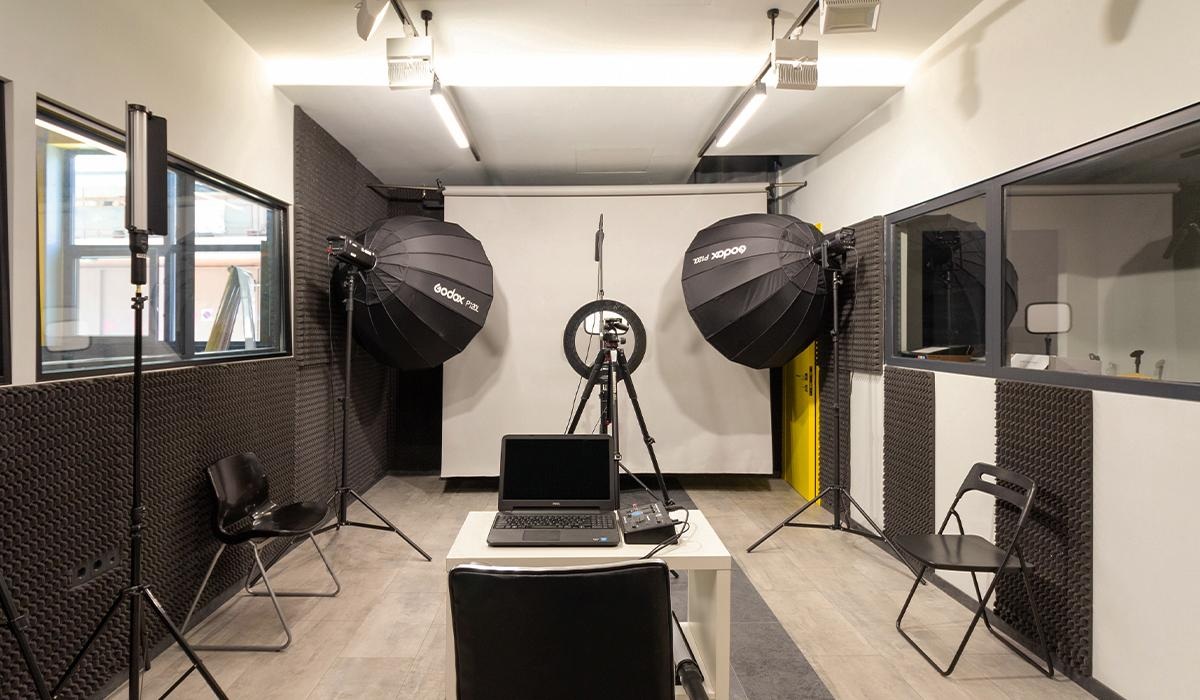
The YouTube Room adds another step: explaining the thing you have made. Designed for video, podcasts, photography and livestreaming, it has acoustic treatment, professional lighting, different backgrounds and a separate control room. JOIST offers help producing and uploading content. For a small company or independent creator, equipment and assistance are available in the same booking.
The 87-square-metre Future Learning Lab accommodates up to 80 people and supports workshops, skills development and trial solutions before investment. Education is therefore part of the park’s everyday service mix. Children, adults, researchers and entrepreneurs are all potential users, though they arrive with very different reasons to open the door.
04 / A community needs a cash register
The commercial logic is a collection of related purchases: memberships, workspace rentals, training, consulting, events and specialist facilities. The website reports more than 150 members and 500 partners. Those are JOIST’s own figures, and neither should be mistaken for a count of paying customers. They describe the network, rather than its accounts.
The franchise program makes the operating model more explicit. It distinguishes an Innovation Space, typically above 200 square metres, from an Innovation Park, typically above 1,000. Published terms specify service royalties of 7%-10% and a marketing contribution of 2% of total revenue. Additional subscriptions or support fees may apply. Local demand and operating costs still determine whether the arithmetic works.
05 / The test is another town
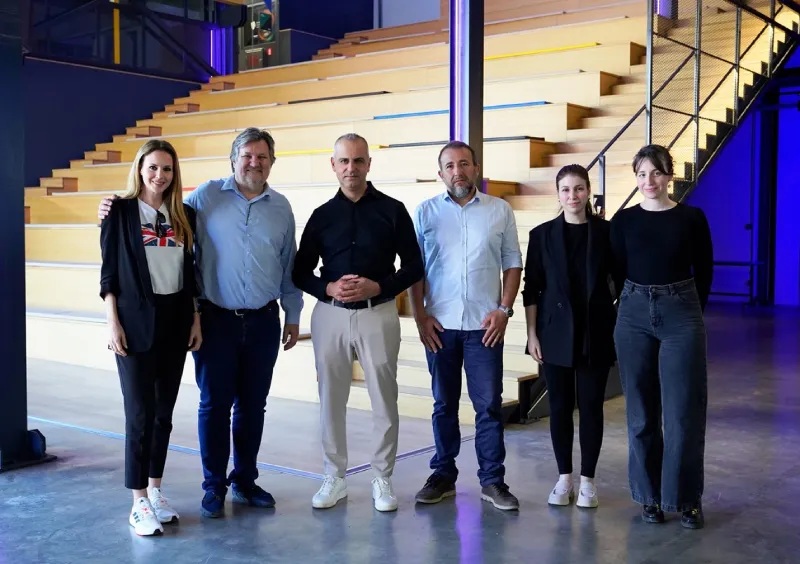
Ioannina provides a useful glimpse of replication. In a December 2025 case study, JOIST described a space developed with the Hellenic Institute of Packaging and Safety of Agrifood Products. It reported more than 15 startup and SME collaborations, more than 20 schools hosted and over 500 pupils and students reached in under two years.
“The challenge was not a lack of talent or ideas.”
JOIST’s Ioannina case study
Those participation figures suggest local use; they do not establish investment returns. They also reveal what JOIST counts as meaningful activity. Schools sit alongside companies. The park’s interpretation of the regional problem is fragmentation: capable people and organisations operating without enough connections between them. A shared venue is its proposed remedy.
On September 29, 2026, JOIST announced a cooperation memorandum with the Hellenic Development Bank. The agreement includes links with the bank’s InnoAgora community, visibility for selected startups and solutions, and joint educational and networking activities. It extends the matchmaking approach into finance networks, while remaining a framework for cooperation rather than a funding award.
The useful lesson for another company is modest enough to copy: define the problem, meet relevant expertise, test a possible solution and train the people who will use it. For another city, the harder task is assembling demand and credible local partners. JOIST’s proposition depends on those relationships. The rooms make them possible; the people must make them useful.
Explore JOIST
Spaces to book, services to investigate, and conversations to follow.