A microscope needs a home before it can help sell anything. When Media System Lab opened in Rovereto in early 2020, it started with two small spaces: one for instruments, another for administration. Meeting rooms came from Trentino Sviluppo. Later that year, the microscopy company moved into the new Be Factory development, securing an early handover of its module so it could host a workshop with instrument maker Delong Instruments. The business eventually took another module for service and storage.
That sequence makes a useful introduction to Trentino Sviluppo S.p.A., the company owned by the Autonomous Province of Trento. Its work includes industrial property, startup support, technology transfer and international expansion. The customer might need a room, a prototype, an introduction or help making a business plan survive contact with a buyer. Here, those requests can reach the same organization.
The setting helps explain the ambition. Rovereto has an industrial past as well as an Alpine backdrop. Trentino Sviluppo works on the proposition that an old factory can become useful again if the next occupants get more than keys. Media System Lab's account offers a small, tangible example: shared facilities first, a dedicated technical space next, then room to grow.
The factories came before the pitch decks
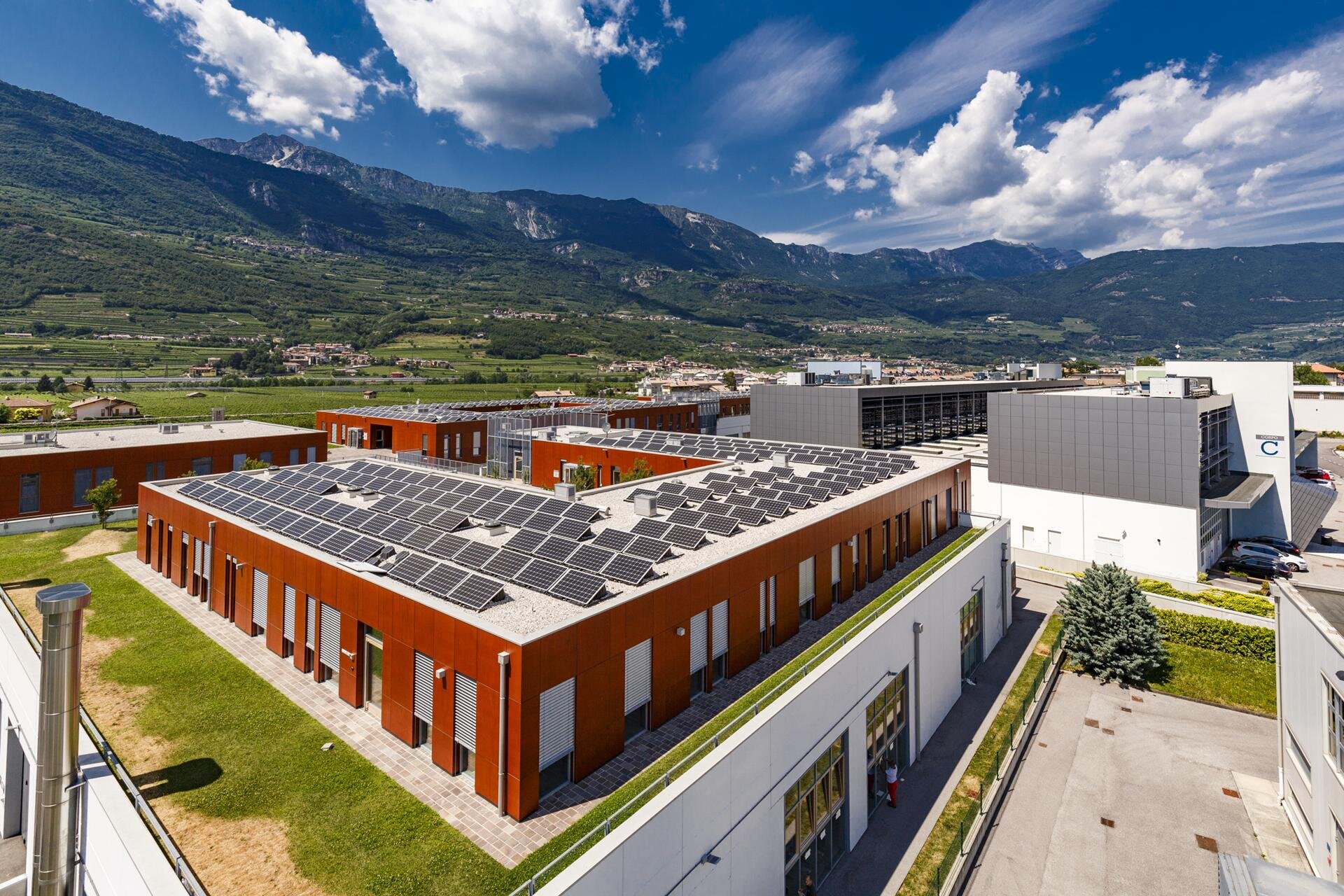
Trentino Sviluppo traces its origins to Tecnofin Strutture, established in 1986 to redevelop Rovereto's former Pirelli cotton mill into a Business Innovation Centre. The present name arrived in 2008. A year later came the venture that became Progetto Manifattura, repurposing the city's old tobacco works. In 2013, the Rovereto technology park took on a more specific identity: Polo Meccatronica.
That specialization matters. Mechanical engineering, electronics and software have to cooperate inside a mechatronic product; the park tries to make their practitioners cooperate outside it. Polo Meccatronica occupies a 130,000-square-meter site, bringing productive space, research and education into the same setting. Its physical offer includes offices and manufacturing space, with the practical supporting cast of connectivity, meeting rooms and logistics.
The institutional arrangement is equally deliberate. Trentino Sviluppo coordinates the park's strategy and operations, working with the province, Fondazione Bruno Kessler, the University of Trento, Confindustria Trento and vocational education representatives. Each brings a different part of the job: public commitment, research, industrial relationships or skills. A building gives these organizations an address in common. Making that proximity useful is the continuing assignment.
One place. Several reasons to collaborate.
A €45.6 million place to make things
Be Factory puts a price on the proposition. The development at Progetto Manifattura was handed over in September 2020 with a reported overall value of €45.6 million. Its funding split was 80 percent through the Development and Cohesion Fund and 20 percent through the European Regional Development Fund. Those are construction-project figures, not a startup investment round.
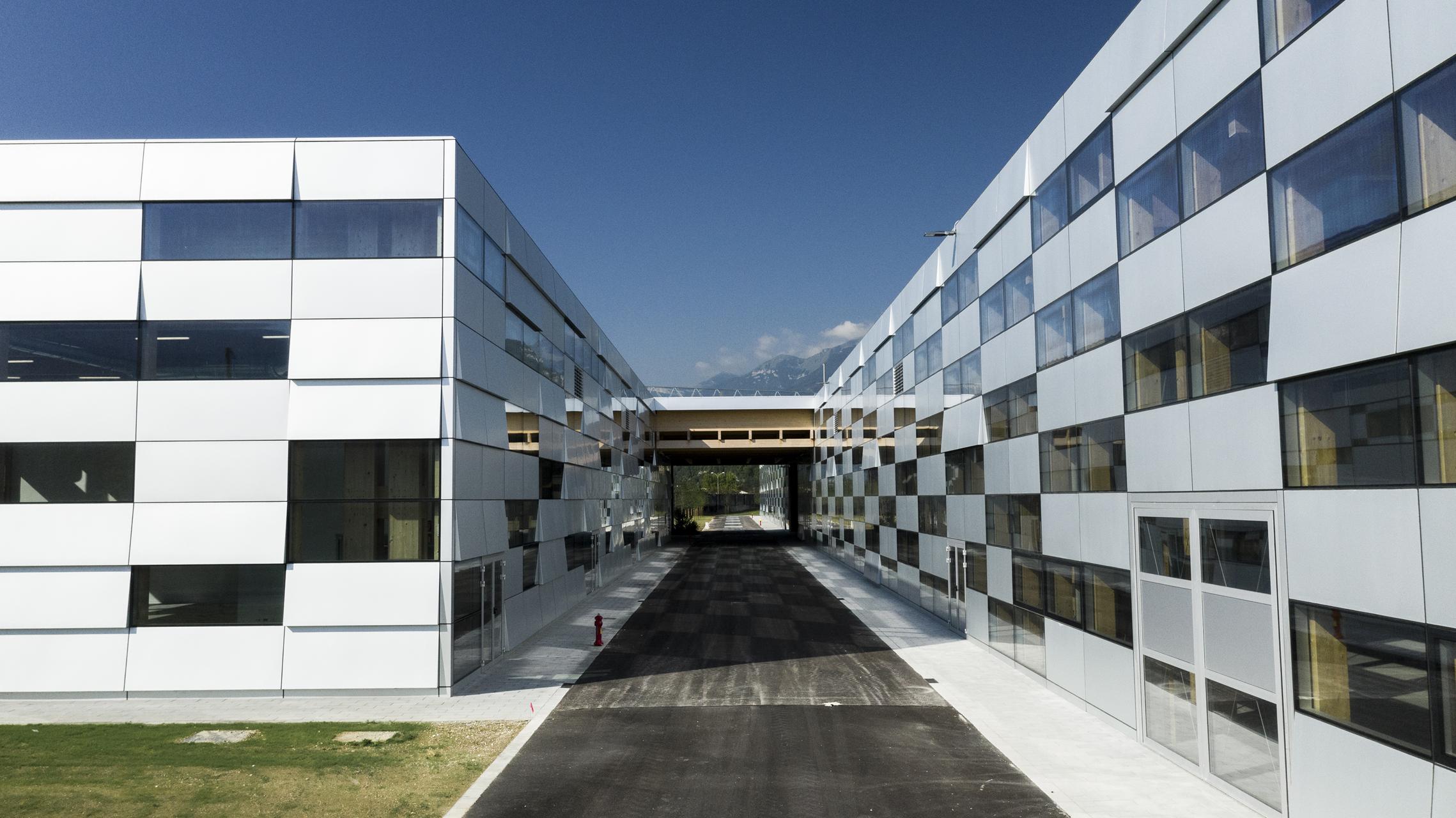
The architecture gives the industrial site a second public life. Kengo Kuma's design provided approximately 25,000 square meters of production space, while a planted pedestrian roof connected the development with the city. The roof's reported 18,000-square-meter area is an unusually literal answer to the question of what a community gets on top of an industrial investment.
The path to handover had friction. Trentino Sviluppo's 2018 accounts record several administrative appeals by competing bidding groups before construction began that June. The obstruction was in procurement, before tenants could get to work. That is a useful corrective to any effortless regeneration story: public infrastructure has a legal and administrative timetable as well as a construction schedule.
For anyone trying to copy the approach, the lesson is to budget for the route to the building, too. A regional development company needs the capacity to handle property, procurement and delivery alongside its business advice. An accelerator with mentors and a rented meeting room would be taking on a different kind of undertaking if it tried to reproduce Be Factory.
80% Development and Cohesion Fund
20% European Regional Development Fund
Bring the awkward component
Inside Polo Meccatronica, ProM Facility makes the offer more specific. Its front-page promise is admirably short: “We make prototypes.” The lab combines conventional mechanical work with additive manufacturing, application development, testing and component pre-qualification. Its menu runs from laser cutting and embedded systems to climate tests, three-dimensional scans and topology optimization, which can reduce a mechanical component's weight.
For a hardware business, that means there is somewhere to discuss how a design will be manufactured and checked. A promising shape on a screen still needs material, tolerances and a test. The practical appeal is access to several related capabilities during product development; whether that saves a particular company time or money depends on the assignment.
The next premises are also being organized around collaboration. A 2026 call for ProM's planned new facility offered two temporary laboratories, of 350 and 200 square meters, within a six-lab arrangement. Applications were assessed for business solidity, proposed technological collaboration and fit with mechatronics. Companies outside Trentino could apply, with a commitment to establish an operating unit locally. The deadline was July 24, 2026.
Those conditions reveal the bargain. Trentino is inviting companies to contribute to a local industrial network. The offer is consequently a closer fit for a business that needs research relationships and a regional base than for one simply hunting for the cheapest possible floor space.
“We make prototypes.”
ProM Facility's own three-word introduction
The accelerator has an elimination round
A founder without a production line has another entrance. Trentino Startup Valley, promoted with Fondazione HIT, runs through Bootstrap and Validation phases over approximately ten months. It combines coaching, workspace and access to specialist advisers and investors. The structure asks teams to develop the business as well as explain the technology.
The 2026 edition received 89 applications and selected 31 teams, comprising 128 founders and aspiring founders. A mid-course assessment determines progression. The November Demo Day is scheduled to allocate a total prize pool of €110,000 to selected projects. That sum is a competition pool, not a cheque promised to every applicant.
The useful feature to copy is the sequence: give a project time and expert attention, then require evidence before it advances. A pitch gets it into consideration; market validation gets its own phase. Selection also means a founder should treat the program as one possible route, with deadlines and assessment, rather than build a cash-flow plan around an assumed award.
The previous edition's winners show how broad the intake can be. EndoV presented a portable simulation kit for cerebral endovascular procedures. OICO brought an educational app about responsible financial management. Alongside innovative and social-impact ideas, the 2026 edition introduced a separate participation category for ideas commercializing Trentino research. That widens the entrance while retaining a regional purpose.
89Applications
31Teams selected
Competitive awards, not automatic funding.
One contact, several kinds of help
Established businesses have problems that do not fit an accelerator calendar. Trentino Sviluppo's internationalization services cover market analysis, strategic advice, commercial missions and preparation for export. Its International Assessment uses qualitative and quantitative evaluation to produce a report and a development plan. For an enterprise considering its first foreign market, checking readiness is a sensible task to put before booking a trade-fair stand.
The company has also changed how clients navigate its offer. Its service reorganization provides a single key account manager to accompany a business from initial contact through evaluation of the work delivered. The stated aim is to connect the expertise of different operating areas into an integrated service. That is the documented change in approach: organize around the client's journey through the company.
Access and price depend on the service. Initial startup orientation is publicly described as free under Trentino Sviluppo's economic-development mission. A 2026 service request allows eligible resident companies with service agreements to activate finance and internationalization support without an additional charge. A leased workshop, a technical assignment and a funded advisory session remain different arrangements.
Its place in the market follows from that breadth. A company could assemble assistance from a commercial landlord, an engineering bureau, an export consultant and an accelerator. Trentino Sviluppo gathers those kinds of access around one territory and a public development mandate. Nearby NOI Techpark in Bolzano is a regional alternative for innovation support, but also a collaborator: both participate in the cross-border MOZART project.
The balance sheet belongs to a territory
The corporate form matters. This is an in-house company wholly owned by the province, with a remit that includes acquiring, renovating, leasing and managing property for economic activity. Its business model combines property and service operations with work undertaken for its public shareholder. Founders are users of that system; they are not the company's sole constituency.
The 2025 accounts, approved in June 2026, reported €21.8 million in sales and service revenue and €5.6 million in profit. Assets managed across its own balance sheet and provincial funds exceeded €1.2 billion. Managed assets measure responsibility for property and capital; they do not describe a venture valuation or money available to distribute to startups.
There are more domestic measures of the organization's priorities, too. Its Family Audit work includes a solidarity time bank, allowing employees to donate accrued leave to colleagues caring for family members who need continuing medical attention. Part-time flexibility and staff development also feature. These are concrete employment practices behind a mission that links economic development with quality of life.
The public role extends into culture. Through Trentino Film Commission, production companies can seek support for filming in the region. That sits alongside laboratories for a reason: regional development concerns where economic activity happens, whether the visiting professional arrives with a camera or a component drawing.
A workshop is a beginning
The scale already attracts attention beyond the province. In June 2026, Trentino Sviluppo hosted the EBN Congress between Riva del Garda and Rovereto, bringing together 250 participants from 37 countries. The program included a visit to ProM Facility. For fellow incubator operators, seeing the equipment adds something that a conference slide cannot.
The next steps still depend on execution. ProM's new premises were planned to be ready by the end of 2026. More specialized space only becomes economically useful when companies can make sustained use of it. For a business weighing a move, the right questions concern the actual technical service, available unit, eligibility terms and people it expects to work with.
For another region, copying the architecture alone would miss the mechanism. The approach needs patient infrastructure funding, capable research partners and businesses with reasons to use them. For a founder, the smaller lesson is easier to borrow: identify the next bottleneck before choosing the support. Media System Lab needed somewhere to demonstrate an instrument. Getting that room was a business-development decision, measured in a workshop that could actually happen.
Find your way in
Explore the spaces, services and people behind the work.