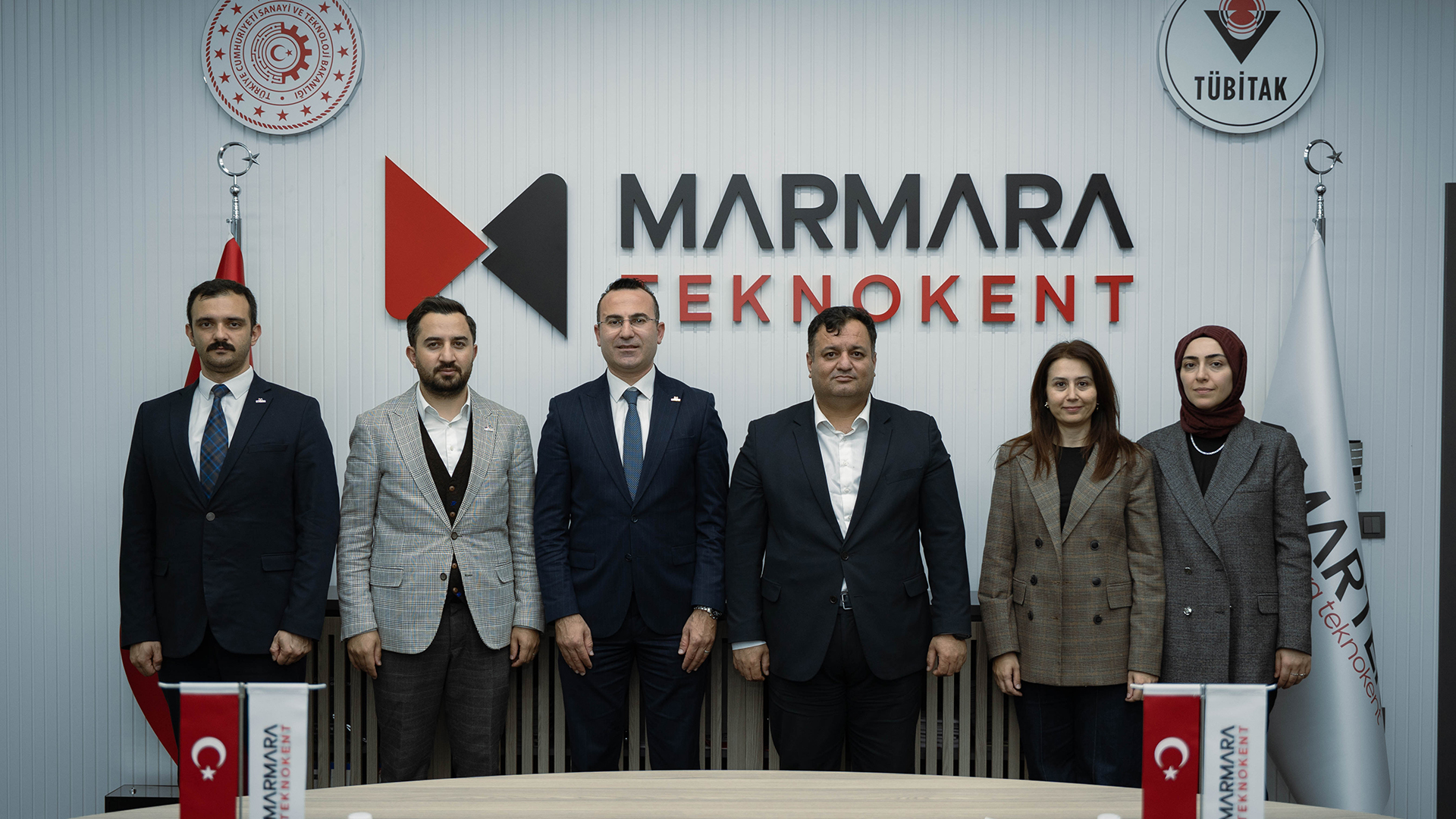
A laboratory can prove that something works. A factory has to prove it works again, and again, at a price somebody will pay. Between those achievements sits an awkward stretch of business: equipment, process development, permissions, partners. Marmara Teknokent, on the TÜBİTAK campus in Gebze, has organized its proposition around that stretch. Its most revealing feature is a boundary on a map.
- Two adjoining zones connect technology development with R&D-based production and trade.
- Companies rent space and can seek incubation, research connections and commercialization support.
- The useful question for a founder: which obstacle would moving here actually remove?
Two zones, one awkward gap
One part is TEKGEB, the Technology Development Zone. The other is TEKSEB, the Technology Free Zone. Together they occupy roughly 62 hectares. The first gives research, software and design businesses a place to develop technology. The second provides a setting for research-linked production and international business. Each has its own framework. Sharing a campus makes their relationship unusually tangible.
The distinction matters because a company’s needs change as its product matures. An office can accommodate a software team. A laboratory needs water, drainage, ventilation and somewhere to put equipment. A production operation brings another set of demands. TEKSEB advertises office and laboratory leases, along with serviced plots starting at 3,000 square meters for companies constructing their own research facilities.
There is a practical geographical advantage, too. Gebze sits in Turkey’s industrial corridor, within reach of Istanbul and major transport routes. More specifically, these firms share a campus with TÜBİTAK research institutions. The park offers connections to those capabilities. For an entrepreneur, proximity becomes valuable when it produces an answer to an actual technical question.
The idea needs plumbing
Consider Nobel İlaç, a resident pharmaceutical company. Nobel describes an on-campus biotechnology production facility with two 1,000-liter reactors, active since 2019. It also describes upstream and downstream process-development laboratories, bioassay and bioanalytical capabilities. These details give the park’s commercialization language a physical scale. A thousand liters is a rather demanding follow-up to a promising experiment.
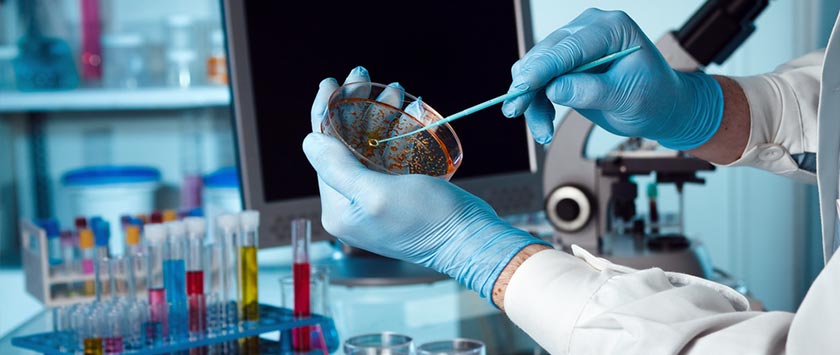
Nobel says its research operation pursues biosimilar medicines and original drug development. The manufacturer supplies the pharmaceutical expertise and runs the facility. Marmara Teknokent supplies the surrounding setting. Keeping those responsibilities clear helps explain what the park sells: a place and a network in which specialized companies can do their own difficult work.
The same principle appears in food entrepreneurship. The food-themed incubation center, developed with TÜBİTAK MAM and TÜGİP, connects entrepreneurs with laboratories and pilot lines. A promising food formulation must survive a production process. Access to suitable equipment gives a team somewhere to investigate that problem before committing to a larger operation.
A company that rents the connecting tissue
The operating company dates to 2003; its institutional roots reach back to a technology development center established in 1992. TÜBİTAK remains its controlling shareholder. This history puts Marmara Teknokent in a particular market position: an operator linking public research infrastructure with commercial tenants, from young businesses to established industrial companies.
Its business combines premises and services. Companies can lease offices and other space, while the operator provides administrative support and access to incubation and technology transfer. The resident directory includes software businesses alongside pharmaceutical and industrial firms. Their common requirement is a route from technical capability to something customers will buy.
The Technology Transfer Office, operating since 2015, addresses that commercial journey. Its menu includes project consultancy, intellectual-property guidance, partner matching and commercialization support. The park’s FAQ discusses licensing, joint ventures and direct sales as possible business models. Choosing among them requires attention to the technology’s maturity, the company’s objectives and the market.
“We offer the right support at the right time.”GO IDEA’s public promise, translated from Turkish
GO IDEA, the entrepreneurship office, works earlier in that journey through pre-incubation, incubation, training and mentoring. Its programs include food-focused support and a 48-hour idea camp. The appealing feature is the sequence: an entrepreneur can explore an idea, develop a business and seek connections without assuming that every stage calls for the same intervention.
Choose the next bottleneck
The scale is substantial enough to examine carefully. A May 2025 parliamentary presentation reported 223 resident companies and approximately 4,000 people across the campus. It put residents’ 2024 turnover at $380 million and exports at $105 million. Those figures describe activity by the companies housed there. They do not establish how much of that activity the park caused.
Exports by resident companies in 2024.
A measure of campus output, rather than operator revenue.
For a prospective tenant, the useful calculation is more specific. Compare the cost of premises, fit-out, equipment and services with the research access and commercial connections the business can use. The FAQ identifies IP consultancy as free. That does not make the whole operation free. A laboratory business still needs a budget for its own development work.
The copyable lesson is to map the next obstacle before choosing the building. A team needing process-development expertise should investigate that access. A founder needing a commercial partner should examine the transfer office’s relevant connections. A business with little eligible R&D, or no practical use for the surrounding infrastructure, has a weaker reason to relocate. This is a way to assess fit, not a promise of results.
A campus learning to travel
Recent activity suggests the organization is extending those connections. In October 2026, it discussed a planned entrepreneurship office with officials in Ordu and reviewed the Food Innovation Cluster’s next steps. It also hosted Mersin Teknopark’s general manager. The Ordu office remained a plan in that announcement. The underlying question travels well: what does this particular company need to make its next useful thing?