At Erciyes Teknopark, the first thing a would-be entrepreneur needs is not necessarily a business idea. The park’s SERA incubator has a preliminary stage for people who have yet to find one. Before the prototype, before the pitch, before anyone orders business cards, there is a place on the program for figuring out what might be worth building.
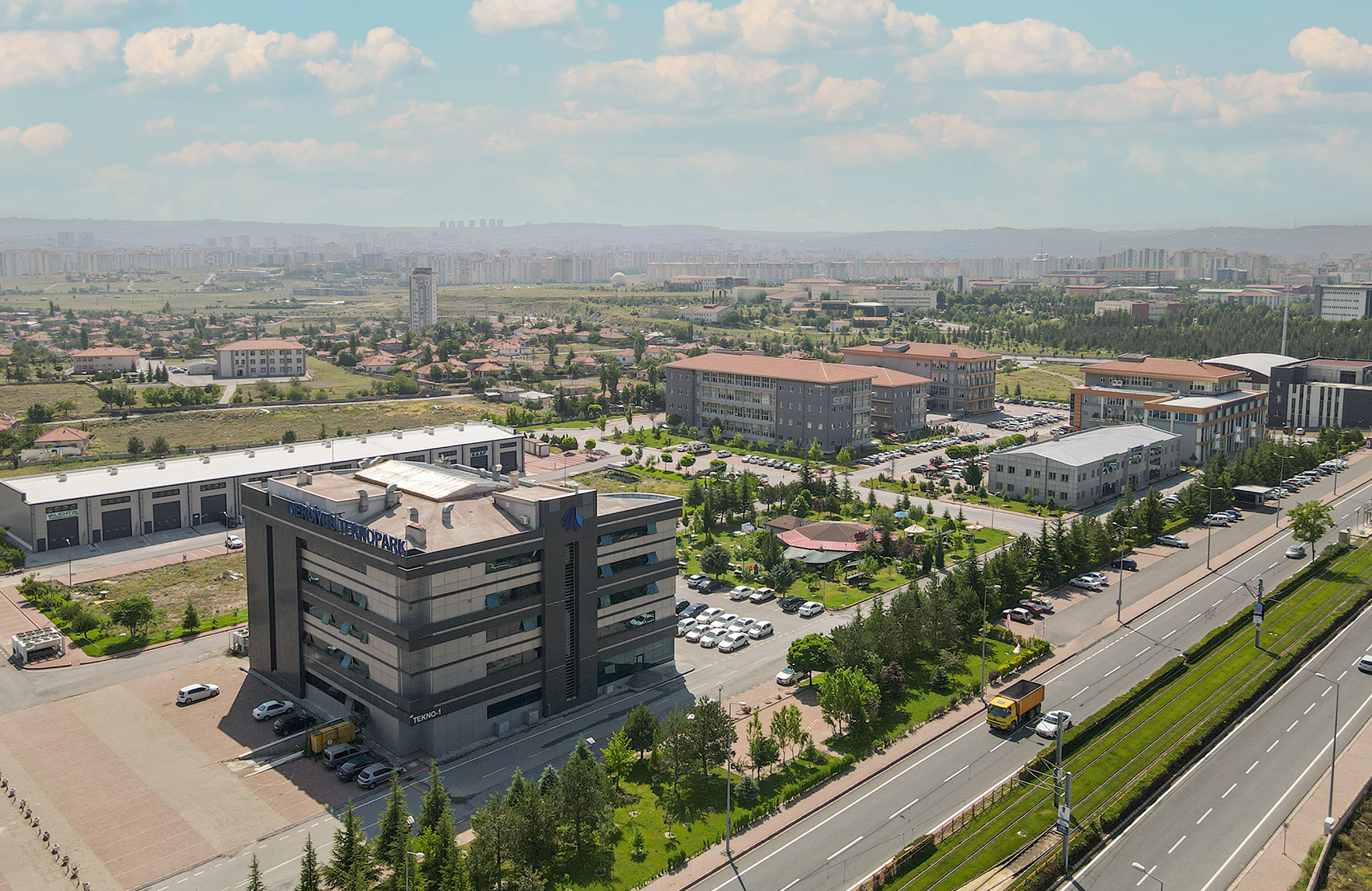
That is a revealing entrance to a company whose name sounds like a property development. Erciyes Teknopark A.Ş. manages a technology development zone in Kayseri, in central Turkey. Offices are part of the offer. So are patent support, project-funding guidance, a prototyping workshop and introductions to investors. Its business is helping other businesses get organized around research.
The interesting question is how those services connect. A researcher needs a commercial route for an invention. A new team needs equipment it may use only occasionally. An established company needs a partner abroad. Erciyes has built separate services for those problems under one institutional roof. The result is a useful case study in the unglamorous work that surrounds a technical breakthrough.
A greenhouse, with a business plan
Sera means greenhouse in Turkish. The metaphor earns its keep: the published program separates early development into four stages. Pre Sera covers inspiration, ideas and validation; Sera moves toward a prototype; After Sera develops that prototype for the market; Pro Sera addresses professionalization and expansion abroad.
That order matters. It puts a period of investigation ahead of making the thing. For a reader designing an incubator, the transferable choice is to give idea development its own place and resources. A room full of enthusiastic people is easier to assemble than a program that helps them decide what to pursue.
SERA advertises equipped work areas, training and mentoring free to participants. Its stated project fields run from robotics and wireless communications to food technology. The breadth makes sense for a university-linked operation: the starting material is the people and technical work around it, rather than one narrowly defined software market.
The buildings took 40 months
The technology development zone was designated in April 2004; the management company followed in February 2005. Its first R&D tenant agreement came in March 2007. The chronology is a reminder that declaring a zone and getting a business through the door are different jobs.
A regional innovation project helped supply the physical foundation. The park records a €7.8 million budget and completion in 2014. The European Union’s account describes a 40-month undertaking that included construction, equipment for laboratories and offices, stakeholder analysis and market research. The spending bought an operating environment as well as buildings.
SERA and the ERBAN investor network began in 2014. Lab Erciyes followed in 2016. Read together, the milestones show an expanding range of support around the original tenancy business. The €7.8 million figure belongs to the infrastructure project; it is not a startup funding round or a valuation of the management company.
Reported budget of the EU-supported regional innovation project, completed in 2014.
The useful stuff includes a soldering iron
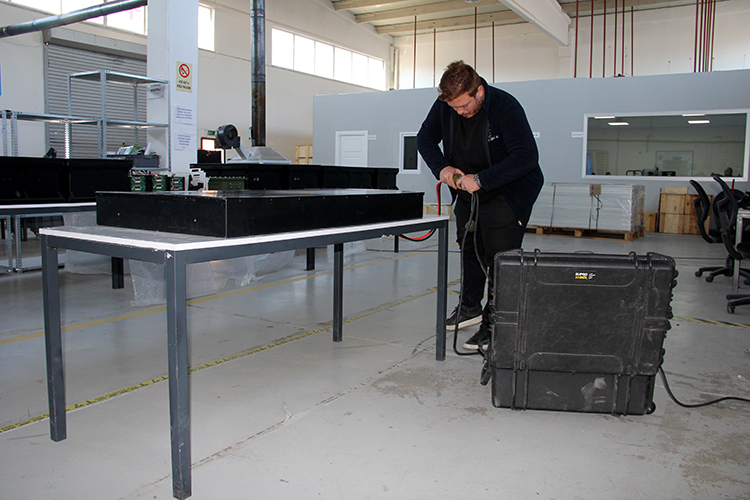
Lab Erciyes makes the offer concrete. Its equipment list includes an Ultimaker 3D printer, desktop CNC, Arduino sets and measuring instruments. It also includes drills, screwdrivers, clamps and soldering equipment. Sometimes the next step in technology development is finding the right tool.
The workshop serves park tenants and SERA teams, with a form for requesting 3D printing. For a small hardware team, shared equipment can reduce the need to own every tool before a prototype is ready. The accompanying Lab Cafe is intended for meetings, events and exchanging experience. The workshop and the conversation each have a designated place.
Elsewhere, ETTO, the technology transfer office, handles project support, intellectual property and university-industry cooperation. Its service description names both Erciyes University and Kayseri University as recipients of its TTO services. A technical question can therefore lead to a funding discussion, a patent discussion or a search for an industrial collaborator. Those are distinct tasks requiring distinct expertise.
The customers are making their own products
The park’s users include students, academics, technology entrepreneurs and established R&D businesses. Türkiye’s TechVisa directory describes more than 270 technology companies, including over 70 academic spin-offs. Those are published scale indicators, rather than a dated census for this month. They suggest a substantial base of companies with university roots.
A battery business supplies a more tangible example. In a January 2024 account, Batron co-founder Yusuf Kaya described starting at Erciyes Teknopark in 2017 in an 18-square-meter office. By the time of that report, the company operated a 2,000-square-meter factory while keeping an R&D team at the park.
Batron’s reported applications included civilian energy storage and equipment for defense customers. “We develop the software ourselves, too,” Kaya said, translated from Turkish, in the tenant account. The detail explains why a battery maker belongs in a research park: its work spans physical products, electronics and software. The company’s factory and sales are Batron’s achievements; the park supplied part of the setting in which it developed.
“We develop the software ourselves, too.”
Yusuf Kaya · Batron co-founder
Translated from Turkish, January 2024
Free to begin does not mean free to operate
The business model becomes clearest in the admissions paperwork. Erciyes rents offices and administers applications, while public programs support parts of its infrastructure and entrepreneurship work. The published application process, checked September 10, 2026, lists a free preliminary stage and a formal application fee of TRY 7,500, including VAT. Rent is a separate expense.
The preliminary stage checks eligibility and the application’s completeness. Formal review can produce acceptance, a request for revision or rejection. Accepted projects must supply the required documents before a lease and keys follow. For applicants, the sequence is practical: establish that the project fits before treating a park address as settled.
The rental discount schedule reveals the operator’s priorities. It offers a 15 percent discount for a qualifying recent patent and provisions for exports, academic ownership and R&D employment. Qualifying publicly supported SERA companies can receive substantial incubation discounts. Conditions, documentary requirements and caps apply. These are incentives for particular activities, not one universal cheap-office price.
An introduction still needs a business
ERBAN adds an investor network to the offer. Its published description reports 140 investors as of 2023, including 67 with individual participation investor licenses. That is a dated membership figure, not the number of checks written. It places a group of potential backers within reach of entrepreneurs who might otherwise have to assemble those contacts themselves.
The park also helps prepare applicants for TÜBİTAK’s BİGG program. Its March 2026 call advertised investment of up to TRY 1.35 million for 3 percent equity, with an April 19 application deadline. Those terms belonged to that call and the BİGG fund, rather than an unconditional offer of money from the park.
Eligibility matters here. The call’s rules included student or graduate status and restrictions concerning previous support and existing company ownership. A founder already running a business may need a different service. Choosing the correct route is part of getting value from an institution with several entry points.
Kayseri is part of the proposition
The company’s listed shareholders bring universities together with Kayseri’s organized industrial zone and chambers of commerce and industry. That arrangement puts academic and commercial institutions inside the operator’s structure. For a team seeking regional collaborators, the composition matters as much as the office specification.
Other Turkish parks offer overlapping services. Istanbul’s İTÜ Çekirdek, for example, combines incubation, training, infrastructure and investor access. Erciyes’s case rests on the particular combination available in Kayseri: university links, local industrial organizations, prototyping and a program that begins before an idea exists.
Its reach extends beyond the campus. Erciyes announced renewal as the sole Enterprise Europe Network operator for the TR72 region, covering Kayseri, Sivas and Yozgat, for 2025-2028. The regional mandate adds international business support to the local offer. Its usefulness will depend on whether a company needs those connections and can turn an introduction into a working relationship.
Now the park is working on its electricity bill
The latest physical project tackles an ordinary operating need. In August 2026, Erciyes University reported that construction had begun in July on a 900 kWp rooftop and carport solar installation at TGB-1. Commissioning was planned for September. Expected annual output was about 1.2 million kWh against annual consumption of roughly 1.4 million kWh.
1.2 million kWh projected generation
1.4 million kWh annual consumption
The university’s forecast puts solar coverage at approximately 85 percent of annual consumption. That remains a projection, not a measured operating result. It also reports six workshop-style offices opened in TGB-2 in 2025, with solar planned for their roofs. The campus continues to acquire the physical infrastructure its users need.
For founders, the lesson from Erciyes is to identify the immediate problem before picking a program: developing an idea, testing a prototype, finding research expertise or seeking a commercial partner. The park offers places to do each. The value comes when a team uses the next service to answer a real question about its business.
Step inside
Explore the official website, company directory and newsroom. Follow the park on LinkedIn, X, Instagram and Facebook.
▶ Watch the park’s linked presentation YOUTUBE ↗