A notebook can leave a factory with a powerful processor, a beautiful screen and one missing screw. The screw is small. The consequences are less accommodating. For Lenovo, Fundação CERTI helped build a system that checks computers before they reach their packaging. It examines labels, keyboards, fasteners and other visible details. Innovation, in this case, has the rather unfashionable job of making sure everything is where it belongs.
- CERTI turns research into products, manufacturing systems and businesses.
- Its customers include Lenovo, ENGIE, Petrobras and WEG.
- Its method joins prototypes, testing, production and the people who use them.
That modest task explains a surprisingly wide institution. CERTI sells the work needed to make technology useful: engineering, software, measurement, testing and support for entrepreneurs. A manufacturer can commission a development project. A startup can seek incubation. An energy company can bring a monitoring problem. The common purchase is expertise that would be expensive to assemble for one assignment.
01 / The professor already had customers
In 1984, mechanical-engineering professor Carlos Alberto Schneider initiated CERTI on the campus of the Federal University of Santa Catarina. The early foundation shared space with the university’s metrology and automation laboratory. Its location supplied an obvious advantage: proximity to people who knew how to measure things, build things and determine whether those things behaved as promised.
Schneider later recalled hiring ten engineers immediately after the foundation began, because company projects were already waiting. There is a pleasing reversal here. The institution did not have to spend its first morning wondering who might need it. Industry had supplied the question; the university supplied some of the people capable of answering.
“We already had company projects to execute.”Carlos Alberto Schneider, recalling the founding in a 2007 interview. Translated from Portuguese.
CERTI remains an independent nonprofit. Its business runs through commissioned research, specialized services and innovation programs, including projects supported by public incentives. The nonprofit structure sits alongside commercial discipline: customers still need working results. The distinction matters because a research institution can help carry technical uncertainty that an ordinary supplier might prefer to avoid.
02 / A second-place machine
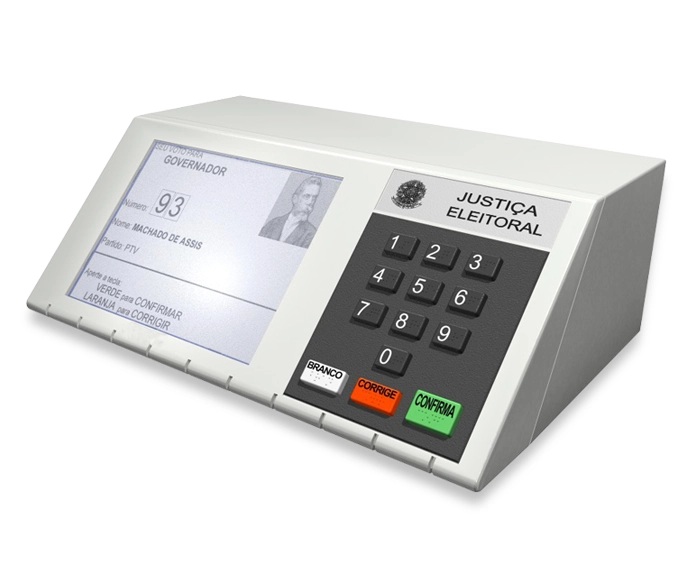
Consider the voting machine. Procomp, subsequently associated with Diebold, brought CERTI into its bid for Brazil’s electronic voting equipment. CERTI handled mechanical design and contributed to electronics, support software and testing. The partnership placed second in the 1996 tender. It won the following year. A useful innovation story sometimes begins with somebody else getting the contract.
The resulting design weighed just over eight kilograms and could operate for twelve hours without external power. It had to endure southern cold, Amazonian heat and humidity, and transport to remote communities. Those requirements make an abstract phrase like “technology transfer” suddenly physical. The machinery needed a case, a battery and a tolerance for journeys that a laboratory bench never takes.
Today, comparable alternatives include SENAI’s technology institutes, São Paulo’s IPT, specialist engineering firms and a customer’s own R&D department. CERTI’s particular proposition is the combination: product engineering, industrial measurement, manufacturing development and entrepreneurship support within one institutional network. That breadth becomes useful when a problem refuses to stay inside one profession.
03 / Five revisions before the field
ENGIE’s Arataca project supplies a price tag. Its published case records R$950,000 in combined ENGIE and EMBRAPII investment to develop a device for locating electrical-current leakage. The hardware went through five engineering revisions to improve reliability, sensitivity and suitability for power-plant conditions. CERTI reports validation in multiple ENGIE hydropower plants and lists delivery in 2026.
Combined investment · five hardware revisions · hydropower field tests
The device introduces a controlled current and follows its path to find hidden leaks. The five revisions are the instructive detail. A proof of concept still needed more engineering before maintenance teams could use it in operating plants. Readers can borrow that sequence: identify the failure you need to detect, build an instrument, and keep testing against the place where it must work.
For eligible intelligent-systems projects, CERTI’s published EMBRAPII model offers non-repayable support covering up to one third of the contracted total. Companies negotiate directly with the unit rather than waiting for a call for proposals. That changes the investment calculation. It helps distribute technical risk while leaving the business responsible for a project worth pursuing.
04 / The factory worker gets a vote
Lenovo’s Eye of Things, delivered in 2024, brings the same concern to inspection. CERTI says the system checks every unit before packaging. Quality staff can change configurations through an interface without writing code, and configurations can be replicated between production lines. The system also connects to Lenovo’s database, preserving production information and configuration history.
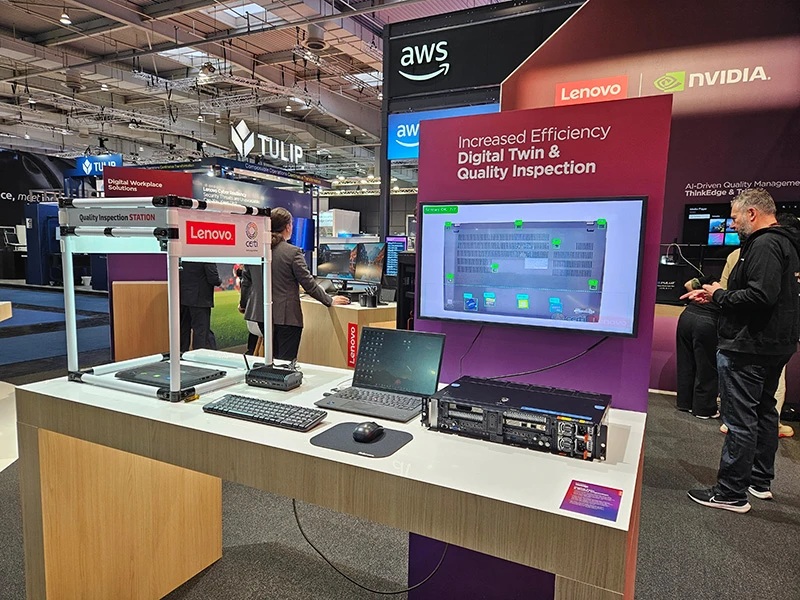
In an August 2026 CERTI podcast discussion, Lenovo’s Marcelo Parada emphasized the people working on the factory floor. Frequent changes in computer models make flexibility a daily concern. The lesson is practical: an inspection system needs to fit the operator’s work. Accurate recognition alone leaves part of the adoption problem unfinished.
05 / The forest also needs a customer
CERTI launched the incubator initiative that became CELTA in 1986. Today CELTA offers startups mentoring, infrastructure and strategic support. In the Amazon, Jornada Amazônia extends the entrepreneurship idea into bioeconomy businesses. Ecosystem studies began in 2018; pilots preceded a larger platform backed by Bradesco, Itaú Unibanco, Santander and Fundo Vale.
Bioconex makes the commercial obstacle explicit. Amazon cooperatives need visibility, traceability and dependable transactions with industrial buyers. CERTI’s marketplace organizes more than 25 supply chains, including açaí, cocoa and vegetable oils. Its case reports approximately R$120,000 in sales during the final quarter of 2024. That is transaction value, a modest and concrete sign of trade.

The recurring lesson is to budget for the route into use. A prototype needs field access and trustworthy measurements. A factory system needs operators who can configure it. A forest product needs buyers and logistics. For a business with a defined technical challenge, CERTI offers people and facilities to work through those dependencies. The useful first conversation starts with what must work, where, and for whom.