Before Órbi had a building, it had a banking problem. In 2016, entrepreneur Pedro Menezes asked the San Pedro Valley startup community whether anyone knew a digital bank that could offer a simple business account. Someone pointed him toward Intermedium, the bank now known as Inter. The request was ordinary. The chain of introductions that followed was considerably more ambitious.
Inter made digital business accounts available to the community. Menezes then discussed the entrepreneurs’ collaborative work with João Vitor Menin. Conversations brought in MRV and Localiza, and the idea became a place where startups and established companies could meet. Órbi opened in Lagoinha on November 1, 2017. A WhatsApp question had acquired an address.
That beginning still explains the organization better than a list of technology buzzwords. Órbi helps people who have problems find people with relevant skills, resources or institutional access. Its expanding portfolio includes education, events and research collaboration. The interesting question is how far an introduction can travel before somebody has to deliver.
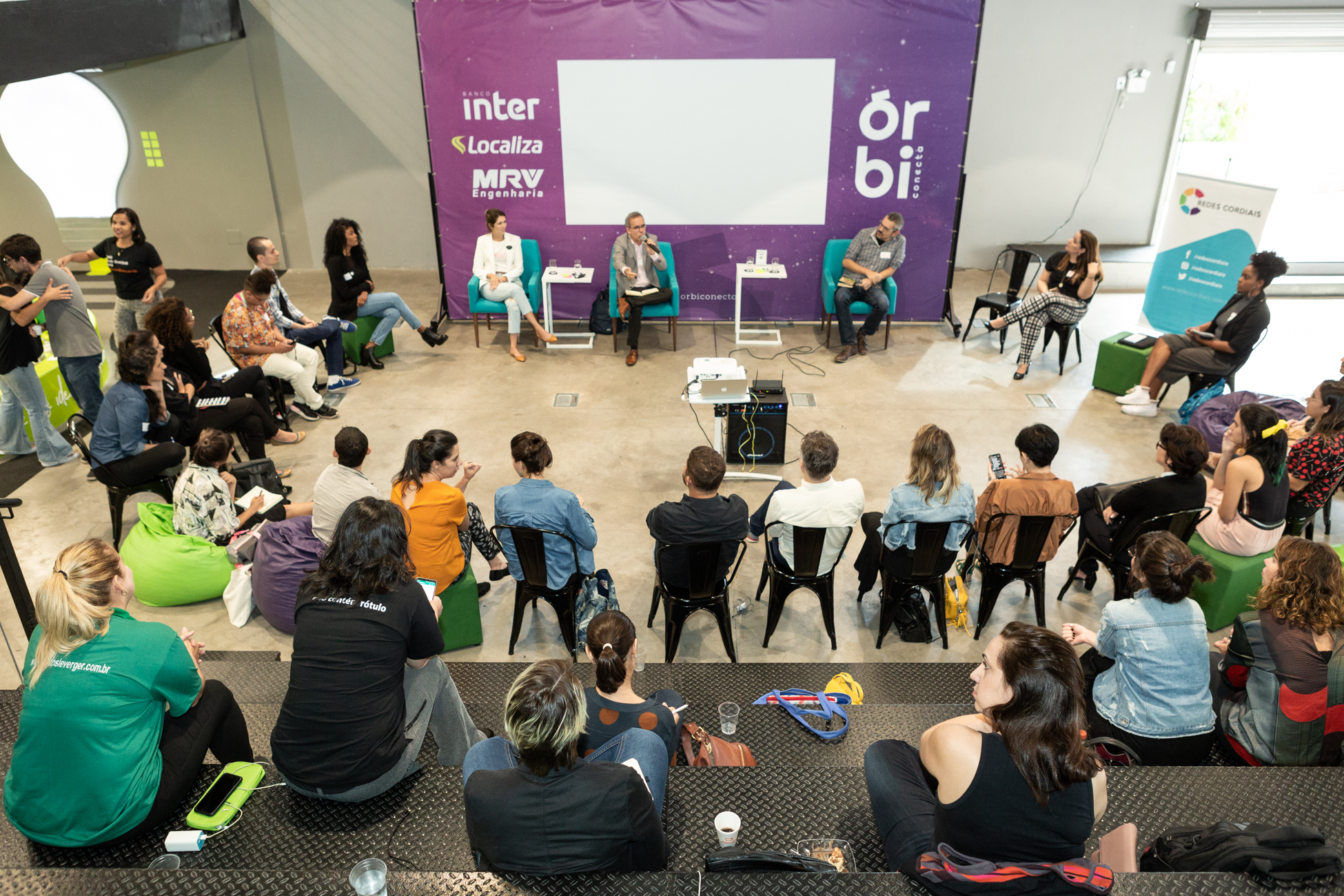
A bank, a builder and a rental fleet walk into a hub
Órbi’s founding coalition paired the San Pedro Valley community with Inter, MRV and Localiza. Those companies brought different operating worlds: financial services, housing and mobility. For an entrepreneur, that breadth matters. A useful business connection might involve a potential buyer, an experienced operator or a company with a problem worth solving.
The organization was established as a nonprofit association. Pedro Menezes was an originating organizer; Anna Martins helped create it and became its founding CEO. An advisory council included corporate and startup representatives. That arrangement gave the people building young businesses a place in the institution alongside the larger organizations supporting it.
In a 2021 interview, Martins described curated participation and shared desks, with no enclosed office reserved for a single brand. More than 200 companies had used the space by then, according to that report. The design encouraged people to encounter colleagues outside their own teams. There was also a garden, a coffee-friendly communal area and a ball pit. The adults were allowed toys.
The physical setup expresses a commercial proposition: access to a community whose members may be useful to one another. It also requires work. Selecting participants, arranging conversations and keeping people involved are services with their own demands; installing desks does not complete the assignment.
The room closed. The work moved.
The pandemic exposed an obvious dependency. In 2020, Órbi initially closed its premises and moved activities online. A place organized around proximity had to keep relationships alive at a distance. Its own account describes the closure and the measures taken before people could return.
Other uses emerged from the same network. Fazendinha em Casa, an online marketplace for local food producers, used Órbi’s parking area as a departure point for deliveries. Transforma BH stored donated food at the site; Órbi connected the organization with Localiza, which supplied vehicles to move donations. The parking lot suddenly had an unusually persuasive business case.
In an interview with Distrito, Martins described a stronger virtual offer, with online learning and connections for businesses across Brazil. The documented change was practical: activity could reach people who did not share the building. For anyone copying the model, the lesson is to establish reasons to stay connected that survive the loss of a meeting room.
“Não dá para falar de transformação digital sem falar das pessoas.”
Dany Carvalho, then Órbi CEO, speaking to Exame“You cannot talk about digital transformation without talking about people.”
Teach the people the employers need
Órbi Academy Techboost made the education proposition tangible. Launched in 2021 with Digital Innovation One, it offered free programming bootcamps backed by employers. Inter, Localiza and MRV participated. The launch events drew a reported 27,000 interested people, and the training addressed recognizable technical roles.
One MRV track covered .NET development through 90 hours and 19 courses. Its content included C#, object-oriented programming and application architecture. That specificity helps explain the offer: students could see what they would learn, while employers could recognize skills relevant to their technology teams.
Take Blip’s arrival expanded the planned scholarship allocation from 100,000 to 130,000 in 2021. Órbi said the program had already made 50,000 scholarships available and assembled a pool of more than 8,000 qualified students available for interviews. Those are separate measures of access and recruitment readiness.
Free online programming scholarships offered. An access figure, not a count of graduates or jobs secured.
By its fifth-anniversary reporting in 2022, Órbi put the total offered at 168,000 scholarships. The distinction matters: a scholarship opens a door, while finishing a course and getting hired require further steps. The number describes the scale of the invitation.
A separate partnership with Gama Academy and Una connected training with recruitment, including a June 2022 fair in Belo Horizonte. Together, these initiatives show a repeatable approach: bring education providers and employers into the same program, then give learners a route to meet the market.
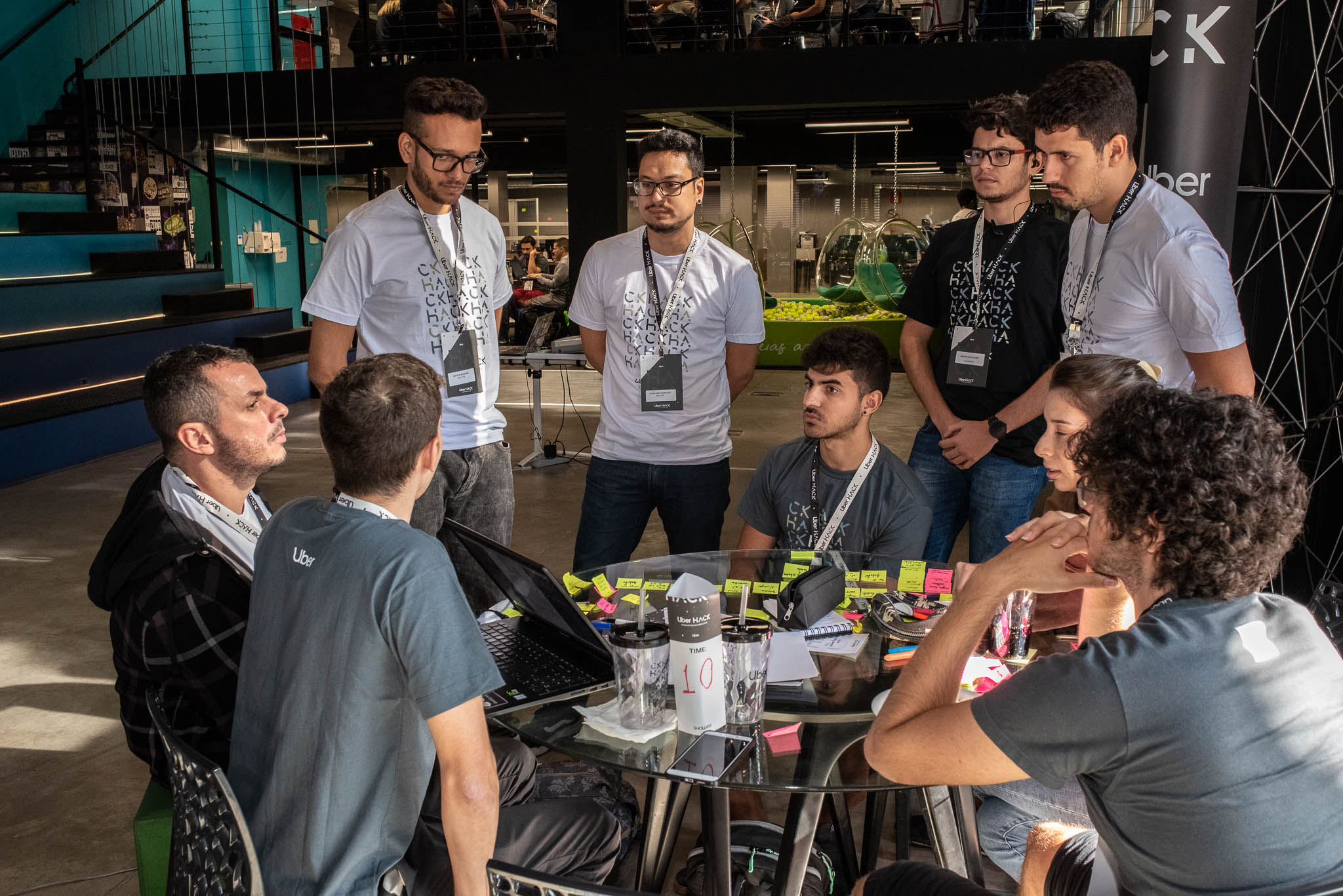
Free scholarships, paid courses, real costs
Órbi serves several audiences, and the economics vary. Corporate support helps sustain the institution; education and venue rental create paid offerings. Some public events and sponsored training are free to participants. It is a mixed model, with different people paying for different kinds of access.
One concrete contribution appears in Localiza’s 2019 sustainability reporting: R$700,000 invested in Órbi that year. The same report recorded 95 events, 6,573 visitors and seven completed deals. That contribution is evidence of corporate backing, not a valuation or a venture-capital round.
The Academy’s published 2024 course menu supplies a more familiar price comparison. An eight-hour innovation-culture course cost R$1,299 per person; eight hours of data-centric design cost R$1,600. A three-day ESG immersion was R$2,199. These are historical listed prices for distinct courses, not a current quotation.
The Guia AI management course page, checked in September 2026, lists R$5,000, payable in up to three installments. Its four in-person business meetings cover fundamentals, prompts and tools, ethics and cybersecurity, and implementation. The audience is leaders making decisions about where AI belongs in their organizations.
That curriculum includes data quality, integration with older systems and infrastructure constraints. Those topics are useful precisely because a promising demonstration does not settle an implementation decision. The course brings technical and business perspectives together; its published teaching team includes Pedro Calais and education director Sabrina Oliveira.
From making introductions to doing the research
Christiano Xavier’s appointment as CEO was announced in February 2025. He succeeded Dany Carvalho and brought experience in legal innovation, technology businesses and a decade at Localiza. In his opening public remarks, he emphasized listening to the community and producing results, while identifying professional training and technology adoption as recurring needs.
By July 2025, Órbi’s transition to a science and technology institution, or ICT, was being reported publicly. The newer offer includes helping companies structure innovation projects and collaborate with researchers. It gives more institutional weight to work that continues long after an initial meeting.
Órbi’s website describes support from proposal submission through reporting, along with research co-execution involving university talent. For a smaller business, the appeal is understandable: finding a researcher, shaping a project and navigating a funding application can be substantial jobs in themselves.
- 01Define the problem
- 02Build the research project
- 03Submit for funding
- 04Execute and report
Órbi describes support across this journey. Submission is a step, not an award.
A February 2026 retrospective reported 13 Competente Minas submissions supported by Órbi, with potential funding approaching R$30 million. The word “potential” does essential work. Proposed research funding cannot be booked as a successful award, or as Órbi’s revenue.
In market terms, Órbi sits across categories that a buyer might otherwise approach separately: workspace, business networking, executive education and research support. Its value depends on whether the combination helps a particular project. A company seeking only a desk has a different shopping list from one seeking research partners.
Lagoinha gets a say
The next ambition extends beyond the building. Montanha Digital connects Órbi’s technology agenda with the creative economy of Lagoinha. Its December 2025 anniversary account described an urban laboratory linking companies, universities, public institutions and communities. The neighborhood is part of the work being proposed.
The first Portas Abertas gathering of 2026 made that direction visible. The free event brought together entrepreneurs, artists, cultural producers and public-policy specialists. Viva Lagoinha contributors discussed local history, architecture and neighborhood initiatives. Carnival, urban art and sponsorship shared the program with business and technology.
That choice gives Órbi a particular local character. CEO Xavier cited Recife’s Porto Digital as an inspiration for embracing local culture. The useful test is whether those relationships create projects that residents and businesses can actually use. A district takes more than a name.
For a founder or manager considering Órbi, the sensible entry point is a specific piece of work: a hiring need, a research question, a team’s skills gap or a prospective partnership. Name the person responsible and the result you want. If an organization cannot commit time or follow through, another introduction may simply add to its calendar. Órbi’s beginning offers a better brief: find a shared problem that somebody is ready to solve.
Step into the conversation
Explore Órbi’s programs and contact forms, the Guia course and its news and essays. Follow LinkedIn, Instagram or Facebook.
WATCH / ARCHIVE CONVERSATIONS
↗ On the Road: Recife’s startup ecosystem↗ On the Road: corporate-startup relationships