In May 2026, an Istanbul university’s technopark moved its London office. The old address was Battersea Power Station. The new one was High Holborn. Rector Eyüp Debik explained the change in practical terms: the previous office had limited resources; the replacement offered more space and stronger social amenities. Behind this modest property story sits a more interesting question. What does an inventor need after the invention works?
The useful version
- A place to build: university-linked workspace and R&D support.
- A route to selling: incubation, mentoring and technology transfer.
- A way out into the world: overseas offices and organized market introductions.
YTÜ Yıldız Teknopark has spent years assembling an answer. Its customers include research businesses, startup founders and university researchers. The operator provides premises and services; the companies inside develop the products. That distinction explains why a technopark can accommodate pharmaceutical research, software and aviation without pretending to manufacture everything itself.
A campus with commercial consequences
Yıldız Technical University laid the foundations in 2003. The technopark’s own history dates the Davutpaşa launch to 2009, followed by İkitelli in 2014 and Maslak in 2022. The sequence matters. Before the foreign addresses came the unglamorous work of giving research companies somewhere to operate, then expanding that physical base.
Today, the organization reports more than 750 R&D and incubation companies. Its homepage lists 7,800 completed projects and $3 billion in total exports across the ecosystem. Read those numbers carefully: they describe collective activity, rather than the operator’s annual turnover. A landlord’s accounts and its tenants’ achievements tell different stories.
Organization-reported totals, accessed October 2026. Export total is cumulative.
The appeal is the combination. An office gives a company a base. University expertise can help with a technical question. A technology-transfer office can help with intellectual property and industrial relationships. Bring those services together and a founder has fewer separate institutions to navigate. Whether that saves a particular company time depends on which help it actually uses.
The next obstacle gets its own program
YTU Startup House, the entrepreneurship arm, divides its work according to a company’s stage. Pre-incubation covers design thinking, user-centered product development, sales strategies and mentoring. The incubation program is aimed at teams that have finished the idea and product-development stages and want to increase existing sales. Those are recognizably different assignments.
The distinction is useful to anyone applying. A founder still deciding what to build needs contact with users and a workable business model. A team with a product needs help reaching customers, improving the technology and organizing growth. Putting both teams through identical workshops would be convenient for the organizer and rather less convenient for the teams.
Follow the work
- 01Shape the ideaPre-incubation & mentoring
- 02Develop & protectR&D guidance & patents
- 03Find the buyerIncubation & industry links
- 04Reach abroadOffices & market meetings
A map of available support, not an automatic progression.
Yıldız TTO supplies another part of the machinery. Its services include matching industrial problems with academics, shaping funding proposals, patent analysis and licensing. This is where a promising research result encounters ownership, budgets and commercial applications. The paperwork has a purpose: a potential industrial partner needs to understand what it can use and on what terms.
Free training, paid space, selective capital
For a prospective tenant, the published application route starts with a preliminary discussion and an online submission. Project staff then conduct checks and a commission evaluates the proposal before the lease stage. That sequence gives the relationship a technical gate as well as a property transaction. A founder choosing a location should ask whether the proposed work fits the park, who will review it, and which services become useful immediately. An attractive office is easy to recognize. An appropriate research environment takes a little more questioning.
The financial arrangements deserve separate reading. The operator’s rules describe rent, operating contributions and fees for certain facilities. Those payments support the managed premises. A training program or an investment award follows its own terms. Treating every service as one generous startup package would make budgeting unnecessarily theatrical.
StarBİGG, run with Türksat under TÜBİTAK’s investment-based entrepreneurship program, currently advertises TL1.35 million for 3% equity for eligible ventures approved by TÜBİTAK. That is an investment in a selected company. In December 2025, Startup House reported five ventures qualifying for the then-applicable TL900,000 support. Neither figure represents money raised by the technopark operator.
Other support has a different price: the October 2026 AI Engineer Bootcamp with NVIDIA is advertised as free. Its three-week, English-language program covers practical AI engineering with NVIDIA engineers. Startup House also announced free undergraduate AI training with Meta in September. These activities give the collaboration culture a specific shape: people come together to learn a skill they can use.
London is where the question changes
The London relocation brings the commercial problem into focus. In the university’s account of the opening, general manager Muhammet Garip emphasized scaling and reaching suitable markets. The overseas network includes Dubai, Amsterdam and Skopje. London’s new office also received International Technology Marketing Office status under the Turkish Ministry of Trade’s support framework.
“No matter how high-quality a product is, it cannot scale if it cannot reach the right markets.”
Muhammet Garip · London office opening, May 2026
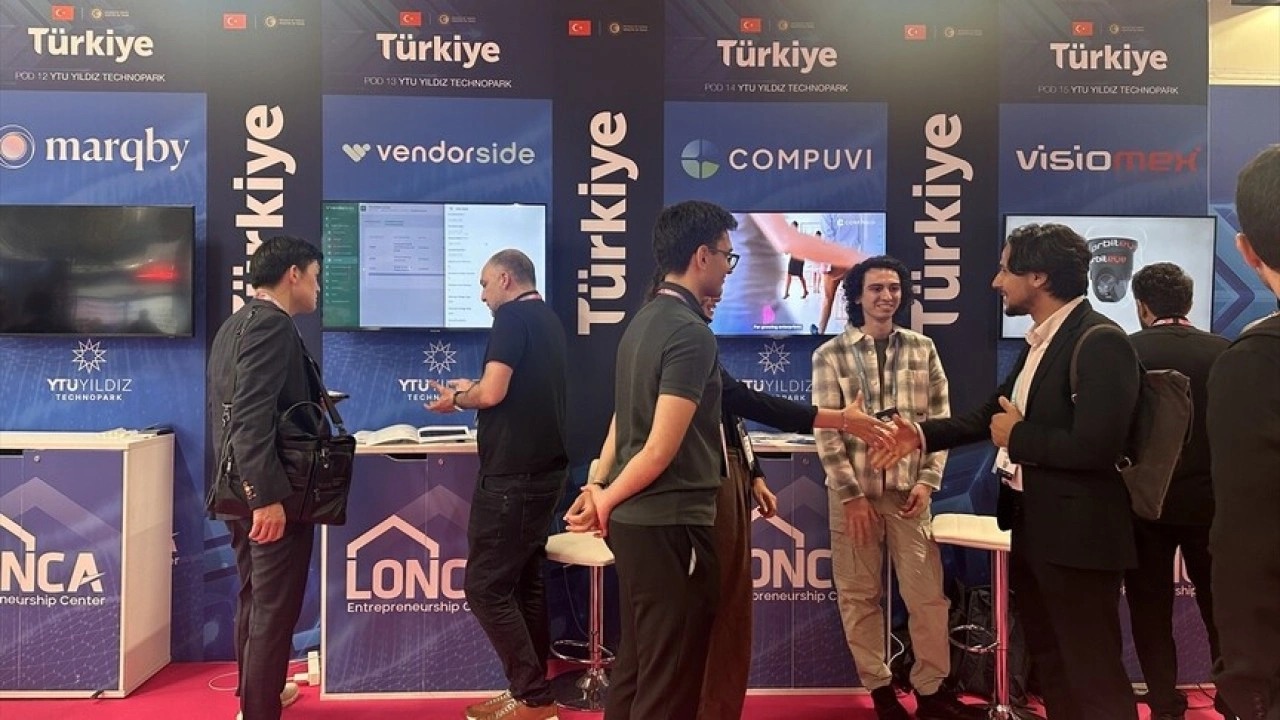
There is a concrete example of that work. At London Tech Week in June 2026, Yıldız brought fourteen startups and partners into the international event. Companies presented solutions and growth plans; the new London office hosted a networking gathering. The technopark organized an occasion for introductions. The companies still had to make a persuasive case.
Borrow the sequence, then do the selling
For a founder choosing between Istanbul’s university-linked parks, the useful comparison is the fit of services: technical expertise, program stage, partner benefits and overseas connections. Yıldız competes in that market alongside alternatives such as İTÜ ARI Teknokent and Teknopark İstanbul. Its distinctive offer is the assembled route from academic work to commercial introductions.
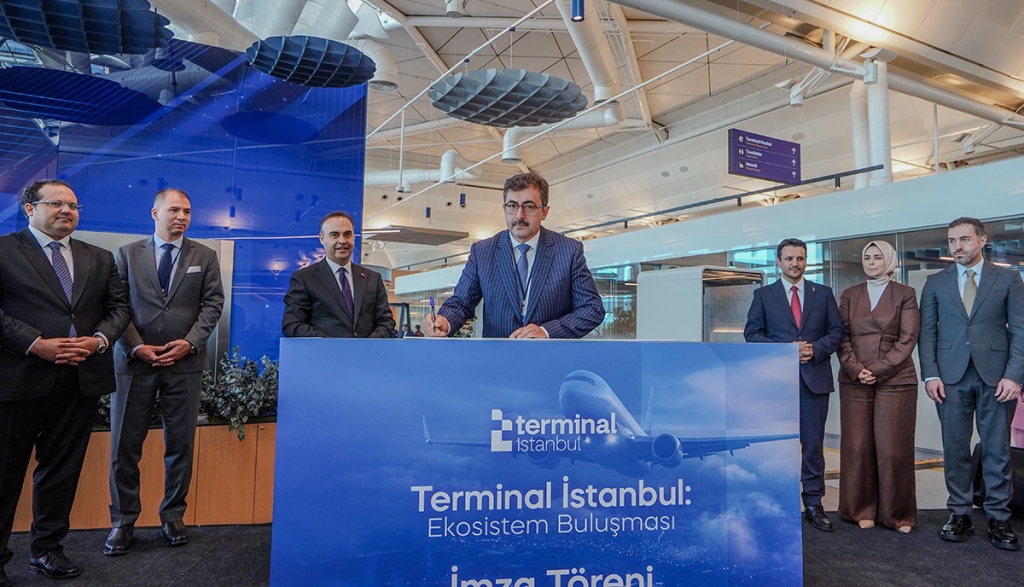
Its network continues to expand. On September 25, 2026, Yıldız signed the Terminal İstanbul ecosystem cooperation agreement. The proposed center targets a 2027 first phase. An agreement establishes a starting point; actual joint work will determine its value. The distinction is worth keeping when innovation announcements begin to sound like finished buildings.
What another organization can copy is the sequence: identify the founder’s next obstacle, then assign support to it. The conditions matter. A company must fit the relevant program, do the development work and convert introductions into demand. An overseas address cannot decide what customers want. Yıldız’s proposition is to make those customers, and the expertise needed to serve them, easier to reach.
Take the next meeting
Browse the programs, meet the network or watch the technopark’s introduction.