A heat pump is an unusually good place to begin a story about business consulting. Inside it, refrigerant moves, heat transfers and small design decisions have consequences. For AC Heating, a manufacturer working on a new generation of equipment, the useful intervention was a research partnership: specialists at the University of West Bohemia simulated what was happening inside the system before another prototype had to be built.
That collaboration, supported by Plzeň’s business-voucher programme, gets close to the purpose of BIC Plzeň. The city’s business and innovation centre helps companies find the expertise, money and partners needed to move an idea forward. The work can involve a founder’s first sales conversation or a manufacturer’s next technical question. Sometimes the important meeting is with a scientist.
Founded by the City of Plzeň in 1992, BIC occupies a useful position between municipal economic development and the daily frustrations of running a company. It advises, introduces, helps organise support and offers working space. Its appeal rests on how those activities connect: a problem discussed with a consultant can lead to a research institution, a grant application or a place to test.
The million crowns have a job to do
The attention-grabbing offer is incubation support of up to CZK 1 million. The money is intended for external expert services, such as product development, legal work or marketing. The city programme also advertises 100 hours of consultation. In other words, there is an opportunity to buy specialist help and a structured process for deciding which help the business actually needs.
BIC’s early-stage offer starts before the formal competition. Initial consultations provide free feedback on an idea. Preincubation, introduced in 2025, gives would-be entrepreneurs a way to work on their proposition without waiting for an intake, subject to the team’s capacity. For someone still deciding whether a promising sideline could become a livelihood, that is a fairly low-friction first appointment.
The formal programme asks for more commitment. In the autumn 2025 intake, 13 businesses applied, 11 presented to the programme council and eight entered the main phase. The selection process included consultations to clarify needs and goals. Those numbers describe access to the programme, not a verdict on which companies would ultimately succeed.
A selection funnel, not a startup survival chart.
The participants make a pleasingly untidy collection. Farmiture develops hydroponic growing systems built into furniture. TSB Training Sandbag works on portable exercise equipment. PrivLex AI focuses on a local AI assistant for organisations handling sensitive information. These businesses need different technical answers, but each has to identify a customer, explain its value and decide what deserves the next slice of its budget.
First, find something worth testing
The programme’s published retrospective gives a more useful measure of progress than the usual group photograph. TSB founder Marcel Kolena described making connections with gyms, testing his product and defining the project more clearly. Those are specific commercial activities: find a setting where the product belongs, let people use it and learn enough to sharpen the offer.
The same retrospective describes how participants valued mentoring and introductions alongside financial support. Bohemian Cosmetics founder Ivana Petr put the relationship simply: “BIC believed in my project as much as I did.” The remark, translated from Czech, captures the client experience BIC wants to provide. As a testimonial published by the programme itself, it is best read as one founder’s account.
“BIC believed in my project as much as I did.”
Ivana Petr · Bohemian Cosmetics
Translated from Czech
There is a change in the process worth noticing, too. BIC introduced mandatory consultations and preincubation in 2025. Its account says the consultations helped businesses understand their strengths and weaknesses. The practical lesson is to do some diagnosis before committing to a package of support. A founder who needs a clearer market proposition may have a different shopping list from one preparing an already tested product for production.

A better question for the laboratory
BIC’s usefulness extends beyond new companies. AC Heating, operated by KUFI INT, worked with the university’s Regional Technological Institute on refrigerant flow and heat transfer. The research examined distribution within the system and flow through the evaporator. According to the published project account, the work supported more even flow, improved operation and evaluation of design options before prototype production.
The sequence matters. A company brought an engineering problem; a research team supplied simulation tools and specialist knowledge; the findings informed development. It is a model a manufacturer can copy at the level of method: define a narrow uncertainty and find the expertise capable of reducing it. The voucher helps make the collaboration financially accessible.
FK PRO SYSTEMS offers another example. The company designs and optimises steel elements for industrial buildings, where details around roof openings and skylights can require more evidence than routine design work provides. Through the voucher programme it collaborated with COMTES FHT on mechanical tests, material analysis and numerical simulations. BIC’s account says the resulting knowledge feeds the company’s own design methodology.
These cases put some substance behind “technology transfer.” Researchers help examine a specific commercial problem, and a business gains information it can use. The payoff may appear in an improved design process or a better-informed prototype decision. Neither example needs a dramatic reinvention story to explain why the work was useful.
The building is part of the proposition
Physical businesses also need somewhere to work. BIC points clients toward a local network that includes the science and technology park, TechTower and SIT Port, alongside its own central coworking space. The science park combines offices, laboratory and development space near the University of West Bohemia. BIC and the science-park company jointly provide services across the site.
TechTower supplies one of the more memorable details: a 10-metre test tank for water robots and drones. The wider facilities offer includes prototyping, CNC workshops, electronics work and 3D printing. For hardware teams, access to the appropriate equipment can change which experiments are feasible. A desk and a reliable internet connection only cover part of the job.
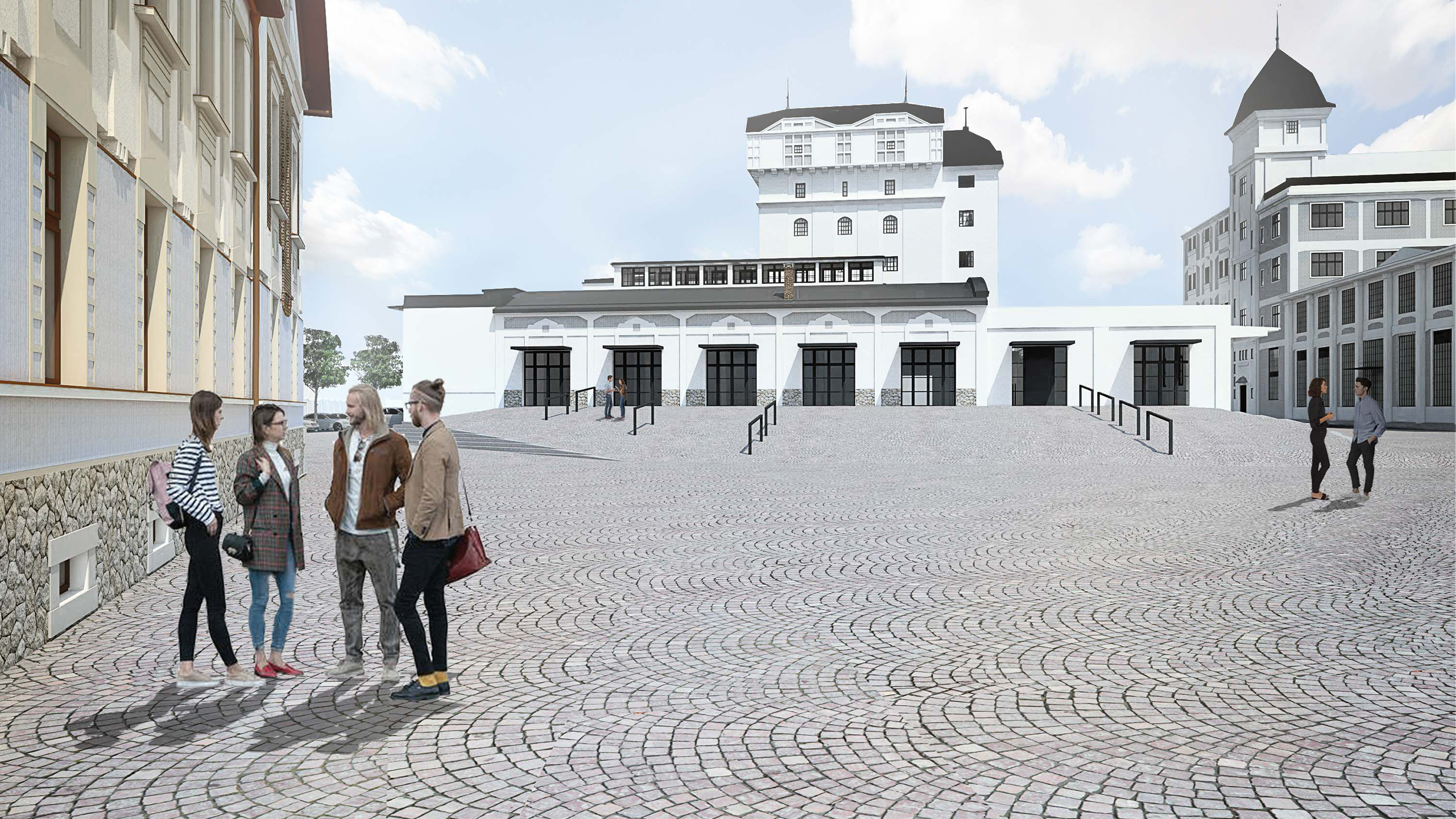
These facilities also represent a substantial public commitment. TechTower opened in February 2023 following a project reported at CZK 780 million including VAT. That is the cost of the city’s technology-park development, not money raised by BIC. Keeping those accounts separate matters: BIC’s role is part of a larger collection of organisations, buildings and services.
What the help costs
There are several different transactions under the BIC umbrella. Enterprise Europe Network services are free to users because the European Union and the Czech Ministry of Industry and Trade finance them. Coworking is a rental business. The published starting price for a dedicated desk is CZK 3,000 a month excluding VAT, with energy, cleaning and internet included; printing and drinks are charged according to consumption.
Research vouchers have their own terms. The September 2026 call allocates CZK 4 million across the programme and offers support for services supplied by research organisations. The published contribution can cover up to 75 percent of eligible expenses for small and medium-sized enterprises, and up to 40 percent for large companies. Businesses therefore have to plan for their own contribution as well as the supported work.
These distinctions explain BIC’s business model more clearly than a single consulting label. It combines publicly backed business support with paid premises and programme delivery. A client may receive advice through one route, rent a workspace through another and apply for a competitive grant through a third. Eligibility, timing and the purpose of the expenditure determine which route fits.
Plzeň is the starting point
International expansion is another part of the offer. Through Enterprise Europe Network, BIC helps firms explore markets, identify partners and navigate questions about financing, intellectual property and cross-border business. Its services include support for planned business-to-business meetings. The value of an introduction depends on a company arriving with something specific to discuss: a manufacturing requirement, a distribution opportunity or a research proposal.
The local support continues after incubation. BIC’s alumni programme offers occasional consultations and contacts without another competitive intake. Its wider services include Sales Class, focused on customer selection and sales conversations, and PLATINN, offering up to 40 hours with an expert on a defined business problem. This gives a company several reasons to return as its needs change.
For prospective clients, location and deadlines deserve early attention. The autumn 2026 city incubation call requires a valid business identification number and a registered office in Plzeň. Applications closed on August 14. As of September 9, the research-voucher call remains open until September 30 at noon. Someone seeking immediate unrestricted cash will find a different proposition here: scheduled programmes, specified purchases and work with advisers.
BIC’s distinctive advantage is the proximity of those advisers to research, premises and public programmes. A business can start with a practical question and pursue it through several connected organisations. The habit worth borrowing is straightforward: identify what you need to learn next, then budget for the person, test or customer conversation that can teach it. In Plzeň, there is a company whose job is to help arrange that next step.