In May 2018, a European startup could apply to spend a week in Vilnius meeting people who understood blockchain. The attraction was specific: regulators, government officials, investors and fellow founders, assembled in a market the visitors wanted to understand. Participation was free. Travel expenses were reimbursed. Someone even had responsibility for making the introductions useful.
That last detail deserves attention. Startup Lighthouse assigned a Scaling Manager to its participants. For the Vilnius programme, the advertised contact was Dorota Skuseviciene of Startup Division. In the grand theatre of entrepreneurship, where everyone enjoys announcing the next big thing, scheduling a relevant appointment can seem a modest occupation. It is also the occupation that gets a founder into the right room.
- The offer: short, sector-specific visits to new startup markets.
- The practical help: curated meetings, local guidance and follow-up.
- The lesson: give potential partners a concrete problem to discuss.
- The dates: an EU-funded programme running in 2018-2019.
A continent is not a contact list
Startup Lighthouse occupied the space between an accelerator and a trade mission. Its Deep Dive Weeks offered soft landing and business development for technology companies ready to grow abroad. The 2018 recruitment language pointed towards startups around a Series A round or with more than €1 million raised. This was an expansion proposition for companies with something to bring to the table.
The problem was easy to recognise. Knowing that a country has investors tells you very little about which investor will take your meeting. Knowing that a city has hospitals does not reveal who can discuss a medical technology pilot. An unfamiliar market contains plenty of names. The work is discovering which names matter, and why they might care about yours.
The programme organised its visits around sectors and places. Berlin’s September 2018 week focused on industrial IoT. Lisbon’s October edition centred on analytics. The European Commission’s announcement promised one-to-one meetings with potential clients and immersion in local communities. Participants could bring two team members; the call offered travel reimbursement up to €500.
There was useful discipline in that arrangement. A manufacturing startup and a data company might both describe themselves as technology businesses, but that label does not buy either a useful introduction. Putting the sector first makes the invitation more legible to both sides. The founder knows why to travel; the host knows why to clear an hour.
- 01Choose the marketSector before itinerary
- 02Find the counterpartLocal introductions
- 03Bring a problemExplore a possible fit
- 04Own the follow-upGive the visit a next step
The people behind the itinerary
The expertise was distributed. DCU Ryan Academy handled Dublin, FastTrack Lisbon, etventure startup hub Berlin, and Startup Division Vilnius, supported by ViLabs and F6S. A consortium makes a less romantic origin story than two founders scribbling on a napkin. It makes considerable sense for a service whose value depends on local relationships.
Beyond the visits, selected companies could receive Europass conference access, investor exposure through awards, and scouting opportunities outside Europe. These were extensions of the programme, with selection involved. A founder’s first week was therefore an entry point into a wider circuit, rather than a promise that every applicant would travel everywhere.
A participant’s September 2019 account describes five days in Tel Aviv and Jerusalem. Companies included cybersecurity business 4Securitas, payments startup Paystra and Triumf Health. The agenda covered investment, mentoring and connections across business, academia and government. That combination hints at the difficulty of market entry: useful knowledge rarely sits in one institution.
In New York, Digital Irish advertised a smart-cities event featuring Startup Lighthouse and SoftLanding awardees. Its pitch list included Enerbrain, Capte, NevisQ, Popertee and Precision Navigation Systems. The event placed European companies before an audience convened with DCU Ryan Academy and the European Commission. Here, networking acquired an actual subject and a named set of participants.
Then the pitch ran out of road
The team’s closing account contains its most revealing observation: founders and organisations wanted more time together. The programmes evolved towards specific partner challenges. The familiar pitch had proved insufficient for exploring a working relationship.
“Pitches are not enough”Startup Lighthouse team, closing report
That is a useful correction to the economics of the startup event. A pitch compresses a company into a few minutes. A prospective partner may need to discuss procurement, technical compatibility or the work required for a trial. These are different conversations. Applause is an efficient response to the first; the second requires someone to stay in the room.
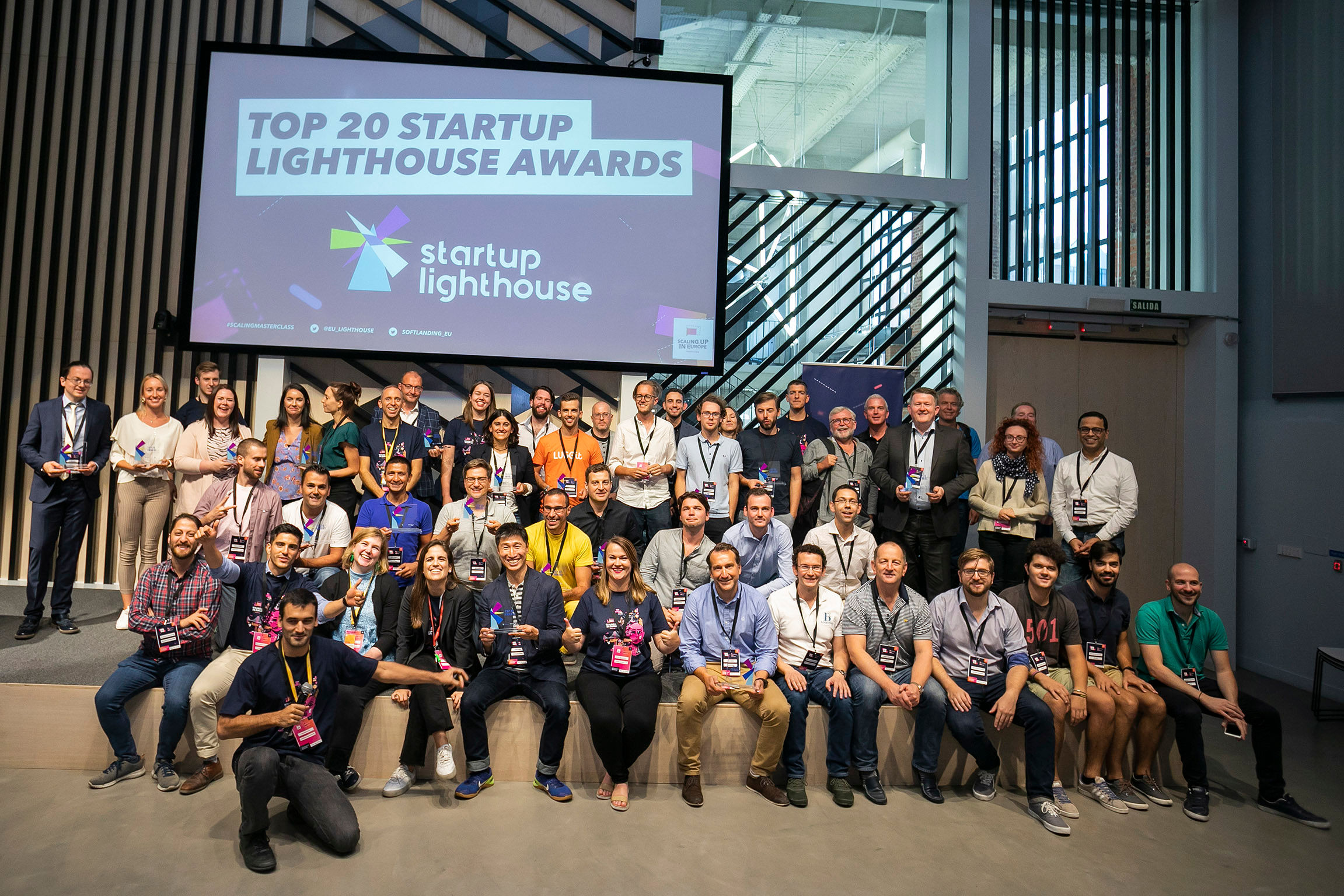
The Madrid Scaling Masterclass, co-organised with sister initiative Soft-Landing on 1 October 2019, gave that practical spirit a public setting. At Google for Startups Campus, with South Summit support, workshops addressed team failure, sales and growth. Afternoon talks included scaling down and the importance of focus. It was an agenda with room for the less photogenic parts of building a business.
Free to attend, paid for somewhere
The European Union contributed €1,476,938.25 to a project with a recorded total cost of €1,829,197.50. That funding underwrote support activities. Treating the grant as a startup investment round would confuse the programme’s operating budget with money raised by its participants.
The original plan anticipated more than €50 million in collective startup investment. The closing report recorded more than €8.3 million raised to date. These figures deserve to sit together, with their labels intact. Different timing and uncertain attribution prevent a clean verdict, but an aspiration should never quietly become an achievement.
The project ended on 31 December 2019. Its transferable idea is a meeting with preparation attached: choose a relevant market, recruit counterparts with a reason to participate, discuss a specific need, and make someone responsible for what happens next. This approach depends on credible local partners and a startup ready to act. Without those conditions, a subsidised journey can still be only a journey. With them, even a short visit has a chance of producing a second appointment.