The interesting question begins after the money arrives. A young software company has a product, a few customers and enough cash to keep working. Then it tries to sell in another country. Someone must answer the email. Someone must trust the unfamiliar supplier. Someone must find room in a budget. A bank balance is an inadequate substitute for those people.
Sarona Ventures has built its investment proposition around this awkward interval. Its argument is that capital becomes more useful when accompanied by commercial relationships and operators who know what a growing company will encounter. There is something pleasantly unglamorous about the premise. Venture investing enjoys the future; Sarona keeps returning to the next customer.
- Early-stage capital for companies selling technology to businesses.
- A wider Sarona network built around corporate channels and international sales.
- A useful founder’s test: which customer can this investor actually help you reach?
A family office learns to open doors
The firm traces its origins to the Bouaziz family office. In June 2022, it announced a $20 million fund backed by private investors and wealthy families. The named supporters included Tinder co-founder Justin Mateen, angel investor Johann Hansmann and the partners’ fund of law firm Orrick. The proposed pipeline combined graduates of Sarona’s scale-up programs with companies emerging from Y Combinator.
That pipeline helps explain the design. An accelerator lets investors observe founders doing difficult work before making an investment. Corporate relationships offer another view: whether a product interests a real buyer. Neither guarantees success, but each supplies evidence that a polished fundraising presentation cannot.
Toot Shani, Sarona’s founding and managing partner, brought an economic-development background to the project. Her official biography describes work with governments, multinational organizations and businesses across several continents. She had founded and exited a company by 25. Helping a business enter a market had been her work before it became her investment thesis.
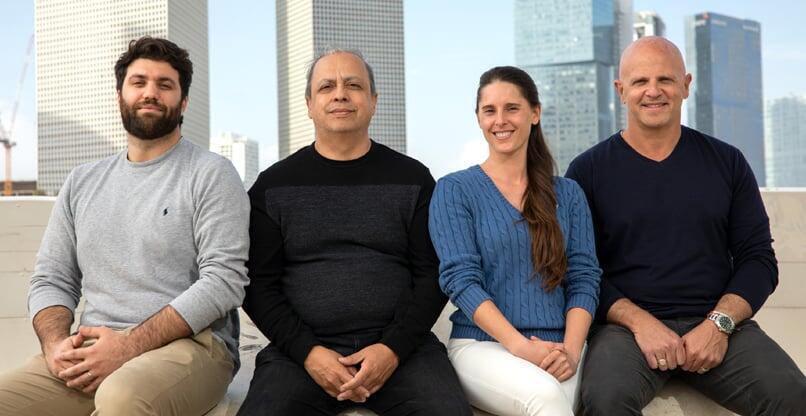
The address book has an operating history
Philippe Bouaziz’s experience provides a different kind of credential. Before his work at Deel, he founded enterprise software group Prodware. His biography records more than 45 acquisitions there. This is experience with customers, integration and the messy consequences of buying companies - useful subjects when a founder’s beautiful product meets an organization’s existing systems.
General Operating Partner David Debash brings engineering training and his own startup exit. He co-founded Sarona’s acceleration arm and now oversees operations, diligence and investor reporting. Alex Bouaziz, Deel’s co-founder and CEO, also works with Sarona founders on hiring, fundraising and international growth. The relationship with Deel is therefore personal as well as financial.
There is a distinction to keep in mind when admiring the portfolio. Sarona’s website says its displayed holdings span direct investments and family-office vehicles. Names such as Deel, Ramp and Notion belong to that combined presentation. A gallery of logos is a calling card; understanding which vehicle holds which investment requires closer reading.
Sales channels, with actual nouns attached
The related Sarona Partners ecosystem supplies the commercial machinery. Its 365x program began in April 2018. By January 2021, reporting described more than 100 graduates, two exits and contracts with corporations including Microsoft, Salesforce, P&G and Walmart. These were program-level results, rather than a promise to every participant.
The work described was specific: prepare a sales strategy, find distribution partners and explore integrations with corporate buyers. Microsoft, Salesforce, Prodware, Tech Data and UST were among the named partners. For a software founder, the appeal is easy to understand. A distributor already has conversations that a new supplier must spend months earning.
“Eventually, the agreements are yours to make.”365x’s published FAQ
An investor can help arrange a conversation. The founder must still earn the contract and deliver the product. That division of labour is the practical difference between useful access and an expensive calendar.
The arithmetic beneath the invitation
Access has a price. The published 365x FAQ, on a site carrying a 2023 footer, gives a seed-investment example: $150,000 for 7% of fully diluted equity, with a $50,000 program fee plus VAT charged from the investment. These are historical published terms for an associated program, not a current quotation for every Sarona deal.
$100,000 remains before VAT. The example also specifies 7% equity.
The subtraction matters: $100,000 remains before VAT. Founders should judge the package against the commercial help it can produce. A company with a proven sales team and established overseas channels may value that assistance differently from one with a working product and no route to its next buyer.
When the fundraising conversation stopped
TechShield made the dependence on relationships more explicit. Introduced publicly in November 2023, the initiative responded to wartime disruption affecting Israeli startups. Its FAQ describes staff called to reserve duty, slower operations and fundraising processes that stalled. Existing customers still needed service while teams and financing were under strain.
Sarona and collaborators including Ibex and Altair proposed a reverse fund: identify companies first, then invite investors into a dedicated vehicle. The approach let participants inspect the intended investments before committing. Its published FAQ lists a five-year term, extension options, a 1% annual fee and 15% carried interest.
What the thesis looks like in 2026
Recent investments put the business focus into recognizable settings. Visitt announced a $22 million Series B in January 2026, with Sarona participating as an existing investor. Its software helps teams operate commercial properties; the announcement reported more than 150 customers. The problem lives in buildings, maintenance requests and daily work.
In February, WINN.AI announced an $18 million Series A including Sarona. Its product guides sales representatives during customer calls and reduces administrative work around them. Both figures describe entire financing rounds, not Sarona’s individual cheques. Both companies illustrate technology aimed at a task that businesses already understand and pay people to perform.
The lesson a founder can copy is to make access testable. Name the buyer. Identify the channel. Ask what the introduction should accomplish, and count the result. Sarona’s proposition depends on that match. An impressive network becomes useful when it contains the particular person your company needs - and your company is ready for the conversation.