applied-ai
(32)
Douglas Gourlay and the Seventy-Percent Decision
The former infantry officer and networking inventor now runs a data company by one compact rule: prepare hard, decide before certainty arrives, and own what happens next.
MDB builds apps. The contracts buy lunch.
At Berkeley, a student development club connects paid software work with an unusually practical education. The small details - a name game, a lunch vote, eleven project milestones - explain how.

mdg sells the reason to show up
A trade show can rent a hall. Earning a place in someone’s calendar is harder. mdg builds the research, campaigns and digital tools that turn professional interest into participation.

Metajive makes the complicated feel obvious
A printer subscription. An AI filmmaking tool. A mountain company finding its voice. The California agency behind them has learned that good design starts with a business question.

Tibor Vass Wants AI to Do the Busywork - and Leave Judgment to People
The Eccentex CMO began with databases, networks and systems. Now he sells a more human idea of automation: let machines handle repetition, while people keep the decisions that matter.
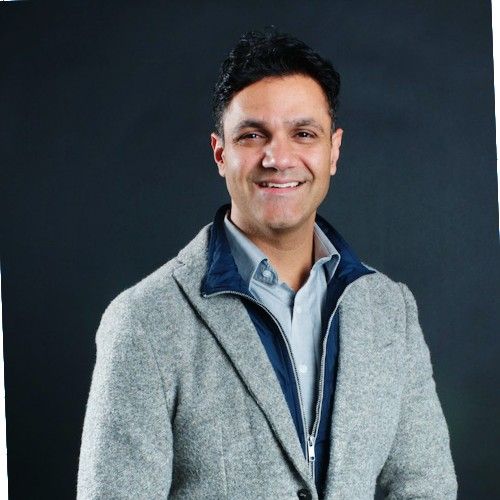
Ashish Kataria Wants You to Watch the Work Before You Buy the Software
At Epik Solutions, the founder and CEO starts transformation with a stubbornly analog move: watch how people actually work. His playbook favors workflow maps, measured adoption and patient growth over fashionable software decisions.

Akshay Budhkar Is Giving AI a Job, Not Another Prompt
The Spine AI co-founder spent years moving research into real companies. Now he is betting that useful AI needs plans, handoffs and review as much as it needs a clever model.

Anirudh Pupneja Is Teaching AI to Leave the Chat Window
The Redapto co-founder has followed one stubborn question from a Hindi-language research lab to Coinbase and Y Combinator: how do you make intelligent software useful when the consequences are real?
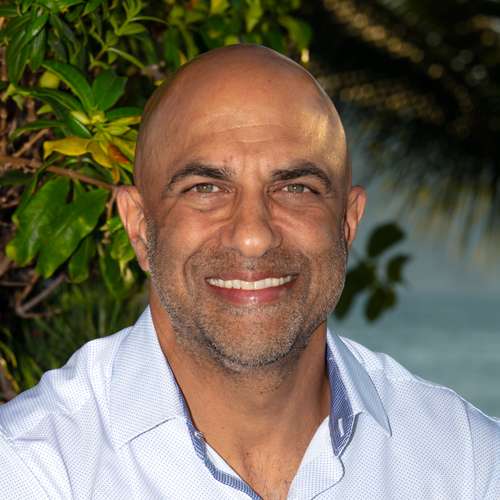
Kamal Shah Is Teaching Jobsite Photos to Speak Up Before the Truck Leaves
For three decades, the Oakland engineer has chased a stubborn problem: the gap between work completed in the field and proof that reaches the office. SiteCaptureAI is his latest attempt to close it while crews are still on site.

Mahe Bayireddi Built a Hiring Company Around a Promise His Father Repeated 6,000 Times
The Phenom co-founder turned a childhood refrain into an enterprise software company. His next test is making AI useful at work without letting it forget the people doing it.
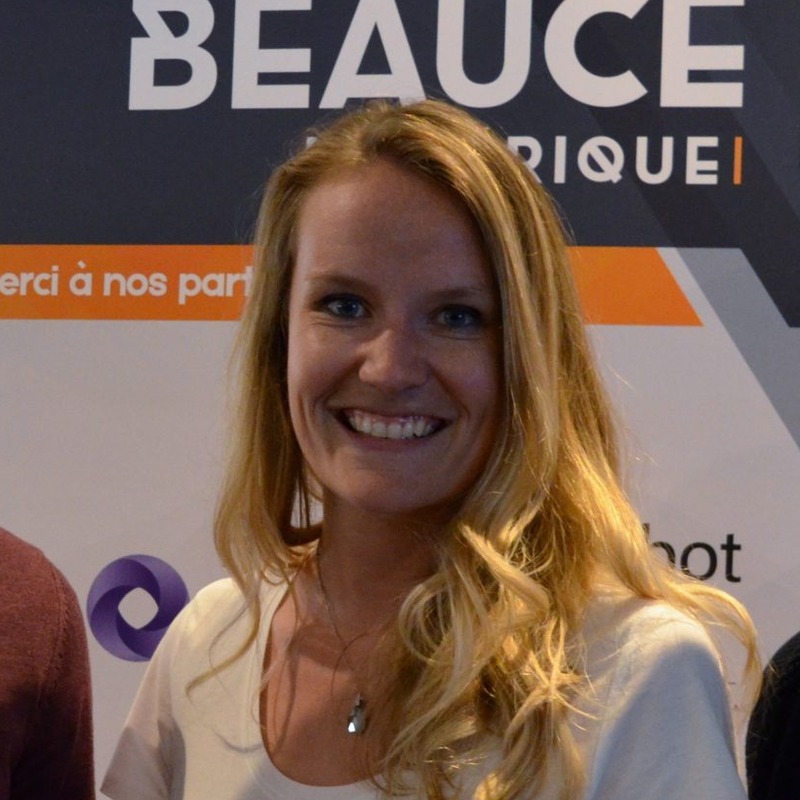
Annie O'Farrell Is Translating AI Into a Language Business Can Use
At Vooban, Annie O'Farrell has spent years turning a difficult technology story into a practical business conversation - one market, one room and one useful example at a time.

Vooban Quit Selling Advice - Then Made AI Earn Its Keep on the Factory Floor
The Quebec City firm bet that companies do not need another AI lecture. They need fewer broken machines, smarter routes and a proof of value before the expensive part begins.

A Five-Year-Old University Is Trying to Make the Business Degree Prove Itself
International Business University has gone from 11 graduates to nearly 700 in two years. Its wager is simple: a young school can earn trust faster if every course leaves evidence an employer can understand.

Phenom Turned a Recruiting App Into the AI Layer for How Big Companies Hire
The Philadelphia-area company escaped the point-solution trap by expanding from a mobile recruiting app into a talent operating layer used by more than 700 organizations. The bet is compelling at enterprise scale - and much harder to justify without the data, integration budget and change management to feed it.

Percheron’s $8 Billion Bet on the People Who Keep America Running
Percheron Capital is turning fragmented, hands-on trades into scaled service platforms. Its unusual tool kit pairs high-velocity M&A with engineers who build AI alongside the frontline.
The Austin VC Firm Betting AI Will Leave the Chat Window
ATX Venture Partners built its name backing Texas software. Its newer thesis is more specific: applied AI that moves through factories, clinics, financial rails and orbit - with operators close enough to help when the software meets the real world.

The Venture Fund That Turned the YC Alumni Group Chat Into an AI Investing Machine
Orange Collective has made a narrow bet with a wide network: let more than 150 YC alumni help spot the AI founders worth backing. The result is part venture fund, part expert panel and part software-assisted research desk.
The VC Firm That Wants Four Bets - and a Seat in the Engine Room
Companyon Ventures does not sell founders on a giant portfolio or a famous logo wall. It makes four new bets a year, then tries to turn the messy stretch between product-market fit and Series A into an operating discipline.

The AI Fund Hunting in One Square Mile
milemark•capital is making a concentrated bet: the next useful AI companies will come from founders who know an industry’s pain intimately - and from research hubs that can turn difficult science into durable businesses.

The Venture Firm That Bought a Hospital
General Catalyst spent 25 years turning startups into giants. Then it did something no venture firm had done before - it bought a hospital.
The Company That Runs on Boring: How Simplify Group Turned 17 Years of Health Insurance Plumbing Into an AI Portfolio
For 17 years, Simplify Healthcare quietly ran the paperwork behind 70-plus health plans. In late 2025 its founder folded that experience into a four-company group betting that operational scar tissue, not just models, is what makes enterprise AI actually work.
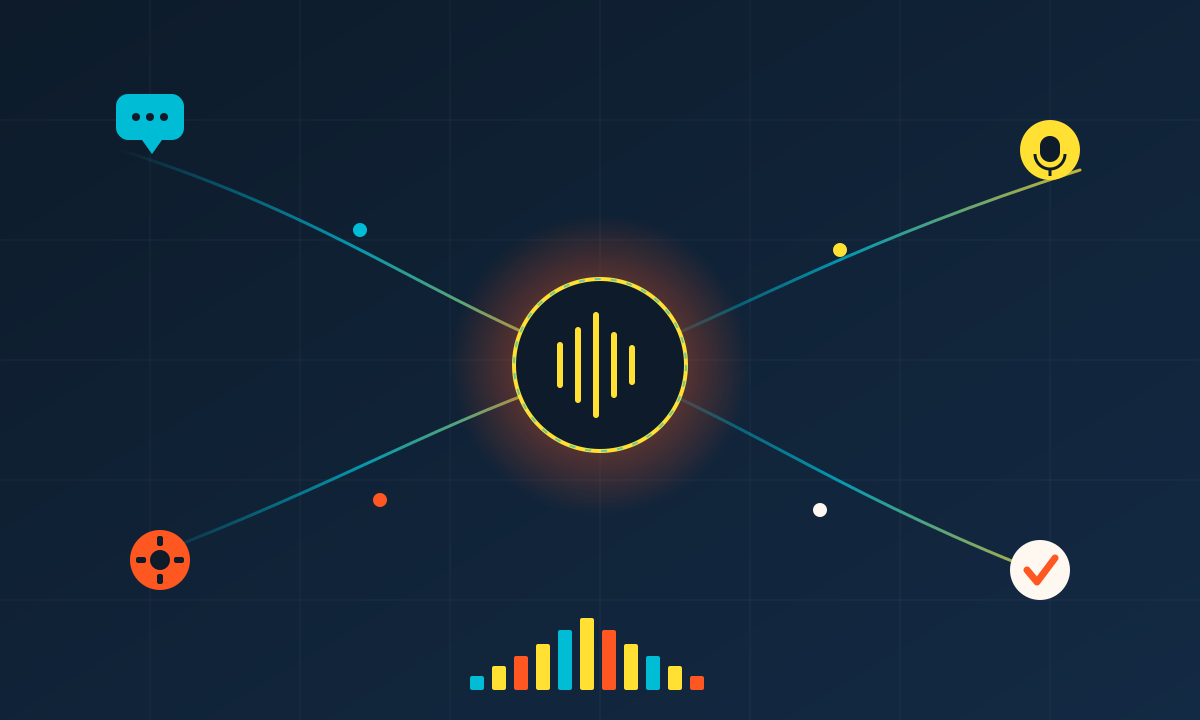
Pypestream Bets the Enterprise on AI That Actually Finishes the Job
The New York AI company crossed 50 million monthly interactions for Fortune 500 clients in 2026, staking its pitch on agents that resolve problems rather than just talk about them - and drawing a line between itself and rivals like Teneo.ai and Parloa.
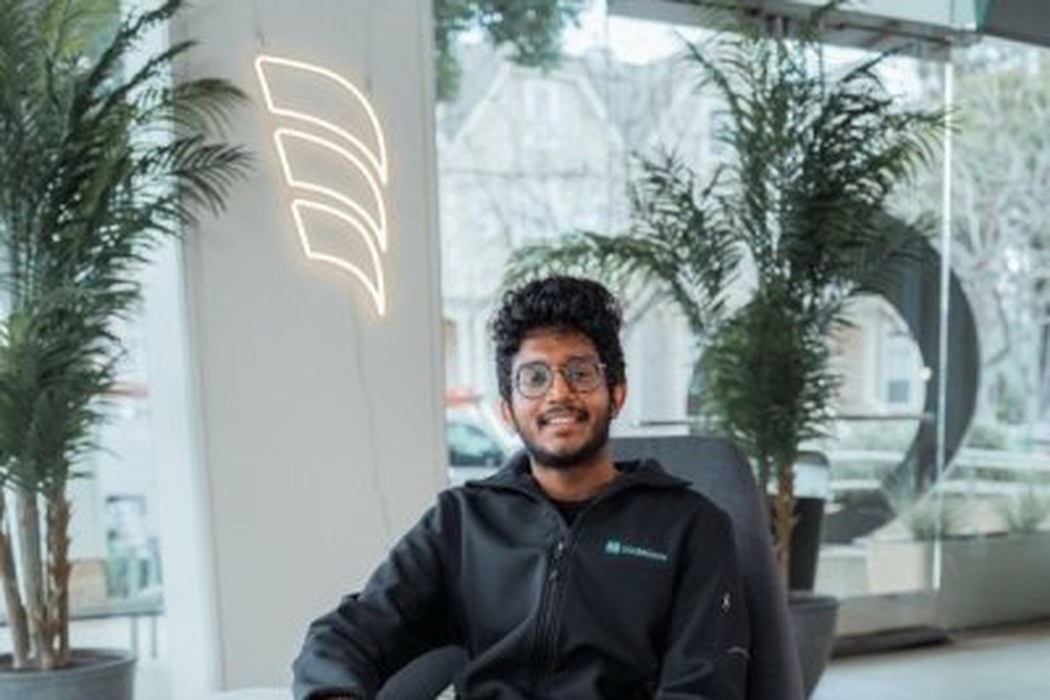
Aakash Mahalingam
Aakash Mahalingam is the cofounder and CEO of Canary (YC W26), a startup building an AI QA engineer that reads your source code to catch broken user flows before they hit production. Before Canary he built Windsurf's enterprise product and helped push its self-serve plan to roughly $20M ARR in six months. An ICPC APAC finalist with earlier stints at AWS and Morgan Stanley, he now works out of Mountain View on the problem of testing keeping pace with AI-accelerated coding.

Blueshoe
Blueshoe is an AI-native law firm that pairs licensed attorneys with proprietary legal reasoning software to make quality legal help affordable and always-on for individuals and small businesses. Founded in 2025 by Harvard Law graduate Casey O'Grady and MIT-trained engineer Kai Yee Wan, the Y Combinator-backed company started as a legal-reasoning research platform piloted at Harvard, Yale, and Columbia law schools, then extended into a full-stack firm covering employment, housing, consumer, personal injury, and product-liability matters without billable hours.

Percepta
Percepta is a New York-based AI transformation company, wholly owned and incubated by venture firm General Catalyst, that embeds teams of researchers, engineers, and product managers directly inside large enterprises to move them past AI pilots and into AI-native operations. Founded in 2025 by CEO Hirsh Jain (a former Palantir SVP) and General Catalyst's Hemant Taneja, the company pairs applied engineering with a frontier research lab to rebuild core workflows in healthcare, financial services, manufacturing, and government - working closely with founding partners Anthropic and AWS.
Fleet AI, Inc.
Fleet AI is an applied research lab building training gyms for AI agents - high-fidelity simulation environments that model real work so frontier models can practice, fail, and learn under human supervision. The company partners with AI labs, hyperscalers, and enterprises to develop the next generation of embodied, drop-in virtual assistants.

Hirsh Jain
Hirsh Jain is the co-founder and CEO of Percepta, a General Catalyst Transformation Company that embeds AI engineers, researchers, and product managers directly inside large enterprises to move them past pilots and into AI-native operations. He spent seven years at Palantir Technologies as a senior vice president leading its healthcare and civilian-government business, and previously worked at Google, Jane Street, and the U.S. Department of Defense. A Harvard computer-science and mathematics graduate and published machine-learning author, he launched Percepta in 2025 with General Catalyst CEO Hemant Taneja and a founding team drawn from Palantir, MIT, Meta FAIR, Google, and Citadel. Shortly after launch, Palantir sued him and other former employees, putting the New York startup at the center of one of the year's most-watched AI talent fights.

QBurst
QBurst is a global digital product engineering and consulting firm founded in 2004 in Trivandrum, India. It builds custom software, cloud platforms, data and AI solutions, and digital experiences for a blue-chip client base across the US, Japan, Europe, the Middle East, and South Africa. Now majority-owned by Multiples Alternate Asset Management after a ~USD 200 million 2025 deal, QBurst employs roughly 3,500 people across more than 20 cities and positions itself as a 'High AI-Q' partner blending human expertise with intelligent technology.

David Cheng
David Cheng is a General Partner at Costanoa Ventures, an early-stage venture capital firm in Palo Alto focused on data, AI infrastructure, cybersecurity, and fintech. With over a decade of investing experience - including nine years at DCM Ventures, where he became the youngest VP in the firm's 30-year history - Cheng has backed breakout companies including EvenUp (now valued at $2B+) and Brigit (acquired for up to $460M). A Forbes 30 Under 30 honoree and Wharton graduate, he is also co-founder of Coreline Ventures and publishes the 'Earned Intuition' newsletter on Substack, sharing lessons from a decade of early-stage investing.

John Cowgill
John Cowgill is a General Partner at Costanoa Ventures, a Palo Alto-based early-stage venture firm with over $2 billion in assets under management. Promoted to GP in September 2024, he has spent nearly a decade building the firm's cybersecurity and space practices, backing category-defining companies like AppOmni, Cyberhaven, Muon Space, and Kepler Communications. A Northwestern University alumnus and former McKinsey consultant who describes himself as a 'wayward Kentuckian and theater school dropout,' Cowgill invests in Seed and Series A startups across applied AI, AI infrastructure, cybersecurity, space, and B2B fintech—leading with a founder-first philosophy anchored in conviction, humility, and grit.