An empty square on a calendar is a surprisingly difficult thing to sell. To an event organizer, it represents a seat, a badge, perhaps a future member. To the person being invited, it represents work deferred, travel arranged and a small wager that being there will be worth the trouble. The invitation has to win that argument before anyone reaches the registration desk.
This is mdg’s territory. The marketing agency works for trade shows and associations, where the audience is part of what everyone else is buying. An exhibitor wants useful conversations. A member wants useful connections. A busy professional wants a reason to leave the office. A room full of people can satisfy none of them if the invitation reached the wrong people.
The room begins with the research
At NAB Show, the media and entertainment gathering, mdg examined years of event data and built a forecasting model. The work produced new attendee personas and a different approach to targeting. A dashboard made it possible to adjust campaigns as information arrived. Freeman’s account describes a shift toward the quality of attendance.
Then the research crossed an interesting boundary: it helped shape the physical event. The floor was organized around content destinations that reflected audience interests. The message promising relevance and the place delivering it were being designed together.
“The research informed design and marketing”
Justine McVaney, NAB · on the Freeman collaboration
That is the attraction of this particular agency arrangement. Freeman acquired mdg in 2018, connecting an audience-marketing business with a company that produces live experiences. The acquisition announcement also specified that mdg could serve organizers regardless of their existing relationship with Freeman. For a buyer, the proposition was access to connected expertise while retaining a choice of event partners.
- 01Understand
the audience - 02Earn
attention - 03Deliver
relevance - 04Measure
and learn
Research → campaign → experience → next decision
A restaurant show enters the feed
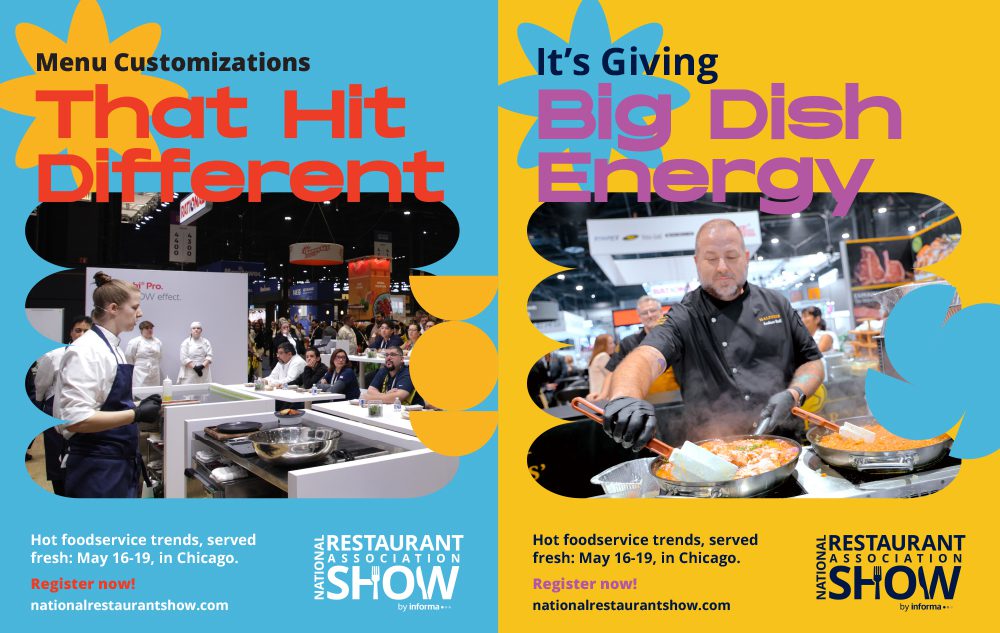
The National Restaurant Association Show wanted to reach younger foodservice professionals. mdg developed a TikTok campaign with influencers creating content about reasons to attend. The format was made for the platform, and the audience it attracted fed a broader remarketing effort on Meta and Google.
The agency reports nearly 7,000 website visits at an average cost of 61 cents, with new users accounting for 90% of that traffic. It also reports a year-over-year reduction of more than $100 in cost per conversion. Those are different measurements: a visit is an early step, while a conversion records a later campaign action. Treating them as interchangeable would make the economics look much simpler than they are.
of TikTok web traffic
came from new users
reported average
cost per website visit
The transferable idea is the connection between channels. Give a new audience an appropriate first encounter, then build a route toward registration. A cheap visit alone tells an organizer little about whether the visitor will eventually make the trip.
The sale after the show
For associations, the same commercial question continues between events: what will members find useful enough to buy? The International Carwash Association already had training knowledge and relationships with businesses that needed trained employees. What it lacked was a scalable way to package and sell that expertise.
mdg partnered with Learner Mobile on an ICA-branded workforce-training platform. Existing content became structured learning, with course bundles covering subjects such as safety, onboarding and customer service. The work extended through positioning, pricing, the landing page and checkout.
The published case reports $515,000 in annualized recurring revenue, 32 purchasing member businesses and more than 7,500 learners. That revenue belongs to the association’s training offering. The project shows how an agency can work on what gets sold as well as the message selling it.
For another association, the useful starting inventory would be expertise, a reachable buyer and a repeated need. Packaging works best when all three already exist. A subscription cannot manufacture a recurring problem simply by charging every month.
Sometimes the first bottleneck is the inbox
Scottish EDGE presented a smaller, more operational problem. Its seven-person team faced repeated applicant questions during competition cycles. mdg built EDGEword, a website AI agent grounded in approved organizational documents. Routine questions could receive immediate answers; complicated ones reached the human team with their conversation context.
According to mdg, the agent handled more than 150 queries in one application round, and email management fell from six days to one. Transcripts also revealed where applicants were confused. The support process became a way to improve the information applicants encountered next time.
The sensible lesson is to define the answerable territory. Repeated questions with approved answers make a more controllable project than an agent asked to improvise organizational policy. Human escalation is part of the design, not an embarrassment to be hidden.
A specialist with a wider toolkit
Denise Paccione founded Marketing Design Group in 1976. In 2012, Kimberly Hardcastle-Geddes and Vincent Polito bought the business, with Paccione remaining as chief creative officer. After the Freeman acquisition, another expansion arrived in March 2025: Freeman bought Tag Digital, an event-focused digital agency, to combine its services with mdg. Caitlin Fox became mdg president that July, as Hardcastle moved to Freeman’s Chief Strategist role.
The resulting offer spans research, association strategy, creative work, paid media, public relations, international outreach and applied AI. Its commercial model is professional services: an organizer brings a problem and commissions a scope of work. The contact path invites an RFP. Buying it means defining objectives, deliverables and responsibilities with an agency team.
That places mdg between an internal marketing department and a collection of separate specialist suppliers. Its case for being hired rests on knowledge of the event business and the ability to connect disciplines. A general agency may have excellent creative talent; an internal team may know its members intimately. The buying question is where the missing expertise sits, and whether coordinating it is itself becoming a job.
There is also a refreshingly practical side to its international offering. Alongside localized campaigns, mdg lists country prioritization, buyer delegations, partnerships and visa or registration support. An interested overseas attendee still has to navigate the journey. The marketer’s work can extend well past writing the invitation.
The work behind the clever idea
Campaigns also need engineering capacity. Axelerant’s account of working with mdg describes time and bandwidth constraints around marketing automation and web projects. Its support covered Campaign Factory, Campaign Studio, WordPress and HubSpot. Here, the constraint was delivery capacity. The response was to bring in a technical partner.
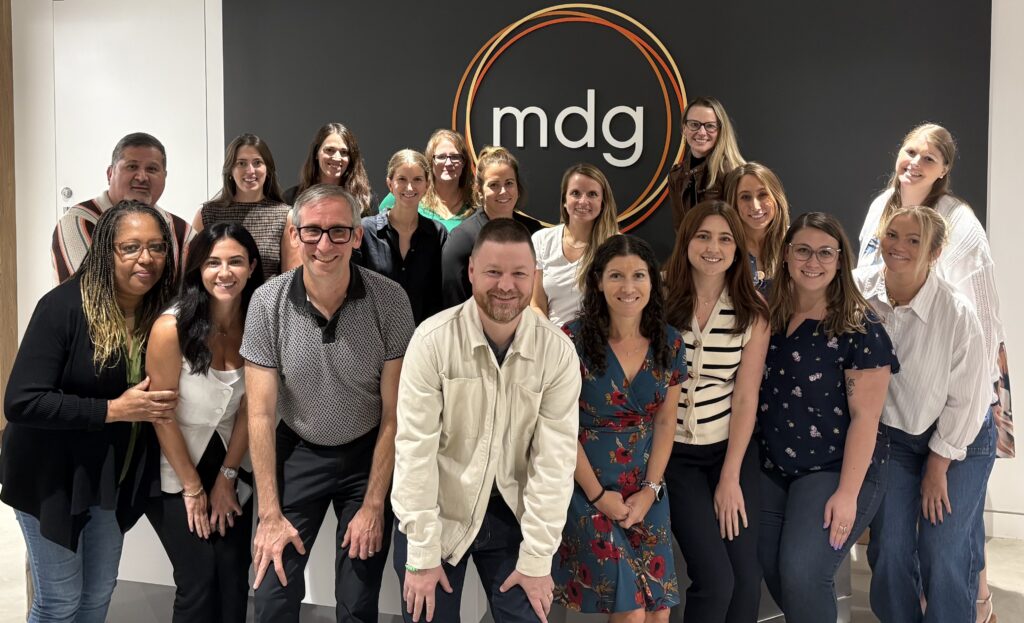
mdg’s careers page advertises flexible working arrangements, professional development, paid parental leave and volunteer time through mdgCares. It also makes room for competitive bakers and book swappers. In an August 2026 announcement, the agency reported 25 team members completing LinkedIn Ads certifications. Keeping the skills current is part of maintaining the service.
For someone preparing a brief, these cases suggest a useful sequence. Name the person whose decision matters. Establish what is stopping that person. Decide what evidence would count as progress. Then commission the research, creative work, technology or outreach that addresses the obstacle. The calendar square is still the same size. The reason to give it away has to become more convincing.
Follow the work
Explore the agency, its projects and the people behind them.