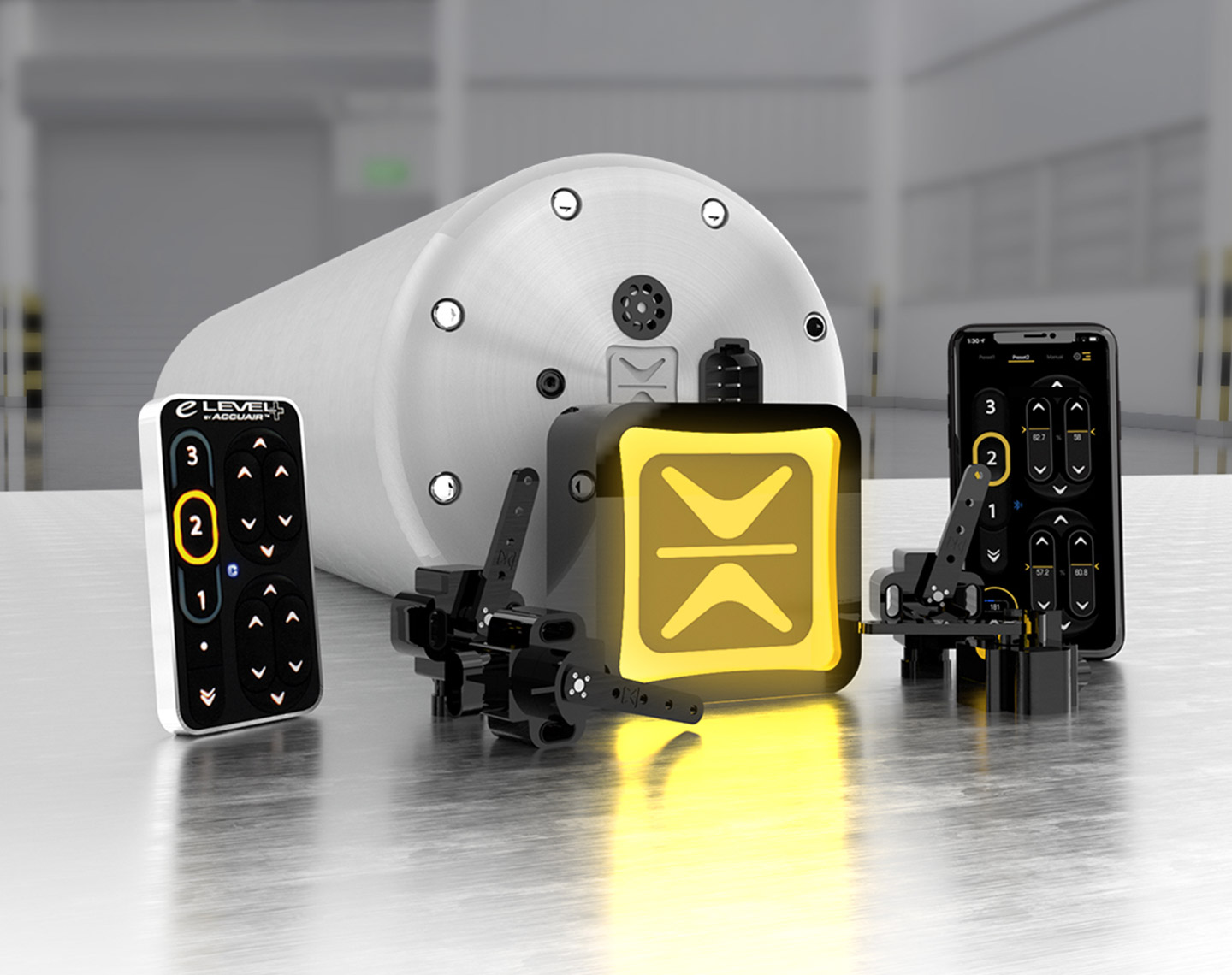
There is a peculiar kind of panic that arrives when a marketing campaign needs photographs and the photographs do not exist. In MBE Group's account of the AccuAir relaunch, the air-suspension brand had been acquired after its previous owner shut it down. What remained was a recognizable name, an exacting audience of car enthusiasts and almost none of the visual material normally required to announce that a company was alive again. There was no budget for a photoshoot. The assignment was not to polish the assets. It was to invent the assets.
So the agency modeled the components in 3D, composited them into stock photography and built a visual world around parts that had not stood in front of a camera. The images were convincing enough to anchor the launch and useful enough that AccuAir kept using them years later, even after it had acquired a proper photo library. This is the small, telling story inside MBE Group. A full-service agency can be an exhausting menu of nouns - advertising, branding, public relations, search, social, events, web, apps. MBE is more interesting as a company that notices which noun is missing.
Three names, two histories, one practical merger
The initials stand for Marx Buscemi Eisbrenner, a name that reads like a law firm until one encounters the line the company uses for its transportation practice: it markets anything that "rolls, crawls, flies or floats." The current business formed in 2019, but its institutional memory starts much earlier. Tom Marx founded Marx Group in Los Angeles in 1984. Ray Eisbrenner founded Eisbrenner Public Relations near Detroit in 1985. One developed deep automotive, aftermarket, research and integrated-marketing muscle; the other became known for B2B public relations in automotive, energy and technology.
Merger conversations began in October 2018. The logic was refreshingly literal. Eisbrenner's team brought PR. Marx Group brought advertising, brand development, research and digital work. Frank Buscemi became chief executive and chief creative officer, Tom Eisbrenner president, and Tom Marx chairman and chief strategy officer. Today Marx is chairman emeritus, and the public leadership team includes executives across accounts, digital marketing and creative work.

“The foundational principles of both companies will continue here: being an extension of our clients' teams.”Tom Eisbrenner, at the 2019 merger
That combination explains the company's market position better than the phrase “full service.” A generalist shop can buy media or write a press release. A specialist can know the difference between an OEM, a Tier 1 supplier, a technician and an enthusiast. MBE's proposition is to carry that specialist fluency across the whole path - research, positioning, identity, content, media relations, events, distribution and measurement. The agency now applies the model to mobility and transportation, B2B and B2C technology, and consumer and ecommerce brands.
The first thing to fail was the format
A second case makes the method easier to see. In early 2020, a global mobility-safety company asked MBE to restart a largely dormant social presence. The pandemic immediately scrambled the plan. The agency shifted toward public-safety communication and stories about the client's factories producing protective equipment. That worked. Later, product and technology posts restored the normal rhythm. Then, in 2022, the numbers flattened. Engagement dropped. The informative product posts had become repetitive.
The tempting response was volume - more posts, more frequency, more noise. MBE's data pointed elsewhere. Employee profiles, factory glimpses and regional stories were outperforming everything else. The agency moved people to the center and left technology in the supporting role. By December 2024, the audience had grown from a little over 30,000 to more than 140,000. Average engagement reached 6 percent. The useful point is not that human stories are magically superior. It is that the team changed its mind when the chart stopped agreeing with the calendar.
The same pattern appears in search. A sprint-planning and product-roadmapping software company had a blog, but not a search strategy. It was attracting roughly 800 to 850 organic sessions per week. MBE split the work in two: high-volume, attainable queries for reach; lower-volume, longer phrases tied to customer pain for conversion. Then it made “supercharged guides” two or three times longer than an ordinary post, pairing broad explanation with use cases, instructions and mistakes. Organic traffic rose by more than 600 percent. Page-one keyword rankings increased from 55 to 743.
Two quiet channels, after diagnosis
Relative bars visualize company-reported case-study results. SaaS growth is shown as an index; follower counts cover April 2020 through December 2024.A business built around somebody else's missing department
MBE sells customized projects and continuing support. Its public package language gives the model three shapes. Maintenance and Advisory is for a small company or thin internal team that needs counsel, site upkeep, search review, social and email. Focused Growth adds multimedia, deeper search work and reporting for a company trying to scale. Strategic Launch starts earlier, with positioning, research, naming, identity, a website and campaign assets. Public relations, paid media, events, app development, animation and post-launch work can be added around them.
This is not a software product with a posted monthly fee. The packages are conversation starters, and investment depends on ambition, budget and what the client's own team can carry. That makes MBE an alternative to three different purchases: hiring a large in-house group, coordinating a flock of specialist shops, or choosing a broad agency that must learn the industry from scratch. Its 41-person scale is part of the argument. It is large enough to combine disciplines, but sells proximity to senior people and domain networks.

The network extends beyond the payroll. MBE belongs to IPREX, an alliance of independent communications agencies across more than 100 markets. Hart Marx Advisors, a closely affiliated M&A consultancy, brings deal experience and relationships in auto, truck, performance and motorsports. Production partner AutoNetTV Studios says it has collaborated with MBE on 30 projects, from 3D assets to launch and awards videos. In December 2025, MBE added another role: preferred licensed reseller and adoption adviser for Prompts.ai, after spending a year testing the platform and deploying it internally.
The copyable part is the diagnosis
There is a compact playbook here for teams that will never hire MBE. Begin with the bottleneck, not the channel. If an audience is indifferent, inspect the format before buying more distribution. Look for behavior that contradicts the content plan. Build the missing raw material only after deciding what job it must do. And make expertise useful: the ADVICS video series, for example, turned technicians' installation problems into short “for techs, by techs” instruction rather than dropping product claims into a prettier frame.
Find the actual stall
Separate a distribution problem from a format, asset or trust problem.
Follow audience behavior
Let search gaps, comments and performance data overrule the content calendar.
Change the container
Turn text into video, parts into 3D scenes or expertise into deep guides.
Build a reusable system
Create assets and processes that keep working after launch week.
The approach depends on access. People-led storytelling is thin without willing employees. Technical instruction is risky without subject experts who can check it. Search growth becomes traffic theater when the keywords have no connection to buyers, and a 3D image is a poor substitute when physical proof is what earns trust. The constraint must be creative; it cannot be ethical, evidentiary or merely a disguise for a weak product.
What distinguishes MBE is therefore not that it can make nearly every marketing deliverable. Many competitors can. It is the accumulated context behind the deliverable: four decades around machines and the people who buy, build, repair, regulate and admire them. That context is portable. It now reaches SaaS search, sustainable phone cases and enterprise AI adoption. But its clearest expression is still the missing photograph - a small emergency that rewarded the agency for looking at the absence long enough to see an asset.
Keep exploring