There is a comforting fiction in the agency business: the client knows the business, the agency knows the audience, and a sufficiently polished brief can connect the two. The brief arrives. The creative team disappears. A campaign returns. Everyone gathers around a screen and uses the word “alignment.” Then the real business, with its habits and politics and last-minute surprises, intrudes.
23 Marketing Group has a blunter answer to that problem. Get closer. The New York agency describes itself as an extension of the client team, a phrase that appears in many proposals and rarely comes with a keycard. In its work for industrial bolting company HYTORC, however, the phrase became physical: 23 Marketing says it maintains an office presence at HYTORC’s headquarters in Mahwah, New Jersey. The outside vendor moved inside.
That detail explains the company better than a catalog of deliverables. Yes, the agency writes copy, shoots video, designs identities, manages websites, buys billboards, runs paid social, handles email and builds geo-targeted campaigns. But the thing holding those services together is access - to the data, the internal people, the event calendar and the small operational facts that never survive a quarterly briefing.
The unglamorous product is proximity
Tony Morino founded 23 Marketing Group in 2019 after 13 years at Focus Media, including five as executive vice president. His new agency grew from a Hudson Valley base with a sports-minded vocabulary: the team is a “roster,” services are a “playbook,” and the local advantage is a “home field.” The language is playful, but the operating idea is sober. Marketing improves when the people making it understand what the client is actually trying to change.

Its client list makes that closeness harder, not easier. A community college does not speak the same language as an industrial manufacturer. A breast-cancer foundation cannot be marketed like a restaurant group. 23 Marketing’s answer is a simple four-part loop, repeated until the work fits the business.
The final verb is the important one. A plan is not treated as a monument. The agency’s own materials emphasize that campaigns are monitored after launch and tactics changed in real time. That sounds obvious. It is also where many marketing arrangements fail: the vendor is paid for the artifact, while the client lives with the outcome.
When the world went remote, the relationship moved closer
The HYTORC relationship began with support work. Then the pandemic forced business communication onto screens and exposed operational gaps. According to 23 Marketing’s case study, the assignment expanded from assistance into an embedded strategic alliance. The agency helped stabilize marketing operations, interpreted internal data, coordinated campaigns across markets, took a role at international trade shows and developed the monthly HYTORC Solutions Series webinar.
“The data-driven insights provided by 23 Marketing have been instrumental in shaping our marketing strategy.”Eric Junkers, president of HYTORC
What changed the client’s mind was not a clever slogan. It was a disruption that made the old arm’s-length method less useful. Virtual communication became the immediate challenge; tighter integration became the durable response. The agency’s presence inside the operation meant it could see production processes, decision paths and product detail. Its role grew because its context grew.
One scoreboard, not fifteen dashboards
The SUNY Orange work shows the same model in a different uniform. Since 2021, 23 Marketing has combined broadcast and print with digital targeting, photography, video, social creative and CRM integration. The goal was not to make a collection of attractive pieces. It was to increase enrollment.
The college reported that fall 2023 registrations rose 11 percent, its largest enrollment growth in more than 30 years. In a later case study, the agency reports higher enrollment across 13 successive academic sessions, a 27.5 percent overall headcount increase and a 32.1 percent rise in full-time-equivalent measures. A colorful bus wrap carrying “Your Path Begins Here” was part of this world, but so was database segmentation. The bus attracted attention. The CRM helped decide what to do with it.
Miles of Hope campaign · selected increases
For Miles of Hope Breast Cancer Foundation, the objective was more local and more urgent: expand awareness in Orange County and send people toward free-screening resources. 23 Marketing mixed print and billboards with business outreach, search and social. The agency reports a 138 percent rise in direct visits to the screening page, a 43.8 percent increase in organic search traffic and a 337 percent jump in engagement with fundraising toolkits. Different channels, same scoreboard: did the audience move toward the action?
What the agency actually sells
Brand voice, SEO copy, landing pages, press releases, graphic design and visual systems.
Photography, video production and editing, radio spots and reusable campaign assets.
Websites, social communities, email automation, content management and CRM-informed targeting.
Search, paid social, geo-fencing, billboards, print, radio, television and performance reporting.
Clients can hire the company for a defined project or keep it on a monthly retainer as an embedded partner. The first suits a launch or finite initiative. The second is the more distinctive business: ongoing access, recurring production and adjustment over time. Public materials do not turn that relationship into a universal package because the scope changes with the client.
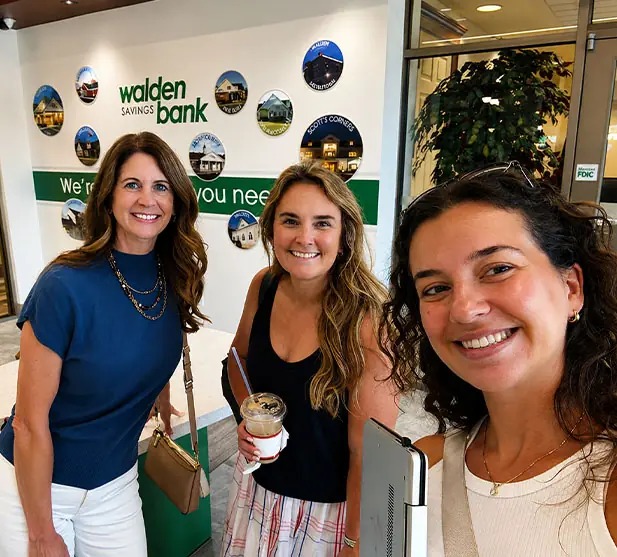
This positions 23 Marketing between an in-house department and a conventional outside shop. An internal team has context but may lack specialist depth. A large agency has specialists but can sit several meetings away from the real decision. The embedded model tries to borrow from both. It is especially legible for organizations with complicated offerings, multiple audiences or limited internal bandwidth: a college managing enrollment cycles, a manufacturer appearing at global trade shows, a foundation coordinating public awareness.
The tradeoff is equally clear. Proximity only creates an advantage when the client shares useful data, gives the agency access to decision-makers and allows work to be adjusted. Without those conditions, an embedded partner becomes an ordinary vendor with a longer commute. The model also makes less sense for a buyer who needs only a cheap, isolated asset and has no appetite for ongoing collaboration.
Five things to borrow before Monday
- Name the business outcome first. “More registrations” is a better brief than “more Instagram.”
- Put channels on the same page. The billboard, search ad, email and CRM should be parts of one journey, not four unrelated assignments.
- Earn context early. Invite the people making the campaign to the site visit, product demo or enrollment meeting where the real constraints surface.
- Keep one honest scoreboard. Leads, conversions, registrations and customer acquisition are harder to decorate than impressions, which is precisely why they help.
- Budget for adjustment. Launch day is the start of the evidence, not the end of the work.
There is no mysterious media invention here. That is what makes the story portable. 23 Marketing’s work suggests that the difference between a bag of services and a functioning marketing system is not one more channel. It is the distance between the people making the promise and the people responsible for keeping it.