There is an old joke about advertising agencies: the senior people appear in the pitch, then vanish as soon as the account is won. CLC Enterprises has spent 29 years betting that clients remember the vanishing act. The Florida company calls itself a 360-degree marketing firm. That phrase can mean almost anything. Here, it means something quite literal: the same shop can shape a brand, write the copy, place the media, run the social accounts, build the website, plan the event, court a partner, and review the result.
The breadth is easy to mistake for the story. It is not. The story is distance - specifically, how little distance CLC tries to leave between the client, the plan, and the people doing the work. Carol Chenkin says the agency schedules weekly or twice-monthly conversations rather than waiting for a crisis. Its stated process has four verbs: strategy, design, execute, manage. The last verb is the tell. A campaign is not considered finished when it appears in public; it has to be watched, adjusted, and made useful.
A memory palace disguised as an agency
Before CLC, Carol spent roughly a dozen years at Burson-Marsteller, the public-relations arm of Young & Rubicam. She rose from an entry-level media role to vice president of corporate entertainment productions. The assignments were big and wonderfully specific: the New York Stock Exchange's 200th anniversary, an Olympic sponsorship activation for the US Postal Service called the World's Largest Postcard, and American Express programs built around the idea that membership should produce visible privileges.
Lonnie arrived with an equally unusual collection of reference points. His career moved through accounting, Paramount Pictures, artist representation, entertainment marketing, music-data licensing, and sustainability businesses. He represented artists including Frank Sinatra and Julio Iglesias, helped expand Paramount into home video and pay television, ran Muze while it licensed entertainment data to Apple, Yahoo, Barnes & Noble, and eBay, and later worked with energy-solutions companies.
Put those careers together and CLC's sprawling menu begins to make sense. Licensing is related to partnerships. Entertainment promotion is related to events. Public relations is related to fundraising. Sustainability consulting is related to business development. The firm's expertise is less a neat vertical than a map of things its founders have already had to make happen.
“Say what you mean and mean what you say.”CLC's operating philosophy, as described by Carol Chenkin
This is also how the company positions itself against a fragmented alternative. A client can hire a branding studio, a PR firm, a web developer, a media buyer, an event producer, and a social freelancer. Each may be excellent. But each introduces a handoff, and every handoff is a small invitation to forget. CLC's proposition is that integration preserves intent. The person who heard why the founder cares about the cause can still be in the room when the caption, press pitch, landing page, and gala schedule are made.
Learn the business
Give it a voice
Put work in market
Measure and adjust
The dance floor explains the company
The clearest example is Orange Ribbons for Jaime, created by Fred and Jennifer Guttenberg after their 14-year-old daughter Jaime was killed in the 2018 shooting at Marjory Stoneman Douglas High School. CLC says it helped formalize the organization as a nonprofit and became involved across fundraising, advocacy, media, social marketing, and events. In 2019, a nationwide dance-a-thon attracted commitments from more than 45 locations. The format matched Jaime's love of dance, which made the event both a fundraiser and an act of memory.
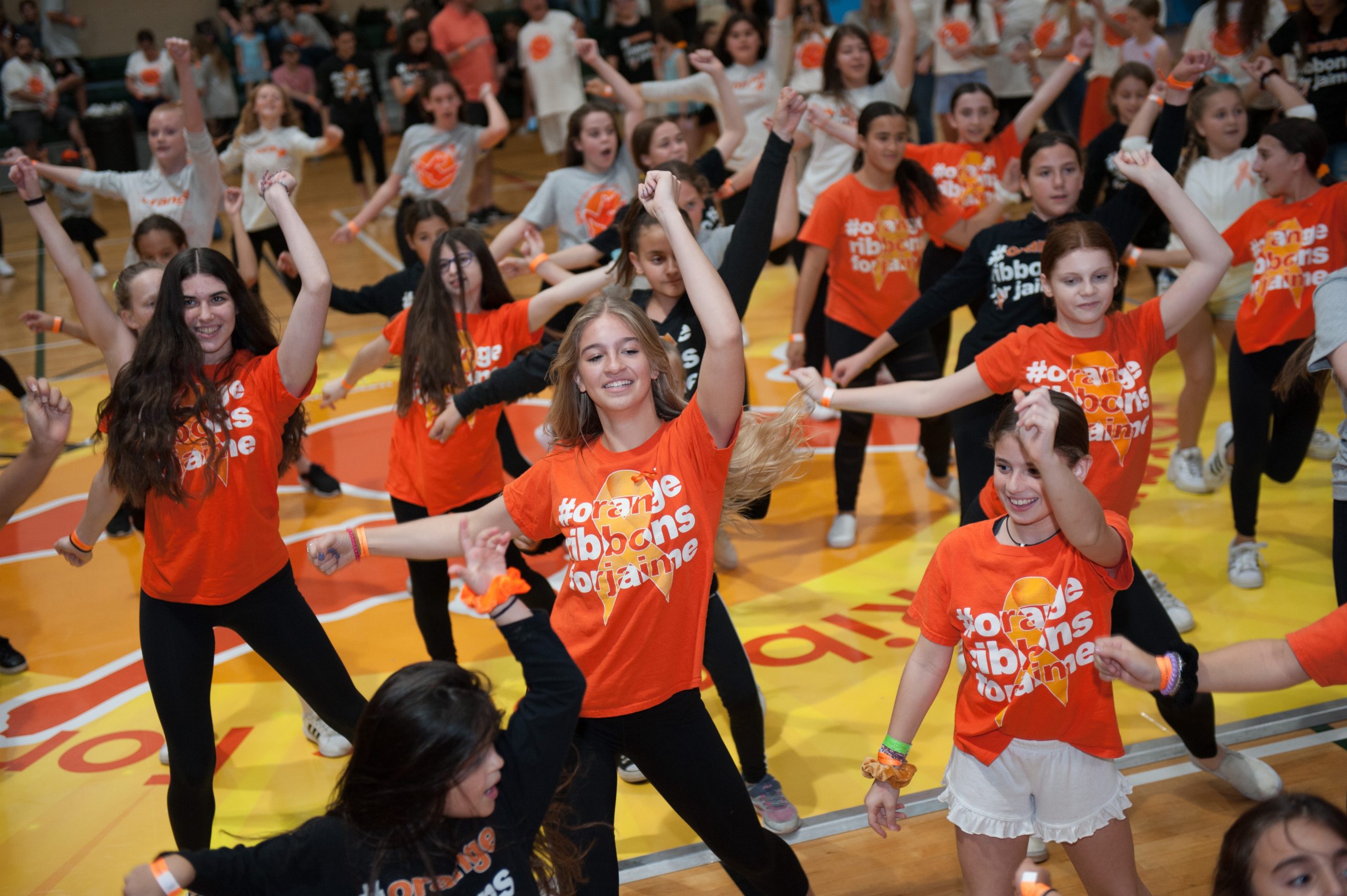
This is cause marketing under unusually unforgiving conditions. The work cannot feel detached from the people it represents. Reach matters, but tone matters first. A generalist agency can be useful here because the boundaries between public relations, community engagement, event logistics, and fundraising are mostly imaginary. The audience experiences one organization, not the vendor chart behind it.
The same pattern appears in CLC's entertainment work. Carol's company biography lists roles as executive producer of two seasons of World of Guitar, associate producer of Guitar Man, the Joe Bonamassa documentary, and talent coordinator for a Keeping the Blues Alive Stream-A-Thon and the Live From Nerdville podcast. By the third annual stream-a-thon in 2022, the foundation reported more than $560,000 raised cumulatively. CLC's place in the market is at these seams: where publicity touches production, and production touches a commercial or charitable goal.
When the room disappeared
For an agency with deep event experience, the pandemic removed the most obvious tool first: the live room. Carol later described how CLC changed programs already in motion and built replacements - webinars, virtual stream-a-thons, book and author chats, and a digital “Buy It Now” auction. It was not a clever channel experiment dreamed up at leisure. It was an answer to a blunt constraint: audiences could no longer gather.
Before the interruption
- Live gatherings
- Physical fundraising events
- Face-to-face relationship building
After the pivot
- Webinars and streams
- Digital auctions and chats
- Remote contact through Zoom, SMS, email, and CRM tools
What changed their mind was not a theory about digital transformation. It was necessity. The useful lesson is that CLC preserved the job while replacing the format. An event is not fundamentally a ballroom; it is a designed moment in which attention, participation, and a goal meet. Once described that way, a stream or digital auction becomes less of a compromise and more of another room.
The cost of closeness
CLC does not publish a rate card. Carol has described the model as fee-based ongoing work plus one-off projects such as websites, brand guidelines, and events. That distinction matters more than a speculative dollar figure. Retained work buys continuity; project work buys a defined output. A buyer choosing the first is paying, in part, for the agency to remember the business between assignments.
The model will not suit every brief. A company seeking a self-service software tool, a single narrow technical specialty, or the lowest interchangeable production cost may find an integrated relationship unnecessary. It works best when the problem crosses channels, the work changes over time, and leaders are willing to stay in regular contact. Closeness is not magic. It is a mutual operating commitment.
Earn attention immediately. Carol's current advice is to make the opening bold, clear, and relevant before the audience scrolls.
Choose a specific audience. The more precise the person, the easier it becomes to make the message feel personally addressed.
Prefer intentional, consistent quality to sheer volume. More posts do not repair an unfocused idea.
There is another practice worth stealing: create a fixed conversation rhythm. Weekly or twice-monthly meetings sound pedestrian beside a campaign concept. Yet regular contact is where small misunderstandings are caught before they become expensive work. It also gives an agency permission to bring ideas before a brief exists. Proactive service is not a personality trait; it is a calendar design.
In 2025, Carol said CLC was working with 12 full-time clients across commercial real estate, nonprofits, celebrity entertainment, law, wealth management, and other sectors. The variety is almost comic. It is also evidence of the firm's actual product. CLC is not selling secret knowledge of one category. It is selling the ability to enter a business, locate the story, and carry that story across the places where customers encounter it.
A small firm's very long shadow
CLC's published client roster ranges from Joe Bonamassa and Keeping the Blues Alive to professional firms, property businesses, manufacturers, nonprofits, and technology companies. The company says it has served startups through Fortune 1000 organizations. That makes it difficult to compare with a single category of competitor. Depending on the assignment, the alternative might be a South Florida PR shop, a digital studio, an event producer, an internal marketing hire, or five freelancers in a shared Slack channel.
Its difference is neither scale nor a proprietary platform. It is an old-fashioned arrangement with modern outputs: senior experience stays involved; disciplines sit near one another; the client is expected to talk often; the work is measured and managed after release. Some client relationships, Carol has said, have lasted more than 20 years. In an industry built around the new campaign, that may be the company's most persuasive campaign of all.