There is a particular kind of sentence that thrives in industrial marketing. It contains the words quality, solutions and customer service. It is accurate. It is approved. It is also nearly useless, because the company across the trade-show aisle can say it too. Strother Communications Group has built a 34-year business around this small tragedy of sameness.
The Minneapolis agency works mostly with manufacturers and other B2B sellers: the people who make precision tools, side-dump trailers, docks, candles or identity-verification software. These are not simple purchases. A buyer may need to satisfy an engineer, a dealer, a purchasing officer and a chief executive. The product can have hundreds of attributes. The temptation is to mention all of them. SCG's first move is to take copywriting off the table and ask questions instead.
The wrong thing was perfectly true
Milkhouse Candle Co. made a good candle from natural ingredients. In a market packed with national brands and small artisans, that fact seemed like the obvious center of the pitch. Yet name recognition remained low and the marketing lacked a unifying idea. SCG ran its Brand Vision and IPQ research - a mix of buyer listening, competitive examination and positioning work - and found something inconvenient. Customers were choosing Milkhouse for its fragrance and the memories fragrance could summon. Natural ingredients mattered, but the company had mistaken a feature for the reason people reached for the jar.
“We had been focusing our marketing effort on the WRONG THINGS!”Eric Sparrow, president, Milkhouse Candle Co.
That discovery changed the center of gravity. “Transport yourself” became the platform. The scent and its emotional journey could now organize the website, print catalogues, email, social channels, Amazon storefront and sales materials. The clever part was not the phrase by itself. It was permission to stop saying six things with equal volume.

Three moves, in the correct order
SCG describes its process in three stages: gather insights, develop positioning, put it in action. That sounds almost elementary. Its force comes from the order. A company interviews customers and dealers, studies competitors and identifies what buyers value. It turns the finding into key messages. Only then does it decide whether the useful objects are a website, a sales sheet, search campaign, video, trade show or media pitch.
Consider DAKA Docks & Lifts. The Minnesota manufacturer had more than 40 years of product experience but struggled against larger names online. SCG went to the dealer conference and found friction in the buying process. The resulting website and brochure did not merely look newer. A selector let customers begin with the type of lakeshore they owned, rather than decode a confusing inventory of options. The work debuted at the 2020 Minneapolis Boat Show; DAKA reported rising interest and sales. The transferable lesson is wonderfully unglamorous: organize information around the buyer's decision, not the manufacturer's catalogue.
Proof with a guitar amplifier
For Mate Precision Technologies, the problem was entry into a crowded category. A company known for precision tooling was launching a zero-point workholding system. SCG defined the audience, developed the “Made for Metalheads” identity and ran it through print, search, video, email, display advertising, SEO, media relations and testimonials. At IMTS 2024, booth visitors reportedly called Mate “the Metalhead guys.” In a convention hall dense with technically competent machines, being called anything from memory is evidence.
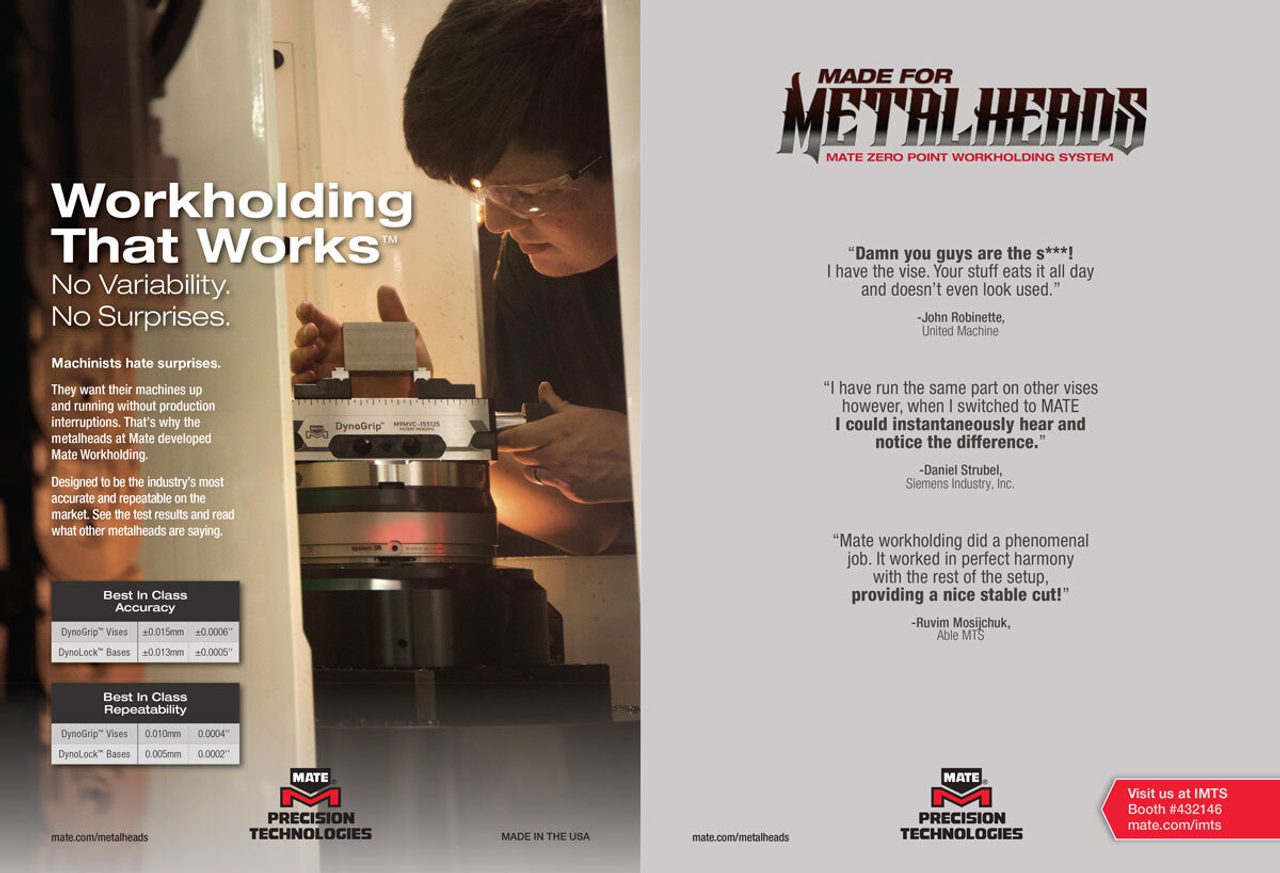
The services behind such a campaign are broad: research, brand strategy, identity, writing, design, web development, SEO, advertising, video, sales support, public relations, crisis counsel and internal communications. In 2025, SCG added an alliance with Growth Stratagem and fractional chief growth officer Marie Mansheim, extending the offer into questions about where a company should grow and how its departments should align.
The small-department bargain
SCG is privately held and does not publish project fees. Its economic argument is comparative: a long-tenured multidisciplinary team can act like a B2B marketing department, often at roughly the cost of adding one employee. That comparison will depend on scope, media spending and how much internal help a client needs; it is a positioning claim, not a rate card. The company is small enough that the public roster reads like a record of institutional memory. Patrick Strother has been there since the 1992 founding. President Patricia Henning Strother, administrative director Jane Tomassetti, creative director Trevor Nolte and client-service leader Jeron Udean each list more than two decades.
The culture statement is equally direct: knowledge, creativity, putting others first, nimbleness, partnership and mentoring. The company says these are descriptions of existing habits, not wishes pasted on a wall. There is even an owl mascot named Professor Plum, a “Know-it-Owl” whose presence prevents all this research talk from becoming too self-important.
Interview recent wins, losses, dealers and frontline staff before choosing the message.
Name the one buyer-valued difference that competitors cannot claim as easily.
Make the site, sales deck, search ads and trade-show story repeat the same position.
The method needs access to honest customers and leaders willing to abandon a favored claim.
The useful constraint
Research does not rescue a weak product, and consistency cannot compensate for poor delivery. The method is also a poor fit when leaders want decoration but will not let outside interviews challenge the internal story. If every stakeholder retains veto power, specificity gets negotiated back into “quality solutions.” If a market is too new to have informed buyers, customer evidence will be thin and experiments must do more of the work.
Under the right conditions, however, SCG's approach is less a marketing trick than a management discipline. It asks the organization to accept that the customer's reason may outrank the founder's reason. Then it makes the concession productive. SmithCo's research shifted its content toward “why buy a side dump?” before “why buy a SmithCo?” Veridocs organized its identity-authentication offer around certainty. Vic's Crane used primary research to put skilled people and equipment into a consistent sales story. Different products, same order of operations.
The factory floor does not lack interesting stories. It lacks editors. Someone must decide which tolerance, scent, shoreline or business risk deserves the front of the brochure. SCG's enduring proposition is that the decision should not be made in the conference room by volume of opinion. Ask the buyer. Find the phrase. Build everything else behind it.