There is a small ritual at the beginning of many agency relationships. The client explains the business. Then explains it again. Acronyms are decoded. Customer types are diagrammed. Someone gently clarifies that an originator is not a person who invented something. Weeks pass. Invoices arrive. Eventually, the agency knows enough to begin.
Seroka Marketing & PR has organized nearly its entire proposition around deleting that ritual. The Brookfield, Wisconsin firm works in mortgage, real estate, and the technology companies orbiting both. Its homepage offers a line with the crispness of an overdue complaint: “Your agency shouldn’t need six months to learn the mortgage business.”
That sentence is more than copy. It identifies the product beneath the products. Seroka sells brand development, public relations, content, digital marketing, social media, strategic planning, and fractional CMO leadership. Yet the real inventory is context accumulated since 1987: how lenders make money, why credibility matters in a large and infrequent transaction, which trade publications shape opinion, where compliance constrains a clever idea, and why a campaign for a national brokerage should not be cloned for a regional lender.
The first client and the long bet
Pat Seroka founded the agency with one client and years of curiosity about why people choose one brand over another. Early joint ventures with the Mortgage Bankers Association gave the firm national visibility in the mortgage business. The agency then did something strategically unfashionable: it stayed put.
Staying put did not mean standing still. Search replaced directories. Social feeds became reputation checks. Mortgage technology became its own crowded category. AI began answering questions once typed into Google. Seroka kept adding capabilities, but it did not keep adding industries. Today it serves mortgage lenders, mortgage technology and insurance companies, real estate brokerages, and related fintech firms across the United States.
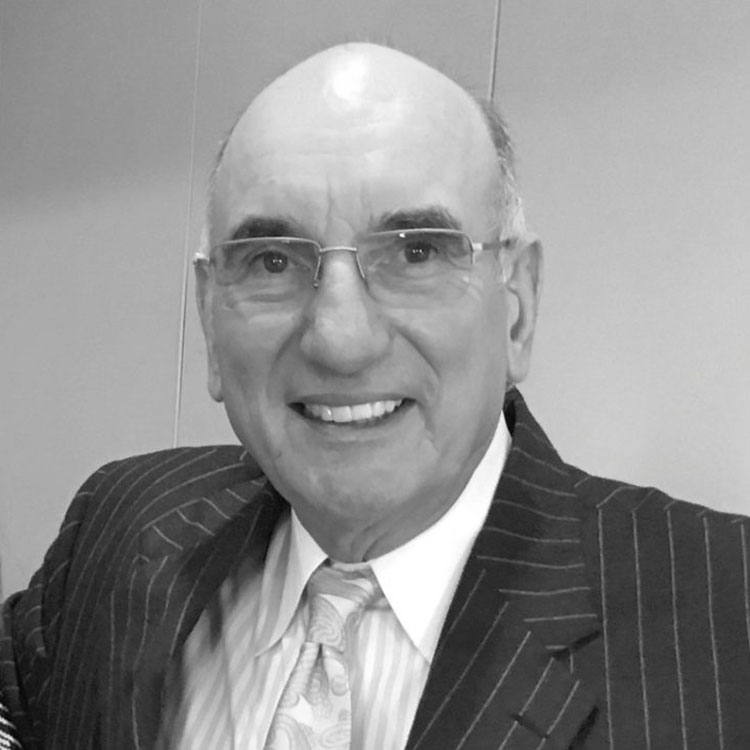
The founder’s biography contains a useful clue about the culture: Pat is a Porsche enthusiast with a competition racing license. This is not evidence that agency meetings end at a checkered flag. It does suggest a recurring instinct - understand the machine, read the conditions, remove wasted motion. President John Seroka brings a second form of insider knowledge. Before agency leadership, he worked as a mortgage loan originator in Los Angeles and Orange County. He has sat on the side of the table where leads, trust, timing, and rates become immediate rather than theoretical.
“Bring us the business problem, not the marketing brief.”Seroka’s invitation to prospective clients
What the client is really buying
A service list can make every integrated agency look like every other integrated agency. Seroka becomes more intelligible when the list is arranged as a sequence. Brand research decides what the company can credibly claim. Strategic planning decides which audiences and outcomes matter. Content and PR turn expertise into evidence. Social and digital distribution put that evidence where buyers look. Measurement tells the team what earned attention, traffic, inquiries, or sales.
Listen
Internal culture research and voice-of-customer interviews expose the gap between intended and experienced brand.
Choose
Positioning, value proposition, audiences, budgets, and KPIs turn a wish list into a plan.
Make
Identity, articles, white papers, websites, campaigns, and sales materials give the strategy a visible form.
Earn
Media relations, executive voices, events, and social publishing build third-party and repeated proof.
Convert
Search, paid media, landing paths, CRM programs, and calls to action connect authority to demand.
Measure
Coverage, share of voice, engagement, referral traffic, rankings, leads, and revenue guide the next move.
The fractional CMO offer makes the model especially revealing. A client may not need another campaign vendor. It may need someone senior enough to decide what should not be a campaign at all. Seroka offers marketing leadership without requiring a full-time executive hire, then has the specialist disciplines to execute the resulting plan. The business model is professional services - custom scopes and ongoing relationships rather than a self-serve product with a posted monthly price.
Yellow represents category learning before useful execution. This is an editorial illustration of Seroka’s proposition, not company performance data.
Trust before traffic
Mortgage marketing has an odd difficulty. The transaction is enormous, emotional, regulated, and rare. A borrower does not wake each Tuesday eager to sample a new mortgage brand. A business buyer evaluating loan software or insurance is equally unlikely to be moved by mere frequency. Visibility helps, but visibility without authority can simply make an unconvincing company easier to notice.
Seroka’s recent publishing circles this problem from several angles: the “trust gap” facing mortgage brands, the need to optimize for authority in AI-mediated discovery, revenue sleeping inside an existing CRM, and the hidden cost of inconsistent social media. The common argument is that marketing should leave credible signals before the sales conversation begins. A useful article, an executive with a coherent point of view, a respected trade-media mention, and a current social presence reinforce one another.
This also explains the agency’s attention to culture. Its brand process examines internal behavior across more than fifteen categories and collects client feedback before building a positioning framework. When a rebrand fails first, it often fails in the gap between the promise and the experience: leadership says one thing, sales improvises another, operations delivers a third. Seroka offers culture consulting when that internal misalignment prevents the external brand from taking hold. The logo is downstream.
The useful limit
Specialization is powerful because it is a limit, not magic. Seroka’s approach fits companies that sell into mortgage, real estate, or adjacent financial markets and want an agency able to challenge the brief from inside the category. It is less natural for a consumer-fashion launch, a restaurant opening, or a business that mainly wants an outsider’s ignorance to produce a deliberately strange creative leap. Deep familiarity can shorten discovery; it cannot rescue a weak product, fix broken operations, or manufacture trust faster than a company can keep its promises.
Nor should a client outsource its judgment. The best use of a specialist is not to nod at everything the specialist says. It is to begin the argument at a higher level. Instead of explaining the vocabulary, leaders can debate which borrowers matter, which proof is believable, which channels deserve less money, and whether the problem is awareness at all.
What another service business can copy
- Choose a market where misunderstanding is expensive.
- Learn its economics, customer anxieties, media, and language.
- Turn that knowledge into a visible process, not a vague credential.
- Connect specialized advice to execution and measurement.
- Say plainly who the work is not for.
There is a pleasing modesty in this lesson. Seroka did not discover a secret platform or invent a new species of funnel. It learned a complicated room, stayed in it, and made the accumulated familiarity useful. The firm’s difference is not that it can write a press release, run a social account, or redesign a brand. Plenty of agencies can. The difference is that when a mortgage executive begins a sentence halfway through, Seroka expects to know how it ends - and is willing to disagree with the ending.