The most useful fact about Sublime Communications is hidden inside the name of one of its former clients. Cylance was a cybersecurity company with a serious problem: it could stop attacks, but it could not reliably start conversations. It had never advertised. People who might buy the product had scarcely heard of it. The company needed what every technical challenger needs and very few receive - a way to be remembered before the sales meeting begins.
Sublime found the answer by listening to the word Cylance. It sounds like “silence,” which is precisely what effective security is supposed to produce. No alarms. No ransom note. No frantic call to IT. The agency made that small phonetic trick the center of an out-of-home, print, digital, radio and experiential campaign.
Founder Nicole Enslein says Cylance's sales increased by 566 percent during the campaign year. BlackBerry later acquired the company for $1.4 billion. Advertising did not write the software or negotiate the deal, but it helped an unknown name earn a place in the room.
The idea must fit in your pocket
There is a familiar agency temptation to confuse complexity with sophistication. The strategy arrives as a deck, the deck becomes a campaign, and by launch day no one can repeat the sentence that started it. Sublime's better work runs in the opposite direction. Research makes the idea smaller.
For GitLab, a platform beloved by developers but often confused with GitHub, the useful fragment was “Lab.” Sublime made it the place where ideas are explored, shared and turned into better software. The campaign could then travel through London Underground stations, Chicago, New York, San Francisco, print, digital and live experiences without requiring a translator at every stop.
How Sublime's strongest work travels
portable
idea
For Serena Williams Jewelry, the idea was self-gifting. Women did not have to wait for somebody else to buy the diamonds. “Be an accessory to no one,” read one line. “Sweep yourself off your own two feet,” read another. Williams was hands-on, providing input from the logo and website through copy, production and campaign execution. The result moved from packaging and retail presentation to social, email, video, digital and outdoor because each piece carried the same belief.
A big idea is not the line with the most words. It is the one that can survive the most places.
A shop that wants to lose the seam
Enslein founded Sublime in 2016 after years on both sides of the conference table. She had worked in national advertising at UPS and at large agencies. That double life gave her a precise irritation: clients and agencies often behave like neighboring countries, complete with border checks, diplomatic language and suspicious packages called deliverables.
Her alternative was to blur the boundary. Sublime calls itself the “un-agency agency,” a slogan with enough agency in it to invite skepticism. The operational version is more interesting. A compact senior team works across positioning, creative, media buying, PR, web development, social, research and events. The client buys access to a connected group instead of assembling a small parade of specialist vendors.
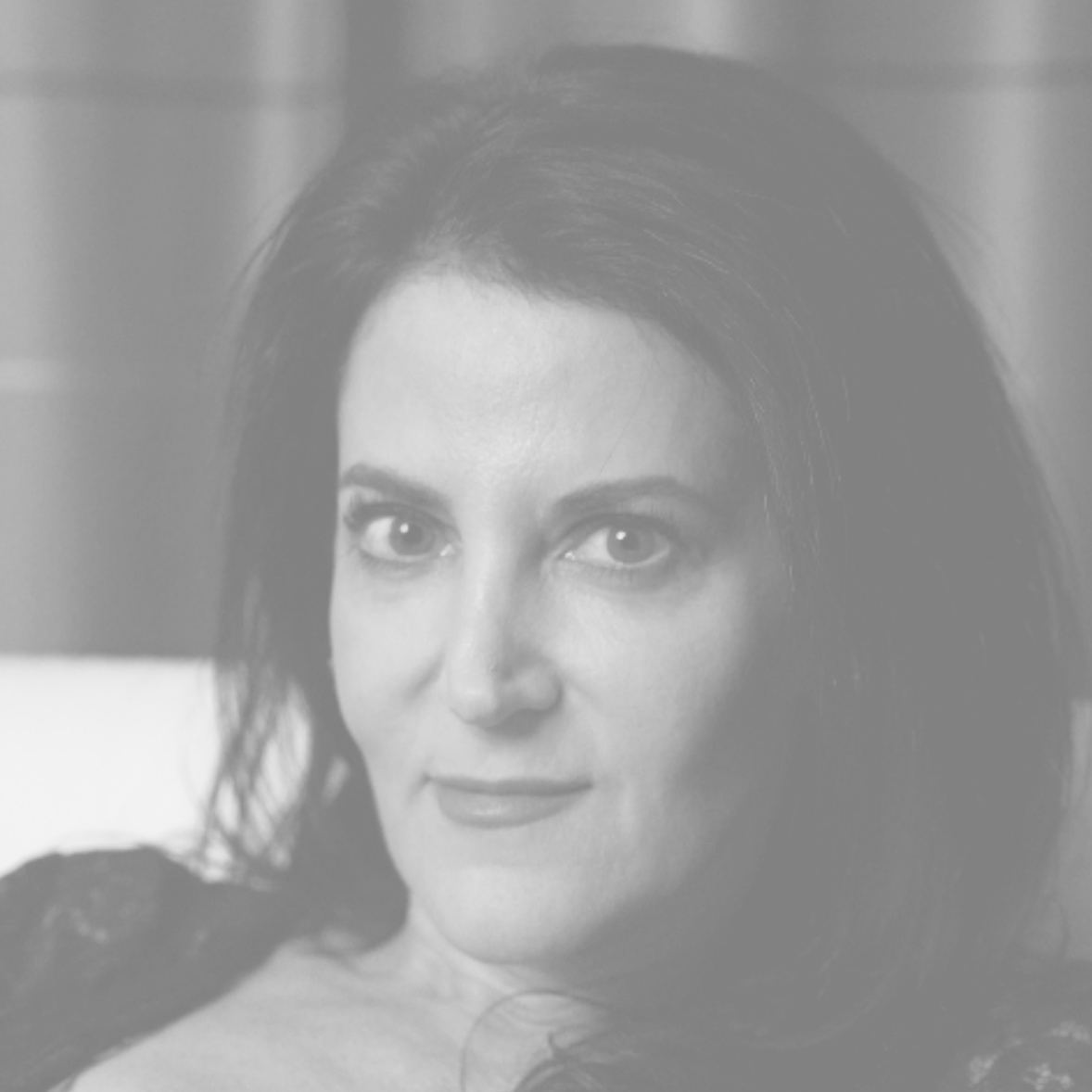
The team page gives this philosophy a playful name. Enslein looks for each person's “superhero powers” and tries to arrange the work so people spend more time using them. It sounds whimsical until you remember how many creative companies promote gifted makers into meetings all day. At a boutique, a bad allocation of one person's attention is not a rounding error.
The creative has to meet the receipt
Sublime sits in an interesting middle of the market. It is not a holding-company network with offices everywhere. It is also not a narrow production studio. The agency's pitch joins human-scale access to a technology-assisted media layer: granular audience data, buying across connected TV, streaming audio, outdoor and digital, and cross-channel reporting in one dashboard.
That combination matters because an attractive campaign can still fail in distribution. Sublime says its direct relationships operate at the data level rather than the sales level, reducing dependence on commissions and traditional guesswork. The agency claims prior campaigns beat benchmarks by at least two times and that some clients have seen returns above eight times. Those are company figures, not a universal promise, but the design of the offer is clear: watch performance, then move the money while the campaign is still running.
A partner's published cyber case study
A collaboration with search firm Titicus shows the mechanics. For a national cybersecurity client, the starting website made conversion tracking difficult and the connected CRM could not attribute inbound channels. The partners built keyword and content strategies, connected paid search with on-site SEO, and followed conversions beyond marketing-qualified leads into sales-qualified leads. In the reported comparison periods, total traffic rose 58 percent, organic traffic 84 percent and leads 96 percent.
What failed first was not the advertising. It was the plumbing. If calls to action cannot be tracked and the CRM forgets where a lead came from, optimization becomes theatre. Fixing attribution made the creative accountable.
The vacuum cleaner gets the trophy
The most charming item in Sublime's cabinet is a 2018 One Show Bronze Pencil for social influencer marketing. It was not for fashion, a sports car or a streaming service. It was for Eureka and a video called “Clean My Path.” The work was also a SABRE Awards finalist. A supposedly ordinary product became useful creative material because the team found the behavior around the object, not merely the specifications inside it.
The same instinct appears in its direct mail for McAfee. New, current and former accounts received different pieces. Familiar objects, including Jenga and Wooly Willy, carried messages about cloud protection and MVISION. The material was playful, but the segmentation was sober: one audience needed introduction, one needed expansion, one needed a reason to reopen the relationship.
Then COVID arrived. Media budgets moved down first. Sublime helped clients accelerate digital marketing as buyers stayed home, while Enslein deepened ties with venture capital, private equity and emerging founders. The change of mind was practical: follow the attention, and build relationships with the people funding the next wave of companies. The agency did not abandon mass media. It adjusted the mix.
The copyable part
- Write down what is actually true about the brand.
- Name what the audience cares about before choosing a channel.
- Find one phrase, image or behavior that joins those two facts.
- Give every channel the same idea, not the same execution.
- Agree on the scorecard and repair attribution before spending.
- Move budget when evidence changes, not when the calendar says so.
Small is useful only when the room is ready
This model is not magic. Enslein's own description of a dream client contains the guardrails: a product that solves a real problem, a defined budget, a leader who can state the objective and agreement on success metrics. Remove those conditions and closeness can become confusion. An embedded agency cannot fix a product nobody needs, and a dashboard cannot settle an argument about goals that happened after launch.
It fits when
The offer solves a real problem, senior leaders are accessible, one team can span channels, and the client will share data quickly.
It strains when
The budget is undefined, approvals multiply, attribution is impossible, or the company expects advertising to substitute for product-market fit.
Nor is every achievement cleanly attributable to the agency. Cylance's engineers built the product; its commercial team closed the sales; BlackBerry chose the acquisition. The honest claim is narrower and still impressive. Sublime helped a little-known technical company sound legible. It made a name carry a promise. That is the small-agency wager in one sentence: get close enough to find the detail everyone else walked past, then make it loud enough to travel.