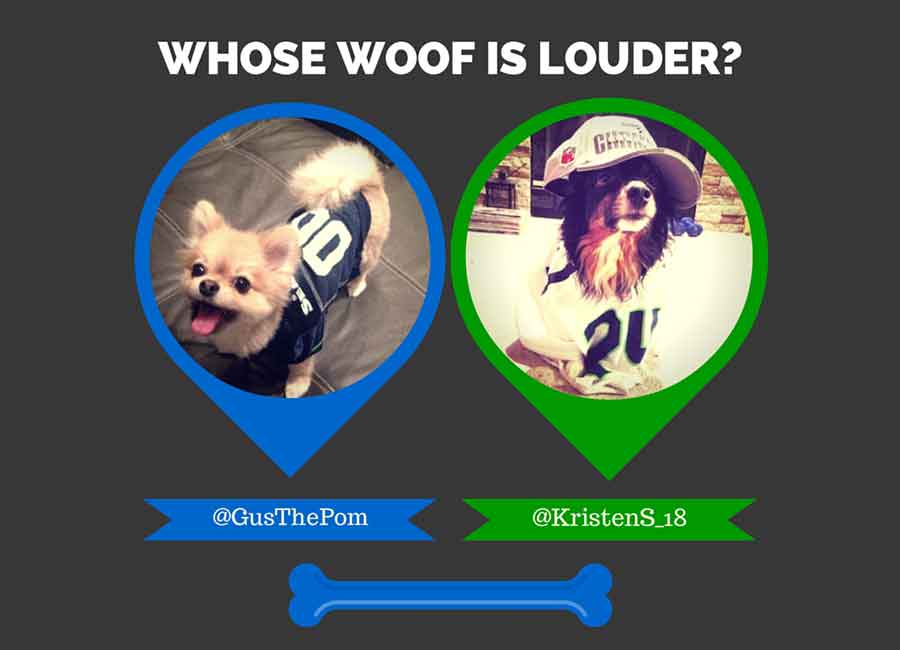
There is a dog in a football jersey somewhere near the center of Epic Marketing Consultants Corporation's theory of commerce. The dog appeared during a three-week social campaign for a Seattle credit union. Fans posted their Seahawks pride. Epic live-tweeted games. Then the promotion wandered, happily, into a “woof-off” in which people voted for a favorite canine fan. On the internet, this qualifies as a perfectly decent ending.
Epic kept counting. Its case study reports two million people reached, 127,000 impressions and more than 2,000 clicks. Those are the figures at which a social agency might stop and prepare the celebratory slide. Epic's next line is the revealing one: 875 additional accounts and $2 million in added deposits. The dog was charming. The deposits were the point.
The media plan is not a personality test
Epic is a full-service marketing and advertising firm based in Odessa, Delaware. “Full service” is one of those phrases polished smooth by repetition, but here it retains a literal meaning. The company plans strategy, develops brands, builds websites, runs search and social campaigns, buys media, handles public relations and events, produces video and photography, prints collateral, and processes direct mail in-house. A client can arrive with a business problem and leave with anything from a customer-journey map to a trade-show tent.
That range matters because Epic is not forced to diagnose every problem as the service it happens to sell. Its published process begins with research, an audit, SWOT analysis, audience definition, personas and journey maps. Only then come the strategic plan, media mix, messaging and execution. Analysis and reporting close the loop. The sensible order is the competitive difference: define the behavior first; choose the object later.
For a large state-chartered credit union, that meant television, radio, billboards, direct mail, digital signage, outdoor banners, social ads, print ads and branch signage around limited-time home-equity and auto-loan rates. Epic reports that the three-month campaign produced $22 million in loans, more than 1,000 new members and a $12 million increase in assets. For an international B2B refractory company, the answer was smaller and more surgical: a redesigned website, planned SEO, clearer inquiry paths and LinkedIn ads. A web lead arrived within three weeks and became a reported $250,000 sale within the month.
Attention is a waypoint. Epic's case studies become interesting at the moment the likes and clicks give way to accounts, deposits, loans and sales.YesPress analysis of Epic's published portfolio02 / The company before the campaign
The first positioning problem was their own marriage
Nancy and Don Dibert opened Epic in 2008. The decision had a private origin. In 2002, Don fell 15 feet at an electrical job site and sustained devastating injuries. His recovery took roughly five years. The experience led the couple to organize work around a blunt preference: they wanted to build their lives side by side. Don proposed the company; Nancy, whose background included early HTML and interface design, supplied its creative direction. The name nods to Einstein's E=mc², as does the line “theory that is relative to your marketing needs.” It is a formidable amount of physics wordplay for a firm that also prints postcards.
Their first mistake was wonderfully basic. In Epic's first month, they introduced themselves to a client's team and assumed everyone understood why they shared a surname. Someone asked whether it was a happy coincidence. The founders learned the lesson every brand strategist eventually sells to someone else: what is obvious inside the building can be invisible outside it.
A more consequential assumption broke as the agency grew. Nancy expected to handle clients and creative work while Don took technical and financial matters. The evidence pointed the other way. Don proved strong at the big picture, creative direction and client management; Nancy gravitated toward detail, web development, SEO and administration. They changed the jobs. Growth did not validate the org chart. It edited it.
The expanding client roster exposed a mismatch between planned roles and demonstrated strengths. Their copyable move was to treat responsibilities as hypotheses, then revise them from observed performance.
That adaptability appears elsewhere. During the pandemic, the business needed project management. Flora Sutalo, a military veteran with a business degree and project-management training, joined after personal-care shutdowns sidelined her previous work. Nancy has said that Sutalo quickly audited projects and timelines; one departmental restructuring generated significant monthly savings. Sutalo became chief operating officer. The tidy lesson is not “hire your network.” It is to notice evidence of competence in places where a conventional résumé filter may not look.
03 / The odd economics of “full service”Fewer handoffs, more things to measure
Epic makes money like a hybrid agency and production shop: consulting and planning, creative projects, ongoing campaign and social management, media buying, web work, events, print, mail and promotional production. Fees are not publicly listed. The one wonderfully granular cost in its portfolio is postage: under 15 cents per piece for an Every Door Direct Mail campaign. It is a small number with a large implication. When planning and production sit together, a strategy can account for the price of reaching one more mailbox.
The customer list explains where this model fits. Epic shows work for credit unions and banks, Delaware government, the University of Delaware, healthcare organizations, nonprofits, local businesses and industrial B2B companies, while its founders say the range extends from small firms to Fortune 500 companies. Financial institutions are an especially natural match. They have regulated messages, geographically defined audiences, physical branches, measurable products and reasons to use both a mailbox and a mobile screen.
Education is the other half of the model. Nancy has led and taught social-media marketing programs through the University of Delaware's continuing-studies division. Epic also produces Social Media Day Delaware, an annual gathering of practitioners, business owners and students. The arrangement creates a useful feedback loop: client work supplies current problems; teaching forces the agency to explain its methods clearly; a conference pulls new practices and people into the room.
04 / What survives outside DelawareCopy the sequence, not the dog contest
The temptation is to copy the visible trick. Find a football team. Add pets. Invent a hashtag. But the visible trick was downstream of an audience, a season, a local obsession, a sweepstakes and a financial institution prepared to convert attention into accounts. The transferable part is quieter.
Before choosing media, name the desired result: a booked loan, an opened account, a qualified lead, a sale.
Keep reach and clicks, but connect them to the next behavior and the business outcome after that.
Assign work, observe who is actually good at it, and change the chart before pride hardens it.
A billboard, search ad and postcard are options. None deserves loyalty before the audience is understood.
There are limits. Epic's figures are reported case-study outcomes, not controlled experiments. The $22 million lending campaign included attractive limited-time rates, and no public breakdown isolates the incremental contribution of each medium. A similar mix will struggle when the offer is weak, conversion cannot be tracked, the audience is too diffuse, or the client cannot follow through operationally. In-house breadth also works only when specialists and quality controls keep one-stop convenience from becoming one-size-fits-all work.
Still, the principle travels well. Marketing does not become rigorous by losing its jokes, dogs or twelve-foot billboards. It becomes rigorous when those things are attached to a theory about behavior and a way to check the theory afterward. Epic borrowed its name from an equation. Its better equation is simpler: curiosity in, evidence out.