In 1977, a power toothbrush was an argument disguised as an appliance. Before anyone could sell the thing, someone had to persuade a dentist that electricity belonged beside enamel, persuade a retailer that the object deserved shelf space, and persuade a person at home that a vibrating handle was an improvement over the familiar stick. Lanmark360 dates its beginning to that launch. The product matters less now than the route it traveled. The little New Jersey agency discovered its organizing idea very early: in healthcare, the customer is rarely one person.
That sounds obvious until a campaign brief arrives. A medical device company wants awareness. A mouthrinse wants credibility. A continuing-education platform wants members. Each request looks like a marketing problem. Underneath, each is a handoff problem. A scientist makes a claim. A marketer translates it. A clinician tests it against experience. A distributor, hospital or practice decides whether to carry it. A patient finally lives with the result. Lose the meaning at any handoff and a handsome campaign becomes expensive wallpaper.
The healthcare chain of belief
The useful kind of narrow
Lanmark360 is a full-service agency, which is usually advertising language for a very long menu. Here the menu really is long: market research, brand strategy, creative, media, PR, social, websites, e-commerce, video, events, influencer work, key-opinion-leader advocacy and HubSpot implementation. The more revealing fact is that roughly 85 percent of its work was in dentistry when CEO Howard Klein described the business in a 2020 interview. This is breadth built on top of a narrow market, not breadth instead of one.
The distinction changes what the agency sells. A generalist can make a polished dental ad. A specialist should know which hygienists influence a category, which trade meeting puts the right people in one room, where professional media still matters, and how a consumer promise survives professional scrutiny. Lanmark360 calls itself small and nimble compared with a large network. Its actual counterweight to scale is memory.
Three cases, three broken handoffs
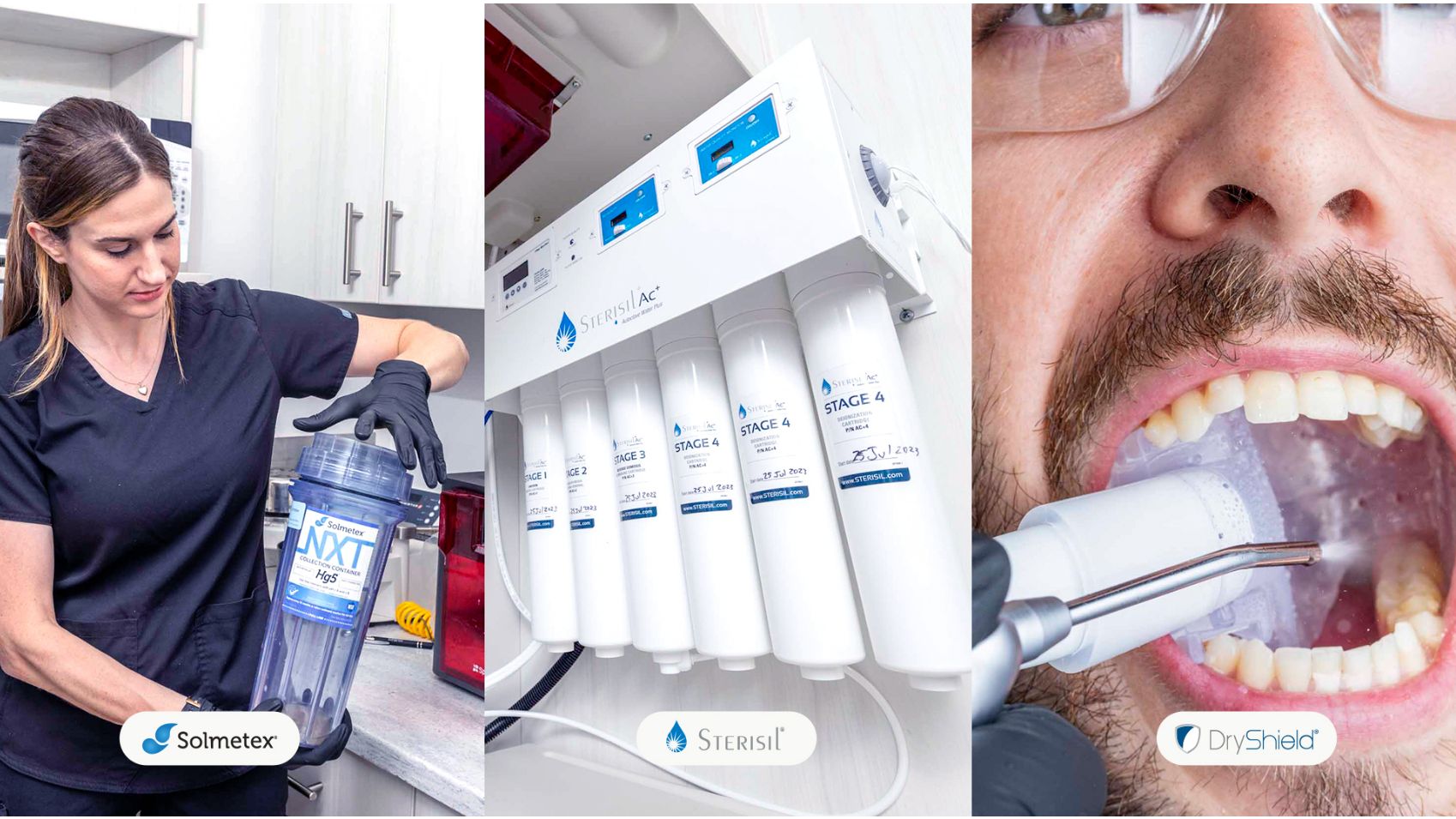
The agency’s published work is most interesting when read as diagnosis. For Solmetex, the first thing broken was coherence. Three dental businesses - Solmetex, Sterisil and DryShield - had become one corporate family, but still arrived with separate products, histories and voices. Lanmark360’s organizing line, “Every Drop Matters,” stretched from amalgam separation to water treatment to isolation devices. The agency then made the operational pieces agree: identity, website, e-commerce, compliance content, trade-show materials, media and PR.
One portfolio
Turn three acquired voices into one navigable company.
One new gatekeeper
Move a consumer-known brand into professional consideration.
One credible carrier
Let clinical peers travel where a sales force could not.
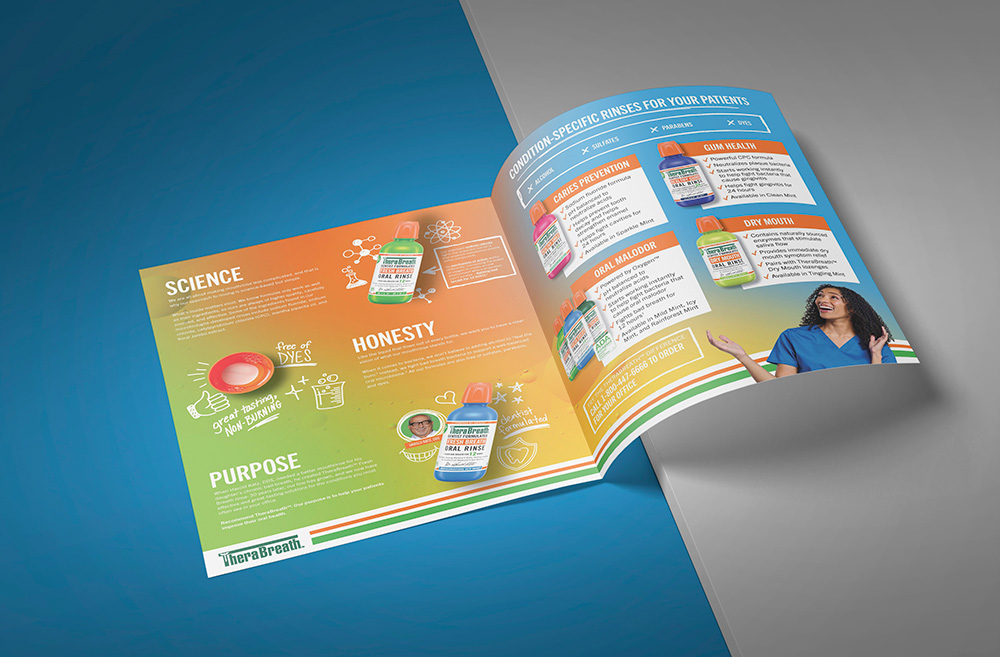
For TheraBreath, the weak link was different. Consumers knew the mouthrinse; dental professionals barely did. After Church & Dwight added the brand to its oral-care portfolio, Lanmark360 researched a professional position and built “Science, Honesty & Purpose.” Notice the move: not louder consumer advertising, but a fresh case for the person whose recommendation changes the consumer’s confidence. At a dental-hygiene convention, that positioning became a sold-out Orangetheory event. The category’s clinical gatekeepers were invited to sweat, smile and meet the brand in person.
Cetacaine, a topical anesthetic spray used in procedures such as endoscopies and bronchoscopies, presented an uglier constraint: no sales force and a limited national promotional budget. Lanmark360 recruited anesthesiologists, pulmonologists, gastroenterologists and nurse anesthetists, recorded their experience, and turned the interviews into ads and deeper site content. Tightly targeted digital media did the delivery. The company says US hospital sales rose consistently. No public contract price or media spend accompanies the case, so the smart lesson is structural, not financial: when paid reach is constrained, make credible people carry more of the message.
“They know exactly what we need before we do.”Vicky Franco, Marketing Manager, Waterpik Professional
When the work stopped, memory started
The clearest account of what failed first comes from the pandemic. Dental practices closed. Projects went on hold. Clients began reallocating budgets. A firm dependent on dentistry suddenly faced a market in which dentistry had largely stopped. Klein and his team remembered a program they had built with the Dental Trade Alliance during the Great Recession, when patients postponed care: “Oral Healthcare Can’t Wait.”
That old campaign changed the question. Instead of asking how to preserve the existing work, the team asked how practices could preserve a relationship with patients stuck at home. Lanmark360 and the alliance created Post for My Patients, a free series of light videos practices could download or share. The first set offered home-care reminders. The next marked reopening with jokes about long hair, missed restaurants and overdue routines. The production was modest. The fit was exact.
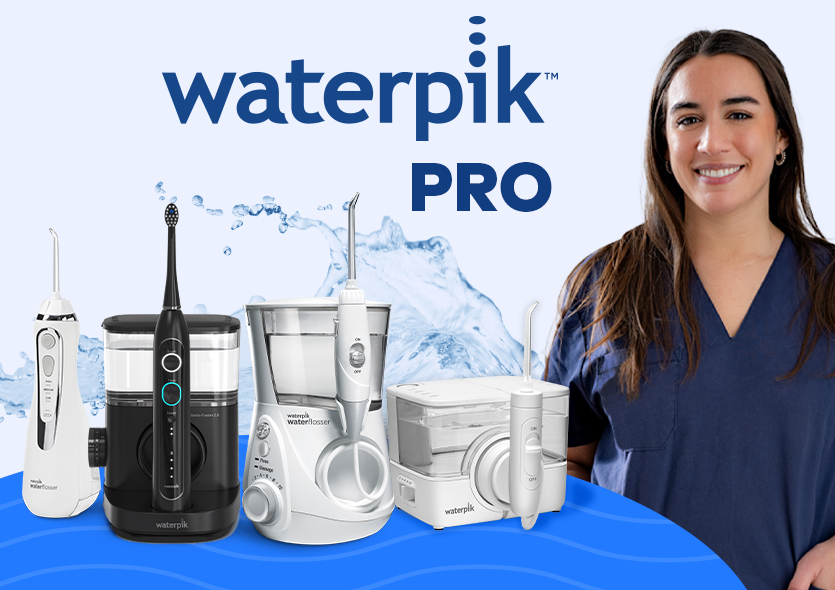
The same instinct appears in Waterpik’s professional program. The brand already had consumer social accounts. Competition was rising among professionals, though, and consumer fame did not automatically create a community of recommenders. Lanmark360 combined paid and organic social with influencer work aimed at dental professionals. Waterpik says the program beat goals for Lunch & Learn and newsletter signups; the agency says growth, engagement and conversion outperformed industry benchmarks. Exact figures are not published, which makes this evidence directional rather than a universal benchmark.
What another company can steal
Lanmark360’s method is copyable, but not by copying its ads. Begin by drawing the chain of belief. Name the person who supplies proof, the person who grants professional permission, the channel that carries the idea and the person who ultimately uses the product. Then mark the first broken handoff. Solmetex had a portfolio problem. TheraBreath had a professional-awareness problem. Cetacaine had a distribution problem. Waterpik had a community problem. Each required a different instrument.
A four-question brief worth borrowing
- Who must believe the claim before the customer will?
- Which handoff loses meaning, trust or momentum?
- What proof can travel without a salesperson in the room?
- Can one idea survive research, creative, media and the customer experience?
This approach fits markets with recognizable gatekeepers and a long purchase path - healthcare, financial services, industrial tools, perhaps education. It is weaker for an impulse product, a market with no stable professional community, or a company that wants a burst of undifferentiated consumer reach. Specialization also has a price: when one industry pauses, the agency feels the pause. Lanmark360’s 2020 experience made that risk plain.
The agency is now based in Freehold, New Jersey, with 41 people associated with it on LinkedIn and a client list that has included Waterpik, Colgate, Dentsply Sirona, Philips, Novartis and Novo Nordisk. It remains privately held. There is no disclosed outside funding, valuation or public rate card. The supplied company record estimates annual revenue at about $5.8 million, but the company does not report financials.
So the enduring asset is hard to put on a balance sheet. Forty-nine years after the toothbrush, Lanmark360 knows that the person holding the product may be the last person the campaign must persuade. The interesting work happens upstream, among the people who decide whether an unfamiliar claim deserves to keep moving.